


The Story Behind Glynoch and Rathmor Railway
The fascinating story of how the railway evolved, why it is so special and why it should be remembered.
History

Railways
Towns
Industries
The Glynoch and Rathmor Railway
Across the windswept waters of the western seas lies the archipelago known collectively as The Caerwyn Isles — a rugged and beautiful set of islands. Reaching out into the North Atlantic on the western lip of the continental shelf, where cliffs plunge to turquoise coves warmed by the Gulf Stream, mountains cradle hidden valleys, and the rhythms of tide, weather, and industry have shaped a distinct island character. Once isolated communities bound together only by fishing boats and packhorse trails, the islands were transformed forever by the coming of the railways. Iron rails bound sea to summit, harbour to highland, weaving an intricate web of trade, travel, and storytelling.
From slate and salt to wool and whisky, the railways carried the lifeblood of the islands’ industries. They linked quarries and ports, farms and factories, villages and towns, turning local crafts into national exports. Yet they also carried dreams — of tourism, exploration, and connection — allowing generations to cross from one island to another, from peat moor to seaside promenade, from woodland hideaways to the dockside warehouse. Today, the network of rails through the isles amounts to almost 400 miles, from old, rarely used industrial tramways through to the busy commuter lines of the bustling coastal towns.
Six islands make up the archipelago, four of which are inhabited: Glynoch, Rathmor, Little Rathmor and Sorcha. Each has its own character, industries, customs and people, and each found its own way to embrace the railway age. The story began with primitive quarry and mineral tramways, followed by estate railways, local passenger lines and ambitious independent companies such as the Rathmor Railway, Great Sorcha Railway and Grand Sorcha Central Railway. Thanks to the growth of the railways, connections were built, turning disparate communities into a united land. The various independent railways gradually merged, were bought out, or simply fell away, until the whole remaining network became what is now known as The Glynoch & Rathmor Railway (G&R).
Here is the story of how each town came to be, how the industries have evolved and how the railways have helped create the islands as we know and love them today.

The Caerwyn Isles
Glynoch and Rathmor Motif
Glynoch - The Industrial Heart
Glynoch, the most northerly of the islands, is a land of contrasts — from salt marshes and reclaimed farmland in the north to iron-streaked mountains and glittering coastal resorts in the south and east. Once an isolated, boggy expanse, Glynoch grew into the industrial powerhouse of the islands.
Its ironworks at Llanchala forged the rails that built an empire of steam, while its herring fleets at Erynporth and salt pans near Porth Dun fed and sustained the islands. The west coast town of Dunfael, once a whaling port, now anchors Glynoch’s hydroelectric network, harnessing the mountain waters that cascade down to the sea.
Glynoch’s railways criss-cross the landscape, conquering hills and marshes alike. They grew as competing systems rather than a single network: the early Glynoch Mineral Railway Company pushed west from Llanchala in 1855, while the Llanchala & Erynporth Coast Railway reached Porth Dun in 1870. Later companies opened routes through the central highlands and across the reclaimed northern marshes, with the northern cross-island route finally opening in 1901. Even today, Glynoch’s towns — from the fishing quays of Porth Gwyn to the foundries of Llanchala — hum with the spirit of progress and the enduring scent of salt and smoke.
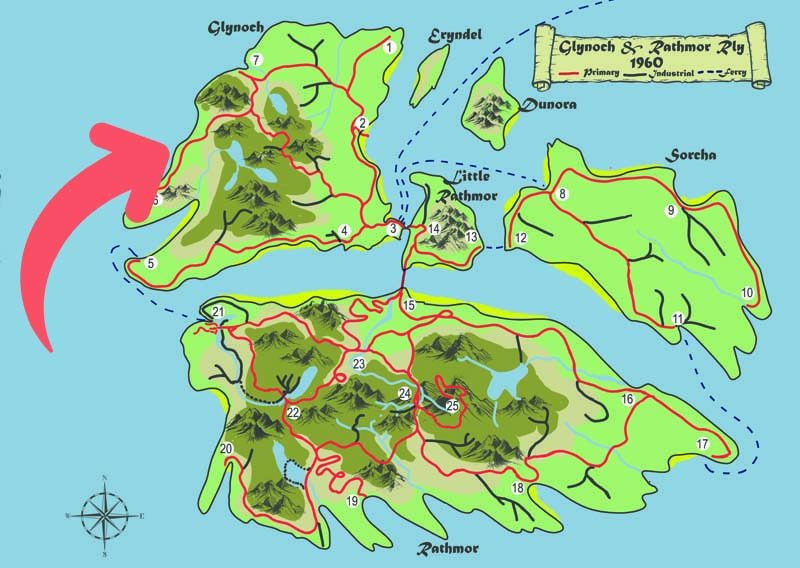
Glynoch
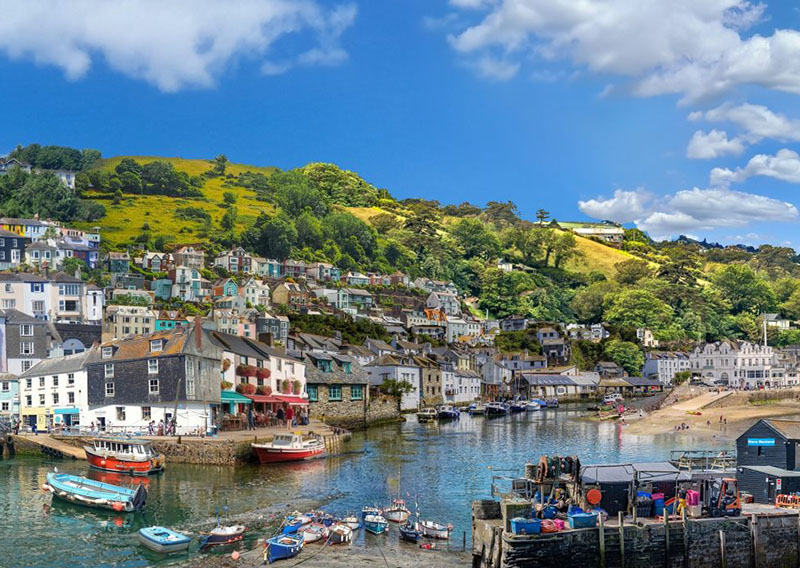
Llanchala - Largest town on Glynoch
Sorcha - The Golden Isle
If Glynoch is the heart, Sorcha is the soul of The Caerwyn Isles. Protected from the worst of the Atlantic storms by the highlands on Glynoch and Rathmor, Sorcha is bathed in softer light, with rolling farmland and orchards that stretch inland from its glittering southern shores. Sorcha is the island of fertility and flavour.
Here, fields of barley, wheat, and grain thrive in the rich soil reclaimed from centuries of forest. The Porth Oir Orchards produce the island’s famed cider, while Caerporth’s sugar cane plantations feed the Island Rum distillery, whose sweet, spiced spirit travels the world. On the northern coast, Rhosport’s dairies produce cheese and ice cream celebrated across Europe, and to the west, Dun Ear’s shipyards still shape proud vessels beneath the shadow of its ancient twin fort at Dun Lar.
Sorcha’s railways came early and spread quickly, beginning with private estate and agricultural tramways around Caerporth in the 1850s. These were followed by increasingly ambitious public railways, including the Caerporth & Rhosport Railway, Great Sorcha Railway and the rival Grand Sorcha Central Railway. Ribbons of steel bound farm to harbour and field to mill. From the cider presses of Porth Oir to the docks of Caerporth, Sorcha’s golden produce poured out to sea — its name forever linked to prosperity and good harvests.
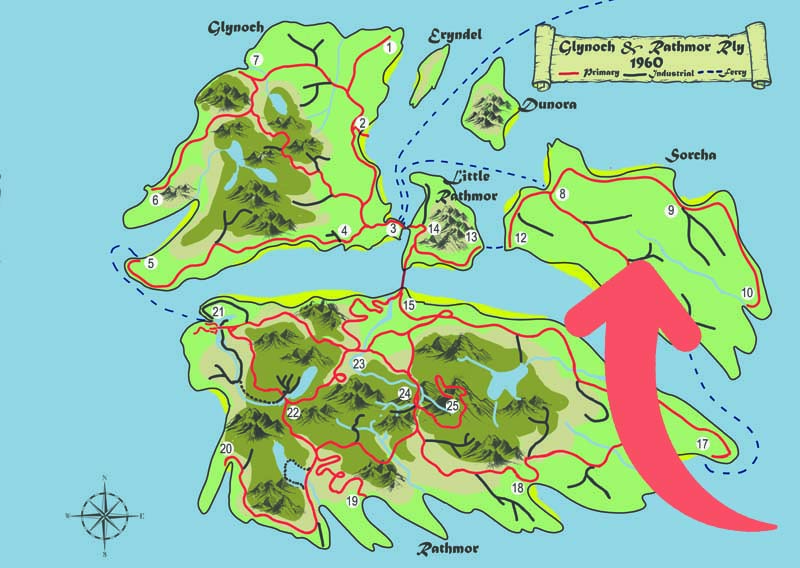
Sorcha
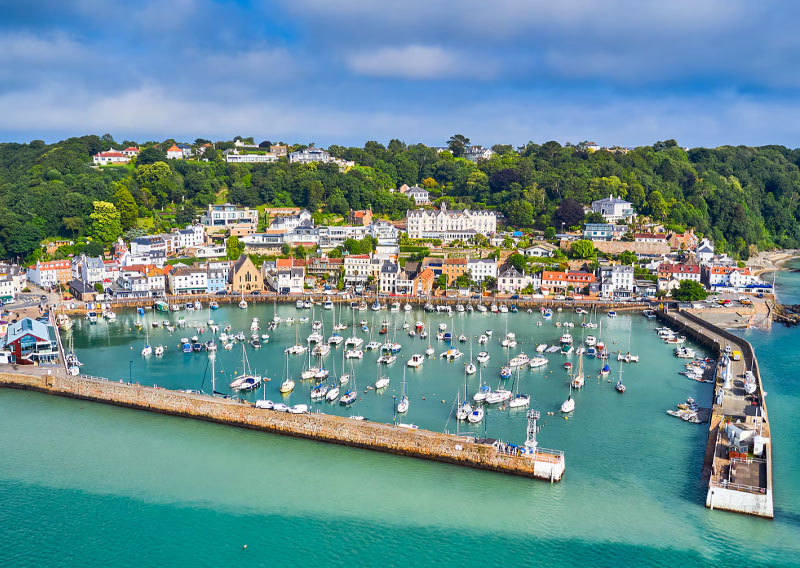
Caerporth - Capital of Sorcha
Little Rathmor - The Limestone Isle
Small in size but vast in heritage, Little Rathmor lies just across The Straights north of Rathmor proper, a rugged and windswept island known for its limestone quarries, sheep farms, and centuries-old coastal communities. Its pale stone — the renowned Rathmor Limestone — has built harbours, quays, and sea walls across the archipelago, from Llanchala to Aberfael. For generations, quarrymen carved their livelihoods from the cliffs, blessing each block with a traditional triple tap before it was shipped away by sea or rail. The island’s hills, cloaked in heather and grass, sustain hardy flocks whose wool feeds the great mills of Dun Lar, where the famous Rathmor Gansey is produced — the thick, warm sweater worn by fishermen across the islands.
Though industry dominates its history, Little Rathmor has always been deeply tied to craft and community. Its people are resilient and proud, shaped by the rhythm of wind, tide, and labour.
Small it may be, but its central position made Little Rathmor pivotal to the development of railways across the islands. Bridges connect it to Glynoch in the west and to Rathmor in the south, via the mighty Llyngor Bridge. The railway story here began as early as 1825, when the Bryn Lar & Llanchala Harbour Company laid primitive rails between the limestone quarries and the quaysides at Bryn Lar. In time, Little Rathmor became a vital railway crossroads between Glynoch and Rathmor, while its main locomotive sheds and workshops ensured its importance within the archipelago far beyond its diminutive geographic size.
Today, Little Rathmor is both industrious and picturesque — a living museum of the islanders’ perseverance. Visitors can still walk the quarry paths, hear the looms of Dun Lar’s mills, and watch fishermen mending nets in the harbour at Bryn Lar, just as they have for centuries. In stone, wool, and sea spray, Little Rathmor endures — the small island that built much of The Caerwyn Isles.
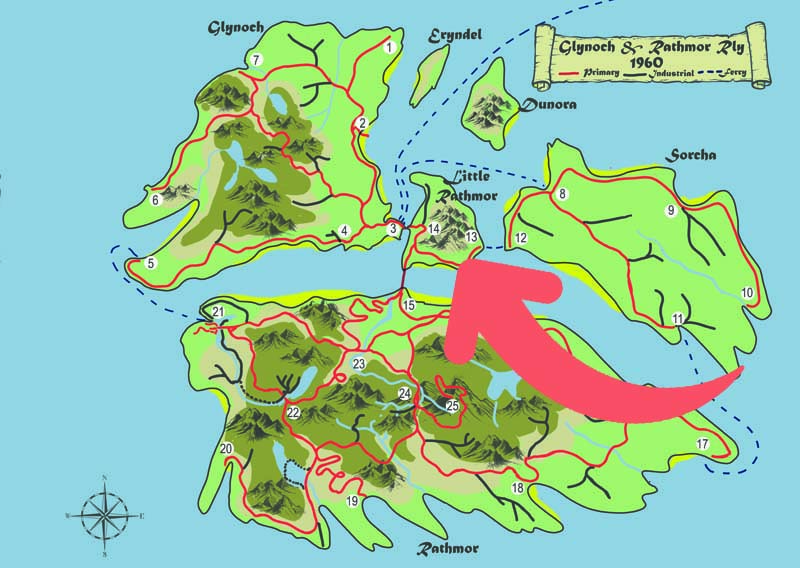
Little Rathmor
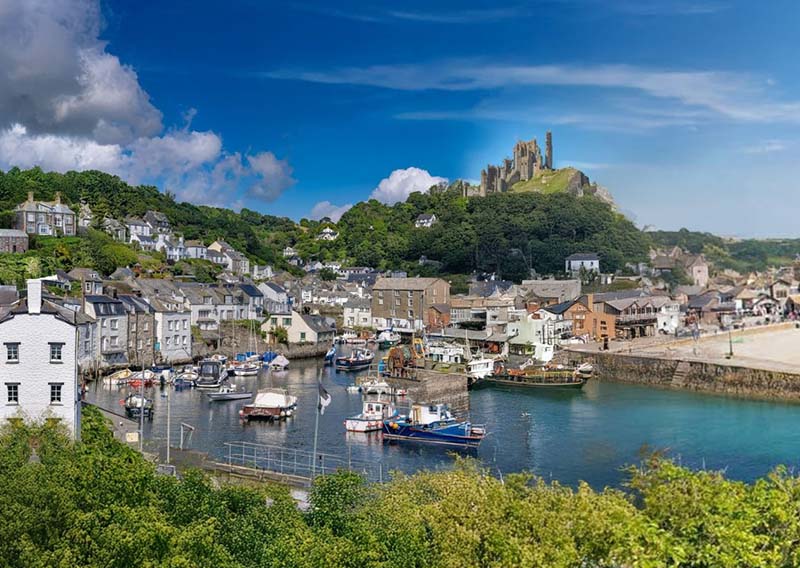
Bryn Lar - Ancient Settlement on Little Rathmor
Rathmor - The Mountain Kingdom
To the south lies Rathmor, the wildest and most storied of the islands — a land of towering mountains, cascading waterfalls, and deep glens where legend and history blur. The peaks of Cernawen dominate its central highlands, where miners once cut slate, copper, and tin from the rock. To the north, the forests of Feorag hide ancient peat bogs and fossil beds, while at the western and eastern extremes, the ports of Talporth and Gwynhaven bustle with life and trade.
Rathmor’s railways are feats of daring engineering, snaking up cliff-sides, crossing viaducts like that at Glen Feorag, and tunnelling through mountain hearts. Their story stretches back to the Tal Valley Tramway of 1845, later rebuilt for steam operation as the Tal Valley Railway. During the great expansion of the late nineteenth century, these early lines and neighbouring systems were gradually drawn together under the ambitious Rathmor Railway. The Cernawen Mountain Railway, completed in 1894, remains one of its crowning glories — a line that climbs through mist and myth alike, carrying tourists to the island’s highest summit.
Once dominated by slate and stone, modern Rathmor thrives on its heritage: the distinctive red brick from Talporth, traditional beers from the Rathmor Brewery, and endless inspiration for poets, painters, and dreamers who find beauty in its rugged silence. Where Glynoch forged and Sorcha grew, Rathmor endures — eternal, elemental, and proud.
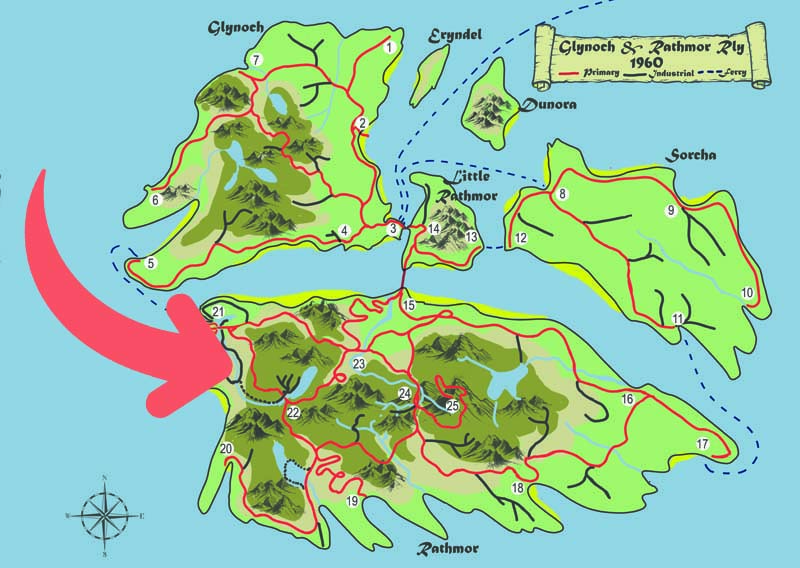
Rathmor
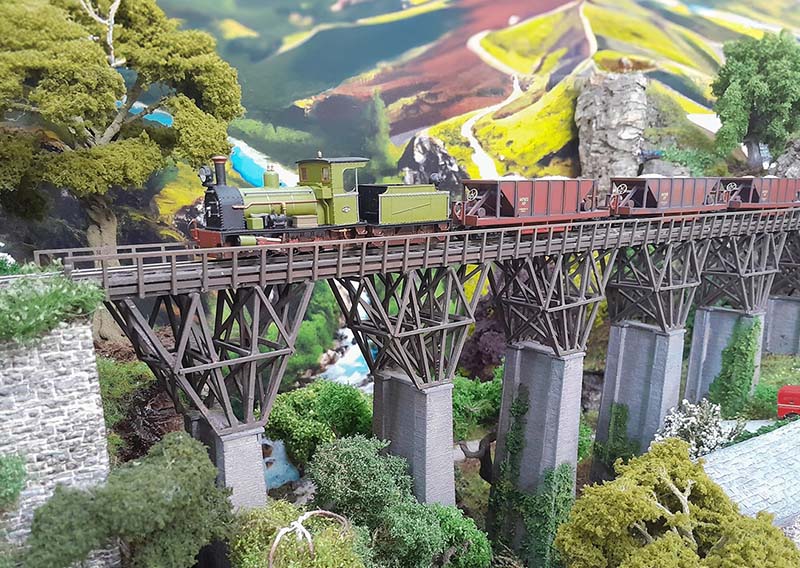
Glen Feorag Viaduct - Rathmor