


1878: Glenmara & Rhosport Railway
Connecting the prosperous riverside town of Glenmara with the growing northern railway network
History

Railways

About the G&RR
G&RR Maps
The Glenmara & Rhosport Railway (G&RR)
At a glance:
Established: 1878
Island: Sorcha
Headquarters: Glenmara
Route: Glenmara – Morrowen Downs – Northern Coast – Rhosport
Connection Completed: 1880
Principal Stations: Glenmara and Rhosport, with intermediate coastal stops
Principal Traffic: Grain, flour, whisky, timber, manufactured goods and passengers
Locomotive Livery: Black
Carriage Livery: Solid Caerwyn Blue
Successor: Great Sorcha Railway, 1881
Later ownership Sorcha Grand Junction Railway (1896); GWR (1923); G&R (1939)
Introduction
The Glenmara & Rhosport Railway was one of the most ambitious independent railway undertakings on the island of Sorcha. Established in 1878 to connect the prosperous riverside town of Glenmara with the growing northern railway network, the company encountered serious engineering difficulties that forced the abandonment of its original route through the Gleannshaile Valley. The alternative alignment, driven through the Morrowen Downs and carried along the island's spectacular northern coastline, became one of Sorcha's most celebrated railway journeys. Although the company survived independently for only three years, its achievements transformed Glenmara's commercial prospects and laid the foundations for the Great Sorcha Railway.
Caerporth & Rhosport Timeline
Glenmara & Rhosport Railway
Great Sorcha Railway
Sorcha Grand Junction Railway
Great Western Railway
Glynoch & Rathmor Rly
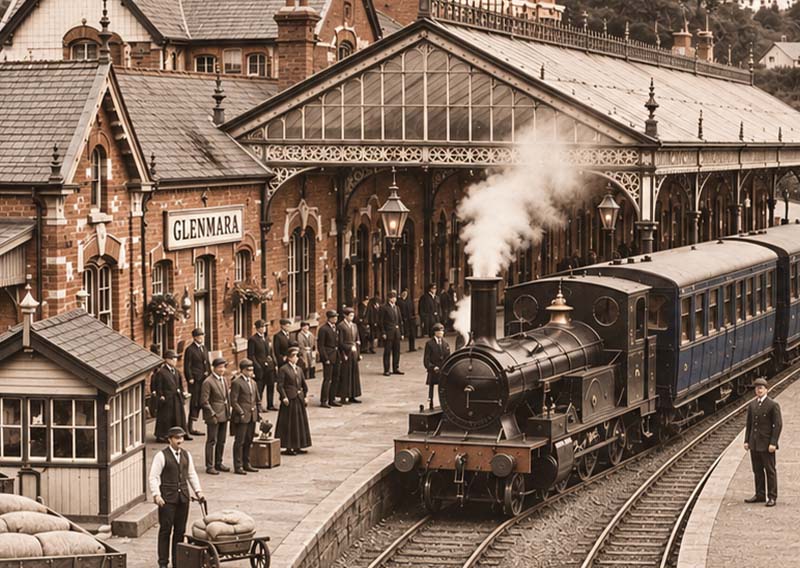
Glenmara Station - c1880
Origins: Glenmara Looks West
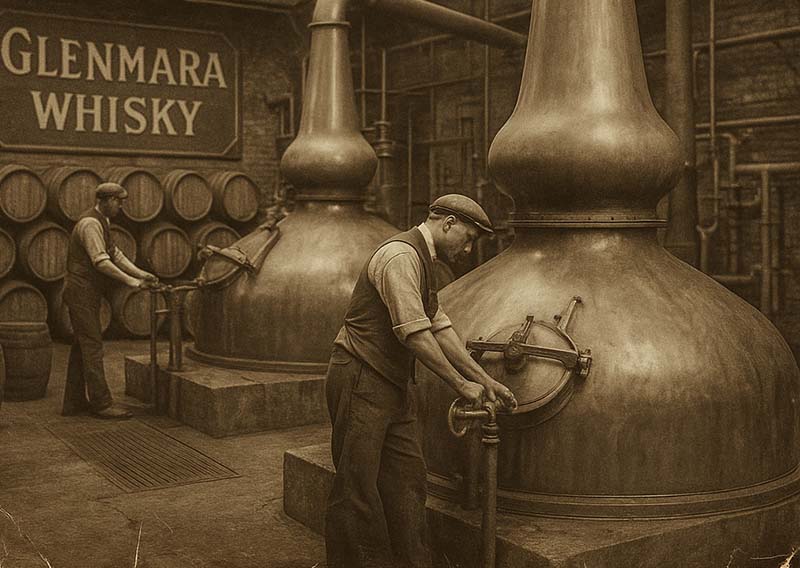
By the 1870s, Glenmara had established itself as one of the most prosperous commercial centres on eastern Sorcha. Situated at the mouth of the River Gleannshaile, the town enjoyed the advantages of fertile agricultural land, a busy river harbour and a growing collection of industries. The surrounding valley was renowned for its wheat and barley production, with numerous watermills converting grain into flour for local consumption and export. Glenmara's distillery had developed an increasingly valuable trade in whisky, while the town's cooperages and woodworking businesses supplied barrels, furniture and other manufactured goods to markets across the islands. Yet despite its prosperity, Glenmara remained heavily dependent upon river barges, coastal shipping and horse-drawn transport. The expansion of the Caerporth & Rhosport Railway in 1877 brought the prospect of a railway connection tantalisingly close. Glenmara's merchants recognised that the new railway could provide access to markets far beyond the reach of traditional river transport, while also offering faster and more reliable movement of agricultural and industrial goods. There was also a growing concern that neighbouring ports, particularly Rhosport, might gain a commercial advantage if Glenmara remained isolated from the railway network. During 1877 and early 1878, discussions among local businessmen, mill owners, distillery interests and landowners gathered momentum. The result was the establishment of the Glenmara & Rhosport Railway in 1878. Unlike some of Sorcha's earlier agricultural tramways, the G&RR was conceived from the outset as a public railway, carrying both goods and passengers. Its principal objective, however, was commercial: to connect the industries of the Gleannshaile Valley with the expanding railway system of northern Sorcha.
The Railway That Turned Away from the Valley
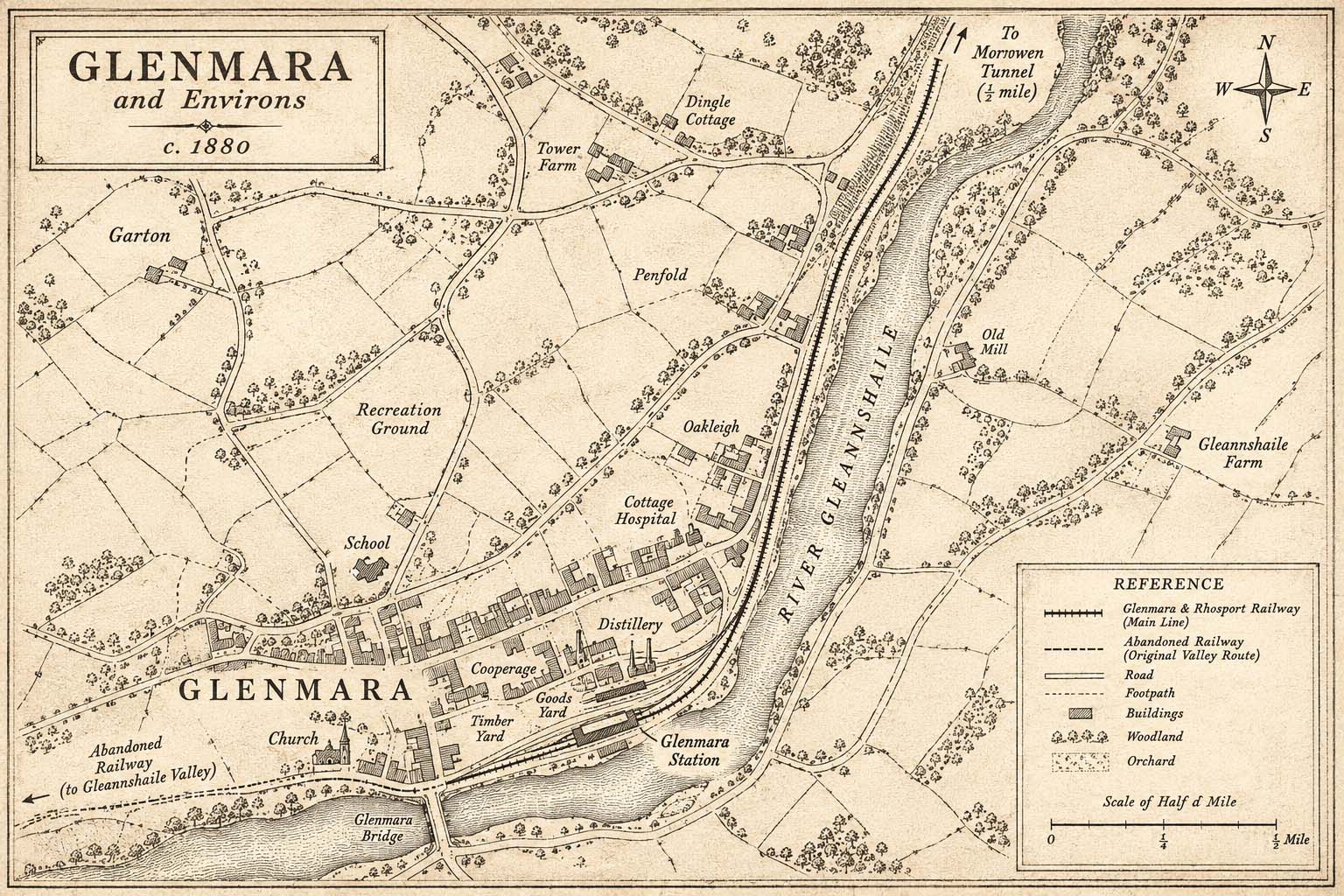
The company's original engineers proposed a route following the River Gleannshaile inland from Glenmara. The broad valley appeared to offer a natural passage into central Sorcha, from where the railway could turn north towards Rhosport. Initial construction began with considerable optimism. Surveyors marked out the route, workmen commenced earthworks and preparations were made for the formation of cuttings and embankments along the river valley. Unfortunately, the landscape proved far less accommodating than anticipated. Beneath the fertile agricultural soils lay extensive deposits of unstable clay. Excavations exposed ground that became particularly troublesome during wet weather, and newly formed embankments showed alarming signs of movement. Repeated landslips, subsidence and the collapse of sections of cuttings raised serious doubts about the long-term stability of the proposed railway. The company's engineers faced an increasingly difficult choice. Continuing along the valley risked committing substantial funds to a route that might never provide a reliable railway. After considerable deliberation, the directors reluctantly agreed to abandon the original alignment. Although relatively little track had been laid, a considerable amount of preliminary earthwork had already been undertaken. The abandoned cuttings and embankments remained scattered along the Gleannshaile Valley, silent reminders of an ambitious railway that had never been completed. Even in later years, traces of these works could still be identified in the countryside beyond Glenmara, occasionally puzzling travellers unfamiliar with the history of the railway. The decision represented a significant financial setback, but it also prompted the engineers to consider an entirely different route.
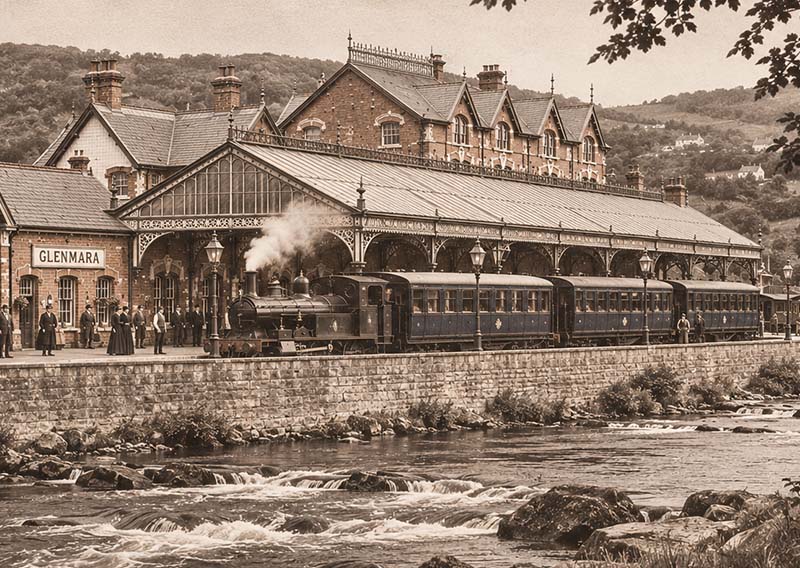
Glenmara riverside station
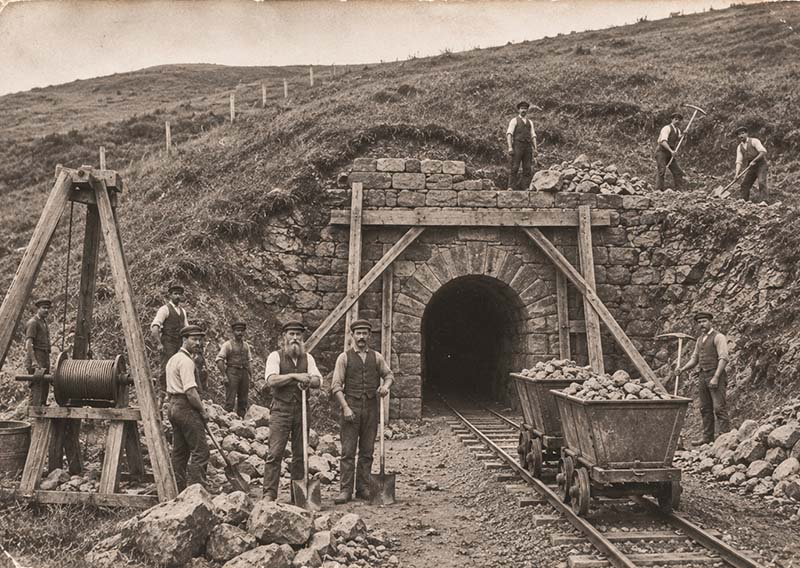
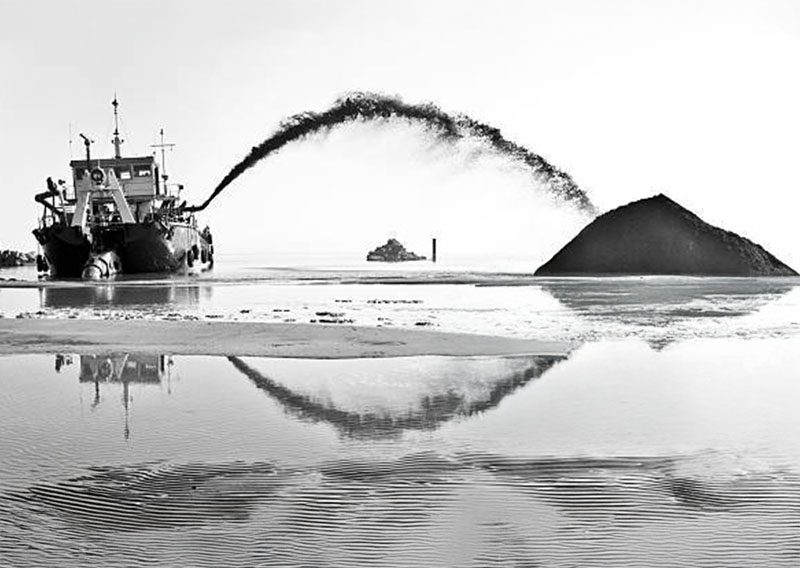
Morrowen Tunnel construction, northern portal 1879
Through the Morrowen Downs
The revised railway would leave Glenmara eastwards before turning sharply north towards the high ground of the Morrowen Downs. Rather than attempting to negotiate the unstable river valley, the engineers proposed driving a tunnel beneath the downs, allowing the railway to emerge on the northern side and continue towards the coast. The resulting Morrowen Tunnel, approximately half a mile in length, became the principal engineering achievement of the G&RR and remains the longest tunnel on all the island railways. Excavation required considerable labour, careful surveying and the removal of large quantities of rock and spoil. Although expensive, the tunnel offered the prospect of a much more reliable route than the troublesome clay formations encountered in the Gleannshaile Valley. Beyond the northern portal, the railway turned north-west towards the coast before following the shoreline for much of the remaining journey to Rhosport. The new alignment passed through open countryside and served a couple of small coastal communities before approaching the town from the east. For much of the journey, passengers enjoyed uninterrupted views across the sea, with the railway winding between the coastal hills and the shoreline. The company had not originally intended to construct a scenic railway. Its directors were primarily concerned with the movement of agricultural produce, industrial goods and commercial traffic. Nevertheless, the spectacular coastal route quickly became an attraction in its own right. Visitors began travelling simply to experience the journey, and the G&RR discovered that its engineering difficulties had inadvertently created one of the most picturesque railway lines on the whole Caerwyn Isles.
Glenmara's Riverside Terminus
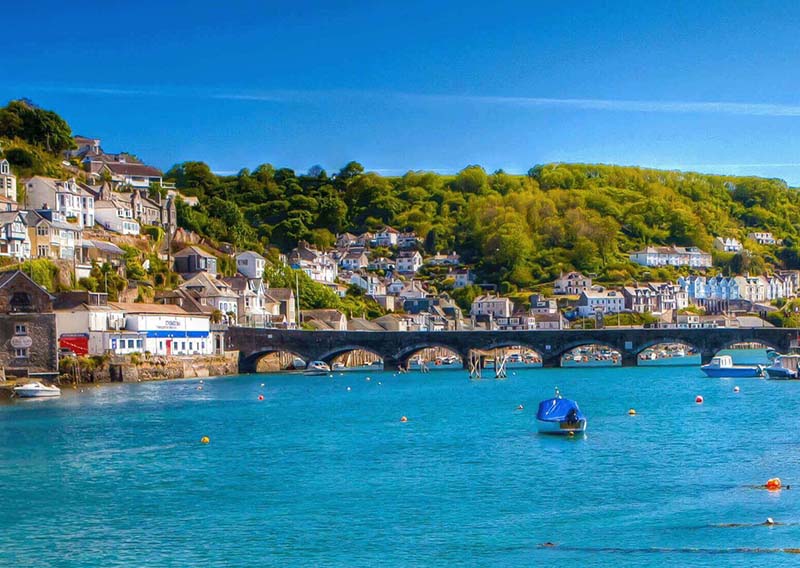
At Glenmara, the railway constructed an impressive station on the banks of the River Gleannshaile. The principal station building, built in red brick and complemented by an iron-and-glass roof, reflected the town's growing commercial confidence. Its picturesque riverside setting made it a particularly attractive gateway to eastern Sorcha. The station was accompanied by goods facilities designed to handle the considerable variety of traffic generated by the surrounding district. Sidings and warehouses accommodated sacks of flour, grain, timber, barrels and other agricultural produce, while the distillery became an important customer for the movement of whisky and the raw materials required for its production. The town's cooperages and woodworking businesses also benefited from the new railway, dispatching finished barrels, furniture and other manufactured goods to distant markets. Passenger accommodation was equally important. Glenmara's merchants anticipated an increasing movement of commercial travellers, agricultural workers and visitors, while the railway itself encouraged new opportunities for tourism along the northern coastline. The station soon became one of the busiest and most recognisable buildings in Glenmara, its platforms and goods sidings reflecting the prosperity of the industries it served.
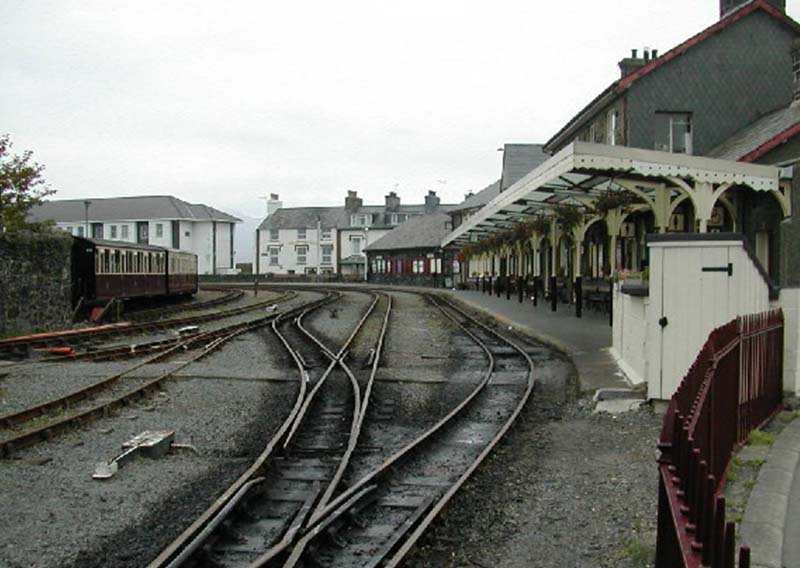
Rhosport Station
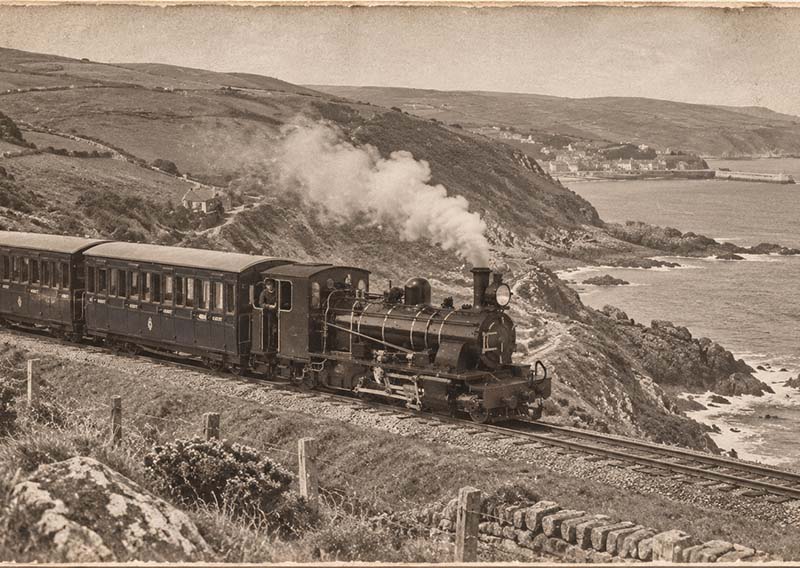
Climbing away from Rhosport c1880
1880: Two Railways Meet at Rhosport
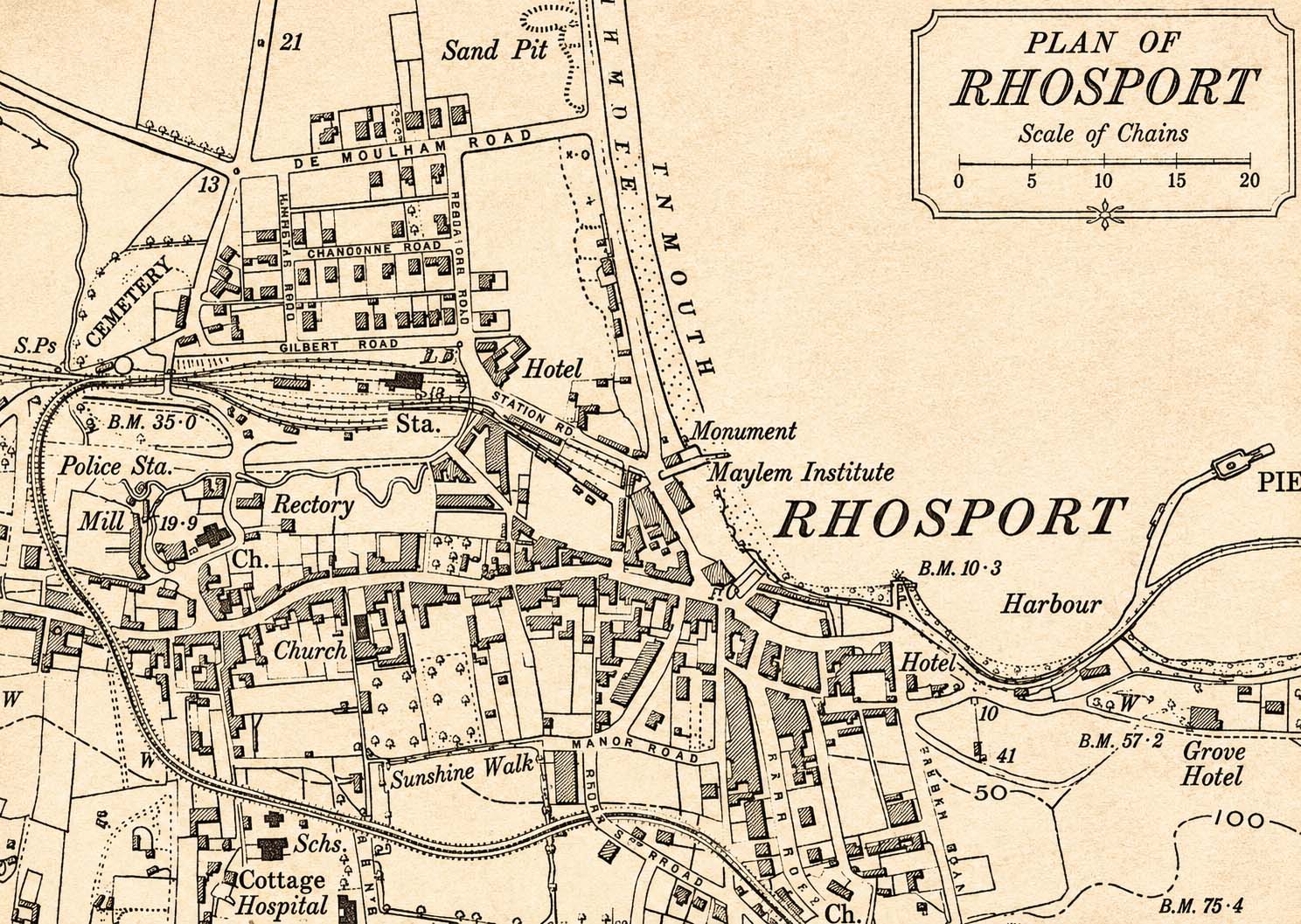
As construction approached Rhosport in 1880, the G&RR faced another important decision. Rather than building a separate station, the company entered into an agreement with the Caerporth & Rhosport Railway to share its existing town-centre terminus. The arrangement made considerable commercial sense. The C&RR had already established substantial station facilities at Rhosport, and the two companies recognised the benefits of coordinating their services rather than duplicating expensive infrastructure. The G&RR approached Rhosport from the east, but instead of entering the station directly, its railway curved around the southern outskirts of the town before joining the existing C&RR line to the west. Trains could then run into the established terminus. The arrangement was unusual, but it enabled both companies to use the same station and provided an immediate connection between their railway systems. There was, however, an operational disadvantage. Rhosport remained a terminus, and through trains travelling between Glenmara and Caerporth were required to reverse direction at the station. For passenger services, the reversal became a familiar feature of the journey. For freight trains, it involved additional shunting movements and delays, particularly as traffic increased. Nevertheless, the completion of the connection in 1880 represented a considerable achievement. For the first time, Glenmara enjoyed a direct railway connection with Rhosport and, beyond it, the wider northern Sorcha network. Agricultural produce, flour, whisky and manufactured goods could now reach distant markets with unprecedented speed, while passenger trains brought new visitors and commercial opportunities to the town. The opening also demonstrated the advantages of cooperation between the two independent railway companies, whose operations were becoming increasingly interdependent.
.
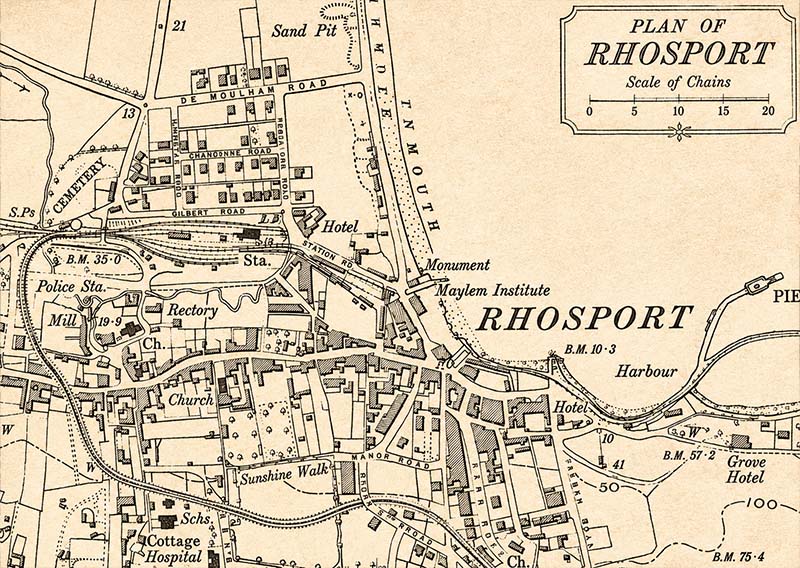
Rhosport Station map including the new G&RR connecting line
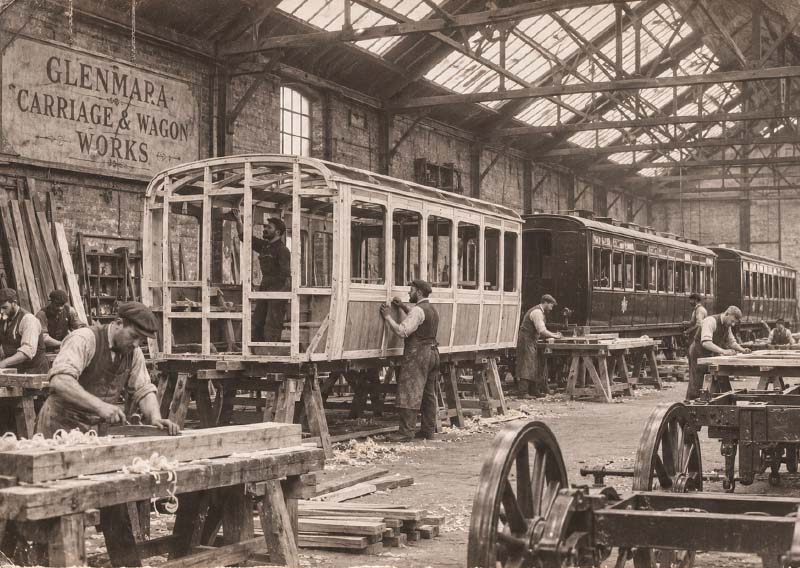
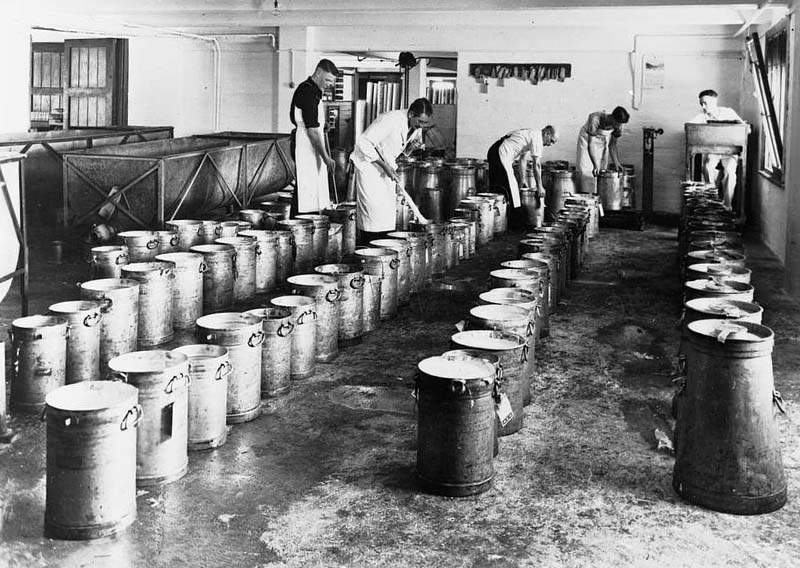
Glenmara Carriage and Wagon Works
Locomotives, Carriages and Traffic
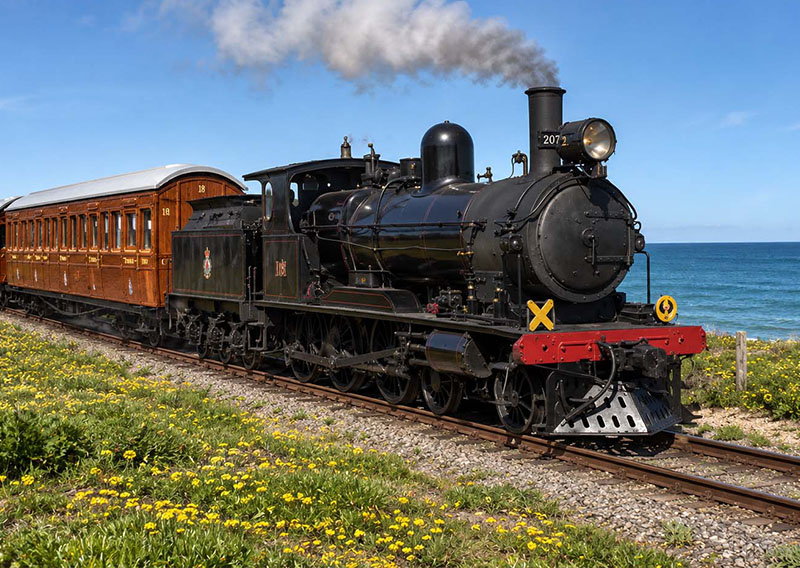
During its brief independent existence, the Glenmara & Rhosport Railway established a distinctive identity. Its steam locomotives were painted black, providing a practical and dignified appearance well suited to the company's predominantly commercial character. Passenger carriages were finished in solid Caerwyn Blue, a striking livery that distinguished G&RR trains from the varnished teak carriages of the neighbouring Caerporth & Rhosport Railway. The contrast between the two companies' rolling stock was particularly noticeable at Rhosport, where their trains could frequently be seen sharing the same platforms. Goods traffic formed the backbone of the railway's business. Grain and flour from the Gleannshaile Valley, whisky from Glenmara's distillery, and barrels and manufactured goods from the town's workshops all contributed to the company's revenue. Inbound traffic included coal, timber, machinery and agricultural supplies, while the harbour continued to provide connections with coastal shipping. Passenger traffic, however, proved more successful than originally anticipated. The northern coastal route attracted visitors eager to experience its dramatic scenery, and the railway gradually became associated with excursions and leisure travel as well as ordinary journeys between the towns. What had begun as a commercially motivated railway had acquired an unexpected second identity as one of the Caerwyn Isles most attractive passenger routes. In fact there was quite a rivalry, generally in good spirits, with the Llyngor Valley Railway for the claim to be The Visitors Choice.
Legacy: What Happened Next?
Although the Glenmara & Rhosport Railway had successfully completed its principal objective, its independent existence was remarkably short. The completion of the Glenmara connection in 1880 had demonstrated the benefits of coordinated operations with the Caerporth & Rhosport Railway. Both companies served complementary markets, shared facilities at Rhosport and increasingly depended upon one another for through passenger and freight traffic. In 1881, the two undertakings amalgamated to form the Great Sorcha Railway, creating a unified northern railway system linking Caerporth, Rhosport and Glenmara. The new company inherited both the advantages and the operational inconveniences of its predecessors. One of its later improvements was the construction of an avoiding line around Rhosport, allowing through freight trains to continue without reversing at the terminus. Passenger services, however, continued to call at Rhosport, preserving the town's importance as a destination and commercial centre. The Glenmara railway itself continued to flourish under successive owners, with its scenic coastal route becoming an enduring attraction. The railway also helped transform Glenmara's industrial character. Its established woodworking and cooperage industries provided a pool of skilled craftsmen, and in later years the Glynoch & Rathmor Railway selected the town as the location for its Carriage and Wagon Works. The works brought new employment and manufacturing opportunities, with local craftsmen contributing their skills to the construction and maintenance of railway carriages, freight wagons and wooden fittings. Thus, although the G&RR existed independently for only three years, its influence extended far beyond its original ambitions. It had opened Glenmara to the wider railway network, strengthened the economy of eastern Sorcha, created one of the island's most celebrated coastal journeys and laid an essential foundation for the Great Sorcha Railway.
History
Railways
About the G&RR
G&RR Maps
Glenmara & Rhosport Railway
The dotted red line shows the original planned route along the Gleannshaile Valley
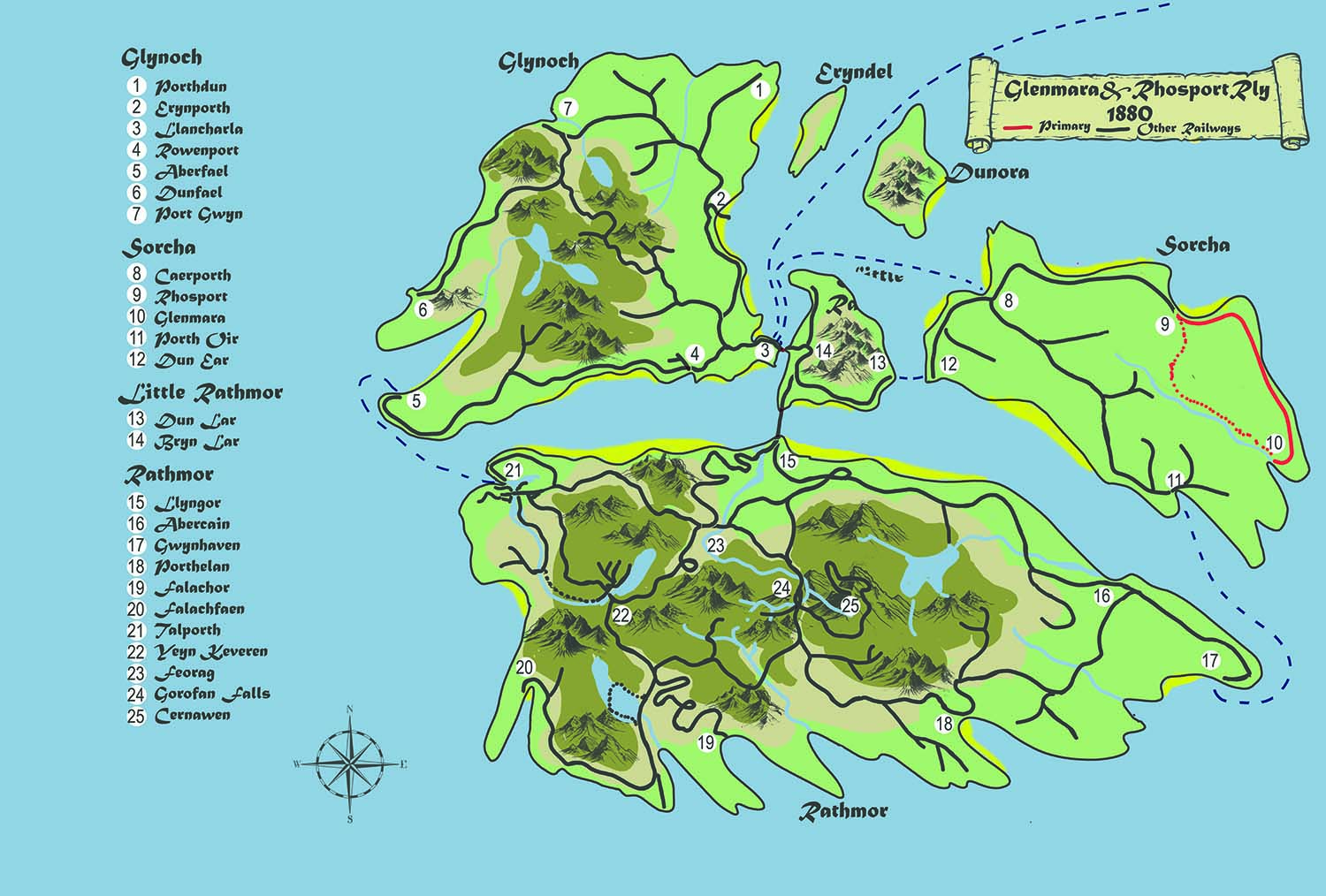
Glenmara Map and G&RR route
Rhosport Station including the new link line for the G&RR


0 Comments