

1877: Caerporth & Rhosport Railway
Three railways, three industries, and one ambition to connect northern Sorcha
History

Railways

About the C&RR
C&RR Maps
The Caerporth & Rhosport Railway (C&RR)
At a glance:
Established: 1877
Island: Sorcha
Headquarters: Caerporth
Chairman: Arthur William Trevellick
Predecessors: Northern Estates Railway; Caerporth Sugar Cane Ltd Railway; Penrath & Caerporth Railway
Principal route Caerporth – Penrath – Rhosport
Rhosport opening: 1878
Locomotive livery: Black
Passenger carriage livery: Varnished teak
Principal traffic: Sugar, agricultural produce, livestock, fish, general merchandise and passengers
Harbour access: Via the independent Caerporth Harbour Board Railway
Successor: Great Sorcha Railway, 1881
Later ownership Sorcha Grand Junction Railway (1896); GWR (1923); G&R (1939)
Origins: Three Railways Become One
In 1877, three independent railway undertakings in northern Sorcha joined forces to create the Caerporth & Rhosport Railway, an ambitious new company that would transform the transport network of the island's northern districts. The merger brought together three very different enterprises. The Northern Estates Railway, established in 1863, served the agricultural estates and farming communities north-east of Caerporth. The Caerporth Sugar Cane Ltd Railway, founded in 1864, operated an extensive industrial network serving the prosperous sugar plantations and processing facilities surrounding the town. The Penrath & Caerporth Railway, established in 1874, represented the interests of fishing merchants and maritime businesses seeking a dependable connection between Penrath and the markets of Caerporth. Each company possessed valuable assets, yet none had the resources or geographical reach to fulfil the wider transport needs of northern Sorcha. Their consolidation in 1877 was therefore more than a simple commercial arrangement. It marked the beginning of a genuine public railway, capable of carrying passengers and merchandise across the northern districts and ultimately reaching the important coastal town of Rhosport. Remarkably, within little more than a year, the new company would achieve its principal ambition.
Caerporth & Rhosport Timeline
Northern Estates Railway
Caerporth Sugar Cane Railway
Penrath & Caerporth Railway
Caerporth & Rhosport Railway
Great Sorcha Railway
Sorcha Grand Junction Railway
Great Western Railway
Glynoch & Rathmor Rly
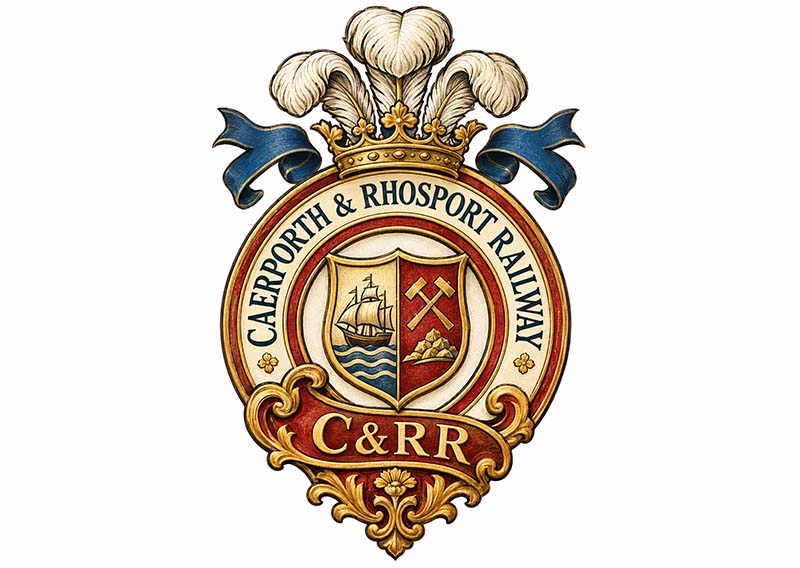
Caerporth & Rhosport Railway Motif
The Man Who Brought Them Together
One of the principal figures behind the merger was Arthur William Trevellick, a respected agricultural landowner and director of the Northern Estates Railway. Trevellick understood the difficulties faced by the farming communities of northern Sorcha. Although the Northern Estates Railway had brought considerable improvements to agricultural transport, its relatively modest resources restricted further expansion. The company nevertheless possessed something of enormous value: an established railway corridor extending north-east from Caerporth, together with land agreements, rights of way and relationships with the estate owners whose properties lay along the proposed route. These advantages had taken years to establish and would have been expensive for a new railway company to obtain independently. Trevellick recognised that the neighbouring railways possessed complementary strengths. The Caerporth Sugar Cane Ltd Railway had substantial financial backing, powerful locomotives, established industrial facilities and a dependable volume of freight. The Penrath & Caerporth Railway had already constructed a significant section of its intended route, but had exhausted much of its capital before completing the connection to Caerporth. What one railway lacked, another could provide. Trevellick became a leading advocate of consolidation, arguing that the three companies would achieve far more as a single undertaking than they could through continued independent operation. His reputation among the northern landowners, together with his relative independence from the powerful sugar and fishing interests, made him a suitable figure to lead the negotiations. When the Caerporth & Rhosport Railway was established in 1877, Trevellick became its first chairman.
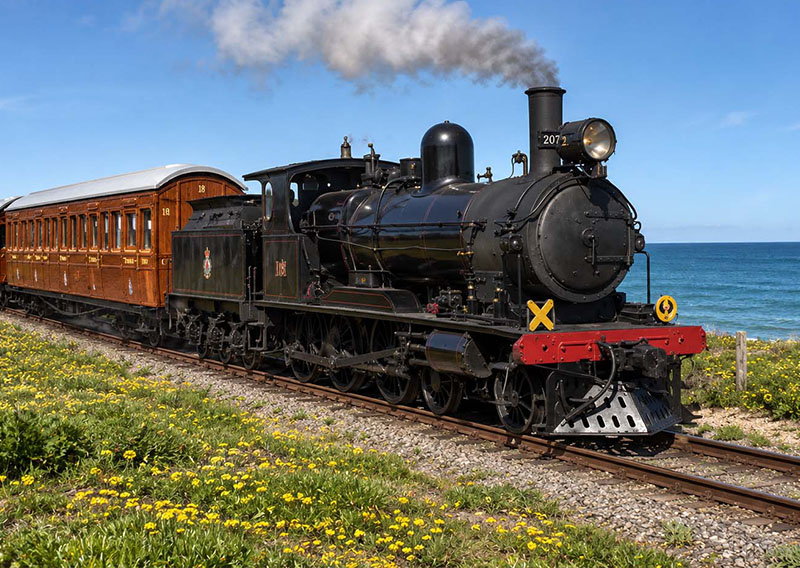
Heading along the north coast towards Rhosport
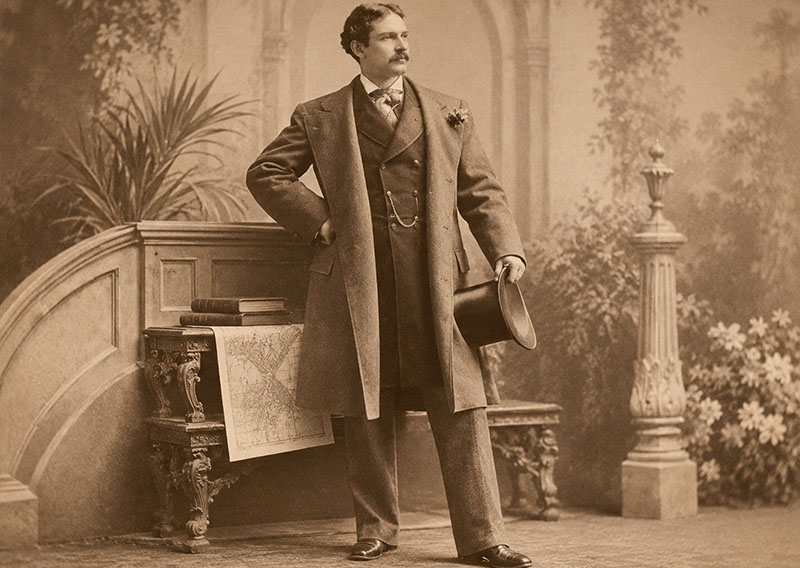
Arthur William Trevellick - C&RR Chairman
A Marriage of Commercial Interests
The negotiations were not necessarily straightforward. The Caerporth Sugar Cane Ltd Railway was by far the wealthiest of the three undertakings. Its backers had invested heavily in locomotives, rolling stock and industrial infrastructure, and the company's railway interests had expanded considerably since 1864. For these investors, the attraction of consolidation was the opportunity to move beyond the immediate sugar-producing districts and participate in a much larger transport business. The Northern Estates Railway brought a different form of wealth. Its existing formation and previously negotiated land rights offered a means of extending the railway through countryside that might otherwise have required years of surveying, negotiation and parliamentary arrangements. The Penrath & Caerporth Railway contributed the ambitions of the fishing merchants. Their railway had opened its first operational section in 1875, but construction had stopped before the line could reach the existing railway network towards Caerporth. The result had been deeply frustrating. Penrath possessed a railway, but not yet the dependable connection to the island's principal port that its promoters had originally envisaged. The new C&RR promised to resolve that difficulty. The three interests therefore entered the merger with different expectations: the agricultural community wanted reliable access to markets, the sugar industry sought greater carrying capacity and commercial opportunities, and the Penrath merchants wanted their unfinished railway completed. The success of the undertaking would depend upon balancing all three.
The Question of Caerporth Harbour
There was, however, one important railway that remained outside the consolidation. The Caerporth Harbour Board Railway had been established in 1864, partly in response to fears that the wealthy sugar company might acquire excessive influence over access to Caerporth's docks. Its jointly governed arrangements ensured that merchants, industrial operators and railway companies could reach the harbour under agreed regulations and charges, without any single undertaking enjoying exclusive control. The formation of the C&RR did not alter this position. Although the new railway inherited the sugar company's substantial traffic and commercial influence, the Harbour Board Railway retained its independence. This distinction was important. The C&RR could develop an extensive railway network across northern Sorcha, but the docks and their connecting railway remained available to the wider trading community, including the Rhosper Estates Tramway and other interests of central Sorcha. For the merchants of Penrath and the agricultural interests represented by Trevellick, this neutral arrangement provided reassurance that the new railway would not simply become an extension of the sugar company's commercial empire. The Harbour Board Railway would remain independent long after the C&RR itself had disappeared.
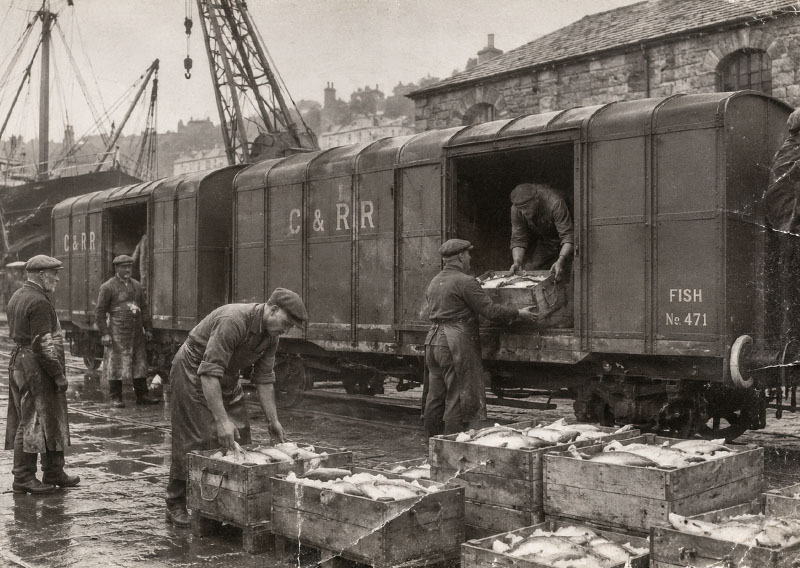
Caerporth docks with a fresh delivery from Penrath c1880
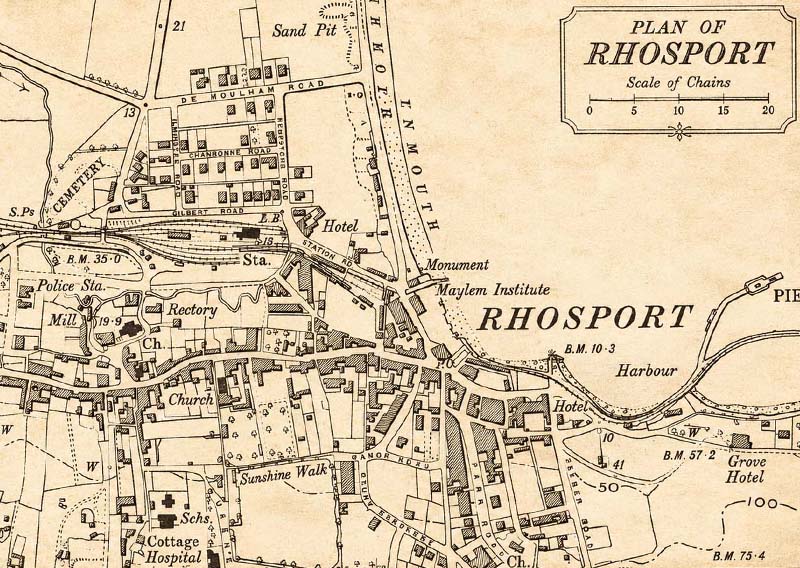
Rhosport 1878
Building the Northern Railway
With the merger completed, the directors turned their attention to the unfinished railway network. The task was considerable, but the new company enjoyed advantages that few railway promoters could have hoped to possess. Much of the route already existed. The former Northern Estates Railway provided an established line running north-east from Caerporth, together with agricultural branches and useful land agreements. The Penrath & Caerporth Railway had constructed a section of railway running inland from Penrath, but had stopped short of joining the Northern Estates route. One of the new company's first priorities was to complete this missing connection, allowing trains to travel directly between Penrath and Caerporth. The financial resources and equipment inherited from the sugar railway were particularly valuable in carrying out this work. Beyond Penrath, the directors planned an entirely new extension towards Rhosport, following the comparatively gentle countryside of northern Sorcha. Unlike the mountainous landscapes of Glynoch and Rathmor, much of Sorcha offered relatively straightforward conditions for railway construction. Although drainage, earthworks and occasional crossings still required careful engineering, the route avoided the great viaducts, steep gradients and extensive tunnelling associated with railway building on the neighbouring islands. Perhaps more importantly, the existing railways had already secured many of the land rights and transport corridors needed for the undertaking. This combination of established infrastructure, available capital and favourable terrain enabled construction to proceed at remarkable speed. By 1878, the railway was ready to reach Rhosport.
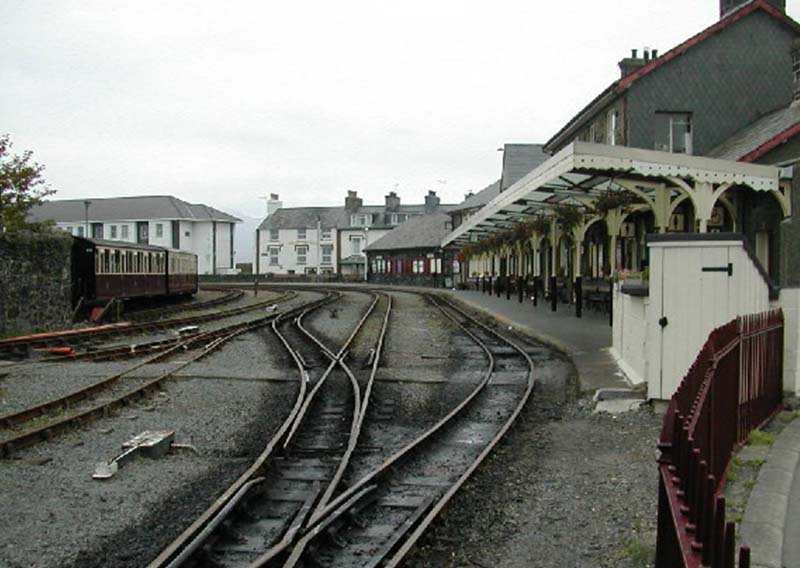
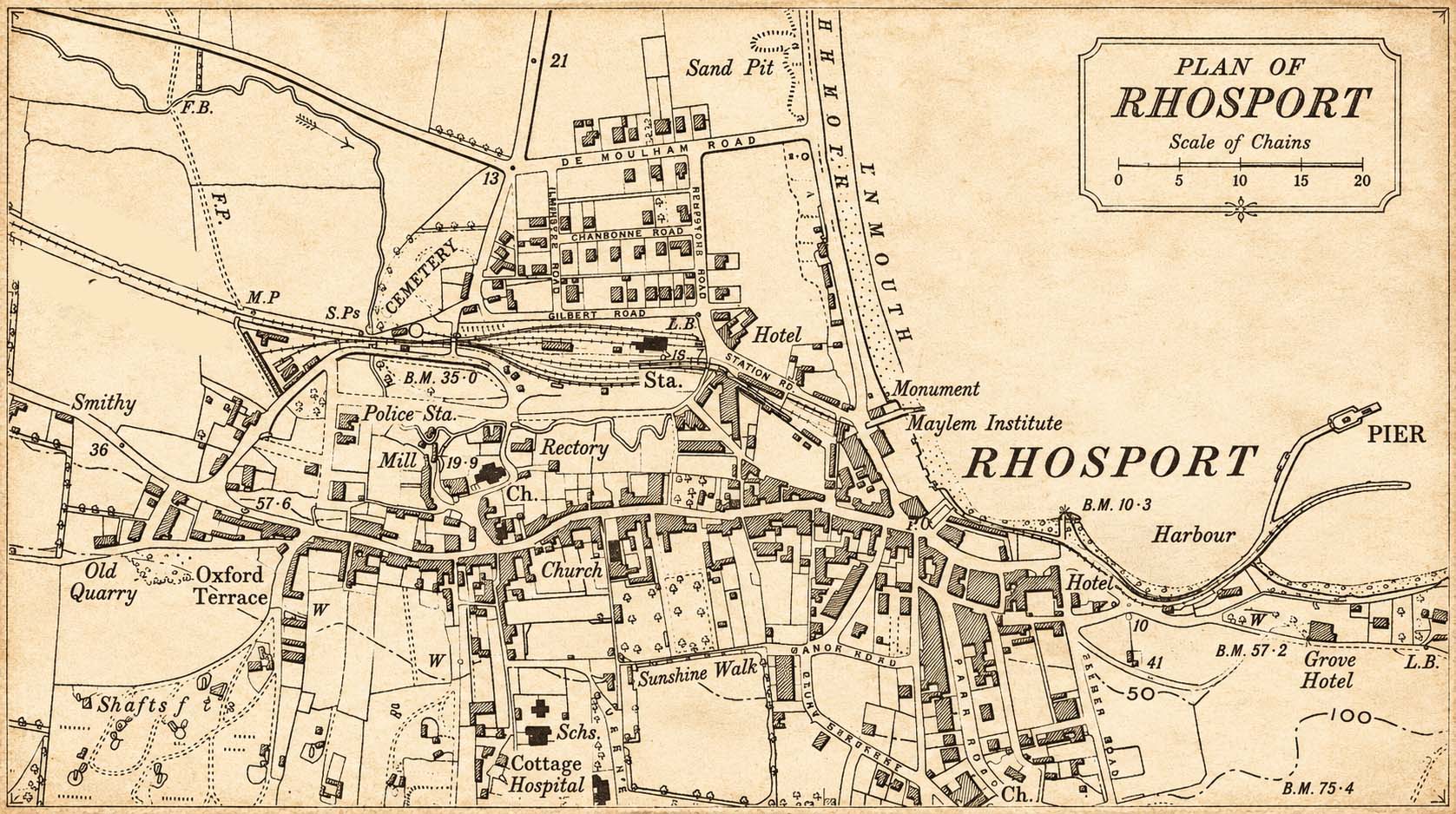
Rhosport Station
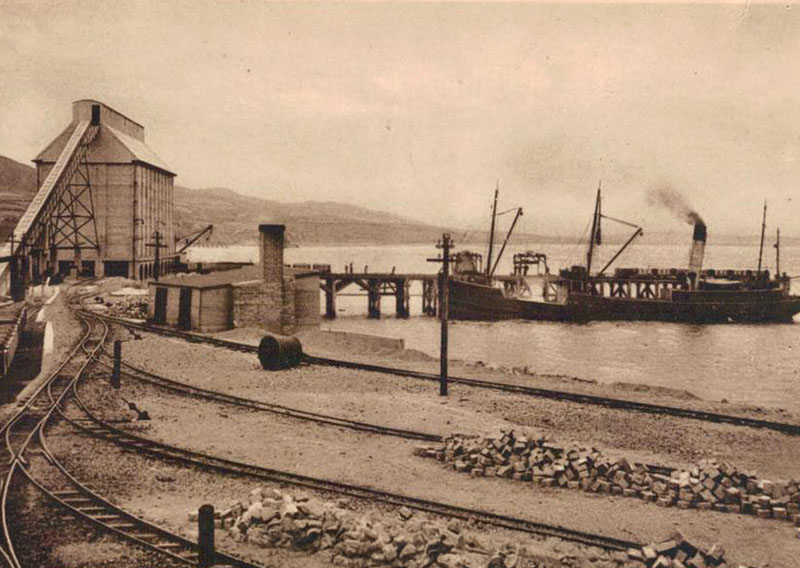
Sand Wharf – Rhosport c1900
1878: Destination Rhosport!
The arrival of the Caerporth & Rhosport Railway at Rhosport in 1878 represented an extraordinary achievement for a company formed only the previous year. For the first time, a continuous railway connected Caerporth, Penrath and Rhosport, bringing together the agricultural, industrial and maritime districts of northern Sorcha. The company celebrated its achievement with the construction of a splendid new station close to the centre of Rhosport. Situated conveniently near the harbour, the terminus provided easy access for passengers visiting the town while placing the railway within reach of its waterfront businesses and commercial facilities. It was a fitting conclusion to the new company's principal construction programme. The station also demonstrated that the directors intended the C&RR to be something more than a collection of industrial sidings and agricultural branches. Rhosport was provided with a substantial public railway terminus, reflecting the company's confidence in the future growth of passenger and merchandise traffic. For Penrath, the opening was equally significant. The fishing merchants who had struggled to finance their own railway could now send their catches south towards Caerporth or onwards towards Rhosport. The town was no longer the isolated end of an unfinished railway, but an important intermediate station on the northern route. The original ambitions of the Penrath & Caerporth Railway had finally been realised, and greatly exceeded.
A Railway of Many Trades
The C&RR inherited an unusually varied collection of railway traffic. Agriculture remained important throughout the northern estates. Cattle, dairy produce, butter, cheese and general farm merchandise travelled towards the markets and harbour facilities of Caerporth, while agricultural supplies and other goods moved in the opposite direction. The former sugar railway continued to handle substantial industrial traffic. Cane from the surrounding plantations was carried towards processing facilities, while finished sugar, rum-related goods, fuel, machinery and other supplies formed an important part of the company's merchandise business. Many of the plantation lines retained their specialised industrial character, even though they now formed part of a much larger railway undertaking. Penrath introduced another distinctive traffic: fish. The fishing merchants depended upon speed and reliable connections, and the railway offered opportunities to move fresh catches to markets that had previously been difficult to reach by road or coastal shipping. Passenger traffic also became increasingly important. Where the earliest predecessor railways had been concerned primarily with agricultural and industrial transport, the C&RR now linked several significant settlements and provided a practical means of travelling between them. The company's rolling stock consequently reflected its varied origins. Heavy industrial locomotives inherited from the sugar railway worked alongside equipment suited to agricultural and general merchandise traffic, while the growing passenger business demanded more suitable accommodation and regular services. The task of bringing these different operations under common management was an important part of the company's short but influential existence. The C&RR adopted a practical and dignified appearance for its locomotives and passenger stock. Locomotives carried a black livery, well suited to the hard-working character of the railway, while passenger carriages displayed the natural warmth of varnished teak. Together they gave the new company a recognisable identity, distinguishing its public services from the varied industrial equipment inherited from its predecessors.
Beyond Rhosport
Although the completion of the railway to Rhosport in 1878 fulfilled the principal ambition of the company's founders, the directors were already aware that the possibilities of railway development extended much further. Beyond Rhosport lay the eastern districts of Sorcha and the growing commercial centre of Glenmara. In the same year that the C&RR reached Rhosport, another railway undertaking was established with the intention of connecting Glenmara to the developing northern railway network. The Glenmara & Rhosport Railway began its construction from Glenmara, working towards Rhosport from the opposite direction. Its promoters faced difficulties of their own, and two further years would pass before their railway reached Rhosport in 1880. The existence of this second undertaking raised the prospect of something considerably more ambitious than either company had originally planned: a continuous railway connecting the northern districts of Sorcha from Caerporth to Glenmara. The commercial opportunities were substantial, but the arrival of a second railway also raised questions about interchange, station accommodation and the future management of the route. These matters would become increasingly important as the two companies considered their relationship.
1881: The Great Sorcha Railway
The Caerporth & Rhosport Railway had existed independently for only four years, yet its achievements were considerable. It had united three previously separate undertakings, completed the unfinished connection to Penrath, constructed the railway onwards to Rhosport and established a coherent public railway serving much of northern Sorcha. Its commercial success demonstrated the advantages of cooperation between agricultural, industrial and maritime interests. The opening of the Glenmara & Rhosport Railway connection in 1880 brought the possibility of a still greater undertaking. In 1881, the two companies combined to form the Great Sorcha Railway, bringing the northern railway route under a single organisation. For Arthur William Trevellick and his fellow directors, the merger marked the culmination of the ambitions that had brought the three original companies together in 1877. The Caerporth & Rhosport Railway disappeared as an independent undertaking, but the railway it had created became the western foundation of Sorcha's principal northern route. Its history had been brief, but its influence would endure through the Great Sorcha Railway, the Sorcha Grand Junction Railway, the Great Western Railway and, eventually, the Glynoch & Rathmor Railway.
But before we can explore the GSR in any detail, we need to understand the story of the The Glenmara & Rhosport Railway (1878) — the railway that approached Rhosport from the opposite direction.
History
Railways
About the C&RR
C&RR Maps
Caerporth & Rhosport Railway
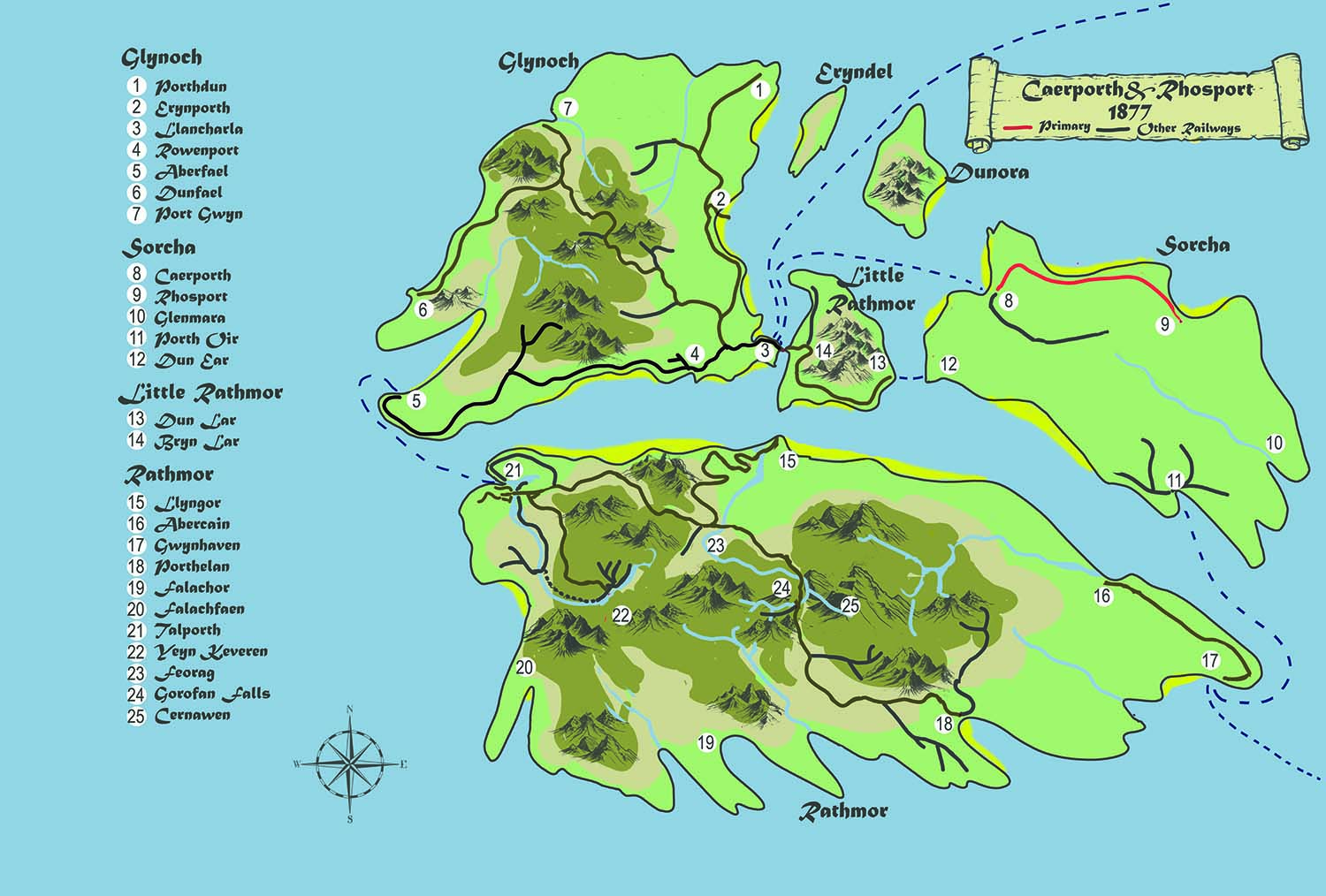
Rhosport Station
Related Articles....
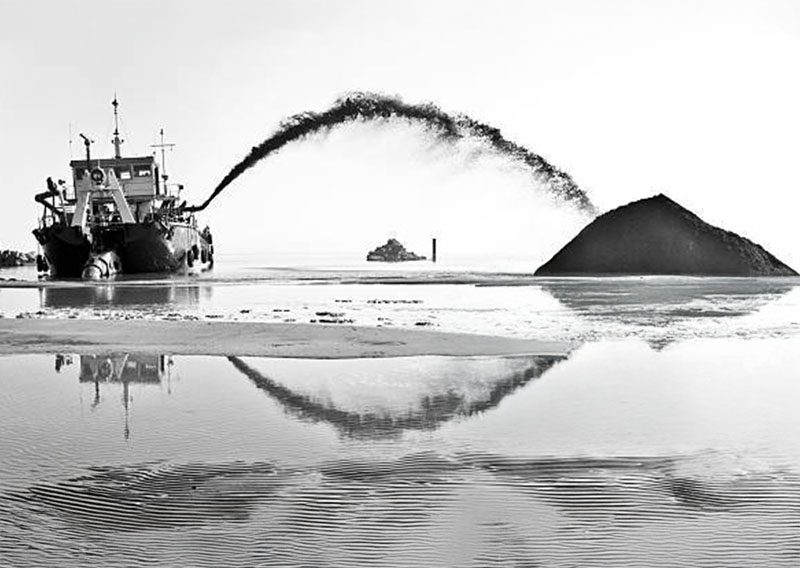
Gravel and Sand Extraction on Sorcha’s North Coast
The sweeping northern coastline of Sorcha is shaped by a […] ...
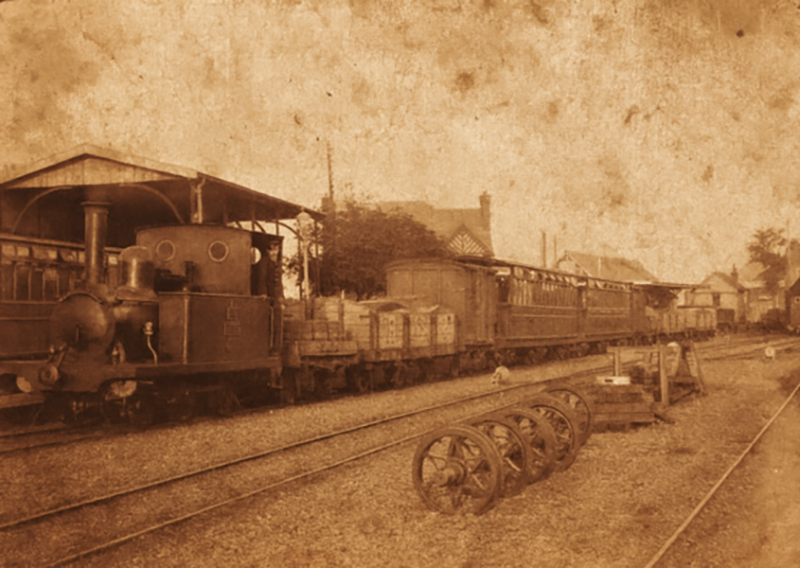
1852: Early Railways of Caerporth
Various independent industrial tramways primarily for moving goods from inland […] ...
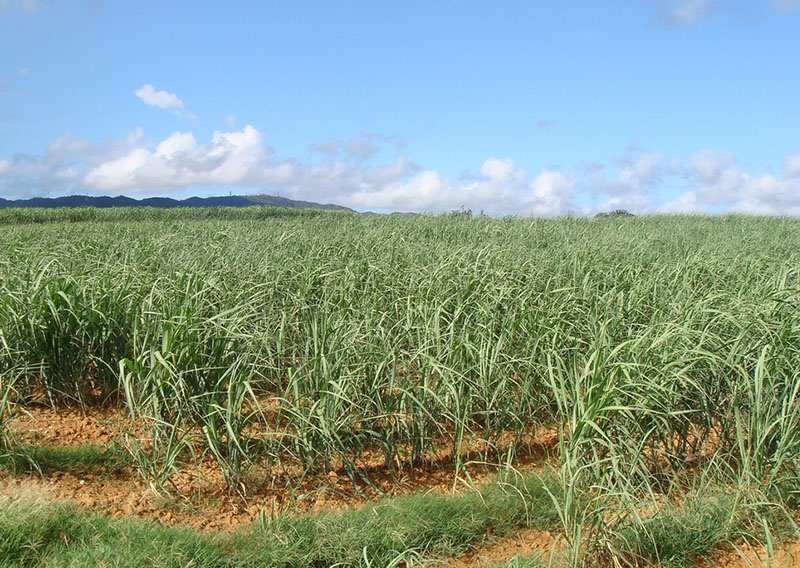
Sugar Cane – The sweet surprise of Sorcha
Introduced in the late 18th century, Sorcha’s warm southern plains […] ...
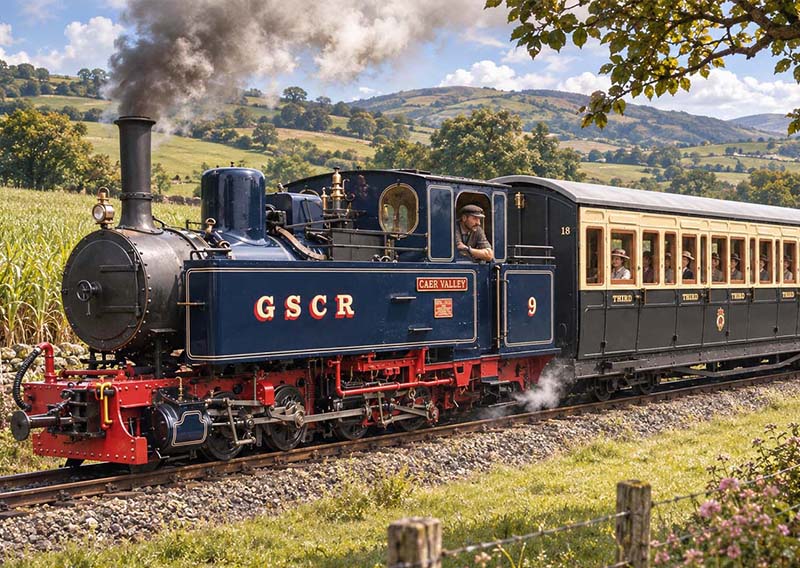
1879: The Grand Sorcha Central Railway
The railway that united central Sorcha and challenged the growing […] ...
Explore More Railways of Glynoch and Rathmor....


0 Comments