


1879: The Grand Sorcha Central Railway
The railway that united central Sorcha and challenged the growing power of the north.
History

Railways

About the GSCR
GSCR Maps
The Grand Sorcha Central Railway (GSCR)
At a glance:
Established: 1879
Island: Sorcha
Principal promoter: Lord Joseph Rhosper
Principal route: Caerporth–Porth Oir
Predecessor railways: Rhosper Estate Tramways, West Cane Estate Railway, Caer Valley Tramway, Porth Oir Agricultural Tramway, Golden Orchard Tramway
Other inherited lines: Smaller agricultural and estate feeder tramways
Through route completed: Late 1880
Principal traffic: Sugar cane, grain, fruit, cider, agricultural produce, general merchandise and passengers
Locomotive livery: Caerwyn Blue
Carriage livery: Cream upper panels, charcoal lower panels
Principal rival: Caerporth & Rhosport Railway; subsequently Great Sorcha Railway
Later ownership: Great Western Railway, 1923; Glynoch & Rathmor Railway, 1939
Rising to the challenge
By the late 1870s, the railway map of Sorcha was changing rapidly. What had begun as a scattered collection of estate tramways, agricultural wagon roads and industrial railways was developing into a network of increasingly ambitious public undertakings. Nowhere was this transformation more apparent than in the northern districts, where powerful commercial interests were combining their resources to establish railways capable of carrying goods and passengers over considerably greater distances. For Lord Joseph Rhosper, one of the most influential landowners in western Sorcha, these developments presented both a threat and an opportunity. The Rhosper family's extensive estates had long depended upon a network of private tramways to move sugar cane and other agricultural produce towards Caerporth. Yet these isolated systems were becoming increasingly inadequate when compared with the coordinated railway development taking place to the north. Lord Rhosper recognised that the future belonged not to individual estate railways, but to larger undertakings capable of connecting towns, industries, harbours and agricultural districts. His answer was the Grand Sorcha Central Railway (GSCR), established in 1879 through the consolidation of existing railway interests around Caerporth and Porth Oir. Within two years, the company had transformed a collection of agricultural tramways into a continuous railway across the fertile heart of Sorcha, linking the island's western and eastern commercial centres. The Grand Sorcha Central Railway would become one of the island's most important railway companies, a formidable rival to the northern interests and a central figure in the railway politics that shaped Sorcha for the next four decades.
GSCR Timeline
Early Caerporth Railways
A trio of estate railways in central Sorcha
Early Porth Oir Railways
Private and co-operative tramways
Grand Sorcha Central Railway
Great Western Railway
Glynoch & Rathmor Rly
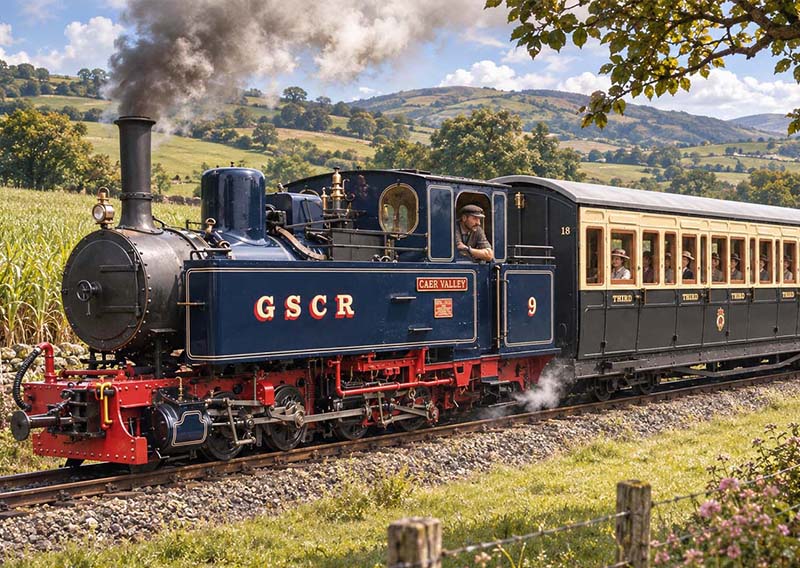
Passenger service on the Grand Sorcha Central
Origins: The Railway That Lord Rhosper Could Not Afford to Ignore
By the closing years of the 1870s, the balance of commercial influence in western Sorcha was beginning to change. For generations, the Rhosper family had been among the island's most powerful landowning interests. Their extensive agricultural estates, prosperous sugar plantations and established network of private tramways had made them a formidable presence in the economy of central Sorcha. Yet they were not without rivals. The Caerporth Sugar Cane Ltd Railway had emerged as an increasingly ambitious competitor. No longer content merely to transport cane between plantations, processing works and harbour, its proprietors had begun to pursue wider railway opportunities, establishing commercial relationships and collaborating with other interests across northern Sorcha. The formation of the Caerporth & Rhosport Railway in 1877 was a particularly significant development. By combining the resources of several previously independent undertakings, the northern promoters had demonstrated that cooperation could achieve what isolated railways could not. Lord Joseph Rhosper watched these developments with growing concern. His family's tramways remained valuable, but they were fragmented, serving individual estates and agricultural districts rather than forming a coherent public railway. If the northern interests continued to expand while central Sorcha remained divided, the Rhosper estates risked losing both commercial opportunities and political influence. The answer, Lord Rhosper concluded, was a railway of considerably greater ambition. To the east, around Porth Oir, a collection of agricultural tramways already served prosperous farms, orchards and the harbour. Although these undertakings had developed independently of the Rhosper estates, they offered the foundations of a continuous railway across the fertile heart of Sorcha. By bringing the western and eastern systems together, Lord Rhosper could create something the northern companies had yet to achieve: a direct east-west coast to coast railway connection across the island of Sorcha, linking two important commercial centres and providing an alternative route for the island's agricultural trade. In 1879, these ambitions took corporate form with the establishment of the Grand Sorcha Central Railway. It was a railway born as much from rivalry and determination as from engineering necessity.
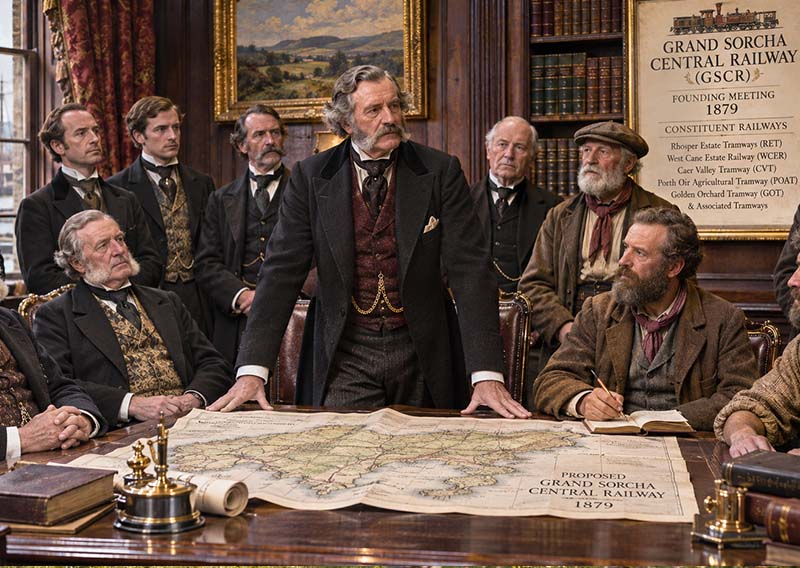
Lord Rhosper at the initial meeting of the GSCR
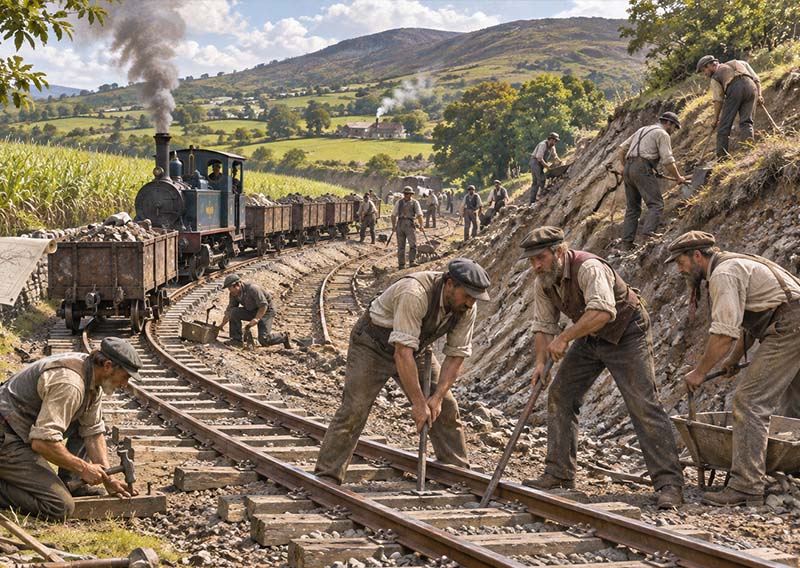
Upgrading the rails in the Caer Valley
The Five Railways That Built the Foundations
The Grand Sorcha Central Railway did not begin with an entirely new railway formation. Its greatest advantage was that much of the groundwork had already been undertaken by five earlier tramways. Three originated in the agricultural districts around Caerporth, while two served the fertile countryside surrounding Porth Oir.
The Caerporth Railways
1852: Rhosper Estate Tramways
The earliest substantial system was the Rhosper Estate Tramways, established around 1852 to serve the family's extensive agricultural holdings. Rather than a single continuous railway, the RET consisted of estate tramways carrying sugar cane and other produce towards processing facilities and the Caerporth area. Its principal purpose was to reduce dependence upon road transport and improve the efficiency of the Rhosper estates. Passenger services played no part in its original operation.
1856: West Cane Estate Railway
Established around 1856, the West Cane Estate Railway served sugar-producing districts in western and central Sorcha. Although independent of the Rhosper Estate Tramways, it performed a similar function, transporting cane from plantations while carrying equipment and estate supplies in the opposite direction. Its established routes and agricultural traffic made it a valuable addition to the later consolidation.
1858: Caer Valley Tramway
The Caer Valley Tramway followed around 1858, taking advantage of the natural geography of the valley to establish an economical route through central Sorcha. Its importance extended beyond the produce it carried. The Caer Valley demonstrated how the island's natural landscape could provide a practical railway corridor, offering useful formation and access for the more ambitious cross-island railway that would follow.
The Porth Oir Railways
1860: Porth Oir Agricultural Tramway
The Porth Oir Agricultural Tramway had a markedly different origin. Rather than being controlled by a wealthy landowner, it was established as a cooperative enterprise by farmers, merchants and warehouse operators who pooled their resources to provide railway transport between agricultural properties and Porth Oir harbour. Horse-drawn wagons carried grain, vegetables, fruit and other produce towards the quays, returning with supplies arriving by sea. Its cooperative ownership would make its incorporation into the GSCR rather different from the acquisition of an estate railway.
1863: Golden Orchard Tramway
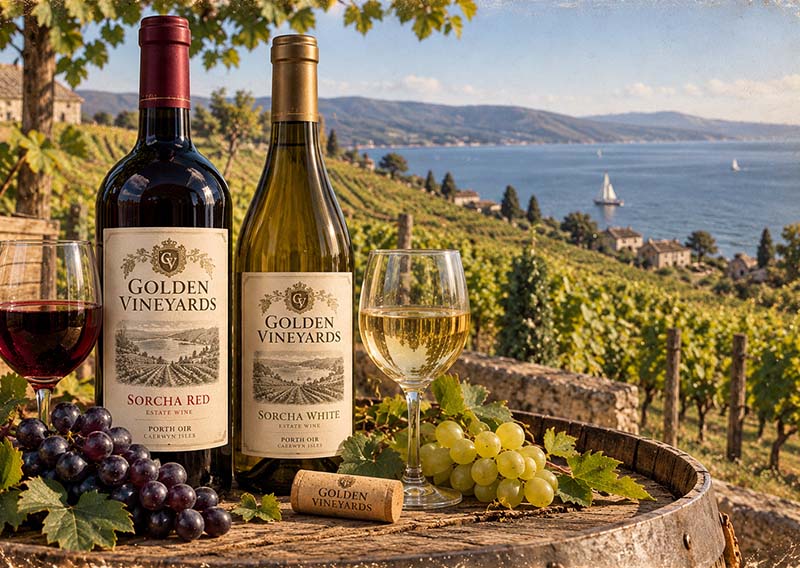
The Golden Orchard Tramway was established by Golden Orchards, an important fruit-growing and cider-making business. The line connected orchards, pressing facilities and stores with Porth Oir harbour, carrying fruit, cider barrels, packaging materials and agricultural supplies. As the business developed, Golden Orchards diversified into grape cultivation and winemaking under the name Golden Vineyards. The vineyards followed the tramway's establishment, adding another source of traffic to an already prosperous agricultural undertaking. Beyond these five principal systems, smaller farm tramroads connected fields, barns, presses and loading points to the established railways. Together, they provided a network of useful but fragmented routes upon which the Grand Sorcha Central Railway could build.
1879: Five Railways Become One
The formation of the Grand Sorcha Central Railway represented a significant change in the organisation of Sorcha's railways. For the first time, railway interests stretching from Caerporth towards Porth Oir were brought together under a single company with the ambition and resources to establish a continuous cross-island route. Lord Joseph Rhosper was the driving influence behind the scheme, but the undertaking necessarily involved interests beyond his family's estates. The Porth Oir Agricultural Tramway, in particular, represented a cooperative of independent farmers and merchants whose priorities were not necessarily identical to those of the Rhosper family. For these smaller producers, the attraction of the new railway lay in access to wider markets and a more dependable transport network. For Lord Rhosper, the benefits were considerably greater. The GSCR offered the opportunity to strengthen his family's commercial position, secure a substantial share of the island's agricultural traffic and establish a railway capable of challenging the increasingly powerful northern interests. The consolidation took place during 1879–80, bringing together the five principal predecessor systems and a number of smaller agricultural connections. But forming a railway company on paper was only the beginning. The inherited tramways had been built for different purposes, under different ownership arrangements and with varying standards of construction and operation. To create a genuine public railway, the new company would have to transform this collection of local systems into a coordinated transport network.
1879–1880: Building the Central Route
The most important task facing the newly established GSCR was the completion of the railway between Caerporth and Porth Oir. The existing tramways offered a considerable advantage. Established formations, land rights and agricultural connections reduced the amount of entirely new railway construction required.
Nevertheless, the inherited routes did not form a continuous public railway. Some served individual plantations, while others connected farms with nearby loading places or harbours. Their alignments reflected local commercial needs rather than the requirements of a railway intended to carry through trains across the island. The GSCR therefore embarked upon a programme of improvements, connections and extensions. Existing formations were adapted where suitable, missing links were constructed and the various inherited lines were progressively brought together into a more coherent system. The Caer Valley provided an important natural corridor through central Sorcha, while the agricultural districts towards Porth Oir offered established traffic and opportunities for further development. The work was more than a matter of joining two sets of rails. A continuous railway required dependable operating arrangements, suitable passing and loading facilities, and a standard of permanent way capable of handling traffic considerably heavier and more varied than that carried by the earliest estate tramways. The company also had to accommodate the requirements of agricultural businesses that continued to depend upon local railway connections. The original purpose of these tramways could not simply be abandoned. Sugar cane still had to reach processing facilities, fruit and grain still needed to reach the harbour, and supplies still had to be distributed to farms and estates. The GSCR's challenge was to preserve these valuable local functions while creating a railway capable of operating over much greater distances. By late 1880, the principal objective had been achieved. A continuous railway now linked Caerporth with Porth Oir. What had once been separate agricultural systems at opposite ends of the island had become a major cross-island transport undertaking
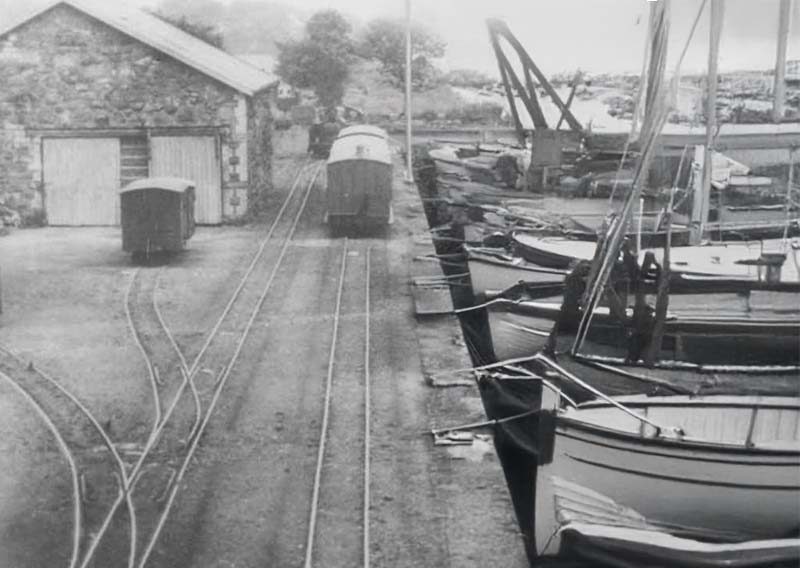
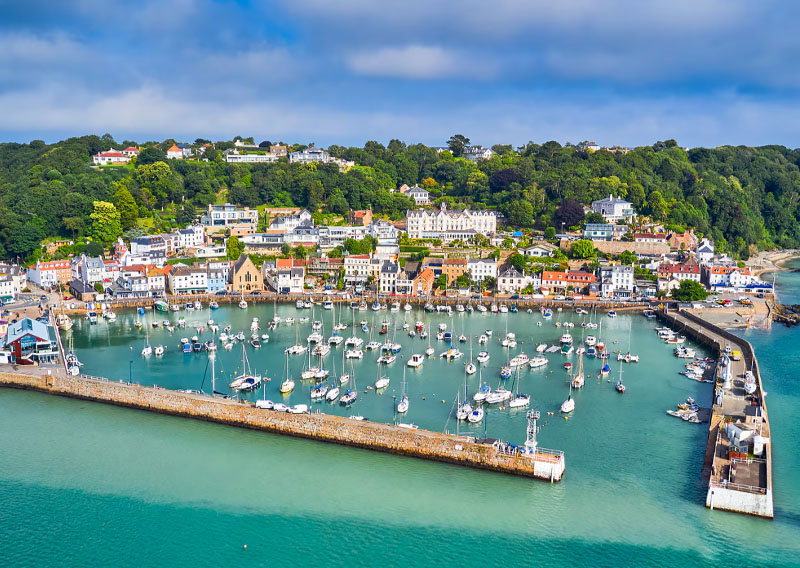
Porth Oir quayside c1910
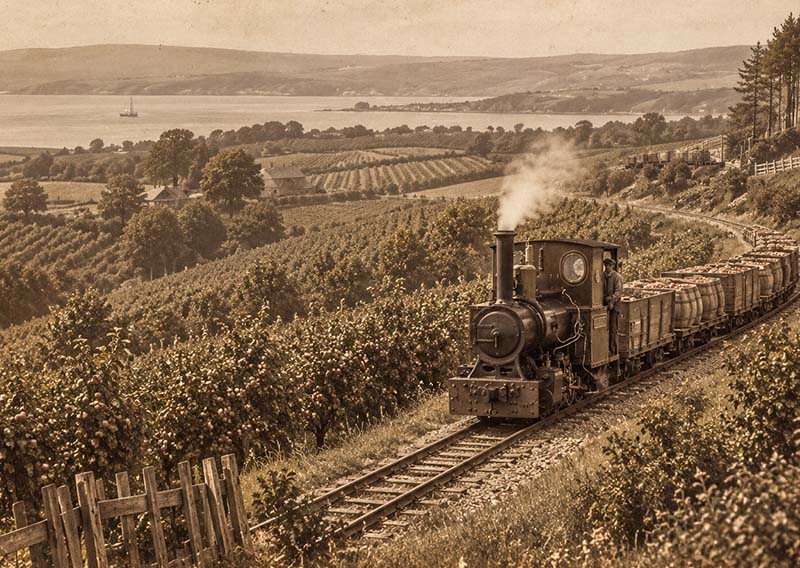
Golden Orchards Co Railway
1880: From Coast to Coast
The completion of the Caerporth–Porth Oir route in late 1880 marked a turning point in Sorcha's railway history. For the first time, the agricultural districts of central Sorcha possessed a continuous railway connection between the island's western and eastern commercial centres. The significance was considerable. Previously, many agricultural producers had depended upon local tramways feeding individual harbours, with onward journeys requiring coastal shipping or road transport. The GSCR created opportunities for goods to travel directly between districts that had previously been separated by difficult and expensive transport arrangements. Sugar and other produce from the Caerporth hinterland could reach eastern markets, while grain, fruit, cider and agricultural merchandise from Porth Oir could travel westwards. The railway also provided a means of distributing supplies and manufactured goods inland from either coast. For merchants and agricultural businesses, the new line offered greater flexibility in choosing markets, ports and commercial partners. For Lord Rhosper, it represented something equally important: a demonstration that central Sorcha could match the ambition of the northern railway interests. The railway was no longer merely a collection of private agricultural lines. It was a substantial public undertaking with a commercial future extending far beyond the boundaries of the estates from which it had emerged.
From Agricultural Wagons to Passenger Trains
The early tramways incorporated into the GSCR had been constructed almost entirely for goods traffic. Their rolling stock consisted largely of simple agricultural wagons, cane vehicles and other equipment suited to the movement of crops and estate supplies. Passenger facilities had been unnecessary, and horse traction remained an important feature of several early operations. The creation of the GSCR changed the character of the railway. A continuous route between Caerporth and Porth Oir offered opportunities not only for agricultural freight but also for passenger journeys between towns, villages and the countryside of central Sorcha. As the railway developed, passenger services became an increasingly important part of its business. The company's locomotives carried a distinctive Caerwyn Blue livery, while its passenger carriages were finished in cream above charcoal, creating an appearance readily distinguishable from the stock of competing railway companies. The contrast between the GSCR's passenger trains and the simple agricultural vehicles of its predecessors illustrated how far the central railway system had progressed. Nevertheless, goods traffic remained fundamental to the company's prosperity. Sugar cane, grain, fruit, cider, agricultural supplies and general merchandise continued to provide the commercial foundation of the railway. The GSCR had become a public railway, but it had not forgotten the agricultural economy that made its existence possible.
Two Railways, Two Ambitions
The establishment of the GSCR did not bring unity to Sorcha's railway interests. Instead, it helped create the conditions for a rivalry that would dominate the island's railway affairs for decades. The Caerporth & Rhosport Railway had already established an increasingly important northern route, drawing together agricultural, industrial and maritime interests. In 1881, its amalgamation with the Glenmara & Rhosport Railway created the Great Sorcha Railway (GSR). Sorcha now possessed two substantial railway systems with different geographical ambitions and competing commercial interests. The Great Sorcha Railway served the northern corridor between Caerporth, Rhosport and Glenmara. The Grand Sorcha Central Railway connected Caerporth with Porth Oir through the agricultural heart of the island. Both companies had important connections with Caerporth, both depended upon the movement of agricultural and commercial traffic, and both sought to increase their influence over the island's developing economy. The rivalry was rooted in the earlier competition between the Rhosper family and the proprietors of the Caerporth Sugar Cane Ltd Railway. But it had now developed into something much larger. Where once the competition had concerned estates, sugar traffic and access to individual markets, it increasingly involved complete railway systems. The GSCR and GSR represented two competing visions of how Sorcha's railway network should develop. Their relationship would be characterised by commercial rivalry, political influence and the continuing struggle to secure valuable traffic. Yet competition did not necessarily mean that every railway facility could be controlled by one company or the other. At Caerporth, the independent Caerporth Harbour Board Railway continued to provide neutral access to the docks under agreed arrangements. Neither the GSCR nor its northern rival could claim automatic control of the harbour merely by virtue of its growing railway network. That independence remained an important feature of Caerporth's commercial life.
The Rhosper Years: Influence and Ambition
Lord Joseph Rhosper's importance to the Grand Sorcha Central Railway extended beyond its foundation. The company was an expression of the family's wider commercial ambitions and its determination to retain a leading position in the affairs of Sorcha. The railway connected extensive agricultural interests with important commercial centres and provided the Rhosper family with influence over one of the island's principal transport corridors. Its success also demonstrated the advantages of bringing previously separate undertakings together. The agricultural tramways of central Sorcha had been valuable individually, but their potential had been restricted by fragmented ownership and limited connections. Under the GSCR, they became part of a railway capable of serving a much wider economy. The company's continued development took place against the background of increasing competition from the northern system. Every improvement in railway connections, freight facilities or passenger services had implications beyond the immediate district served. The GSCR was not simply carrying the produce of central Sorcha. It was helping determine which commercial interests would exercise the greatest influence over the island's future.
1890: A New Generation
The death of Lord Joseph Rhosper in 1890 marked the end of the railway's founding era. His successor, Jacob Rhosper, inherited a family interest closely associated with the GSCR and the wider commercial affairs of Sorcha. By this time, the railway was no longer the new undertaking that Lord Joseph had established in response to northern expansion. It had become an established part of the island's transport network, with a growing passenger business, substantial agricultural traffic and a prominent position in Sorcha's railway politics. Jacob Rhosper's generation would face a different challenge. The question was no longer whether central Sorcha could support a substantial railway. It was how the GSCR could preserve and strengthen its position in an increasingly competitive railway landscape.
The Railway Rivalry Intensifies
The closing years of the nineteenth century brought further changes to Sorcha's railway organisation, as commercial rivalry increasingly influenced the development of the island's railway network. In 1896, the Great Sorcha Railway combined with the Dun Ear Railway to form the Sorcha Grand Junction Railway (SGJR). The merger was far more than a simple expansion of railway territory. For some years, the GSR had grown increasingly suspicious of the Rhosper family's considerable influence in Caerporth, particularly where access to the harbour was concerned. Although the Caerporth Harbour Board Railway remained independent, the northern company was reluctant to see its commercial fortunes depend upon facilities in a town where its principal rival exercised such influence. The acquisition of the Dun Ear route offered an attractive alternative. By establishing a direct connection to the docks at Dun Ear, the northern railway interests could develop their own maritime outlet, reducing their dependence upon Caerporth and strengthening their position in the increasingly competitive railway trade. There was, however, a complication. On the outskirts of Caerporth, the routes of the two competing railway systems crossed one another at rail level. What might ordinarily have been a straightforward operational arrangement became a source of considerable friction, with disputes over signalling, train movements and priority providing ample opportunities for obstruction. One particularly notorious incident involved a GSCR locomotive left standing across the junction for several hours, preventing a northern railway dairy train from continuing towards Dun Ear. The delayed train was carrying fresh milk intended for shipment from the port, and the resulting disruption provoked furious complaints from merchants and railway officials alike. Whether the obstruction was genuinely unavoidable or a deliberate act of railway mischief became a matter of considerable argument between the two companies. Such incidents were symptomatic of a rivalry that had begun decades earlier between the Rhosper estates and the proprietors of the Caerporth Sugar Cane Ltd Railway. What had once been competition between agricultural and industrial interests had developed into a struggle between two substantial railway organisations, each possessing established routes, valuable commercial relationships and considerable political influence. The years that followed became associated with the wider 'Sorcha Railway Wars', as both companies sought to defend their territories, attract profitable traffic and frustrate the ambitions of their competitors. The origins of these disputes could be traced to the railway consolidations of the 1870s, when northern expansion prompted Lord Joseph Rhosper to establish the Grand Sorcha Central Railway. Each subsequent amalgamation altered the balance of power, and by the beginning of the twentieth century, the rivalry between Sorcha's two great railway systems had become one of the defining features of the island's transport history.
1923: The End of Independence
The Grand Sorcha Central Railway remained an independent company for more than four decades, the longest of any of the early railway companies on all of the islands. During that time, it had transformed the transport economy of central Sorcha, linking agricultural districts and commercial centres that had previously depended upon separate local tramways and coastal shipping. Its original purpose had been to protect and strengthen the interests of the Rhosper family in the face of growing competition. But the railway had developed into something far greater than an estate enterprise. It carried passengers, connected communities and provided an essential route for the movement of agricultural produce and general merchandise. The railway's independent existence ended with the Grouping of 1923. On 1st January 1923, the Grand Sorcha Central Railway became part of the Great Western Railway. Its principal competitor, the Sorcha Grand Junction Railway, was also absorbed into the GWR. For the first time, the two great competing railway systems of Sorcha came under common ownership. The separate company identities that had dominated railway affairs since the nineteenth century disappeared, although their routes, infrastructure and commercial importance remained. The rivalry between the GSCR and the northern railway interests had helped shape Sorcha's transport network for generations. Grouping brought that era of independent railway competition to an end.
Legacy: What Happened Next?
The Grand Sorcha Central Railway left an inheritance far greater than the railway between Caerporth and Porth Oir. Its formation had demonstrated how a collection of agricultural tramways, each built to serve a particular estate, business or community, could be transformed into a substantial public railway. The Rhosper Estate Tramways, West Cane Estate Railway and Caer Valley Tramway had provided the foundations in western and central Sorcha. The Porth Oir Agricultural Tramway, Golden Orchard Tramway and smaller agricultural feeders had contributed the eastern connections. Together, these undertakings became a railway serving the fertile heart of the island. The GSCR also played an important part in the political and commercial history of Sorcha. Lord Joseph Rhosper had founded the company partly in response to the expanding influence of the northern railway interests. In doing so, he established one of the two principal railway systems whose rivalry would shape the island's development for decades. Although the company disappeared into the Great Western Railway in 1923, its routes continued to serve the agricultural communities and commercial centres for which they had originally been developed. A further change came in July 1939, when the GWR's Sorcha railway interests passed to the Glynoch & Rathmor Railway. The central route that had begun with horse-drawn agricultural tramways in the 1850s thus became part of a much larger island railway network. Yet beneath the later company names, locomotives and operating arrangements remained the legacy of the earliest tramways. The Grand Sorcha Central Railway had been created to prevent central Sorcha from being left behind. Instead, it helped shape the railway history of the entire island.
History
Railways
About the GSCR
GSCR Maps
Grand Sorcha Central railway
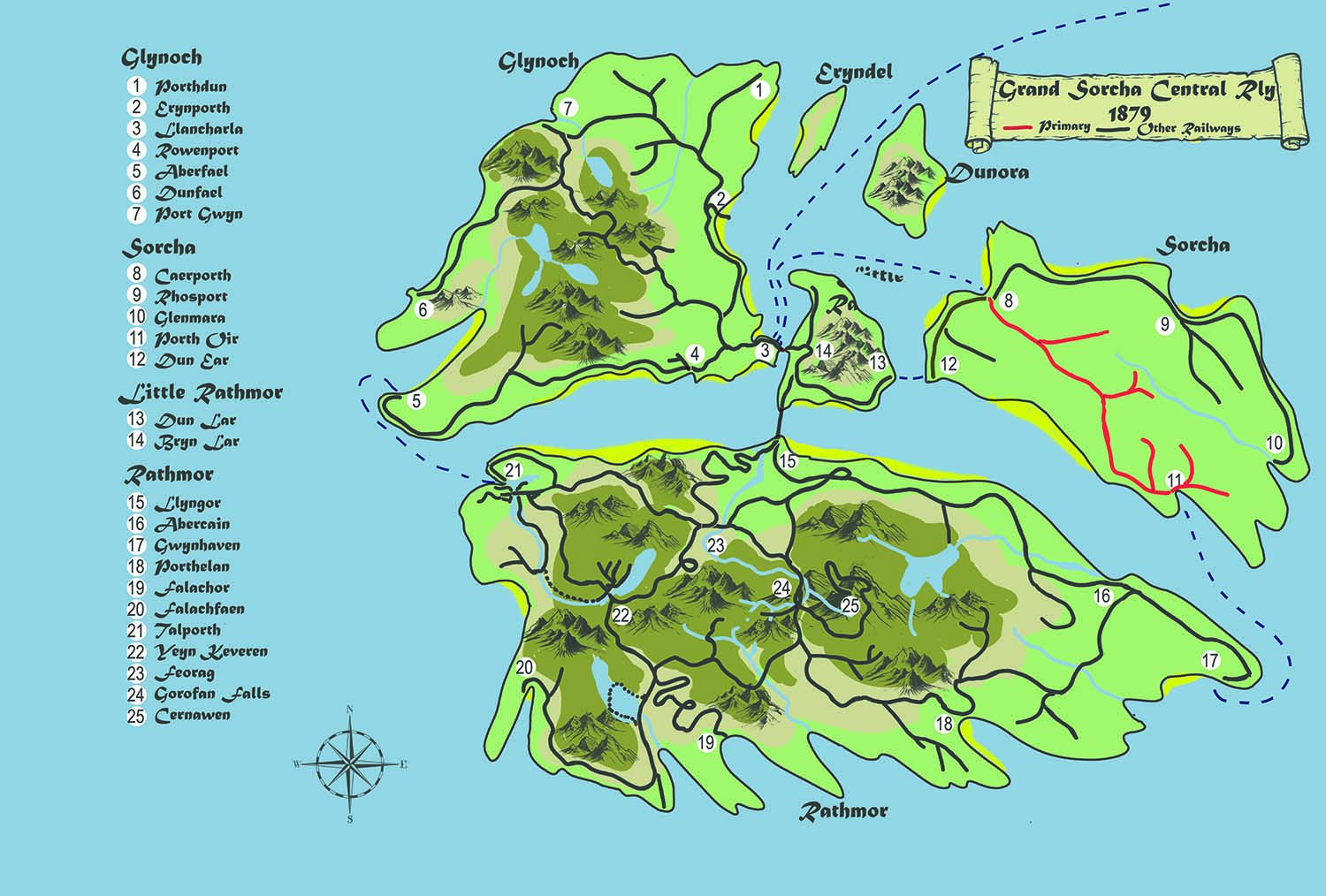
Related Articles....
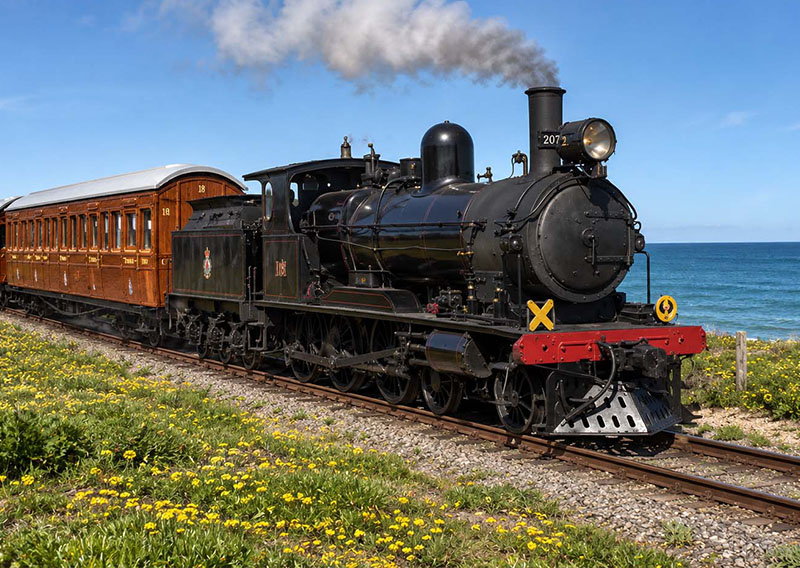
1877: Caerporth & Rhosport Railway
Three railways, three industries, and one ambition to connect northern […] ...
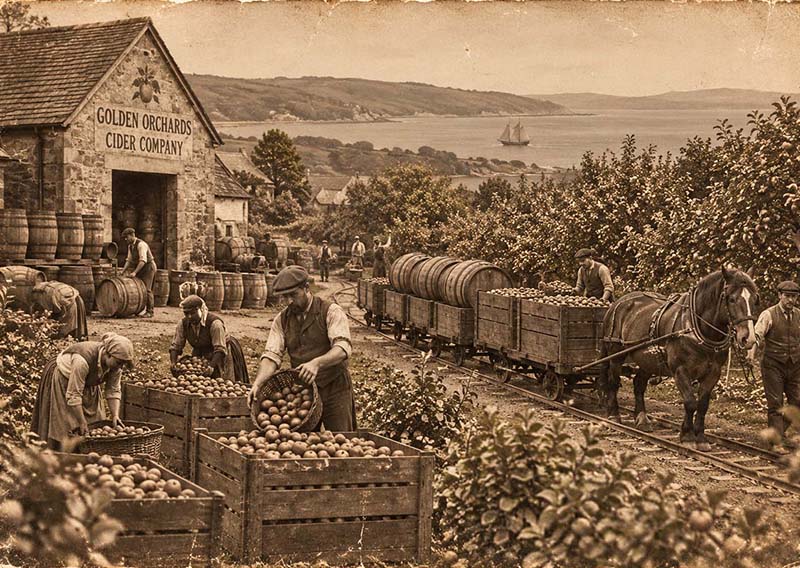
Porth Oir Orchards and the Cider of the Isles
By the late 19th century, the Porth Oir Orchards had […] ...

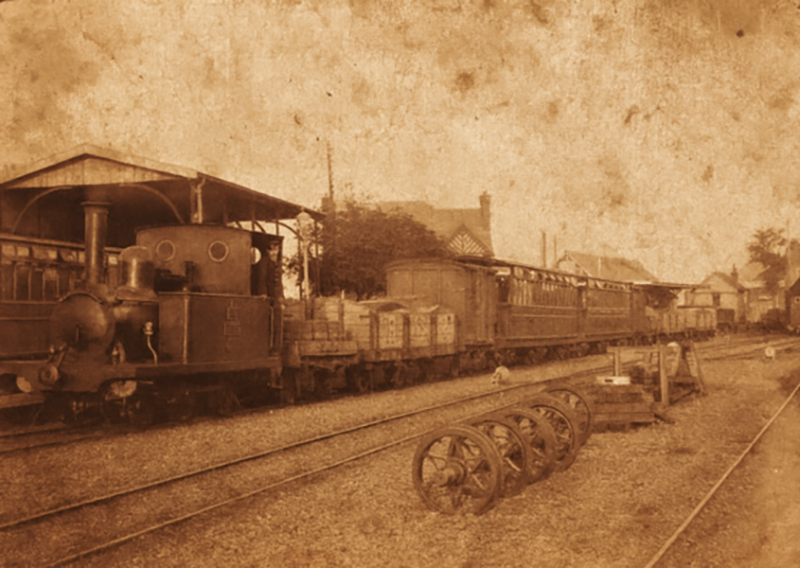
1852: Early Railways of Caerporth
Various independent industrial tramways primarily for moving goods from inland […] ...
Explore More Railways of Glynoch and Rathmor....


Island Railways PRE 1880
The railways began their transformation from scattered industrial tramways into […] ...

0 Comments