


10. Glenmara History
Nestled at the end of a wide fertile valley, part of the ‘Golden Triangle,’ its mills, bakeries, and distilleries have long made it a town of abundance
History
Towns
Glenmara
Glenmara Maps
Glenmara
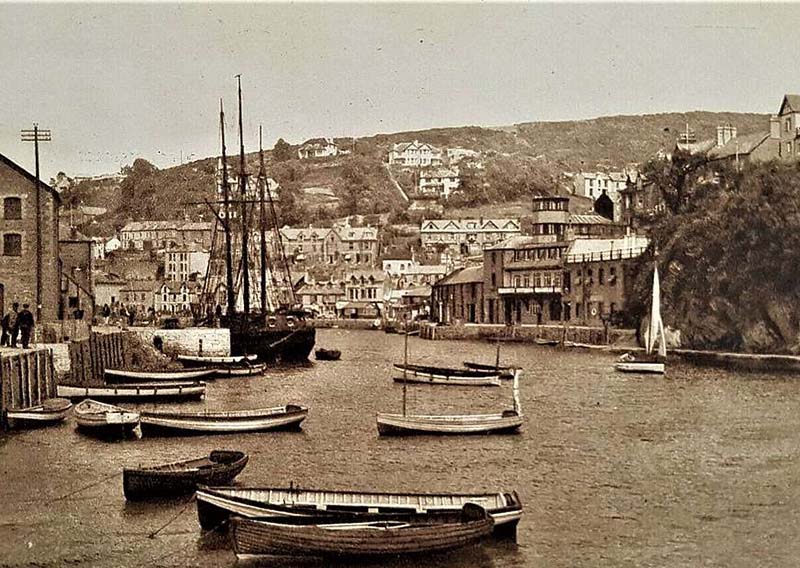
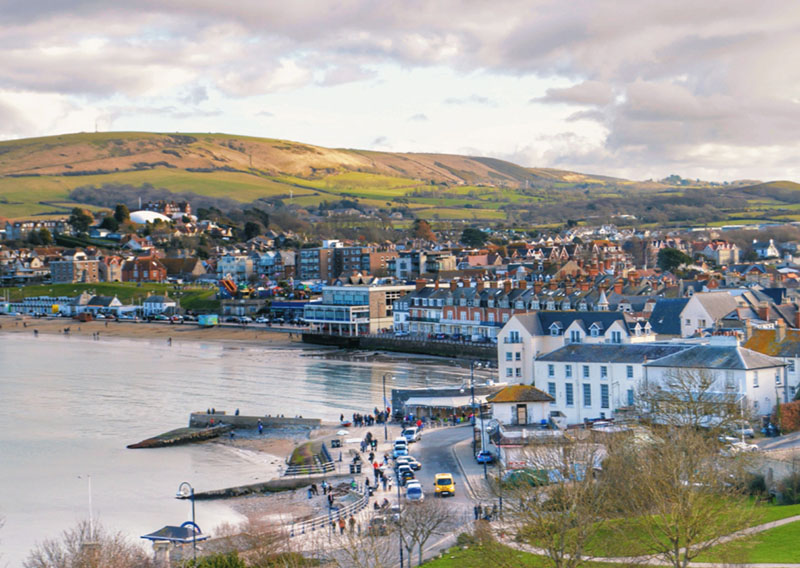
Glenmara (GLEN-mar-ra.) — A prosperous riverside town on the eastern end of the island of Sorcha, situated at the mouth of the River Gleannshaile (lit. “valley of plenty”). Noted for fertile farmlands, flour milling, and whisky distilling,
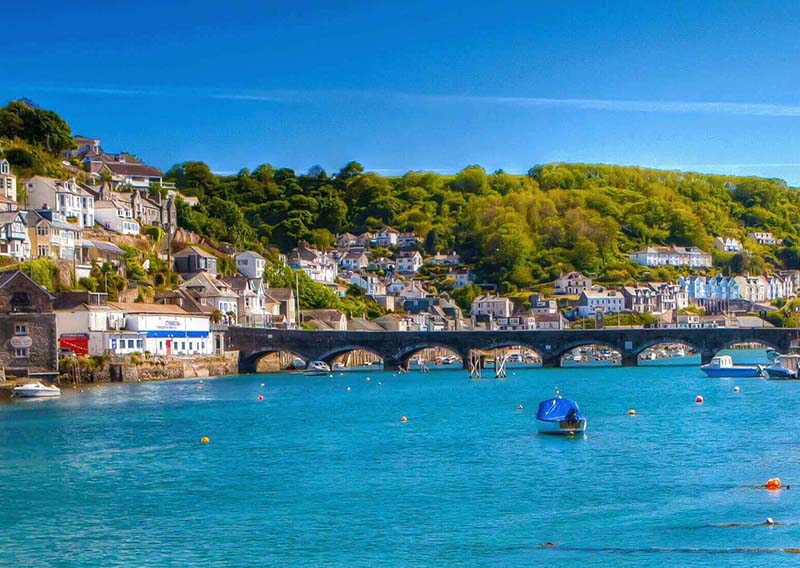
Glenmara Bridge
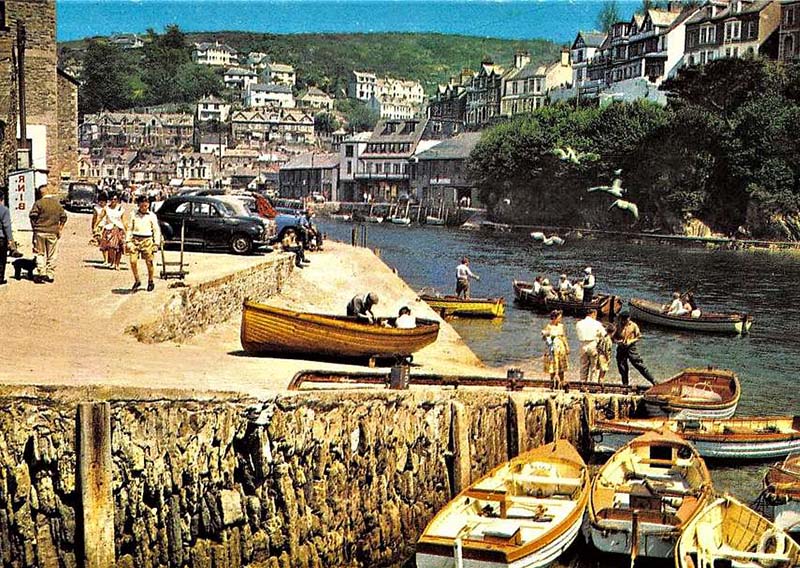
Glenmara c1960
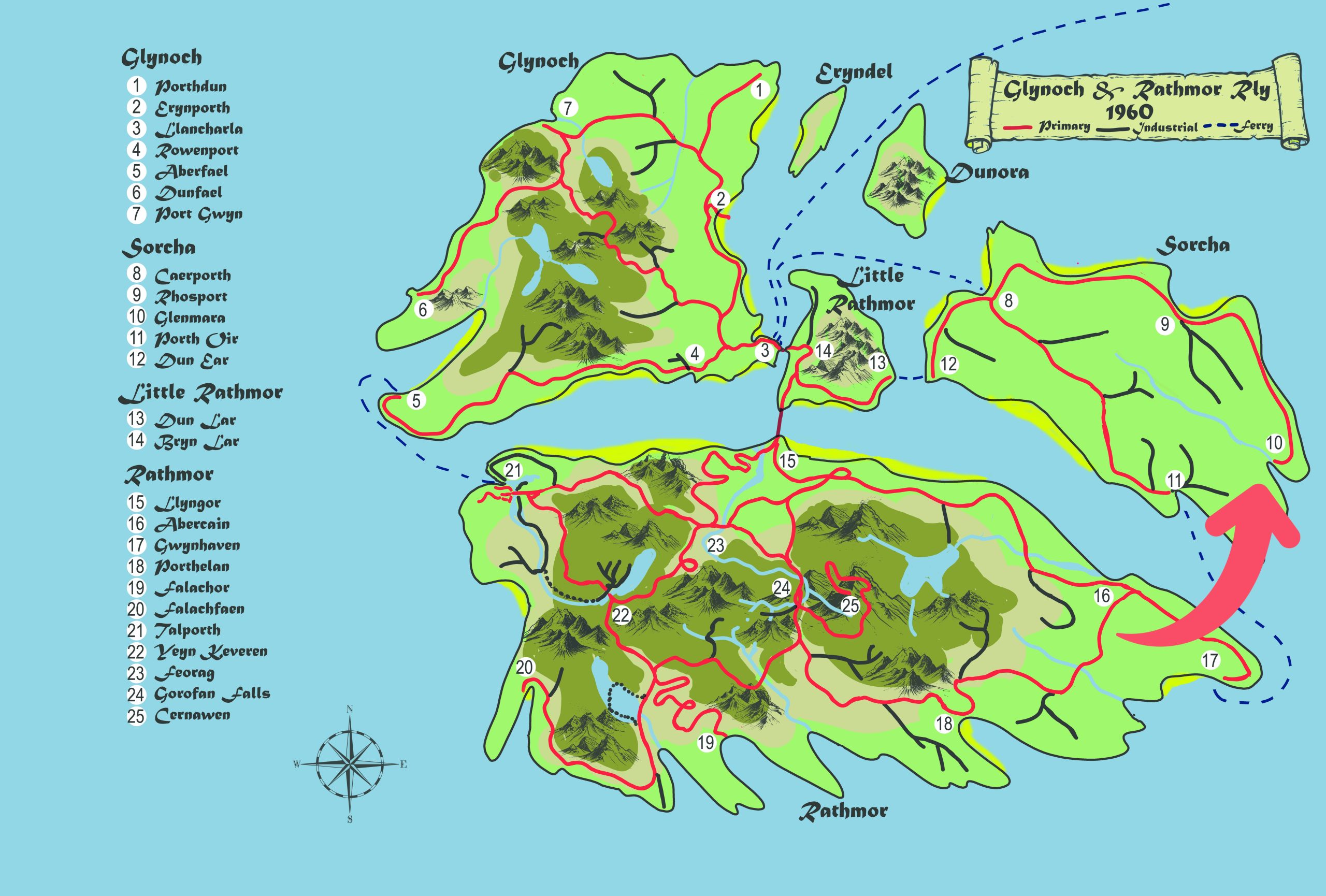
Glenmara forms part of the so-called Golden Triangle of Sorcha’s eastern ports, alongside Port Oir and Rhosport. Since 1880, the railway has connected the town to western Sorcha, reinforcing its role as a hub of agriculture and industry.
Sitting proudly on the eastern end of the island of Sorcha, where the River Gleannshaile — the “valley of plenty” — widens into the sea. Its location, commanding both fertile river valleys and access to maritime trade routes, has ensured its place as one of Sorcha’s most prosperous towns. Along with Port Oir and Rhosport, it forms the renowned “Golden Triangle,” a region famed for its fertile soil, agricultural abundance, industrious spirit, and interconnected commerce.
The lands surrounding Glenmara are rich and fertile, producing a bounty of wheat, barley, and grain. These fields have supported centuries of agriculture, with farmers supplying not only the town itself but also distant communities across the island. The Gleannshaile Valley runs almost dead centre through Sorcha, is lined with watermills, their wheels turning steadily in rhythm with the flowing river. Each mill is a testament to centuries of craft, producing flour that is carried downstream to Glenmara’s thriving bakeries. The scent of warm bread, once a marker of simple subsistence, became a symbol of the town’s prosperity as its goods travelled far beyond its borders.
Equally renowned is the Glenmara Distillery. For more than a century, it has produced whiskies that have earned acclaim well beyond Sorcha’s shores. The distillery embodies both tradition and pride, its stone warehouses and ageing casks a reminder of the patience required to perfect a spirit. Local lore insists that the purity of the Gleannshaile’s waters lends a distinct character to the whisky, a flavour inseparable from the land and river that birthed it.
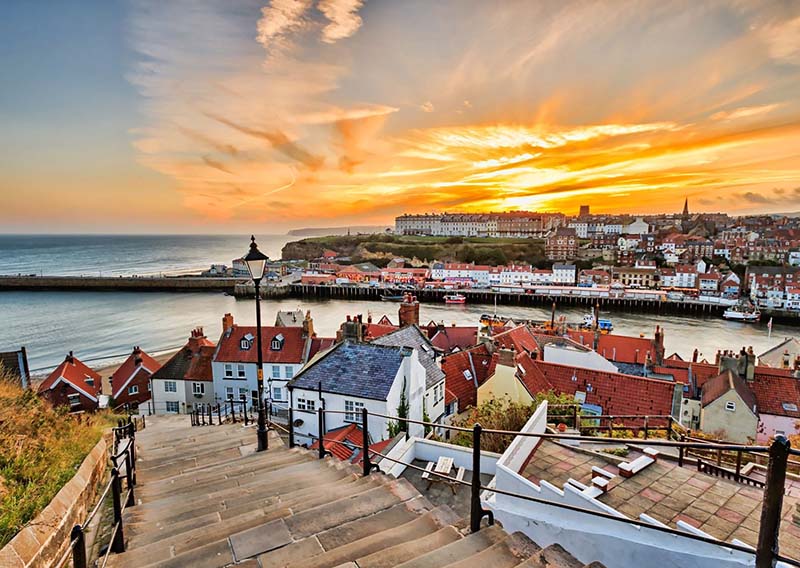
Bustling markets, cobbled quays, and busy workshops make Glenmara a hive of trade and activity. Yet despite its industry, the town retains a warmth — a sense of shared prosperity rooted in its valley, its mills, and its river.
The Glenmara Distillery
On the northern banks of the River Gleannshaile, at the edge of Glenmara lies Glenmara Distillery, one of the three great whiskey makers of the islands and perhaps the most storied. Whiskey-making here is more than a craft; it is part of the land itself. The distillery takes its name from the valley in which it stands. The waters of the Gleannshaile start in the peaty central belt of Sorcha, before flowing over limestone strata down the valley, enriching the waters with the minerals that islanders insist give the whiskey its unique depth and character.
From its founding in the mid-19th century, Glemara has perfected the balance of tradition and innovation. Its stills are heated by peat fires, lending a subtle smokiness, while its casks are a careful blend of sherry-seasoned oak from Spain and native oak harvested from the forests of Rathmor. This duality imparts layers of flavour—dried fruits, vanilla, honey, and spice—unmistakably tied to the island’s character. Unlike some faster-maturing spirits, Sorchas cool, damp climate allows for slow maturation, stretching over decades. The result is a whiskey of remarkable smoothness, complexity, and lingering finish.
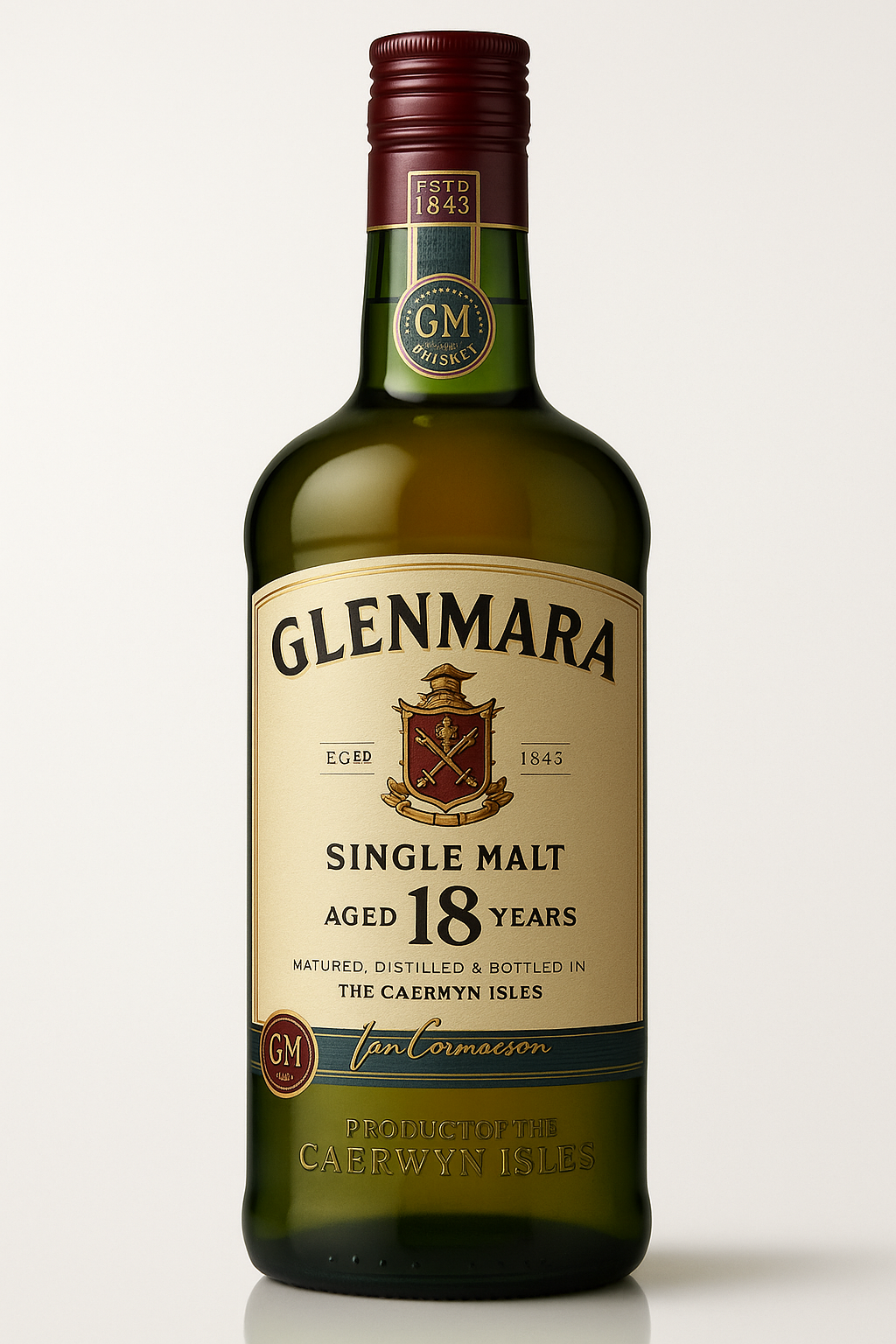
Glenmara Whiskey No.1
Island lore adds its own charm. Locals speak of the “Whiskey Angels”—invisible spirits who drift through the warehouses, sipping the vapours that rise from each cask. This poetic tale explains the natural evaporation of whiskey during aging, known universally as the angel’s share. At Glemara, this idea is celebrated, and each cask is thought to give a little offering to the unseen guardians of the glen.
Visitors to Glemara often embark on tours of all three island distilleries, comparing the peaty coastal drams, the honeyed highland malts, and the rich, malty blends of the lowlands. Yet many insist it is Glemara’s whiskey—balanced, evocative, and touched with the flavour of the glen itself—that most clearly embodies the spirit of the isles. Tastings are a highlight: a dram enjoyed in the cool, stone-walled warehouses feels less like a drink and more like communion with history.
To sip Glenmara whiskey is to taste the islands: the stone, the water, the peat, and the patience of generations distilled into a single glass.
Glenmara Distillery c1880
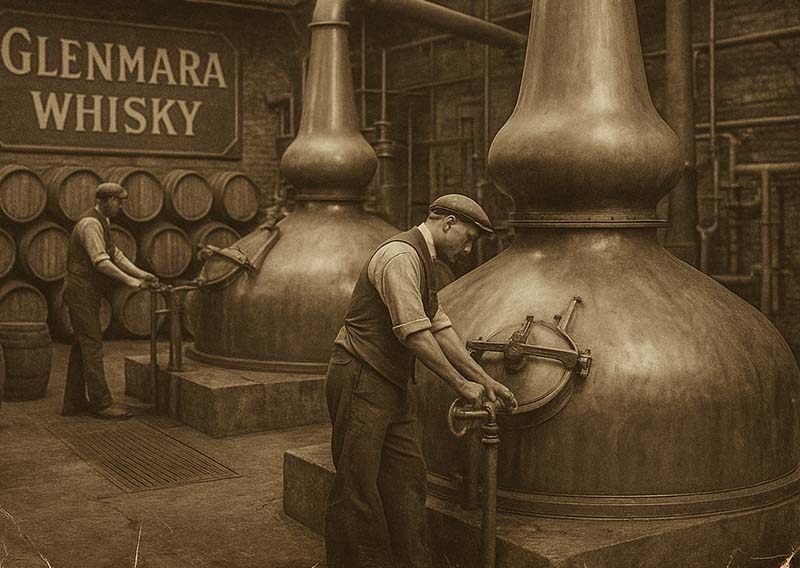
Glenmara Whiskey c1900
Cooperage and Woodworking in Glenmara
Tucked into the sheltered inlet at the eastern end of Sorcha’s central valley, Glenmara has long been synonymous with exceptional craftsmanship. The town’s woodworking tradition began modestly in the 19th century with a single cooperage, established to supply barrels to the nearby distillery. The craft of coopering—shaping staves, binding hoops, and forming airtight vessels without a single nail—demanded precision, patience, and an instinctive understanding of timber. These skills became the foundation of an industry that would soon expand far beyond its original purpose.
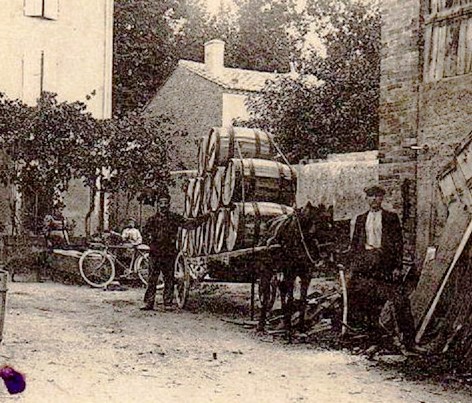
Glenmara Cooperage c1900
As demand for barrels grew, so too did the number of trained coopers in Glenmara. Many eventually turned their talents to new ventures, recognising that their woodworking expertise could be applied to a wider range of products. Small workshops began producing furniture, tools, and bespoke wooden goods, and within a generation Glenmara had transformed into one of the island’s premier centres for fine woodworking. Though the surrounding forests are less extensive than they once were, careful management, selective cutting, and replanting programmes have ensured a sustainable supply of timber that will support the industry for years to come.
Today, Glenmara is a hub of skilled artisans whose output is as varied as it is impressive. Traditional barrel-making continues, servicing distilleries across Sorcha and the neighbouring islands. But alongside the cooperages stand workshops dedicated to crafting everything from sturdy farmhouse tables and hand-carved chairs to musical instruments, tool handles, cabinetry, and ornamental woodwork. Visitors to Glenmara’s market square can often watch craftsmen shaping oak staves, carving decorative motifs, or assembling fine furniture ready for export.
With its blend of tradition, innovation, and enduring skill, Glenmara remains a shining example of how a small community can build a thriving industry on the strength of its craftsmanship—an essential stop for anyone exploring the working heritage of the islands.
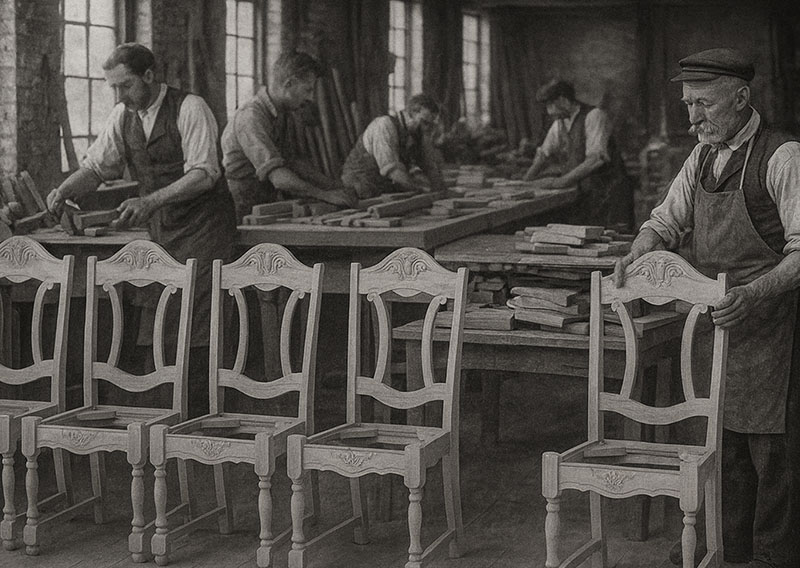
The Glenmara Chair c1920
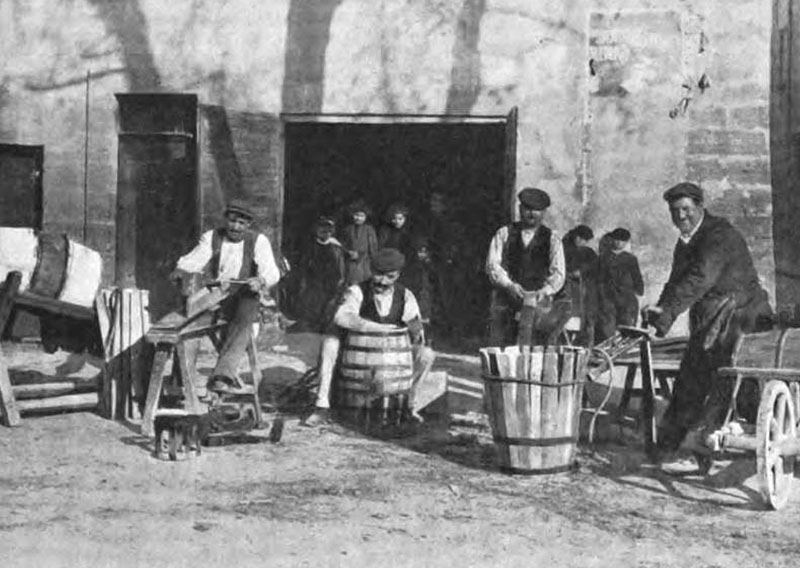
Glenmara Cooperage c1910
The Railway to Glenmara
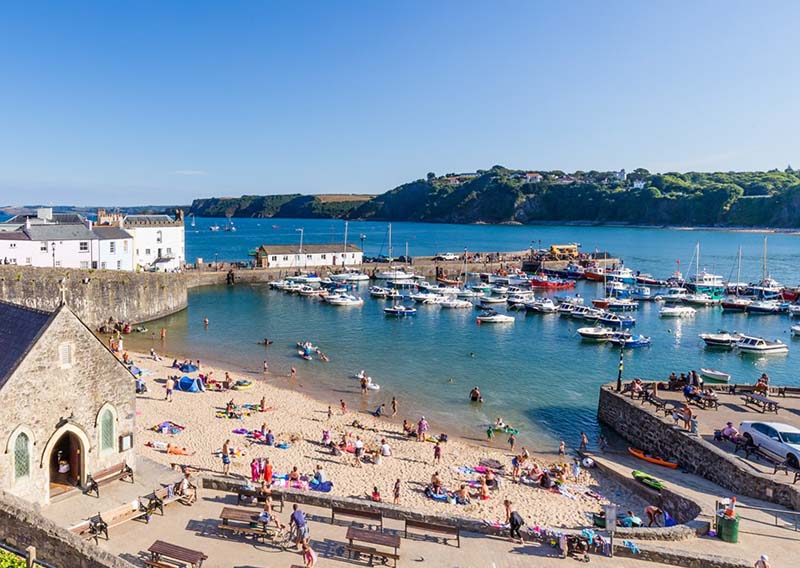
The arrival of the railway in 1880 transformed Glenmara from a busy river-port into a true industrial hub. Before the railway, produce and flour moved slowly by barge down the River Gleannshaile, and onward by coastal trade. The railway line, cutting through the island from west to east, linked Glenmara directly with inland farmlands and western harbours.
For farmers, this meant quicker transport of grain and livestock; for millers, it meant flour could be dispatched to markets that were once days away. Glenmara’s distillery, too, benefited enormously: casks of whisky that once travelled by cart and boat could now reach distant markets with unprecedented speed, allowing Glenmara spirits to build their international reputation.
The railway station, a proud red-brick building with an iron-and-glass roof, became the town’s new heart. Warehouses sprang up beside it, and sidings hummed with activity as goods wagons were loaded with flour sacks, whisky barrels, and baked produce. Passenger trains also brought change, carrying workers, merchants, and visitors from across Sorcha, knitting Glenmara tighter into the island’s growing economy.
One of the town’s most significant developments in recent years came when the Glynoch and Rathmor Railway chose Glenmara as the site of its Carriage and Wagon Works. Drawn by the availability of a highly skilled workforce, the railway established large workshops where local carpenters help construct and maintain wooden carriage interiors, freight wagons, panelled compartments, and fittings. The presence of the works has provided stable employment and further cemented Glenmara’s reputation for quality craftsmanship.
Though river and sea remained vital, the railway ensured Glenmara’s prosperity in the modern age. It turned a riverside town into a gateway — bridging Sorcha’s rural abundance with the wider world.
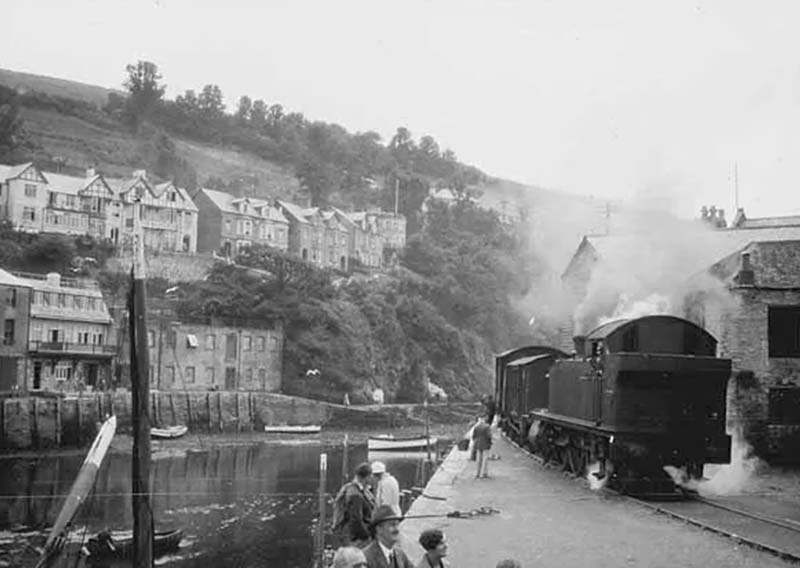
Glenmara Quay c1910
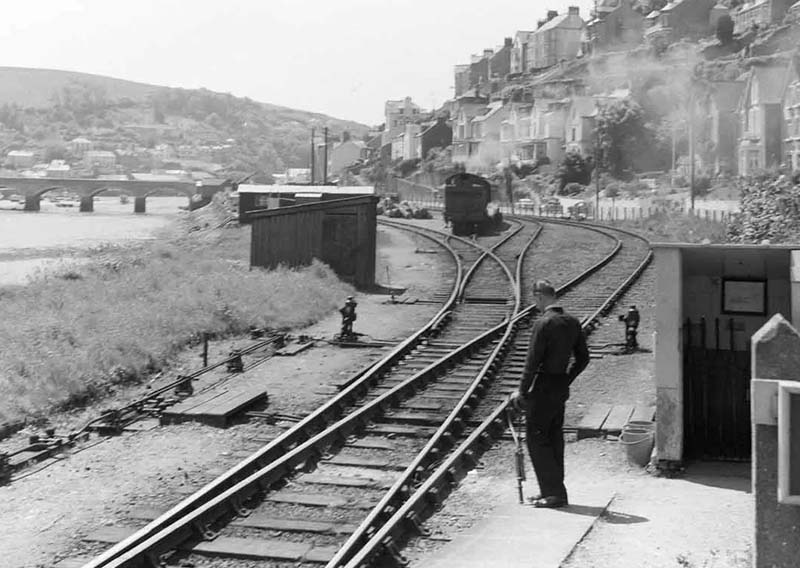
Glenmara Station c1910
History
Towns
Glenmara
Glenmara Maps
Glenmara
Located on the east coast of Sorcha
Explore More Towns...
...View All Towns