


1855: Aberfael China Clay Railway
From the Clay Pits to the Quayside. A railway with a single purpose that grew way beyond its initial role
History

Railways

About the ACCR
ACCR Maps
Aberfael China Clay Railway (ACCR)
At a glance:
Founded / opened: 1855
Independent operation: 1855–1876
Island: Glynoch
Type: Industrial / mineral railway
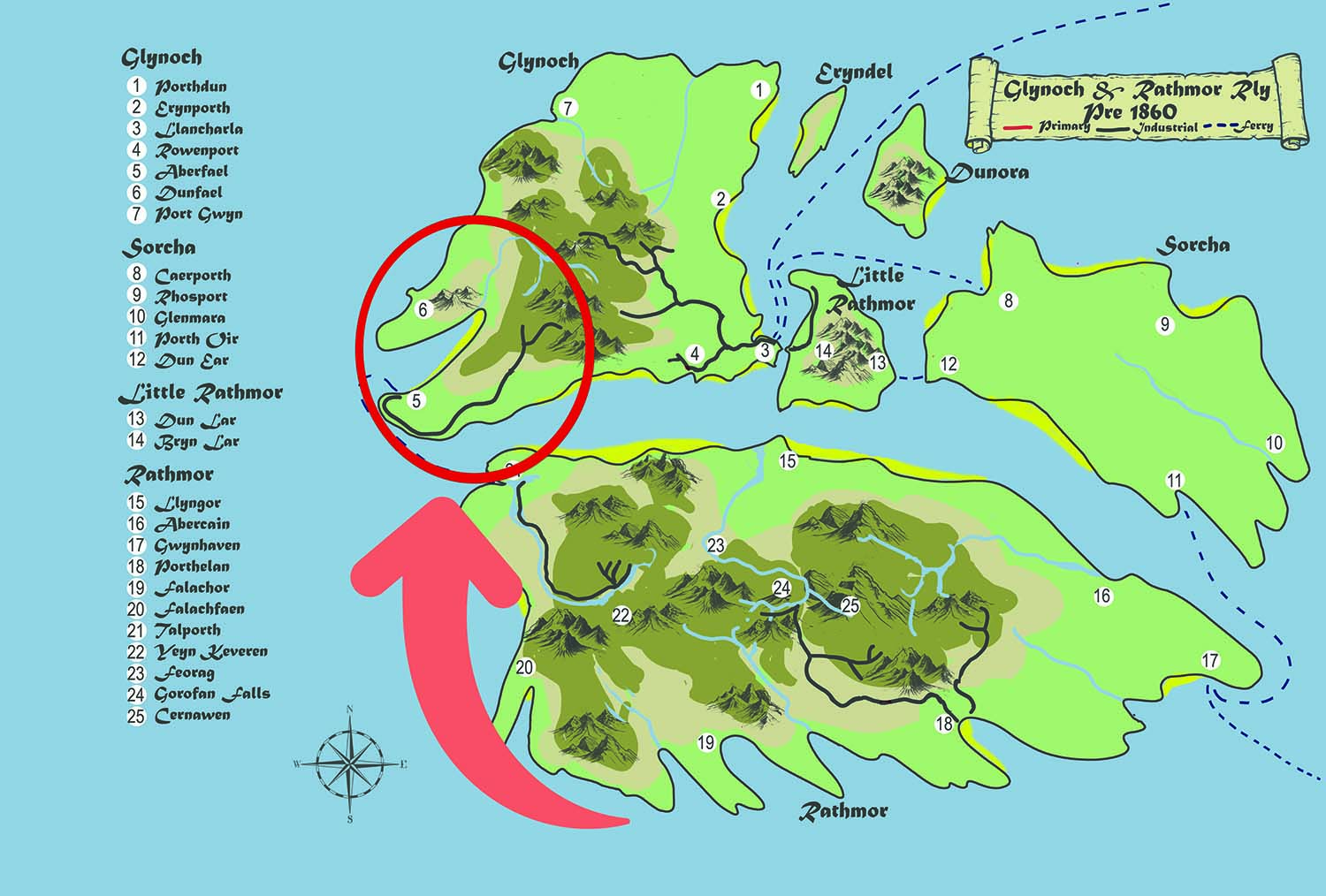
Route: Aberfael harbour; Eastward along the southern coast, then north into the southern highland china-clay workings
Principal traffic: China clay and quarry supplies
Passenger services: None operated by ACCR; Llanchala & South West Railway passenger trains used the coastal section under running rights from 1860
Successor: Llanchala Railway Ltd (1876), formed in one consolidation with the L&SWR and the southern interests of the GMRC
Later history: Llanchala Railway Ltd became part of the Glynoch & Rathmor Railway in 1885
Origins: A Railway Built for White Clay
From the china-clay workings of Glynoch's southern highlands to the coastal harbour at Aberfael, a modest industrial railway would play an unexpectedly important part in the development of the island's southern railway network. By the middle of the nineteenth century, the china-clay deposits in the hills around Aberfael had become an increasingly valuable resource. The pale clay, prized for the manufacture of fine pottery and porcelain, was extracted from workings inland of the town and transported towards the coast for shipment to manufacturers elsewhere in the Caerwyn Isles and beyond. Moving the heavy material was no simple undertaking. The roads between the workings and Aberfael harbour were often difficult, particularly in wet weather, and the growing volume of clay made traditional cart transport increasingly expensive and inefficient.
In 1855, the Aberfael China Clay Railway (ACCR) was established to provide a more reliable connection between the inland workings and the harbour. Its purpose was entirely industrial: to carry china clay down to the quayside and return with supplies needed by the workings. The new railway was not intended to carry passengers. Its promoters were concerned with the practical demands of the clay industry, and the company's early success would be measured in wagons of mineral traffic rather than passenger receipts.
Timeline of the ACCR
Aberfael China Clay Railway
Llanchala Railway
Glynoch & Rathmor Rly

Aberfael China Clay Railway
The Southern Railway to Rowenport
From Aberfael, the railway initially followed the southern coastline before turning northwards into the southern highlands, where branches and sidings served the china-clay workings. The route connected the remote quarry districts with the harbour, providing a reliable means of transporting heavy mineral traffic across country that had previously depended upon difficult road journeys. At the workings, clay was prepared and loaded into railway wagons for its journey towards the coast. At Aberfael, the material was unloaded into storage facilities or transferred to coastal vessels for shipment. The railway therefore became an essential link in a chain of production stretching from the highland quarries to pottery and porcelain manufacturers elsewhere in the Caerwyn Isles and beyond. Although china clay dominated its business, the ACCR also carried materials and supplies required by the industry. Coal, tools, timber and other necessities could be moved inland, reducing dependence on the roads.
For Aberfael, the arrival of the railway strengthened the relationship between its harbour and the surrounding countryside. What had begun as a local mineral enterprise was already helping to shape the town's commercial future.
The South Coast Railway Arrives
The ACCR's greatest significance beyond the clay industry emerged with the development of the Llanchala & South West Railway (L&SWR). Established in 1859, the L&SWR sought to create a continuous railway connection along Glynoch's southern coast, linking Aberfael and Rowenport with the larger commercial centre of Llanchala. The route required cooperation between several existing railway interests, including the Glynoch Mineral Railway Company and the owners of the tracks serving Aberfael. In 1860, the south-coast through route opened. Rather than surrendering its independence or beginning passenger operations itself, the ACCR granted running rights to the L&SWR, allowing that company to operate passenger trains over its tracks into Aberfael. The arrangement was particularly straightforward because the L&SWR required only the coastal portion of the ACCR's railway. From Aberfael, its passenger trains followed the existing tracks along the southern coast before continuing eastwards over the newly developed route towards Rowenport and Llanchala. The ACCR's original line turning north into the southern highlands remained devoted to the china-clay workings and their associated mineral traffic. Thus, two very different railway businesses shared part of the same infrastructure. The ACCR retained ownership and responsibility for its industrial railway, while the L&SWR gained the necessary running rights to bring passenger services into Aberfael without constructing a separate approach to the town. The distinction was important. The passenger trains arriving at Aberfael were L&SWR services, not trains operated by the China Clay Railway. The arrival of through passenger services began to change Aberfael's relationship with the rest of Glynoch. For the first time, travellers could reach the town as part of a connected southern railway journey. Merchants and visitors benefited from easier movement between Aberfael, Rowenport and Llanchala, while the town's coastal setting offered possibilities quite different from those envisaged by the promoters of the original clay railway. Aberfael would eventually become known for its seaside attractions, including Lovers' Sands and its developing resort facilities. Those later achievements should not be mistaken for the ACCR's original purpose, but the opening of the passenger connection in 1860 provided an important foundation for the town's changing fortunes. Meanwhile, china clay remained the ACCR's principal concern. Mineral wagons continued to use the line alongside the passenger services of the L&SWR, making the railway an increasingly important shared route for two very different kinds of traffic.
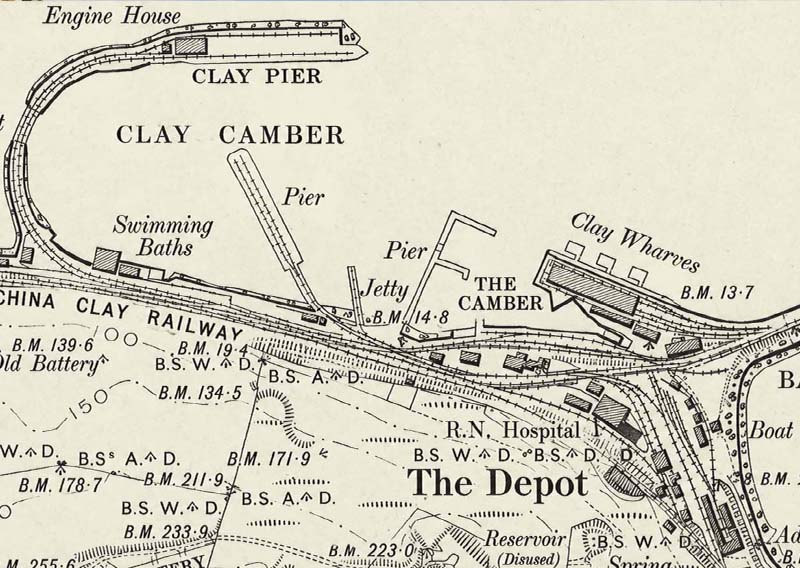
Aberfael China Clay Railway map
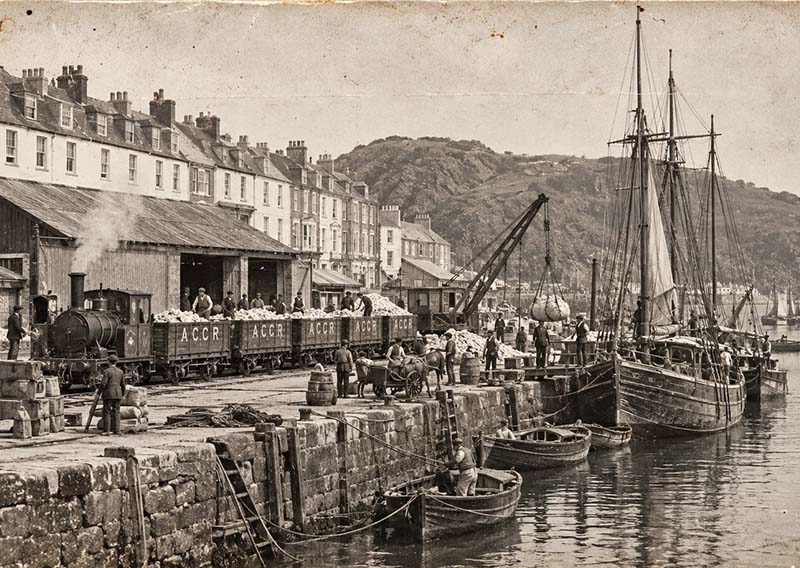
ACCR wharves
Twenty-One Years of Independence
For more than two decades, the Aberfael China Clay Railway retained its separate identity. Its relationship with the L&SWR demonstrated how independent railway companies could cooperate without immediately combining their businesses. The ACCR supplied an essential piece of infrastructure; the L&SWR supplied the wider passenger connection. Each had its own commercial priorities, but both benefited from the arrangement. As railway traffic increased across southern Glynoch, however, the disadvantages of maintaining separate undertakings became more apparent. Through journeys and freight movements depended upon agreements between companies whose lines had increasingly become parts of one connected system.
By the 1870s, the case for a more unified southern railway organisation had grown considerably stronger. In 1876, a major reorganisation brought together three interests whose railways had become closely connected: the Aberfael China Clay Railway, the Llanchala & South West Railway, and the southern section of the Glynoch Mineral Railway Company. All three combined as part of the same consolidation to form Llanchala Railway Ltd. The arrangement created a more coherent railway organisation across southern Glynoch, uniting industrial routes and passenger connections that had previously been operated under separate ownership or agreements.
For the ACCR, it marked the end of twenty-one years as an independent company. Its original mineral railway became part of a larger network whose responsibilities extended far beyond the china-clay workings. The railway's legacy was nevertheless considerable. Built to solve a local industrial transport problem, it had provided the western approach for the south-coast passenger railway and helped lay the foundations for Aberfael's later development.
Nine years later, in 1885, Llanchala Railway Ltd would join with the Rathmor Railway to form the Glynoch & Rathmor Railway, carrying the former ACCR route into an even larger railway system. The little railway built for white clay had become part of the history of an entire island railway network.
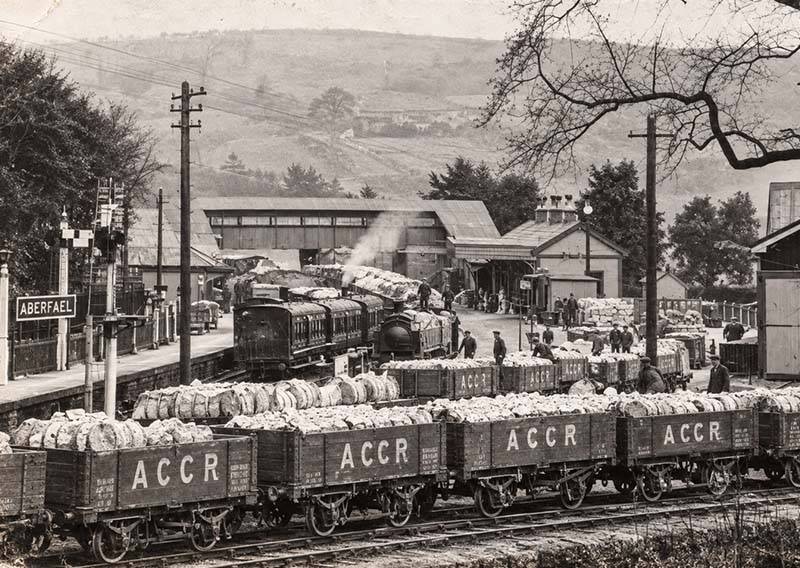
Aberfael yard and LSWR station c1880
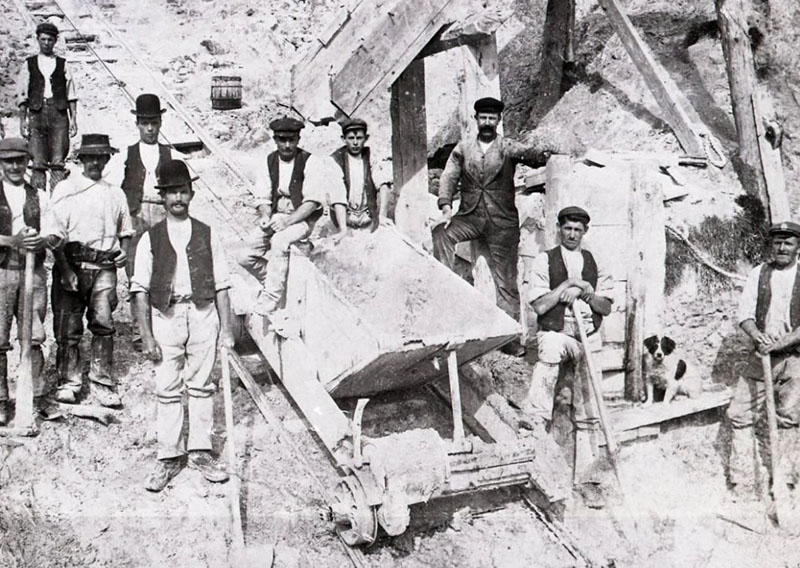
Early China Clay Extraction - Aberfael
History
Railways
About the ACCR
ACCR Maps
Aberfael China Clay Railway
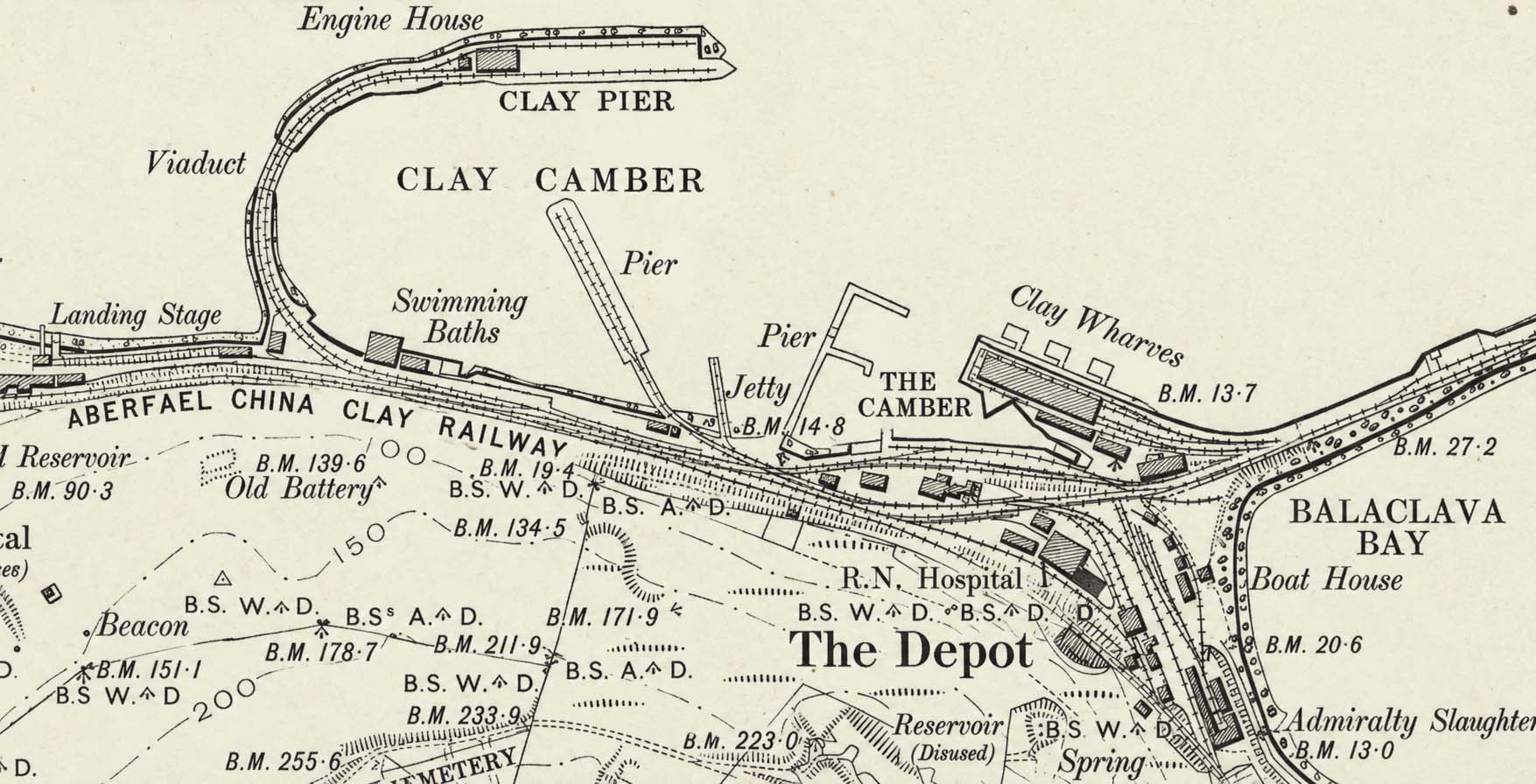
ACCR in 1959
Related Articles....

1859: Llanchala & South West Railway
The railway that united Glynoch’s southern coast, linking coastal communities […] ...

Explore More Railways of Glynoch and Rathmor....


Island Railways PRE 1880
The railways began their transformation from scattered industrial tramways into […] ...
0 Comments