


4. Rowenport History
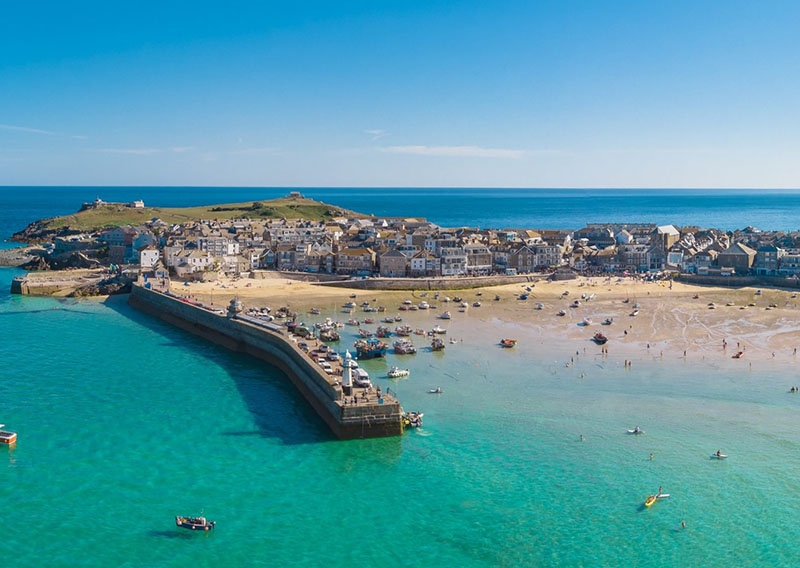
A small coastal village on southern Glynoch, long famed for its lobster fleets, pinewood forests, and open-air theatre.
History
Towns
Rowenport
Rowenport Maps
Rowenport
Rowenport (ROAN-port) — From the local landowning family (Arwyn-Rowen family) and porth (harbour). A small coastal village on southern Glynoch, long famed for its lobster fleets, pinewood forests, and open-air theatre. “Harbour of the Rowen Estate."
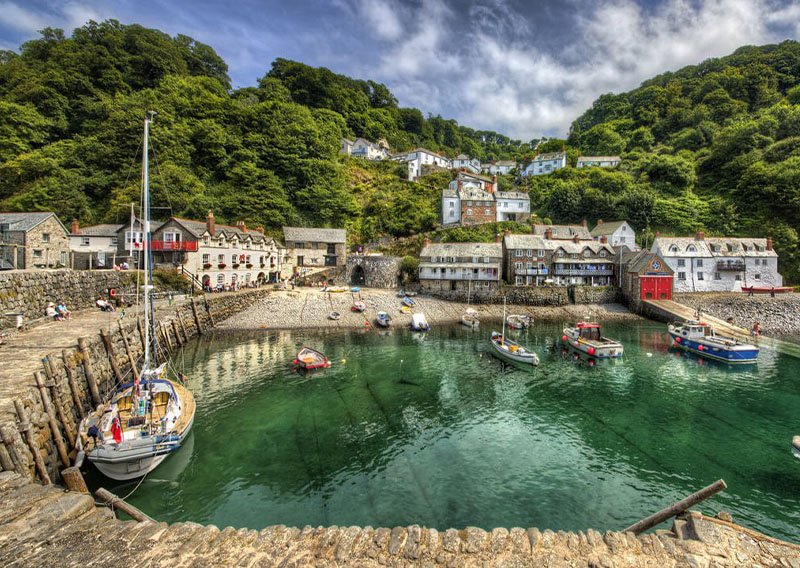
Rowenport Harbour
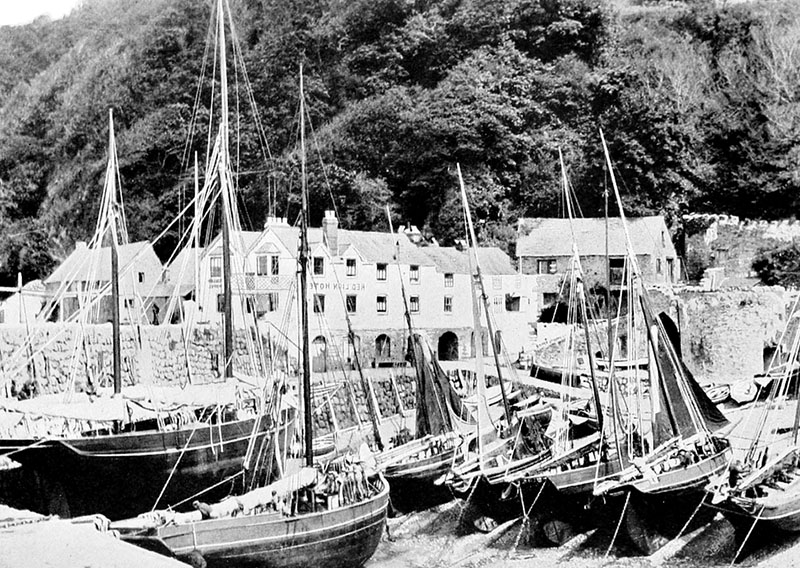
Rowenport lobster fleet c1900
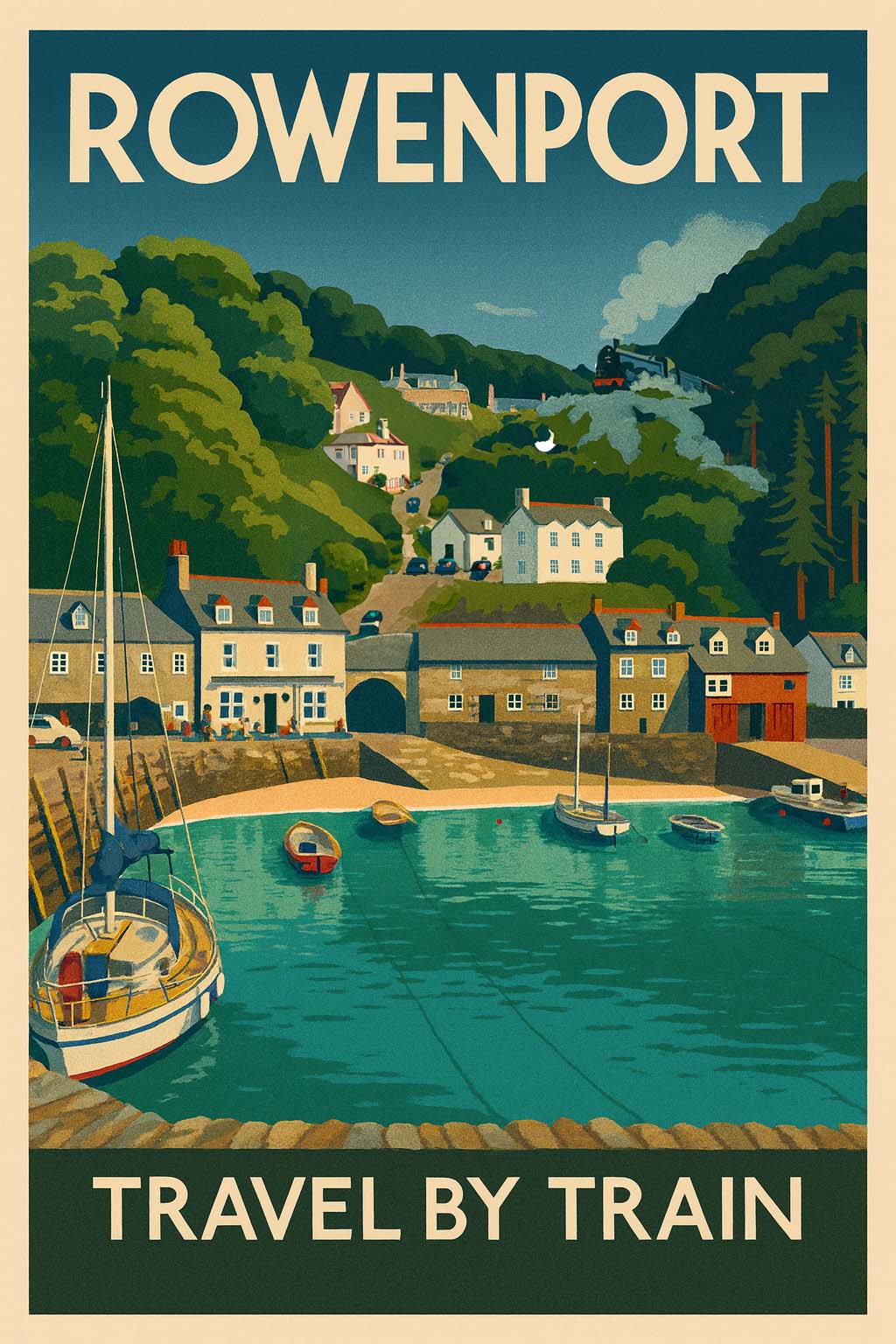
1920's advert
Nestled on Glynoch’s sunlit southern coast, Rowenport lies where forest and ocean intertwine. Tall pine and rowan trees fringe the harbour, their resinous scent mingling with the salt air. The town’s folklore is rich and enduring—locals still speak of the Woodwight, a benevolent forest spirit said to guard the groves from harm. At midsummer, children leave offerings of bread, berries, and honey in hollow stumps to appease the Woodwight and ensure a bountiful season.
Rowenport’s prosperity has always come from the sea. Its lobster fleets are legendary across the isles, with the crimson catch of “Rowenport Reds” served in the finest taverns of Rathmor and Glynoch. Early smokehouses and salt stores line the quay, now repurposed as cafés and galleries. Inland, the tall woods once provided ship timbers, though much of the forestry is now protected under local heritage law.
The town’s reputation as a cultural centre began in the 1920s, when the Arwyn-Rowen family, long-time landowners of the Rowen estate, constructed the Arwyn Open-Air Theatre in a natural amphitheatre on the forest edge, overlooking the bay. Today, it remains one of the most atmospheric venues in the isles, hosting everything from Shakespearean plays to the annual Rathmor Literary and Drama Festival, when lanterns light the pines and poetry mingles with the call of seabirds.
Rowenport is what is known as a 'tied village' (or estate village) in which most or all of the land and properties are still owned by the Rowen Estate. Historically, the residents—typically farmers, craftspeople, and workers—live in tied cottages, meaning their homes and sometimes their livelihoods are “tied” to their employment or tenancy under the estate. As such, the landowner controls not only the maritime activities, all agricultural land as well as the houses, shops, the local inns and even the school. Tenants pay rent or provide labour in exchange for occupation. Maintenance, building improvements, and even village aesthetics (paint colours, fencing, gardens) are usually determined by the estate’s steward and his team.
Where many of the towns across the islands have grown rapidly and modernised, Rowenport has made the concious decision to preserve the look and feel of a village from the late 19th century and as such has developed its own form of 'heritage tourism'. Many thousands of visitors visit the village each year to enjoy its charm, and try the lobster!
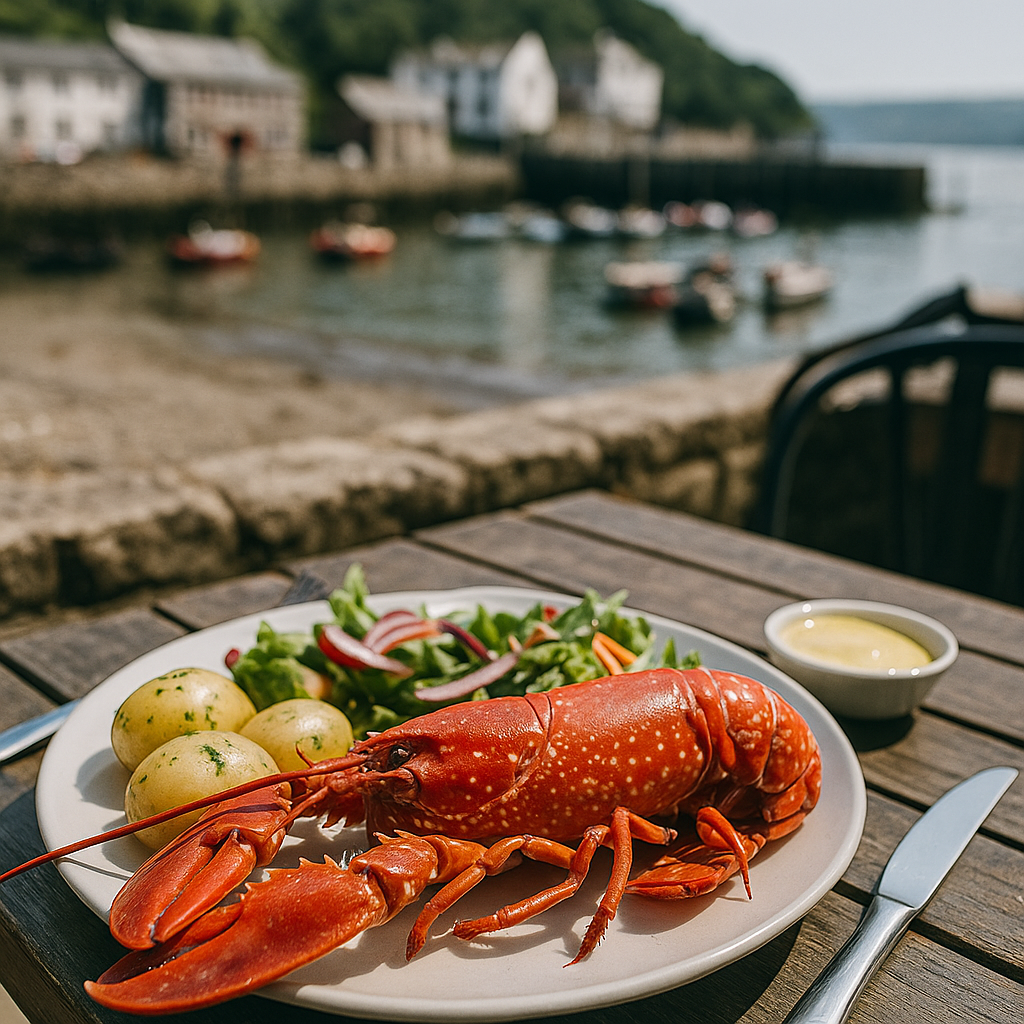
Rowenport Lobster
The Lobsters of Rowenport
The Arwyn-Rowen estate has long been synonymous with the bounty of the sea, and nowhere is this more evident than in the lobster trade that built both its fortune and its legacy. For over two centuries, the rugged coastline around Rowenport has been dotted with brightly painted buoys marking the locations of wooden lobster pots—known locally as creels. These creels are baited with fish scraps and lowered carefully among the kelp-lined rocks where the “Rowenport Reds,” as the local lobsters are affectionately known, thrive in the cold, clean waters of the southern Glynoch coast.
Once considered a food for prisoners and the poor, lobster gradually rose in status as mainland palates changed. By the late 19th century, with the arrival of the railway, Rowenport’s lobster industry experienced a golden age. Fresh catches could reach Llanchala, and even distant cities on the mainland within a day, packed in seaweed from the highland lakes and ice from the Eirwyn’s Crown Glacier. Wealthy diners soon developed a taste for the rich, buttery flavor of the Rowenport Reds, and the estates fortunes soared.
The Arwyn-Rowen family, recognizing the opportunity, expanded the industry with purpose-built quays, curing sheds, and even a small canning operation. Many of the town’s cottages still bear carved motifs of lobsters over their lintels—a proud reminder of the trade that shaped Rowenport’s identity. Yet for all its prosperity, lobster fishing remained a deeply traditional pursuit, guided by tides, weather, and superstition. It is still said that stealing another fisherman’s lobster brings a curse lasting seven generations, and that the sea itself will claim the guilty.
Today, lobster fishing in Rowenport is smaller in scale but no less vital. Wooden creels have been replaced by wire pots, yet the rhythms of tide and season remain unchanged. Visitors can still join a lobster supper on the quay, where the day’s catch is boiled fresh from the pot, served with heather butter and new potatoes. As music drifts from the harbour taverns, the people of Rowenport celebrate a trade that has bound them to the sea for generations—and made their little port famous across the isles.
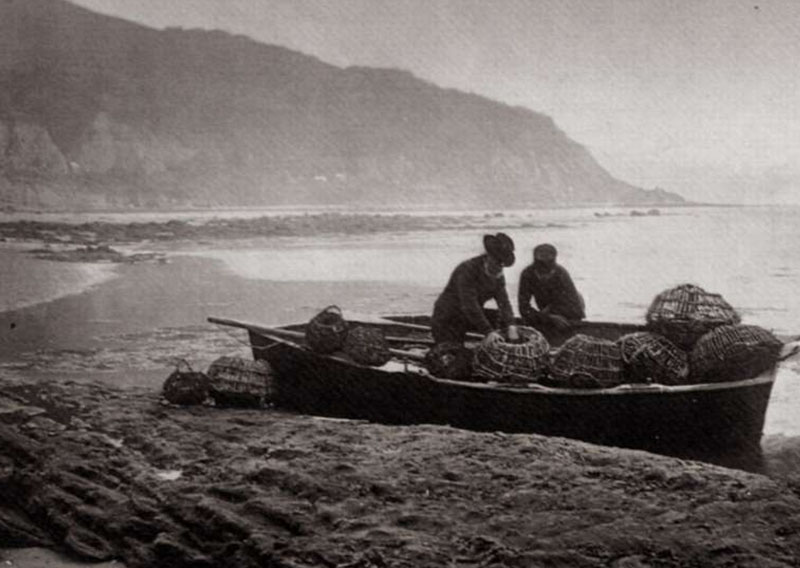
Lobster Fishermen - Rowenport c1880
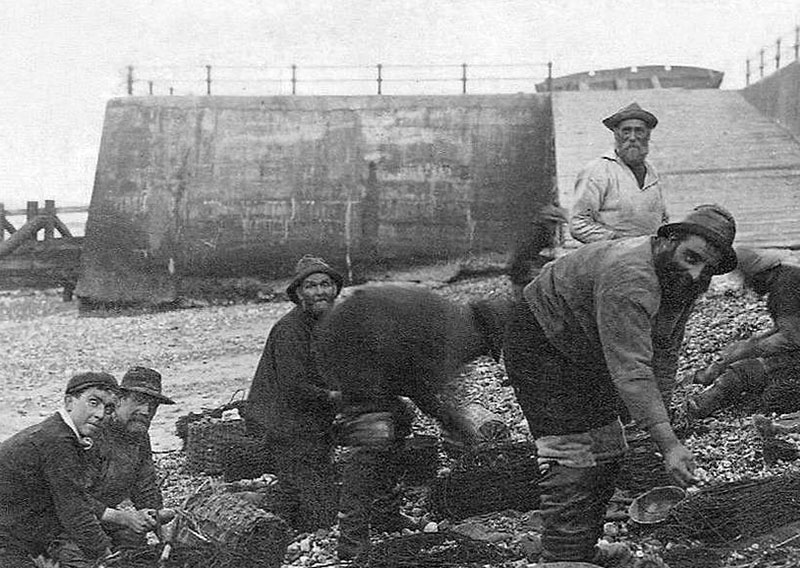
Baiting lobster pots - Rowenport (date unknown)
The Arwyn Theatre at Rowenport
Perched high on the cliffside above Rowenport’s sheltered harbour lies one of Glynoch’s most enchanting landmarks—the Arwyn Open-Air Theatre, a place where sea, sky, and stage unite. Conceived in the late 1920s by Lady Eluned Arwyn, the formidable matriarch of the Arwyn-Rowen estate, the theatre was built as a gift to the people of Rowenport—a place where art could thrive amid the roar of the waves and the cries of the gulls.
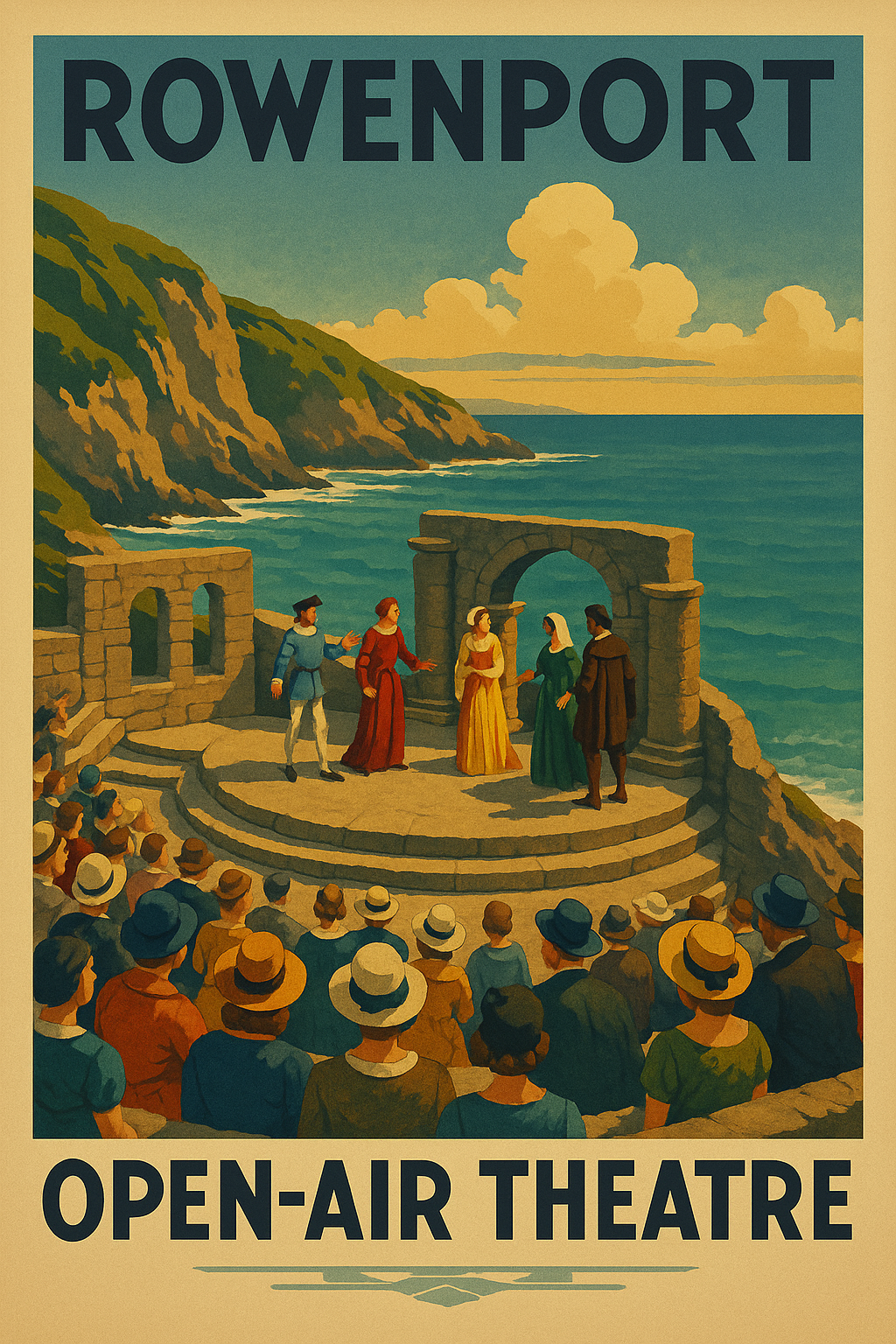
Theatre poster c1935
Lady Arwyn, an ardent patron of the arts, imagined a stage hewn from the living rock, its terraces shaped by the estate’s quarrymen during the quiet months of winter. By the summer of 1929, the first performances took place: local players in hand-sewn costumes performing The Tempest against the ever-changing backdrop of sea and sky. The theatre quickly became a cultural beacon, its annual productions growing in scope and ambition, attracting actors, musicians, and poets from across the isles.
Each summer, the Rowenport Literary and Drama Festival fills the natural amphitheatre with life. Lanterns flicker in the dusk, waves crash softly below, and the scent of heather and salt hangs in the air. Plays, concerts, and poetry readings follow one another through the long, luminous evenings, the audience seated on turf-covered terraces overlooking the ocean.
One of the theatre’s most notable visitors was a young woman named Rowena Cade, who visited in 1931 while staying with family in nearby Erynporth. Inspired by the beauty and spirit of the place, she returned home to Cornwall and began to carve her own cliffside theatre with her own hands. That small project would one day become the Minack Theatre, now one of Britain’s most iconic open-air venues—a lasting testament to the creative spark first kindled in Rowenport.
Today, the Arwyn Open-Air Theatre continues Lady Arwyn’s vision. Each performance pays homage to the sea, the land, and the island’s enduring love of storytelling. To sit beneath the stars as the tide murmurs below is to feel connected—not just to the performers, but to every generation who has found magic here, where the cliffs themselves seem to listen.
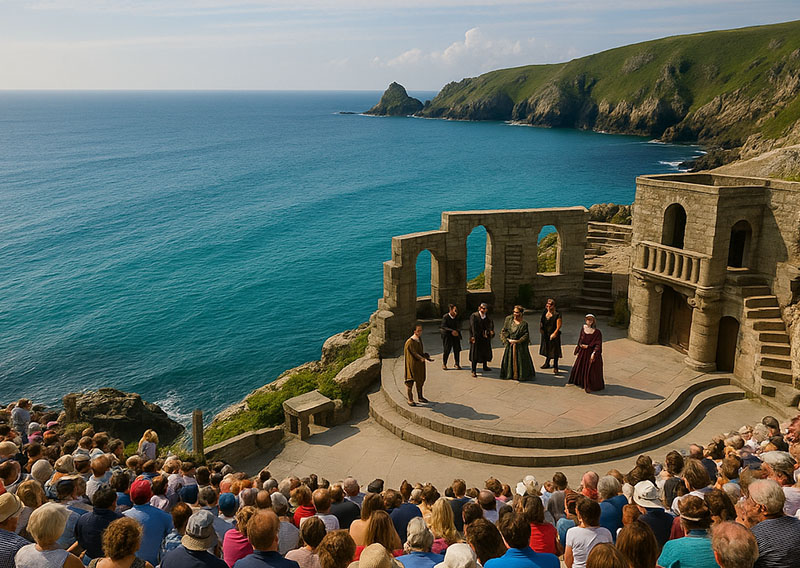
Arwyn Theatre c1970
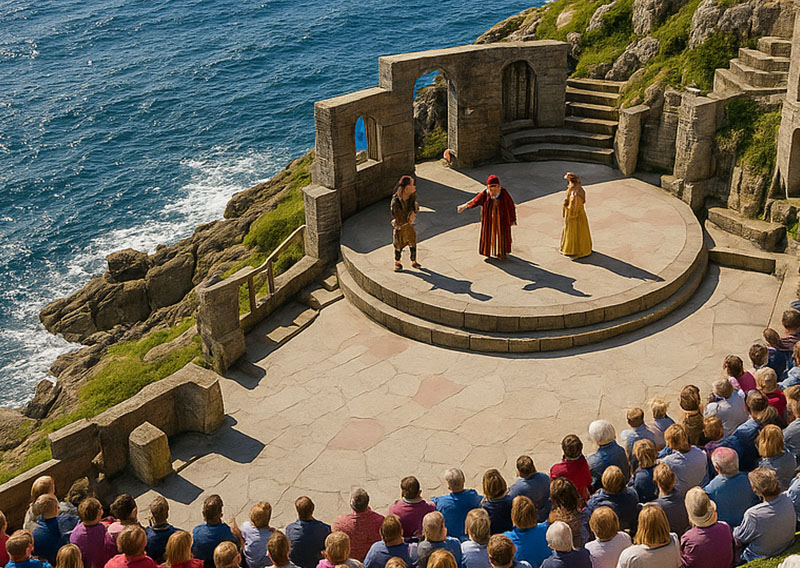
Arwyn Theatre
The Railways of Rowenport
Before the age of steam, Rowenport was a secluded settlement of pinewoods, lobster pots, and cobbled lanes, linked to the rest of Glynoch by little more than winding forest trails and the sea. Its first flirtation with rail transport came not from industry but from the Arwyn-Rowen Estate, whose enterprising owners built a horse-drawn railway across their lands in the 1840s. The line, a rough plateway of wooden rails and iron flanges, was used to carry timber, stone, and household supplies. A rope-worked incline connected the small harbour to the grand house on the hill, where wagons of provisions and even visiting guests were hauled upward by counterweight and mule teams.
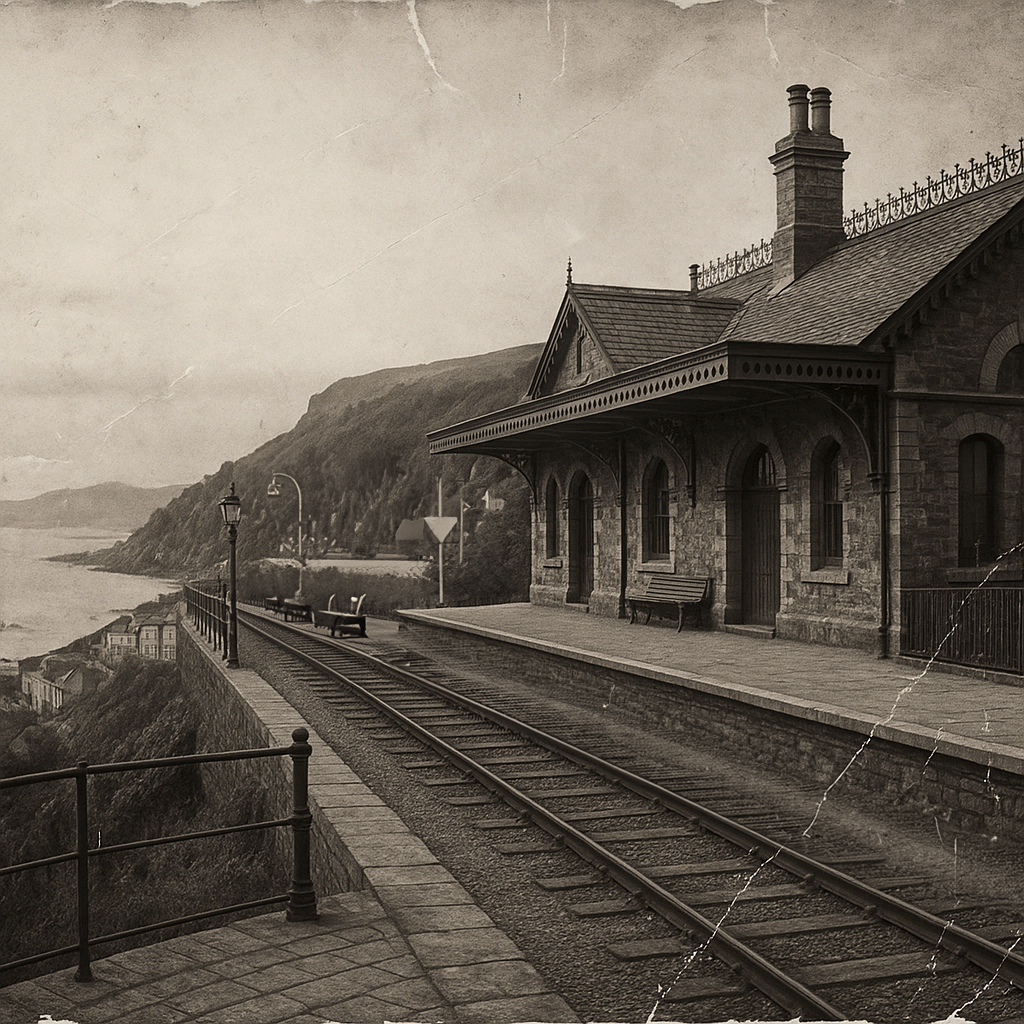
Rowenport Station c1910
When the Glynoch Minerals Railway Company pushed west from Llanchala in 1855, Rowenport’s fortunes changed forever. The new line snaked through dense pine forest, following the contours of the hills before emerging above the sea, its track bed cut into the slopes with remarkable skill. The engineers placed Rowenport Station high above the village—an architectural marvel of stone and iron, perched on a terrace commanding sweeping views of the bay.
Yet this lofty location presented challenges. The harbour, where the lobster boats docked and goods were exchanged, lay far below. To bridge the gap, mules and sledges became a daily sight, ferrying crates of seafood, barrels of pine resin, and the luggage of wide-eyed tourists up and down the steep, cobbled streets. The sound of hooves and iron runners on stone echoed through the alleys, mingling with the cries of gulls and the hiss of steam from the engines above.
With the railway came transformation. Fresh lobster could now reach Llanchalas markets within a day, and visitors from the cities arrived to wander Rowenport’s forest trails and take in the sea air. The timber trade expanded, the theatre prospered, and the once-remote fishing village became a hub of artistry and commerce. Even today, the old incline path and the stone piers of the first horse railway remain as reminders of the ingenuity that bound Rowenport to the wider world—proof that even in the deep forest, the rhythm of progress found its way down to the sea.
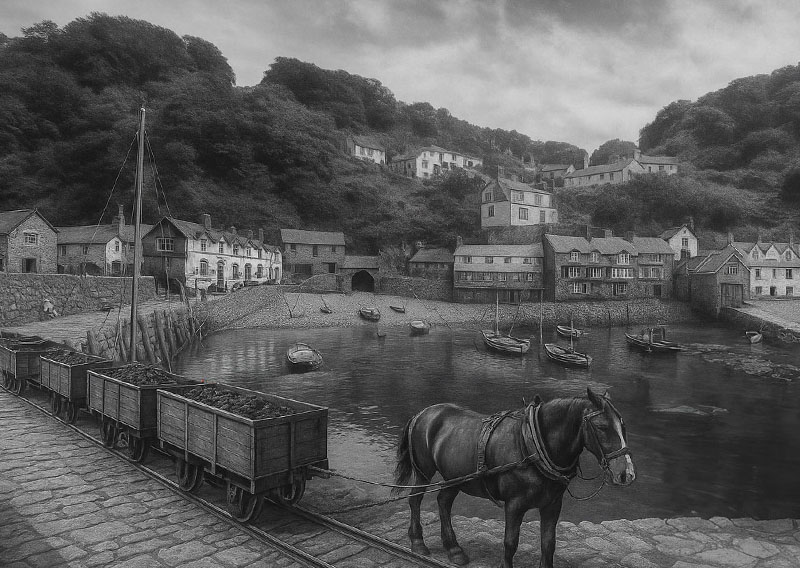
Rowenport Horse Drawn Tramway c1880
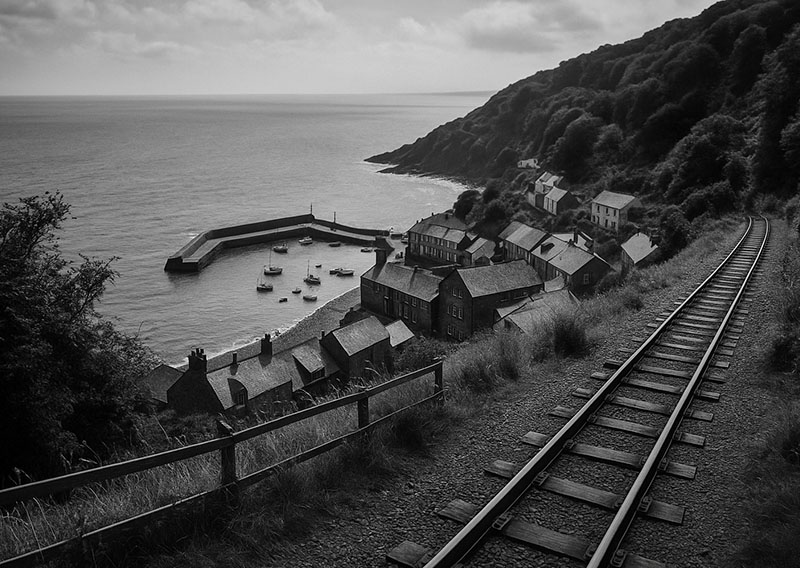
Rails to Rowenport
History
Towns
Rowenport
Rowenport Maps
Rowenport
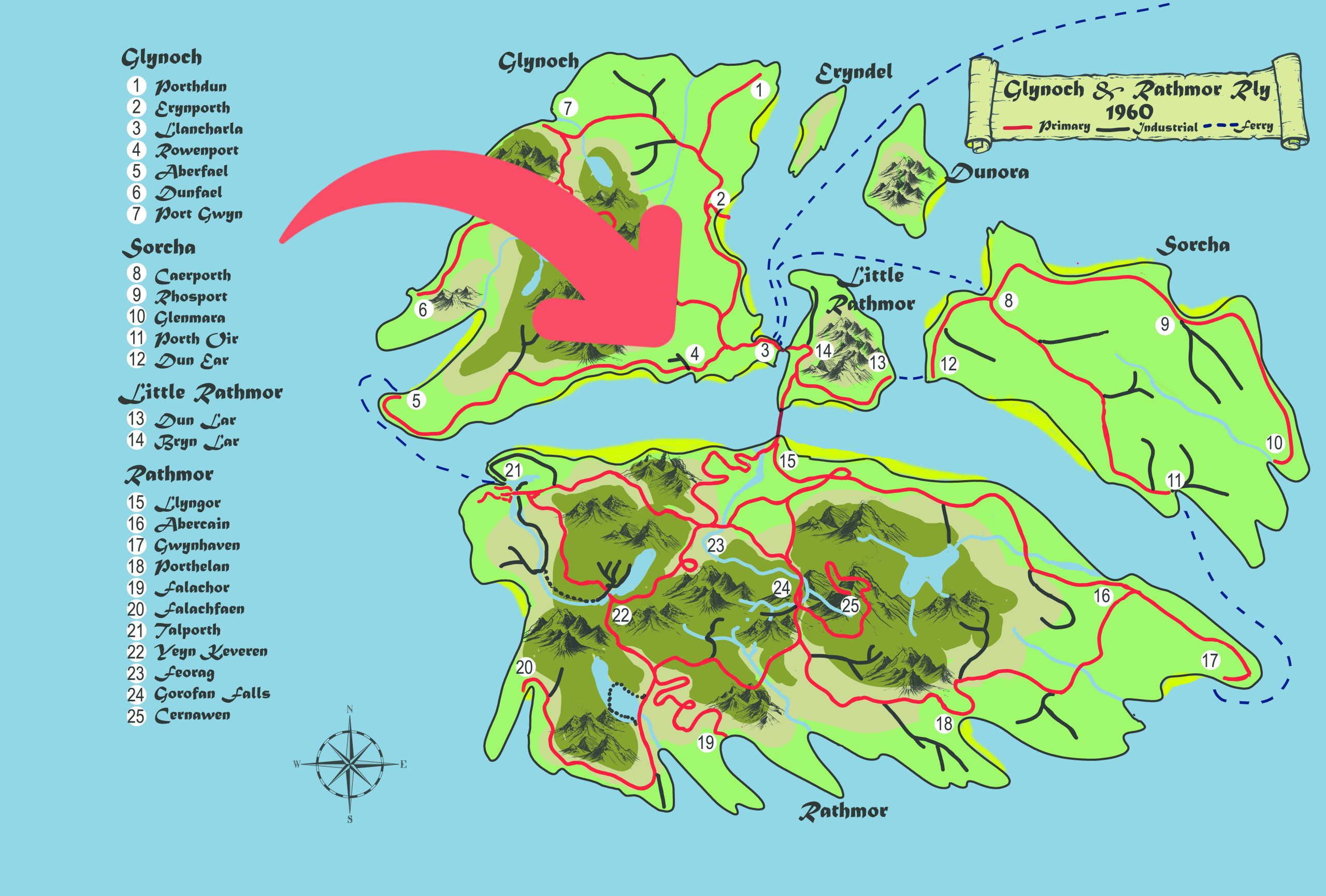
Located on the south coast of Glynoch overlooking The Straights
Explore More Towns...
...View All Towns