

25. Cernawen History
The highest peak on all the islands. Once a sacred druid site, now a huge tourist magnet reached by the Cernawen Mountain Railway
History
Towns
Cernawen
Cernawen Maps
Cernawen
Cernawen (KER-na-wen) – From Cornish carn “cairn, rock” and gwenn “white, holy.” Meaning “Sacred White Cairn.” The name reflects both the snow often seen on its summit and its ancient role as a sacred gathering place.
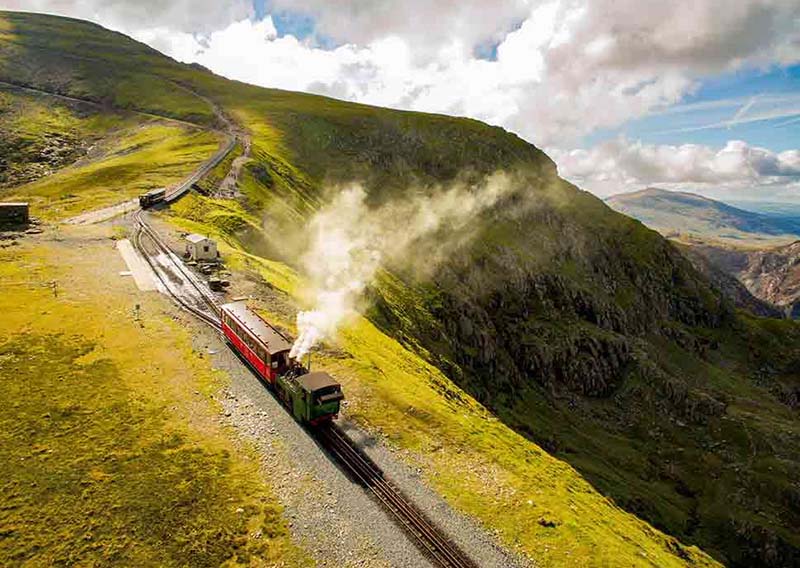
Cernawen Mountain Railway
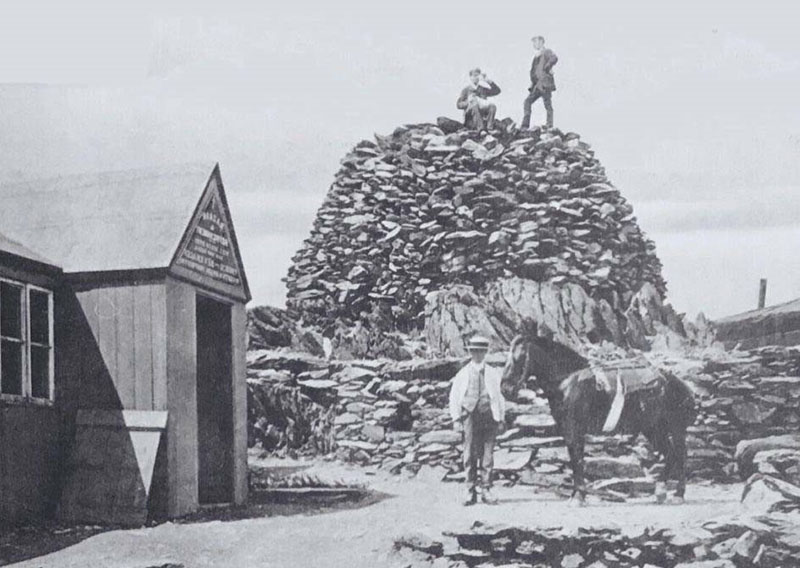
Cernawen Summit c1900
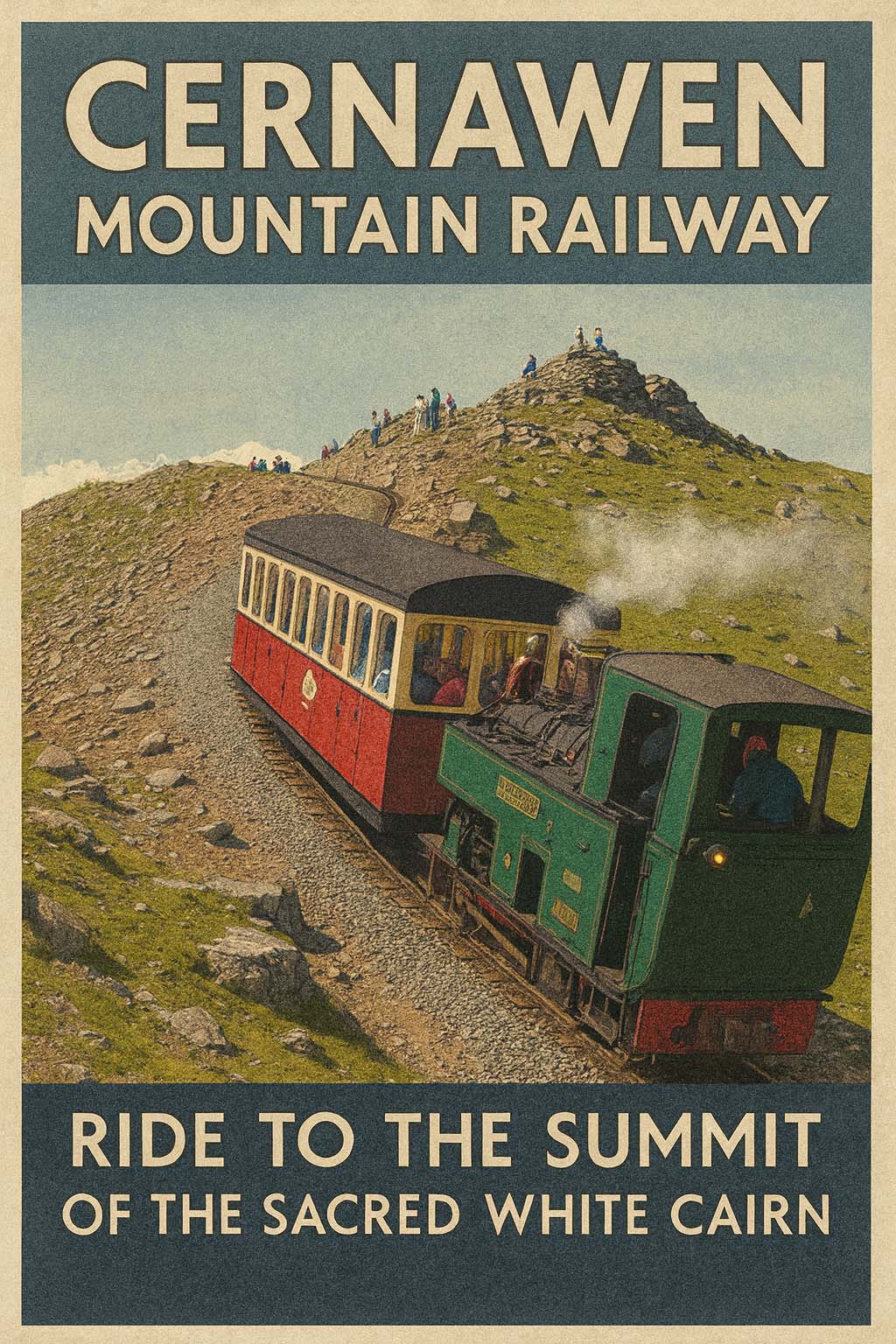
1920s advert
At 2,940 feet, Cernawen is the highest mountain of the Caerwyn Isles, visible from Glynoch and Sorcha on clear days. Its slopes are cloaked in pine and oak, while the summit rises bare and stony, often shrouded in mist. For generations, it has been the subject of myths and reverence. Folklore tells that the mountain was once a giant who lay down to sleep, his white head forever beneath the clouds. Others say the gods of sea and sky held council here, leaving behind great cairns of stone as thrones. Pilgrims once climbed Cernawen at midsummer to light bonfires on its summit, their flames a beacon seen for miles.
Legends also speak of The White Lady of Cernawen, a spirit said to appear on moonlit nights, warning climbers of storms. Many islanders treat the mountain with deep respect, offering a stone to the cairn at the summit for good fortune. Artists and poets have long drawn inspiration from its stark beauty: Turner is said to have sketched the mountain, while 19th-century Romantic poets likened it to Olympus.
Cernawen today is both a symbol of the islands’ natural majesty and a destination for visitors. Whether seen from afar, climbed by foot, or ascended by the railway, its enduring presence binds folklore, faith, and landscape into one awe-inspiring whole.
The Railway to Cernawen
The Cernawen Mountain Railway, completed in 1894, is one of the most remarkable engineering achievements in the islands. Built to connect Gorofan with the mountain’s summit, the line clings to the gorge walls before climbing steeply through forests, across stone viaducts, and into tunnels carved through solid rock. It was designed as a rack-and-pinion railway, using cogwheels to manage the severe gradients, averaging just over 1 in 8 with the steepest section near the summit an eye-watering 1 in 5.
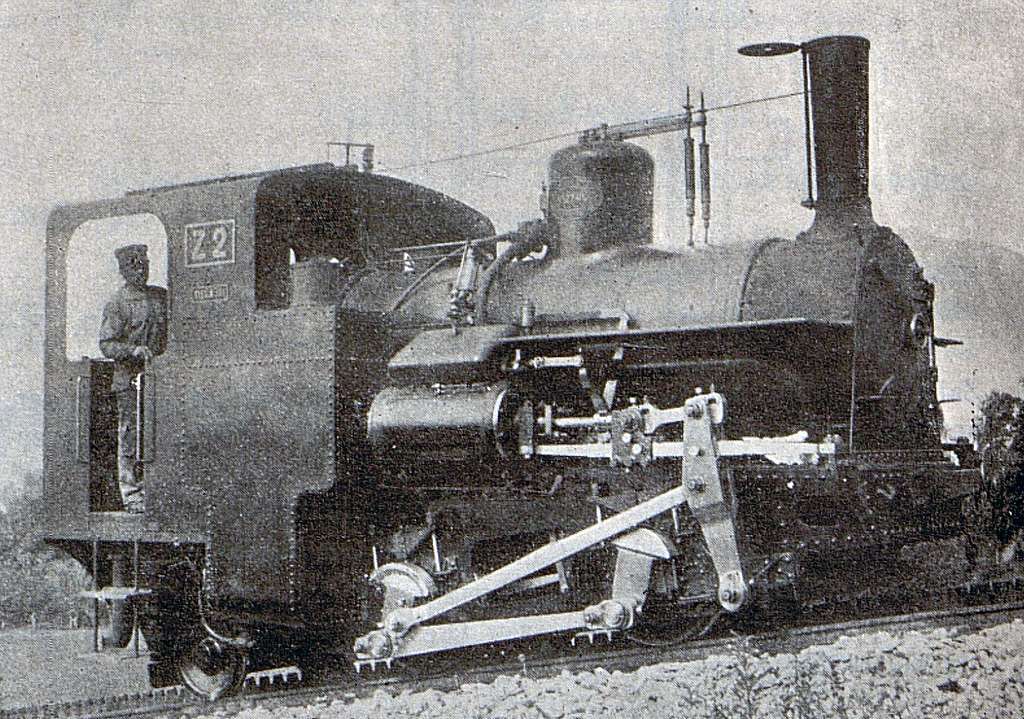
Loco no2 Cernawen c1910
Construction was arduous. Hundreds of navvies laboured in harsh conditions, battling rockfalls, floods from the river below, and fierce winter weather. Supplies and rails were hauled by mules on temporary tramways, while stone viaducts were built by hand using granite quarried nearby. Local legend tells of workers guided by the “Water Maidens of Gorofan,” spirits said to protect those who respected the mountain.
When the line opened, it immediately became a huge tourist success story. Visitors flocked to ride the gravity-defying trains. Elegant wooden carriages, painted in the fondly labelled 'strawberries & cream' livery, carried passengers up the mountain, with stops at scenic lookouts. At the summit station, a hotel and tearoom welcomed travellers with sweeping views across Rathmor and out to the sea.
Today, the Cernawen Mountain Railway is cherished as both transport and heritage. Modern locomotives share the line with lovingly restored steam engines, while visitors from around the world come to experience the breathtaking journey. More than just a railway, it is a living monument to the determination, skill, and imagination of those who dared to conquer the mountain.
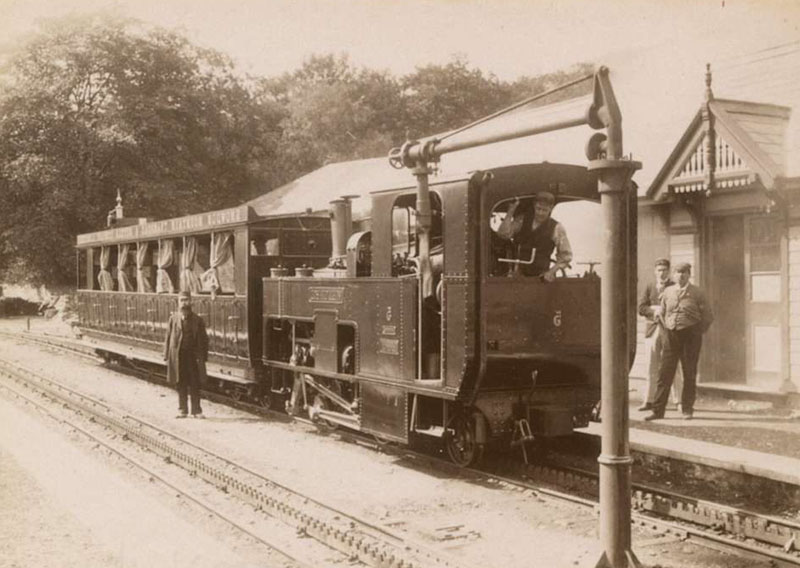
Cernawen Mountain Railway c1899
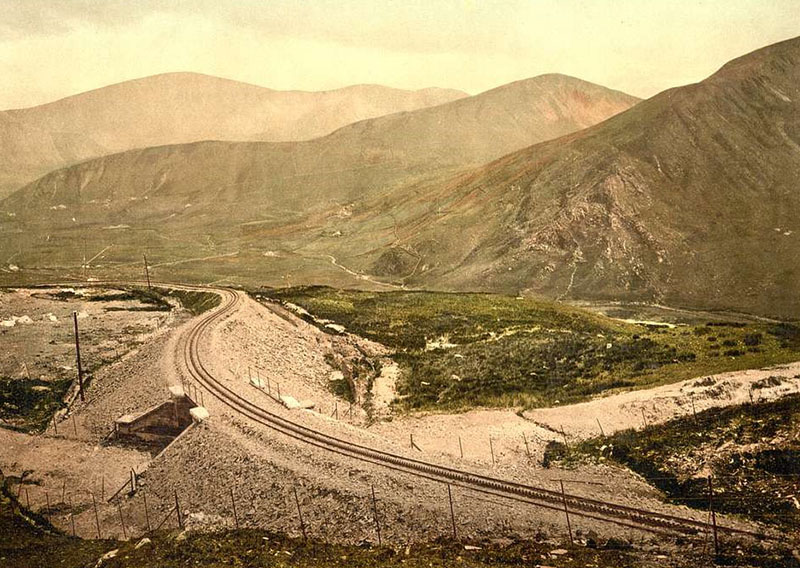
Shortly after completion c1894
History
Towns
Cernawen
Cernawen Maps
Cernawen
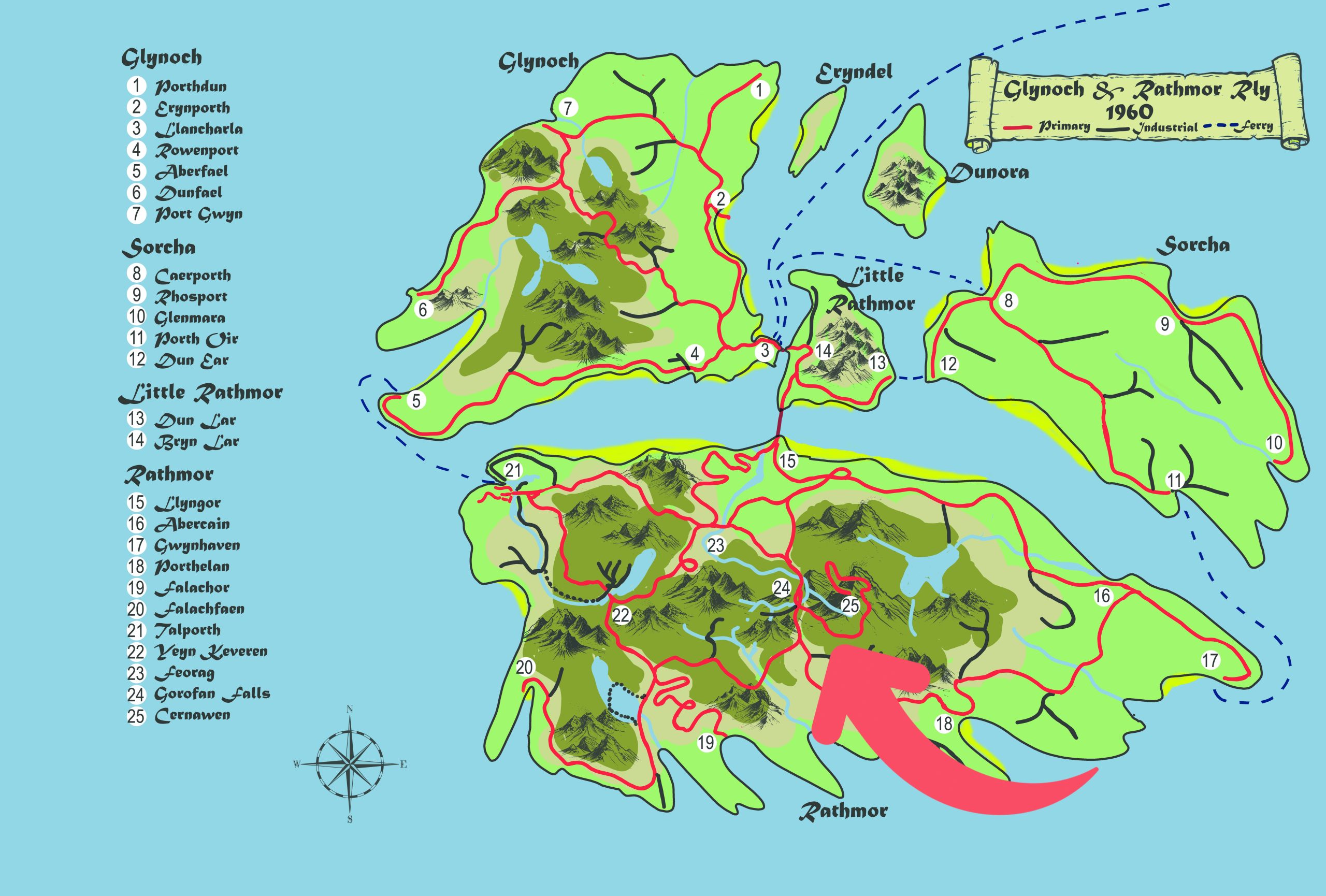
Located in the central highlands of Rathmor
Explore More Towns...
...View All Towns