

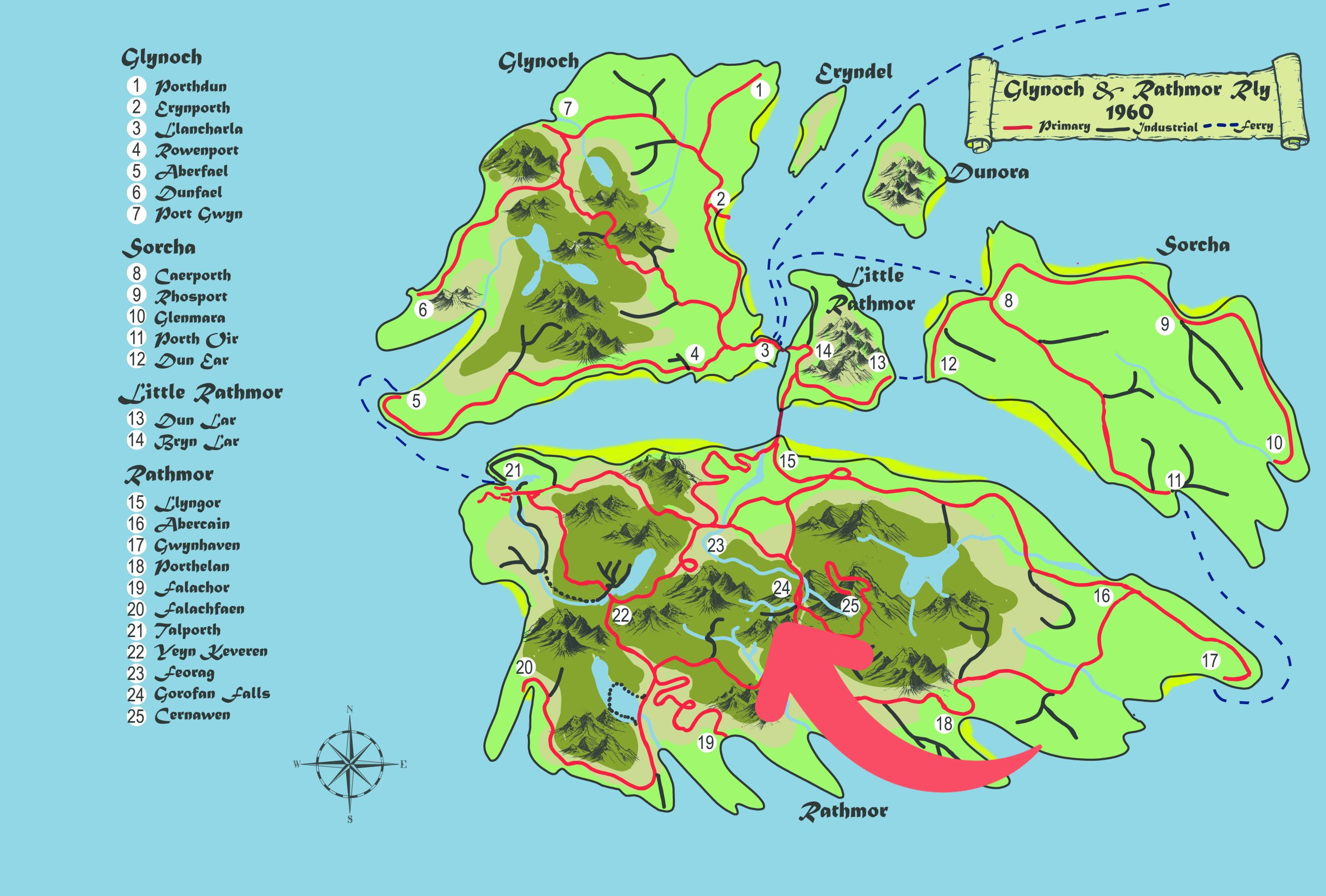
24. Gorofan Falls History
Up in the central highlands is the industrial heart of the G&R. A hardy bunch where winter seems to last for a good 10 months of the year. Tourist gateway to the mighty Cernawen mountain.
History
Towns
Gorofan Falls
Gorofan Falls Maps

Gorofan Layout Information:
NOTE: This is a post all about the Gorofan Falls and its history. There is a separate page documenting the Gorofan layout, including the design and build of the exhibition layout of the same name. Go to Gorofan Layout Page
Gorofan Falls
Gorofan (GOR-o-van) – From Welsh gorof “shelter” and ban “peak.” Meaning 'Falls beneath the sheltering peak.' The name refers to the dramatic waterfalls that cascade through the gorge, long celebrated in folklore and art.
Gorofan lies deep within a dramatic gorge where the Cailleach River, fed by Rathmor’s glacier, plunges over cliffs to create one of the most spectacular waterfalls in the islands. The Gorofan Falls are both a natural wonder and a cultural symbol, their mist and rainbows celebrated by poets and painters for centuries. Folklore speaks of spirits dwelling in the spray, and festivals in midsummer still honour the “water maidens” said to guard the flow.
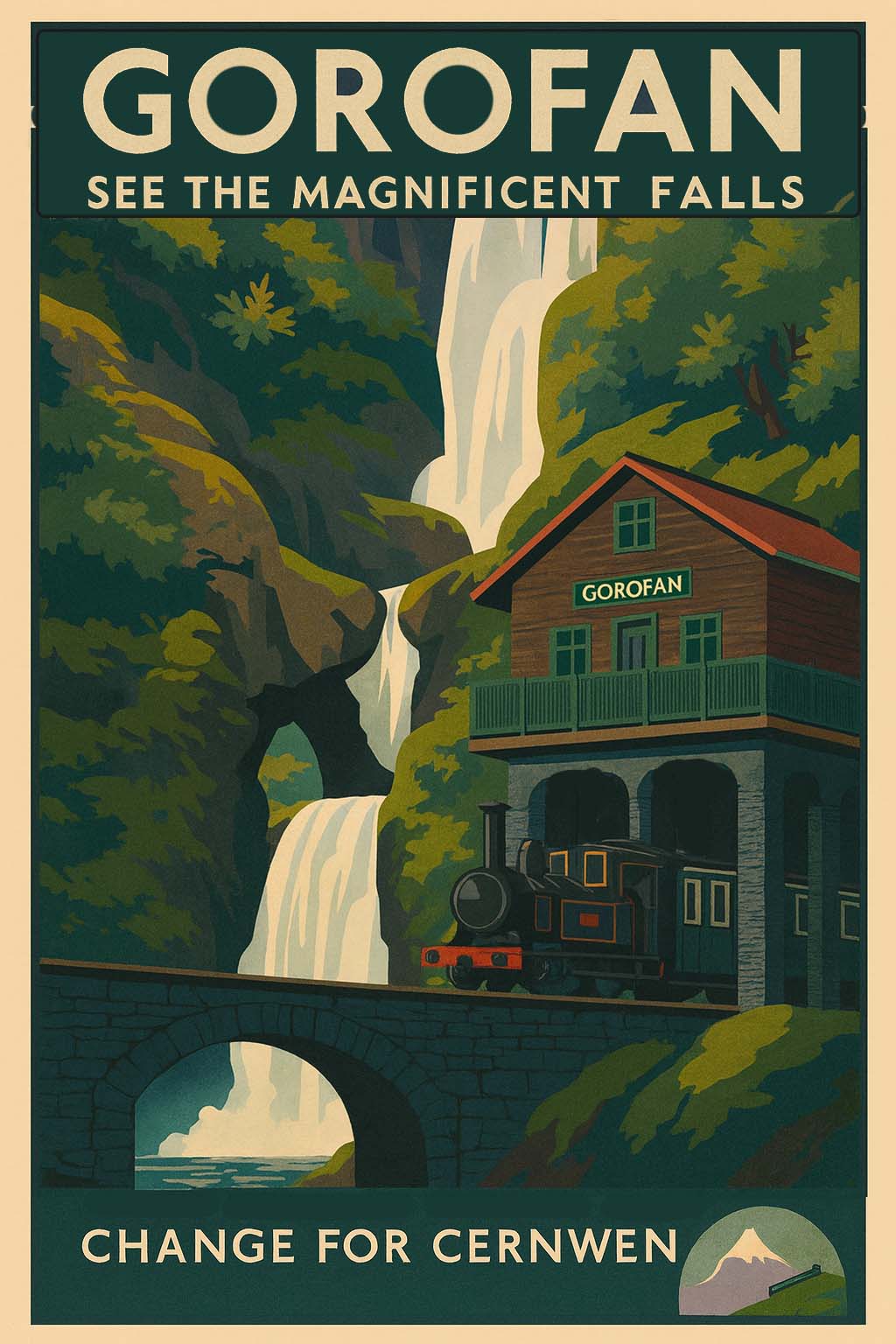
1920s advert
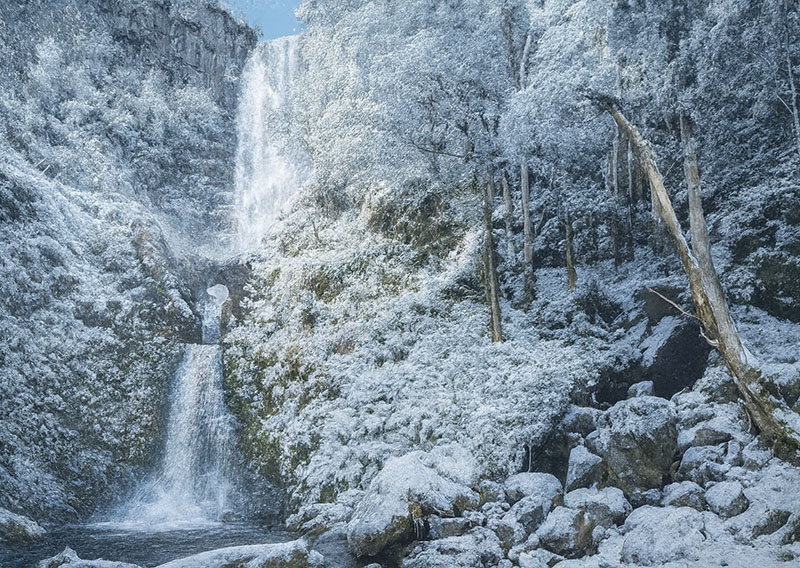
Gorofan Falls
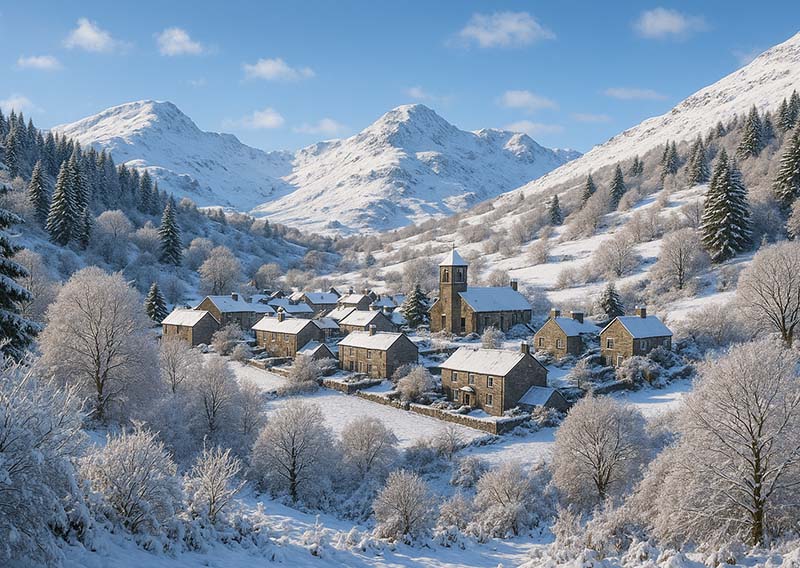
The village of Gorofan
The settlement of Gorofan sits in the rugged central highlands of Rathmor, a land of long winters and hardy folk. Here, the air is crisp, the ground is often dusted with snow, and the horizon is marked by the scars of industry. This is the beating industrial heart of the islands, where generations have hewn wealth from the rocks and forests.
Tin and copper mines delve deep into the mountainsides, while iron ore pits line the ridges, feeding furnaces that once supplied both local blacksmiths and distant shipyards. Forestry adds to the economy, with timber hauled down the valleys for construction and shipbuilding.
Gorofan is at the heart of Rathmor’s ice-mining trade, where blocks of glacier ice are cut, stored, and transported by rail. Before refrigeration, this ice was exported across Europe and was especially vital to the islands' oyster industry. Even today, the old ice houses stand as reminders of a time when Gorofan’s frozen bounty was a prized export.
The railway station, perched precariously on a narrow ledge carved into the gorge wall, is an attraction in itself. Trains rumble alongside the roaring river, their carriages misted with spray. The station is also the junction for the Cernawen Mountain Railway, a steep, narrow-gauge rack railway that winds its way to the summit of Cernawen. Tourists flock here to make the change, eager for the dramatic ride through forests, tunnels, and across high viaducts.
Gorofan is thus a place where the sublime beauty of nature, the ingenuity of industry, and the excitement of travel converge. Whether to marvel at the falls, trace the history of the ice trade, or board the mountain railway, Gorofan offers visitors an unforgettable encounter with the very heart of Rathmor.
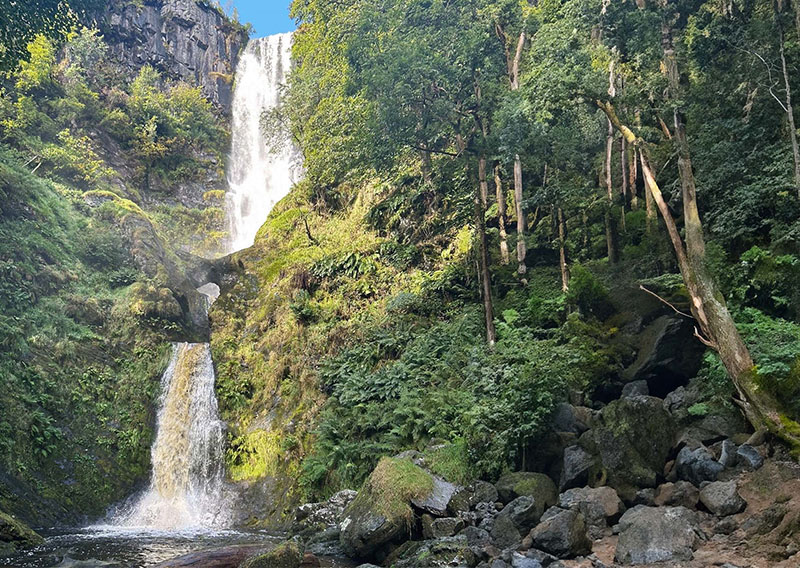
Gorofan Falls in the summertime
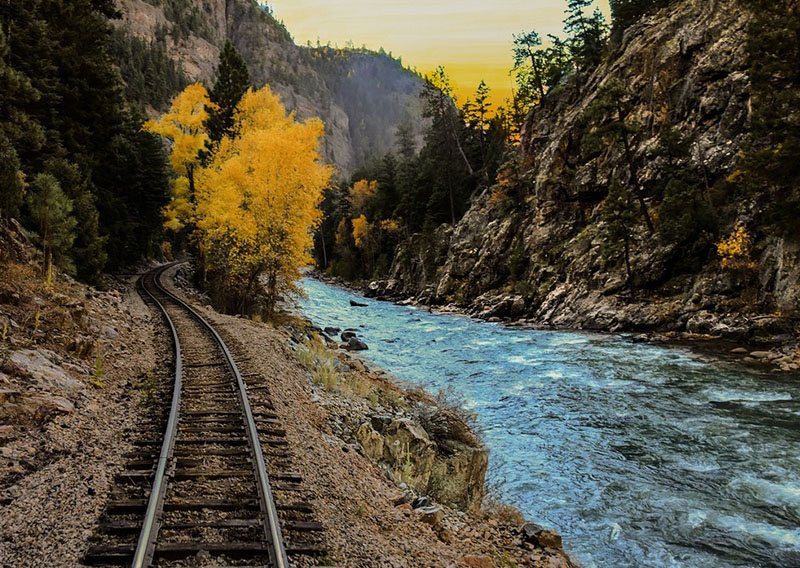
Heading North from Gorofan
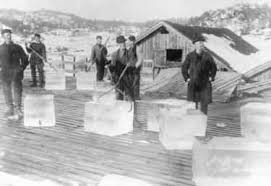
Rathmor Ice Harvest
The Ice Harvest of Rathmor
High in the central highlands of Rathmor lies a glacier that never melts, its flanks cloaked in year-round snow. Long before the age of refrigeration, this frozen treasure was one of the island’s most unusual and profitable exports. From the 17th century onward, islanders developed an industry around the harvesting of ice, cutting and carting great blocks down from the mountains to be shipped across Europe.
The process was laborious but highly organised. Each winter, when snowfall thickened the glacier’s surface, teams of men would climb to the high ice fields armed with saws, chisels, and iron bars. Using wooden frames, they cut the ice into large, square blocks, each weighing several hundred pounds. These were hauled by sledges down steep tracks, where horses or oxen pulled them to insulated storage barns known as ice houses. Packed tightly in layers of sawdust or straw, the ice could be kept from melting for months.
From there, the blocks were loaded onto trains bound for the ports at Porthelan, Talporth and more latterly Llanchala. The ice was in high demand: in kitchens of wealthy families, in hospitals, in breweries and fish markets across Europe. Locally, it was vital to the oyster industry, keeping Abercain’s shellfish fresh for export to distant cities.
Folklore, as ever, attached itself to the work. Harvesters spoke of the “Ice Maidens,” pale figures glimpsed on the glacier during storms, said to guard the frozen heart of Rathmor. To ward off misfortune, the first block of each season was always blessed with a prayer and a splash of whisky.
Though the trade declined with the rise of artificial refrigeration in the 20th century, traces of the industry remain: ice houses crumbling in valleys, old sled tracks still visible on the slopes, and stories of men who braved the high snows to turn nature’s cold into wealth.
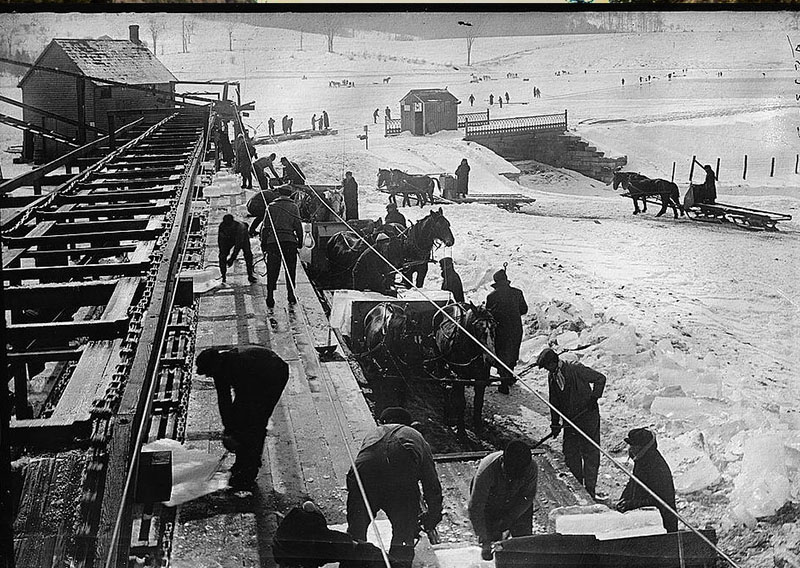
Gorofan Ice Production
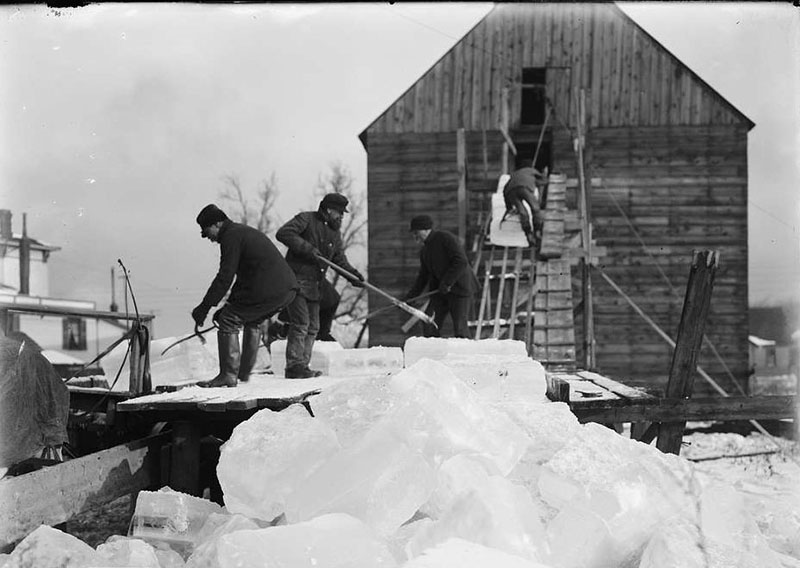
Gorofan Ice Production
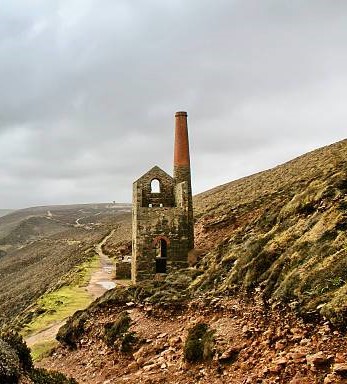
Tin mine – Gorofan
The Mines of Gorofan
The rugged central ranges around Gorofan, in the central highlands of Rathmor, have long been known for their dramatic cliffs, wind-carved ridges, and, beneath the surface, a wealth of valuable minerals. The discovery of tin, copper, and zinc deposits in the mid-19th century occurred almost by accident, when foresters digging access tracks struck unusually heavy, metallic stone. Samples brought to Talporth for examination revealed rich ore seams, triggering a rapid transformation of the once-quiet hillsides into one of the island’s busiest industrial districts.
Tin was the first mineral to be extracted on a large scale. Highly resistant to corrosion and easy to work, tin became essential for producing alloys such as bronze and was widely used in the manufacture of food tins, pipe fittings, and fine metal goods. Soon after, miners uncovered substantial seams of copper, a metal prized for its conductivity and central to the growing electrical and telecommunications industries. The arrival of zinc, found in equally generous quantities, cemented Gorofan’s importance. Zinc serves not only as a critical component of brass but also as a preferred material for galvanising iron, protecting it from rust in the harsh island climate.
At the height of production, the mines supported hundreds of workers, and a network of horse-drawn mineral tramways and rope-worked inclines were laid across the surrounding ranges. These narrow-gauge lines linked the deeper inland workings to the main line at Gorofan and onto the harbour and processing facilities at Talporth, allowing ore to be transported far more efficiently than by cart alone. Trains of small wagons, hauled by sturdy pit ponies, became a common sight against the rugged backdrop. By the early 20th century, as output expanded and technology improved, these tramways were upgraded and replaced by steam-hauled railways, further speeding the movement of ore to Talporth’s smelters and quayside warehouses.
Though some mines have since reduced activity, Gorofan’s legacy remains a cornerstone of Rathmor’s industrial heritage. The islands mineral wealth helped supply the metalworkers, engineers, and exporters for generations, playing a crucial role in the self-sufficiency for which these islands are famed. Today, remnants of tramways, inclines and abandoned shafts stand as reminders of an era when Gorofan’s earth powered industries across the archipelago—and far beyond.
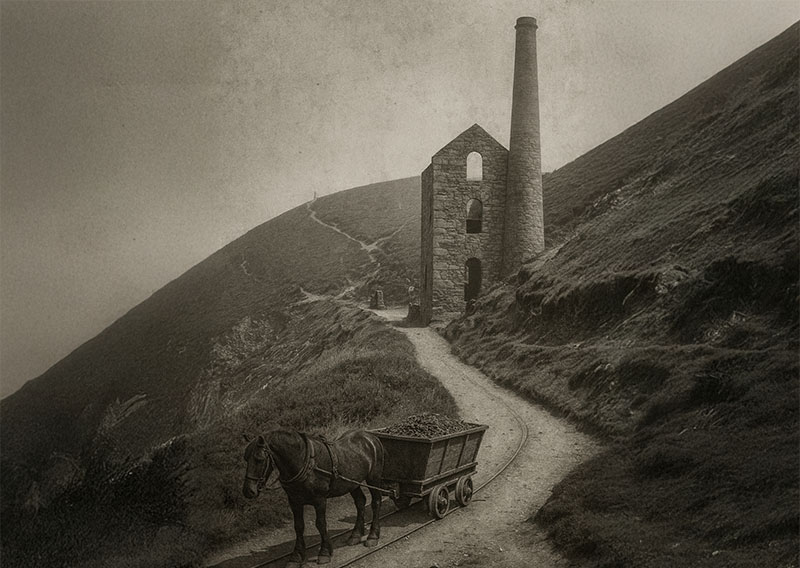
Gorofan c1890
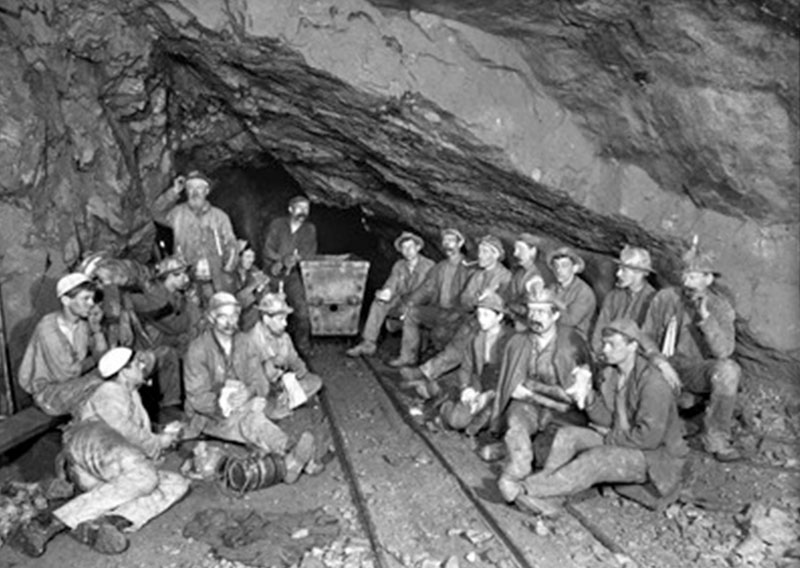
Gorofan zinc mine c1920
The Railways to Gorofan
The earliest railway to reach Gorofan was from the South in 1852. The Porthelan Logging Co had been pushing further inland in the search of new logging grounds. The horse-drawn tramway took loads down to the southern port of Porthelan where the sawmills were located. Prepared timbers were then sent all over Europe. The line was not a huge financial success initially. The logging businesses from the North of the island avoided the expense of a tramway by floating their timber down the Cailleach River to Llyngor.
The tramway was not altogether bad news though, as the discovery of minerals in the surrounding valleys really needed a quick and efficient way down to the coast.
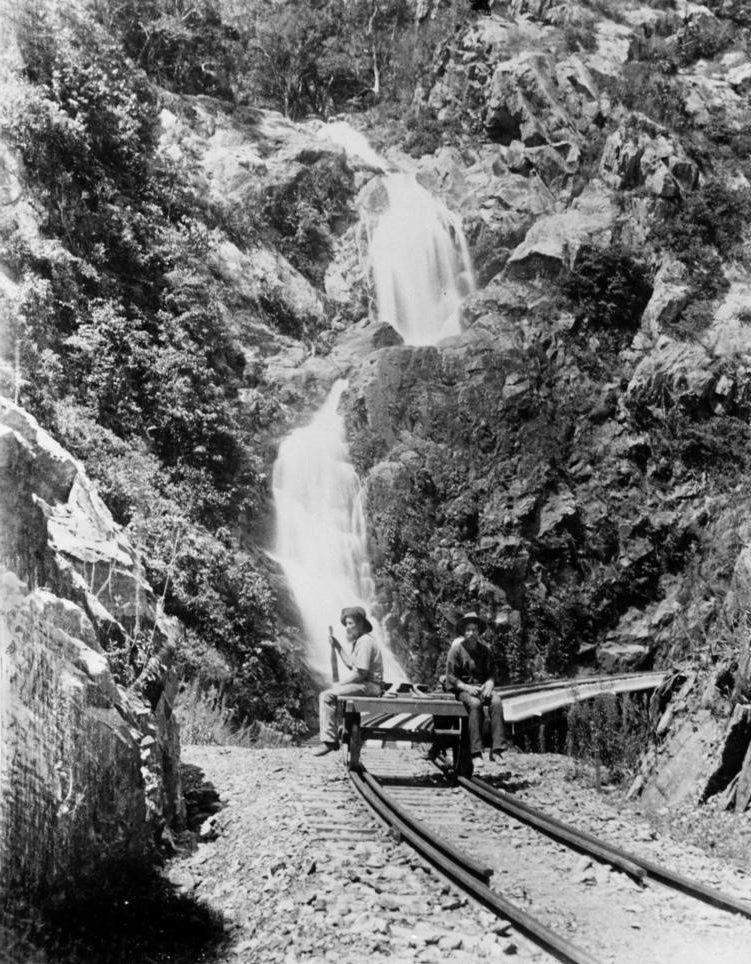
Gorofan Gorge c1910
The faster transfer times of the tramway made little difference to timber, but the demand for ice made the route more than pay its way. By 1860 the tramway was using locomotives, with ice, timber and the growing minerals trade providing plenty of traffic.
By 1880 two more railways had made it to Gorofan. In a bid to get a slice of the growing minerals trade, a line from Llyngor was built and the Talporth & Feorag Railway had completed the grand Glen Feorag Viaduct and forged on with their route to the interior. For the first time freight and passengers had a route right through the mountainous interior of Rathmor.
In the years after the merger of the various railway companies to form the Glynoch and Rathmor Railway in 1885, it was decided to build yet another line from Gorofan. This time it would be a very steep cog railway up the impressive Cernawen Mountain. The G&R Railway board were determined to maximise the tourism opportunity and were quick to hire engineers Sir Douglas Fox and Andrew Fox of London, who had designed a railway to run up Yr Wyddfa in Wales. The Welsh railway had been designed in 1869, but due to landowner issues nothing had been built, so in 1890 the engineers were put to work on the Cernawen Mountain Railway, which opened in 1894, beating the welsh by 2 years.
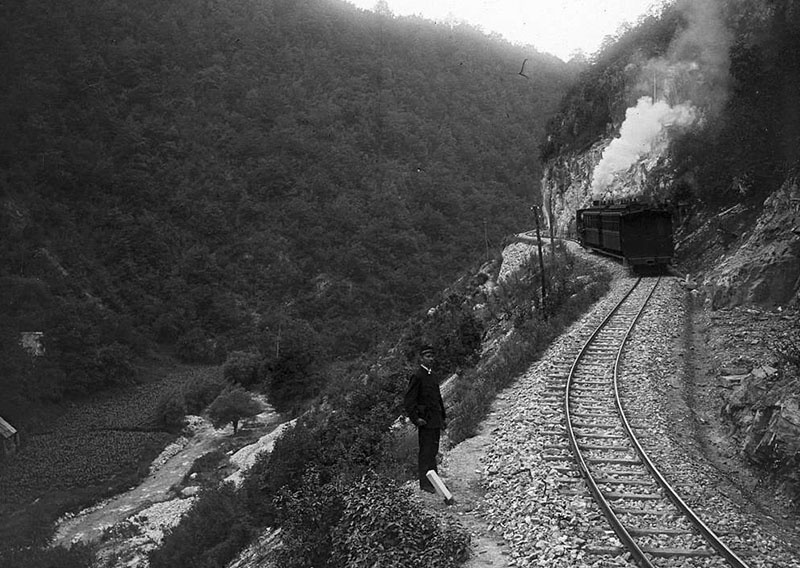
Gorofan Gorge c1880
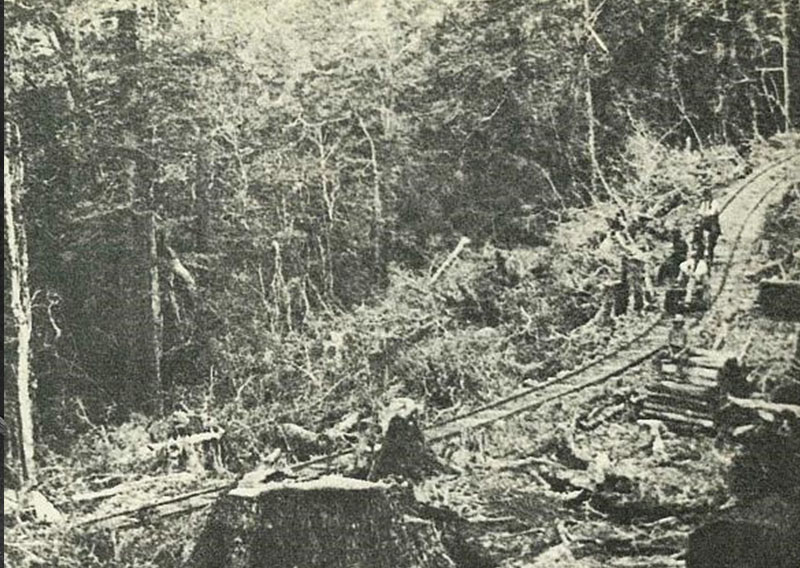
Gorofan Logging Tramway c1855
History
Towns
Gorofan Falls
Gorofan Falls Maps
Gorofan Falls
Located in the central highlands of Rathmor
Explore More Towns...
...View All Towns