


Land Reclamation in North Glynoch
An ambitious project in to drain the tidal marshes of north Glynoch to provide much needed farmland
History
Industries

Land Reclamation
Map
Land Reclamation in North Glynoch
Between Porthdun and Port Gwyn once stretched a vast expanse of salt marshes. For centuries, these lowlands were seen as treacherous and useless, regularly drowned by spring tides that swept far inland. Locals spoke of “The Drowned Fields,” haunted by the ghosts of farmers who tried and failed to tame the land. Yet in the late 18th century, a visionary landowner set his sights on reclamation. With embankments of stone and earth, channels cut to drain the tides, sluices fitted to control the flow and windmills to pump the fields dry, the marshes were slowly wrested from the sea. The work took decades, employing hundreds of laborers, but the reward was land both fertile and rich in hidden resources.
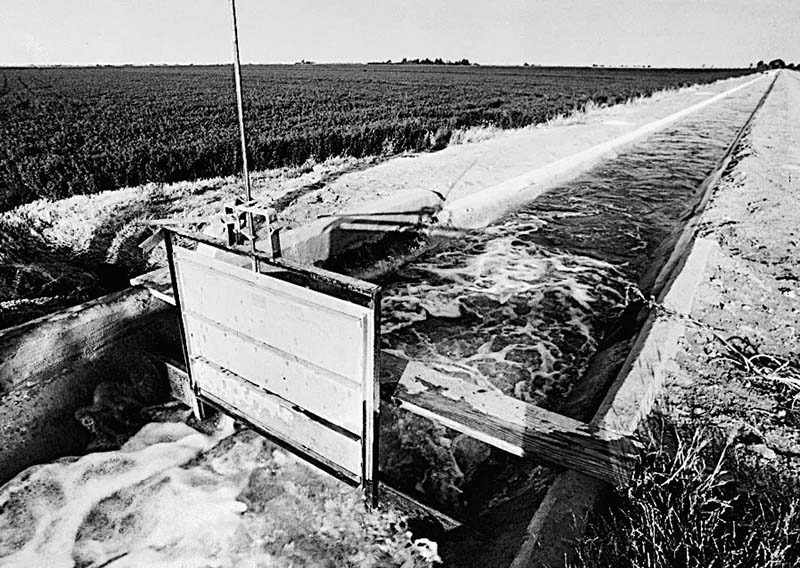
Glynoch Land Reclamation
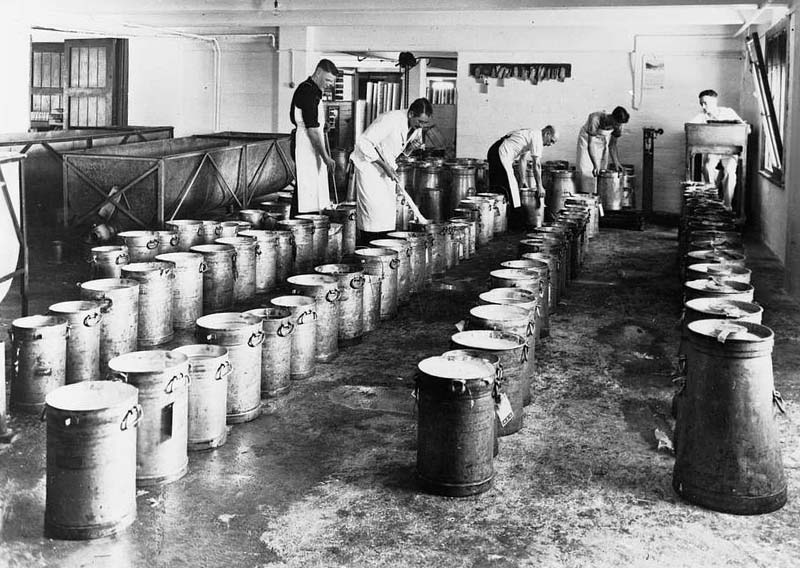
As well as creating much needed space for additional agriculture, the reclaimed lands created new opportunities, two of which have endured and prospered to this day. The first was sea salt. Shallow evaporation pans were dug into the flats, where seawater was trapped and dried by sun and wind. This produced pure, crystalline salt, prized for preserving fish and meat. Before the railway, Glynoch relied on imported salt, but the new salt works soon met local demand and exported to other islands, their product branded as the “White Gold of Glynoch.” The salt production was mainly based in the east and controlled from Porth Dun.
The second innovation, and the one embraced fully by the people of Port Gwyn, was the cultivation of esparto grass, a hardy plant that thrived in the brackish reclaimed soils. Traditionally used for rope and matting, the landowner saw a greater potential: esparto could be pulped into high-quality paper. Bales of the grass were sent by rail to the paper mills of Llancharla, where they were transformed into strong, fine sheets. Esparto paper gained a reputation for durability and was used for books, ledgers, and even government documents.
The reclamation not only reshaped the landscape but also the fortunes of Glynoch. Where once only seabirds wheeled over desolate marsh, now stood salt pans, fields of waving grass, and thriving industries. The transformation became a symbol of human ingenuity triumphing over nature’s challenges, turning drowned land into a cornerstone of Glynoch’s prosperity.
The railway has benefitted from the scheme in a couple of ways. As the wetlands dried out they took early advantage in constructing a new line to the west, allowing for for a much faster route to Port Gwyn and beyond, hours faster than the slow, steep and curvy route through the highlands. It is also regularly used to transport materials for the constant repair and maintenance of the dykes and drainage channels.
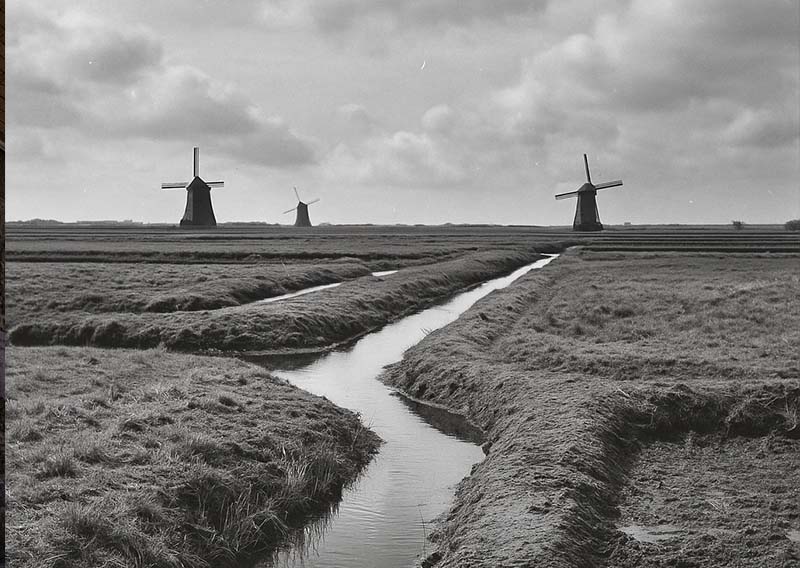
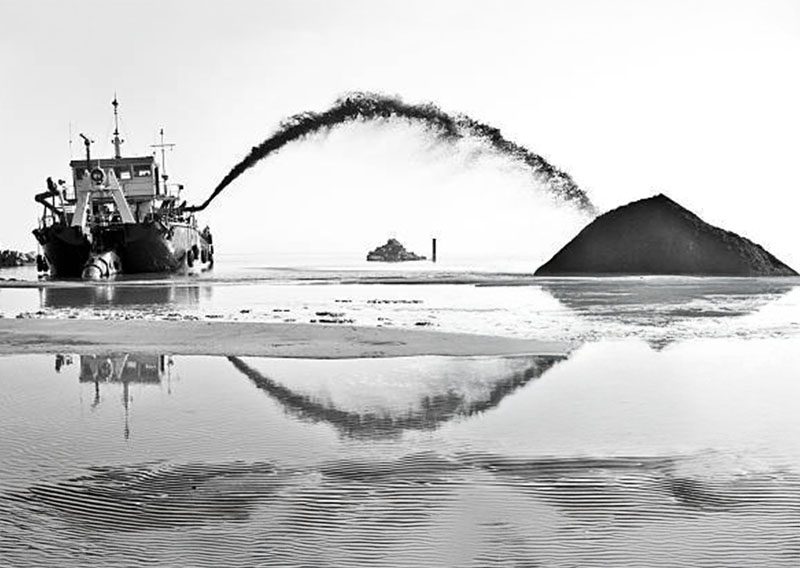
Land Reclamation - Porthdun c1860
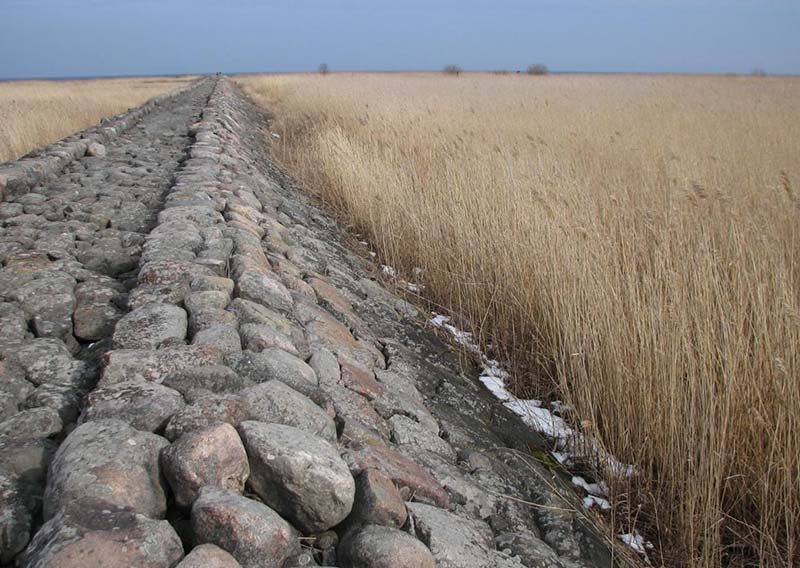
Land Reclamation Barrier - near Port Gwyn
History
Industries
Land Reclamation
Map
Land Reclamation
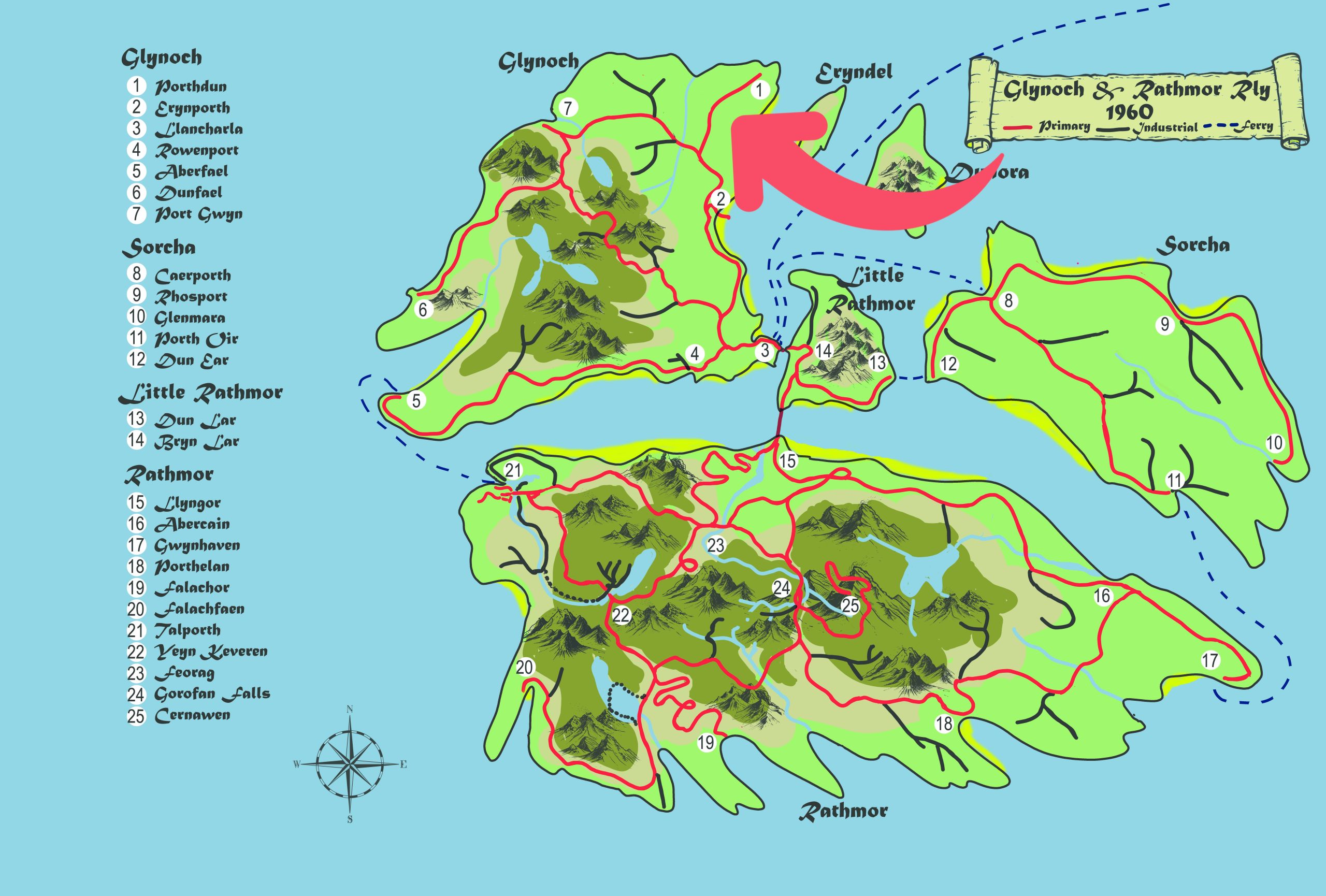
Located in north Glynoch between the towns of Porthdun and Port Gwyn