


1. Porthdun History
The oldest settlement on Glynoch, founded in the early medieval era as a fortified hilltop settlement and grew into a vital defensive fort at the entrance to Llanchala Bay.
History
Towns
Porthdun
Porthdun Maps
Porthdun
Porthdun (POR-doon) – From Porth as in "harbour" and Dun, meaning “fortress”, 'The Fortified Harbour'. The oldest recorded settlement on the island of Glynoch, originally a medieval hillfort guarding the entrance to Llanchala Bay.
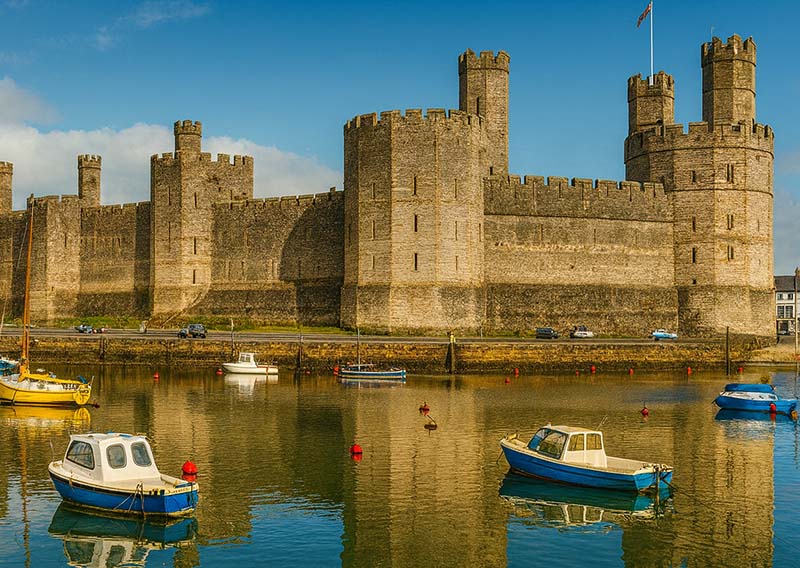
Porthdun Castle
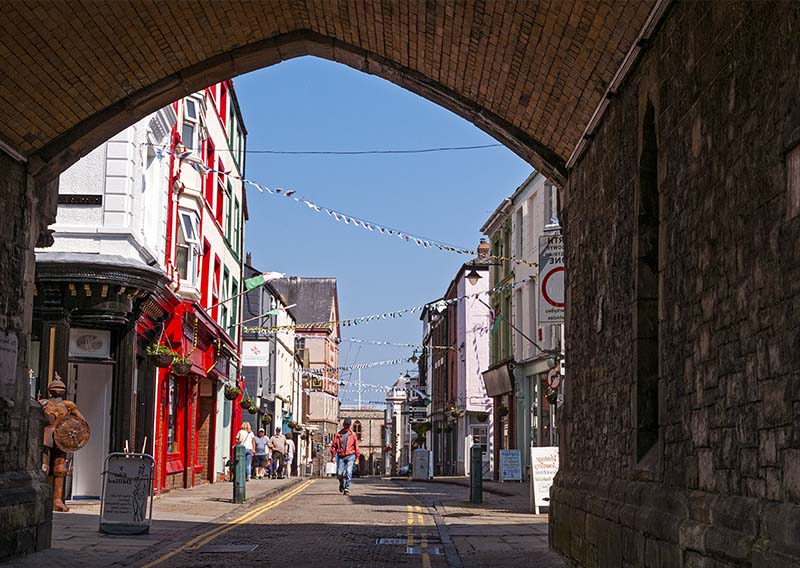
Porthdun
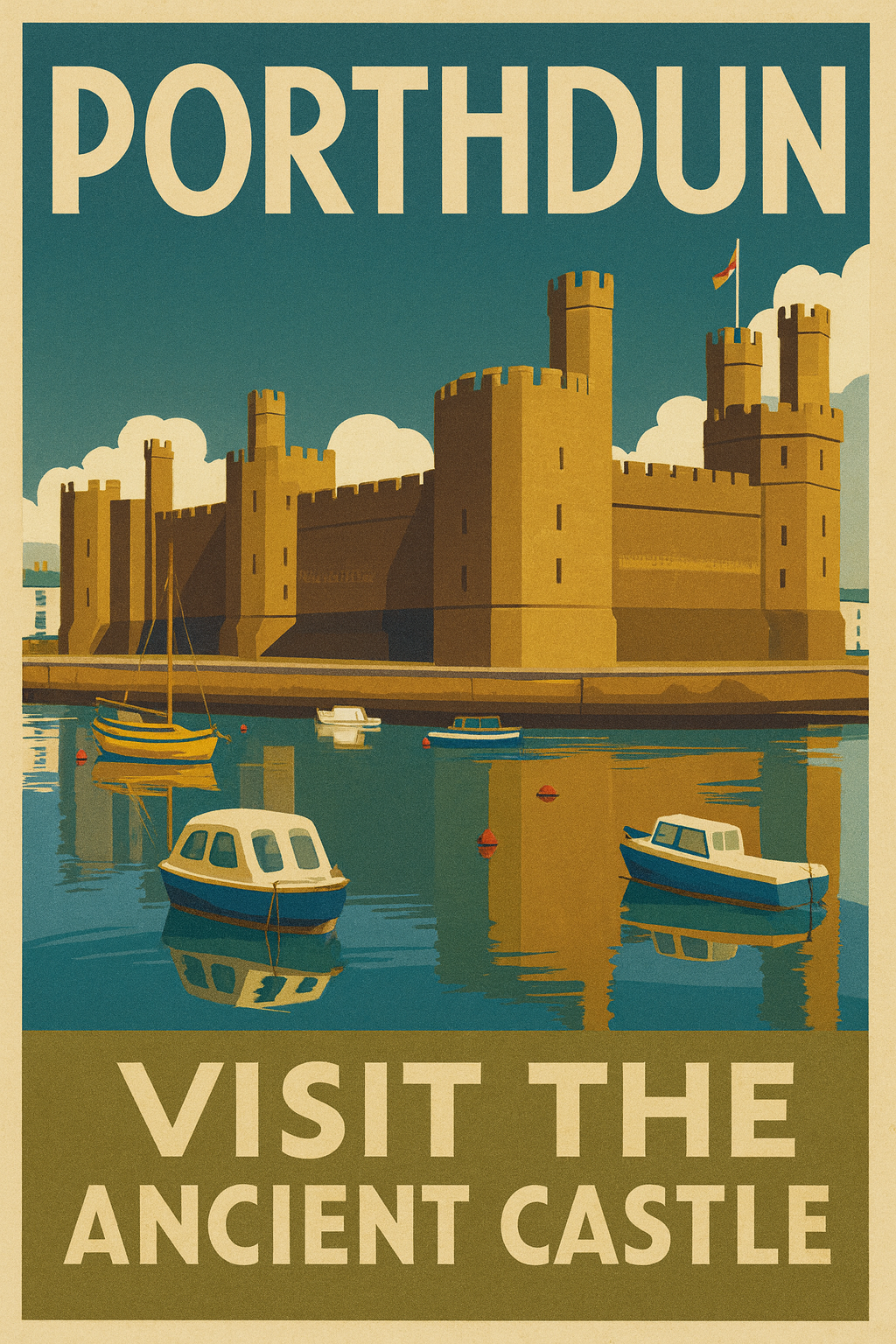
1920's advert
Porthdun stands proudly on Glynoch’s northern coast—the island’s oldest stronghold and its ancient gatekeeper to Llanchala Bay. Once a fortress of kings and warriors, now a working harbour town surrounded by reclaimed land and industry, Porthdun remains a place where history, salt, and sea winds meet.
Now a coastal town known for its salt pans, beef grazing, and land reclamation projects. A strategic and historic site that became an industrial and agricultural hub after the mid-19th century transformation of the northern marshlands.
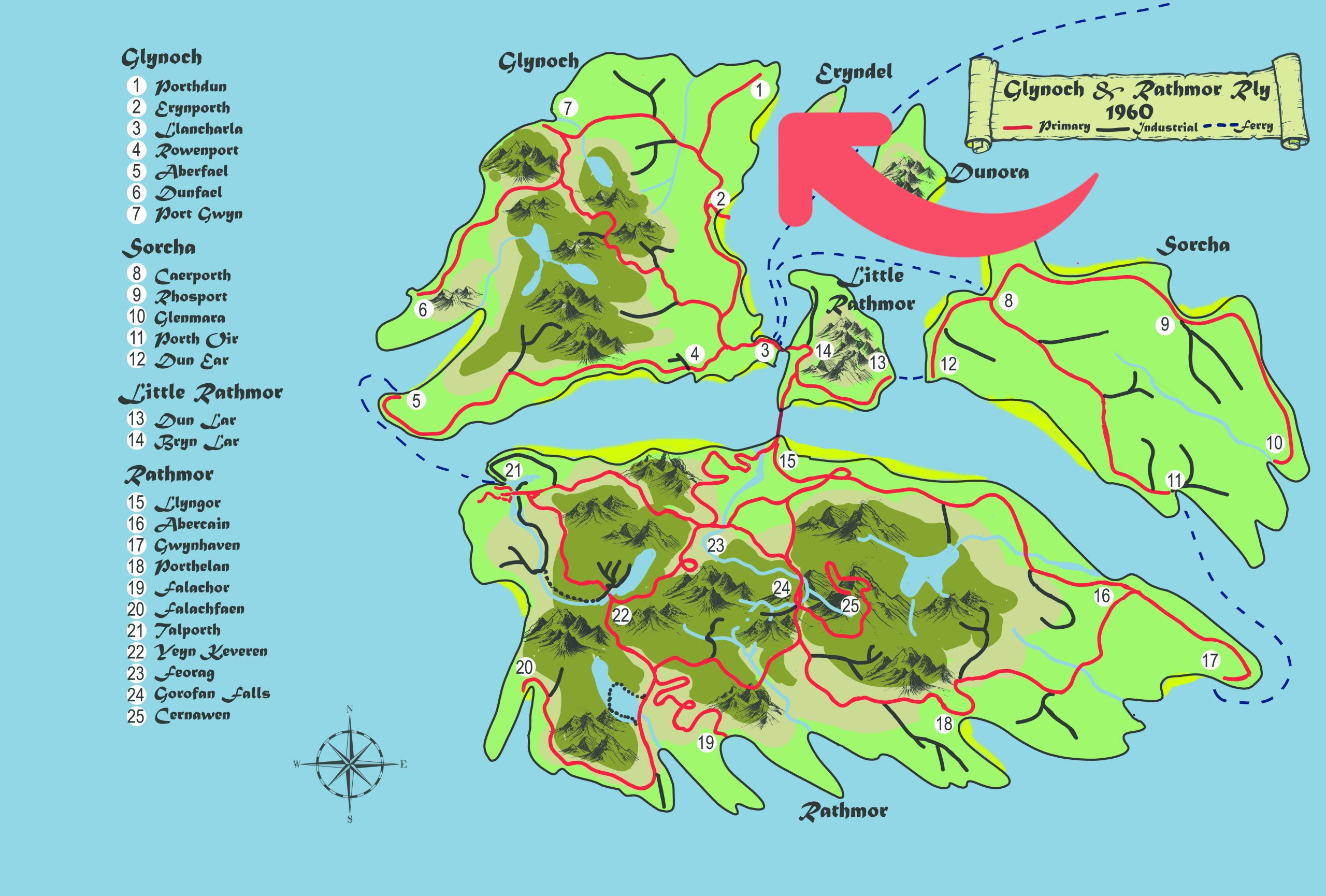
Porthdun, or Fforddun in the old tongue, is steeped in history. Perched on a headland overlooking the entrance to Llanchala Bay, it began as a fortified settlement in the early medieval era—a cluster of timber palisades and stone watchtowers guarding the sea route into the island’s interior. For centuries, its hilltop fort stood as Glynoch’s first line of defence, together with similar forts on the islands of Eryndel and Dunora, watching over the narrow straits where traders and invaders alike once passed. Archaeologists have uncovered fragments of early Celtic pottery and iron spearheads in the surrounding fields, silent witnesses to the centuries of conflict and trade that shaped the town’s destiny.
The two small islands at the entrance to Llanchala bay are both now uninhabited, with little or no evidence of the wooden fortresses left. Eryndel has been taken over by the largest colony of puffins in the northern hemisphere, which is now a huge draw for bird-watchers and tourists alike. Dunora is an archaeologists dream, with little disturbance for centuries, the treasure trove of information gathered from years gone by has been invaluable in our quest to understand the past.
As peace and prosperity came to the islands, Porthdun turned its gaze from war to work. The great land reclamation projects of the 19th century transformed the salt marshes that stretched between Porth Dun and Port Gwyn. Sea walls and drainage canals converted thousands of acres of tidal flats into fertile pasture and industrial ground. The old salt pans, once worked by hand, expanded into a thriving sea salt industry, their white crystals prized for their purity and flavour. Alongside them, the new reclaimed fields became home to vast beef herds, the cattle thriving on the brackish grasses that grew where the sea once lapped.
Despite its transformation, the spirit of the old stronghold remains. The huge castle walls still dominate the town, now overlooking docks and salt sheds instead of warships. Locals speak with pride of Porthdun’s resilience—a town that has reinvented itself through every age, from fortress to farmstead, from marshland to market.
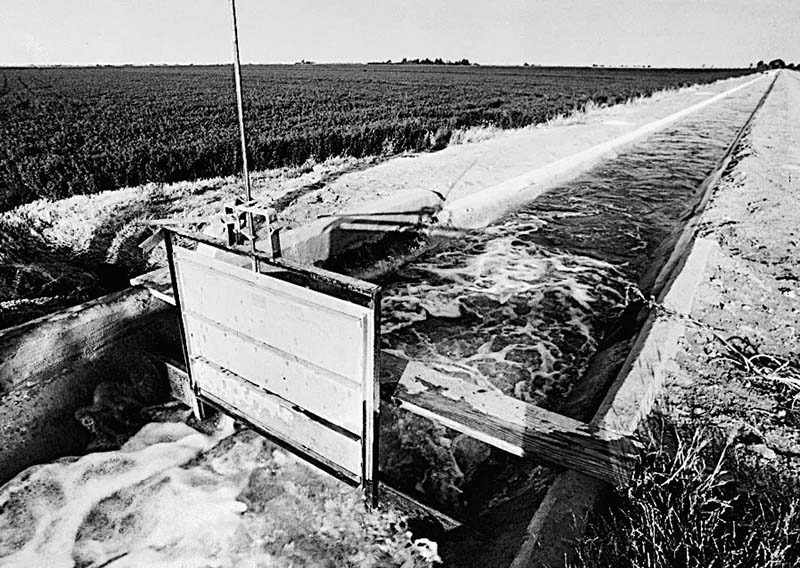
Glynoch Land Reclamation
Land Reclamation in North Glynoch
Between Porthdun and Port Gwyn once stretched a vast expanse of salt marshes. For centuries, these lowlands were seen as treacherous and useless, regularly drowned by spring tides that swept far inland. Locals spoke of “The Drowned Fields,” haunted by the ghosts of farmers who tried and failed to tame the land. Yet in the late 18th century, a visionary landowner set his sights on reclamation. With embankments of stone and earth, channels cut to drain the tides, sluices fitted to control the flow and windmills to pump the fields dry, the marshes were slowly wrested from the sea. The work took decades, employing hundreds of laborers, but the reward was land both fertile and rich in hidden resources.
As well as creating much needed space for additional agriculture, the reclaimed lands created new opportunities, two of which have endured and prospered to this day. The first was the cultivation of esparto grass, a hardy plant that thrived in the brackish reclaimed soils. Traditionally used for rope and matting, the landowner saw a greater potential: esparto could be pulped into high-quality paper. Bales of the grass were sent by rail to the paper mills of Llanchala, where they were transformed into strong, fine sheets. Esparto paper gained a reputation for durability and was used for books, ledgers, and even government documents. Esparto grass production was mainly in the west, near Port Gwyn.
The second innovation, and the one embraced fully by the people of Porthdun, was sea salt. Shallow evaporation pans were dug into the flats, where seawater was trapped and dried by sun and wind. This produced pure, crystalline salt, prized for preserving fish and meat. Before the railway, Glynoch relied on imported salt, but the new salt works soon met local demand and exported to other islands, their product branded as the “White Gold of Glynoch.”
New land not used for salt production or Esparto grass, was set aside for cattle grazing. The brackish grasses that made up the diet of these herds, gave the meat a very distinct flavour, unique to the area, and was prized in restaurants across the islands. Thanks to refrigeration, Porthdun Beef is now sent to all corners of nothern Europe.
The reclamation not only reshaped the landscape but also the fortunes of Glynoch. Where once only seabirds wheeled over desolate marsh, now stood salt pans, fields of waving grass, and thriving industries. The transformation became a symbol of human ingenuity triumphing over nature’s challenges, turning drowned land into a cornerstone of Glynoch’s prosperity.
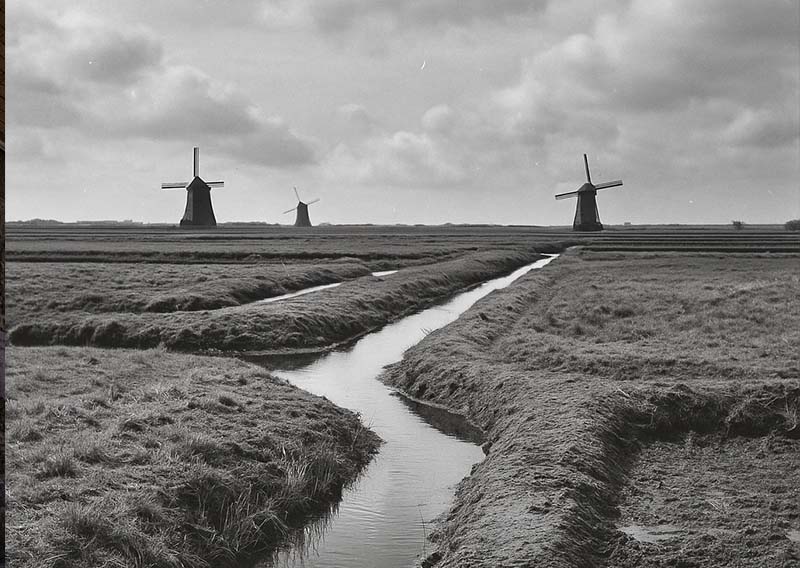
Land Reclamation - Porthdun c 1860
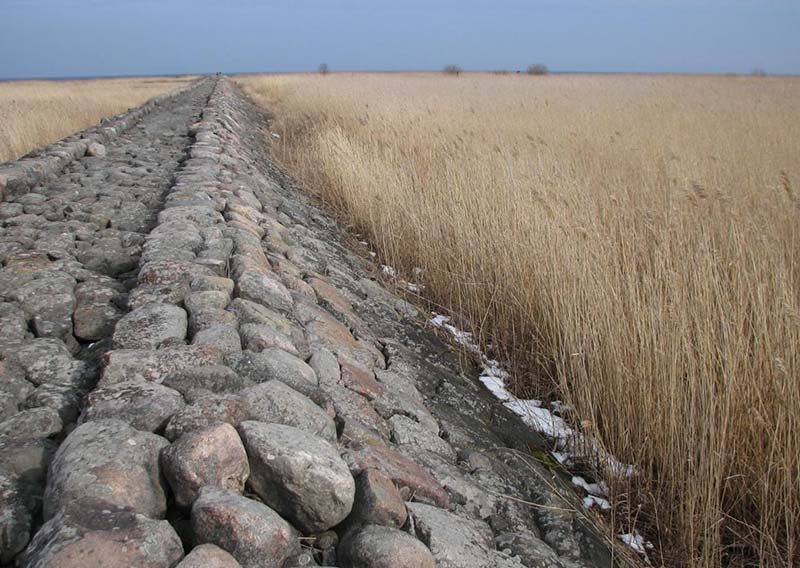
Land Reclamation barrier - near Port Gwyn
The White Gold of Porthdun
After the great land reclamation projects of the mid-19th century transformed the marshes of North Glynoch into a patchwork of fertile plains, a remarkable new industry took root along the tidal flats near Porthdun — sea salt production. What was once a bleak stretch of brackish wetland became the beating heart of the “White Gold Coast.”
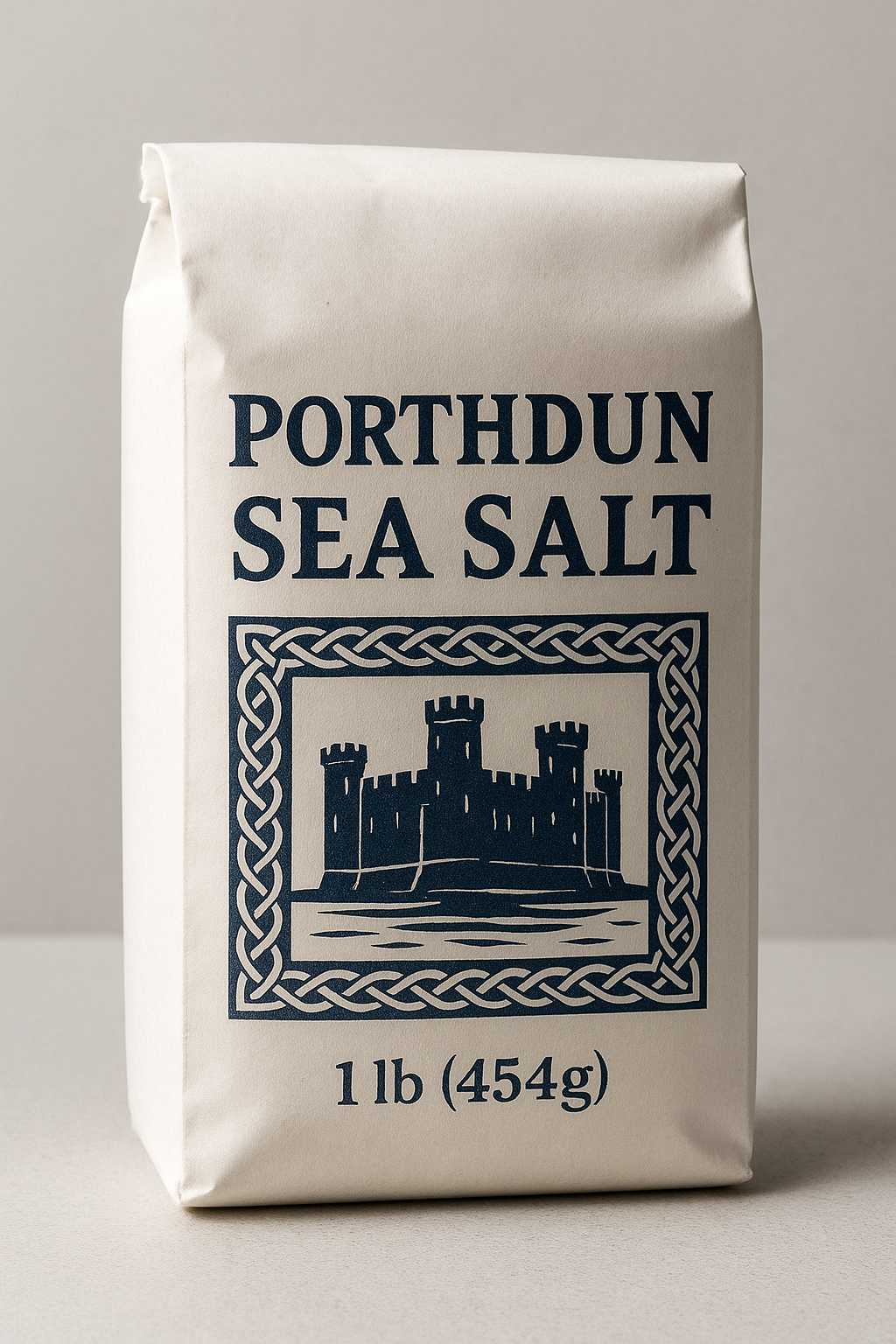
Porthdun Salt
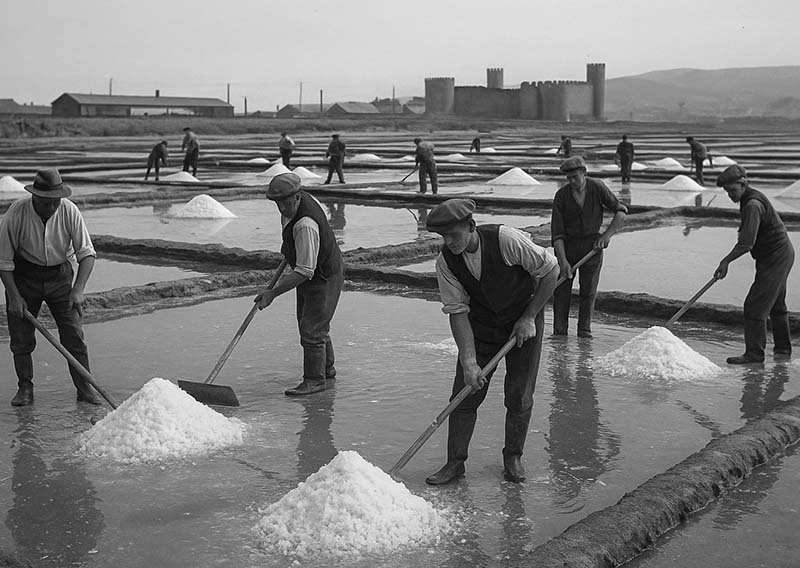
Salt Production Porthdun c1920
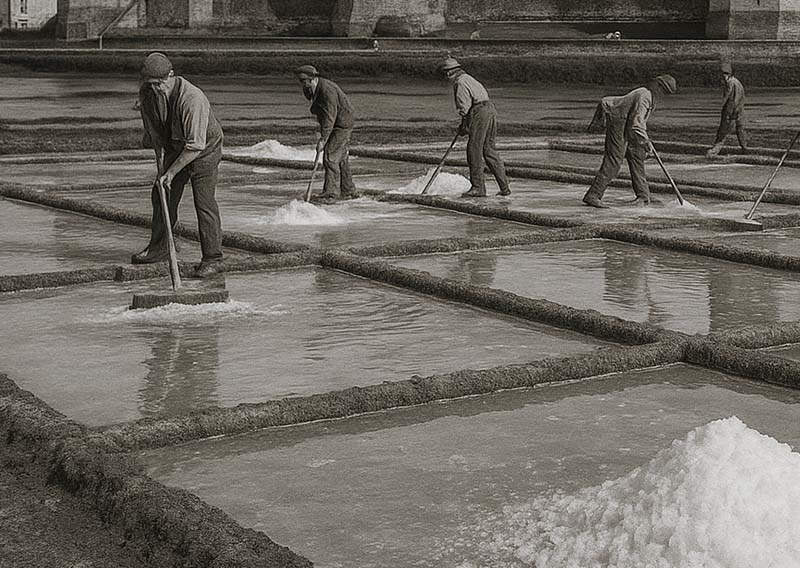
Salt Production - Porthdun
The Railway to Porthdun
The arrival of the railway in 1870 marked a new era for Porthdun. When the Llanchala & Eastern Coast Railway pushed north from the industrial heartlands, following the coast through Erynporth, it brought with it speed, prosperity, and connection. For centuries, the town’s isolation had been both its strength and its burden; the marshes and tidal flats made overland travel slow and treacherous. The railway changed that forever.
The line, engineered along the higher ground inland, linked Porthdun directly with Llanchala, creating a crucial artery between the reclaimed farmlands and the island’s industrial hub. Trains carried blocks of sea salt, crates of beef, and machinery to and from the coast, turning what had once been a modest local economy into a key contributor to Glynoch’s growing prosperity.
The rail connection also allowed the land reclamation projects to expand further north and west, with construction materials, pumps, and workers arriving by train instead of ship.
For the people of Porthdun, the railway was more than just a convenience—it was liberation. Fresh goods could reach market before they spoiled, and people could visit and even work in nearby towns. 'Commuting' for work became a thing as the growth of Llanchala drew in more and more workers from outlying towns and villages. Even tourism began to stir; visitors from Erynporth and Llanchala came to see the great castle walls and to walk among the ruins of the ancient fort, their journeys made possible by the same rails that carried the salt and beef of the reclaimed plains.
Today, the impressive station at Porthdun still stands as a testament to that transformation—a Rathmor Limestone relic of steam and ambition, built on land that once belonged to the sea.
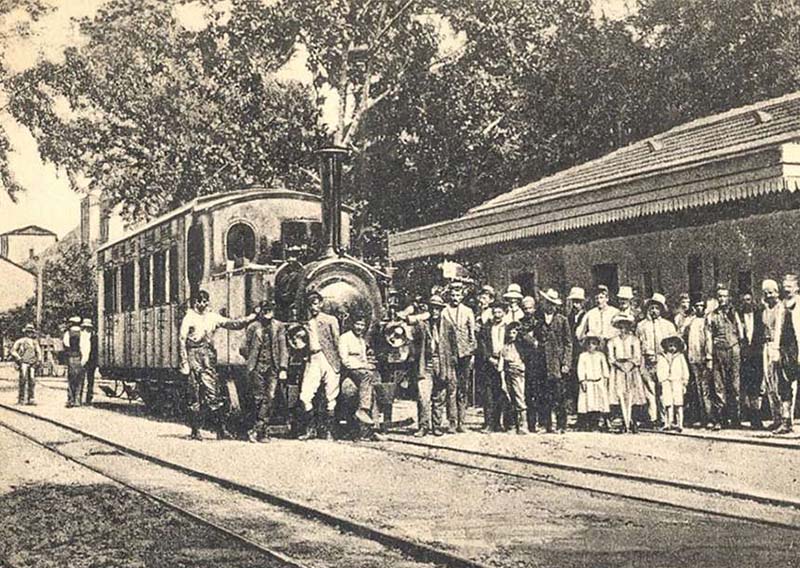
First train into Porthdun June 26th 1870
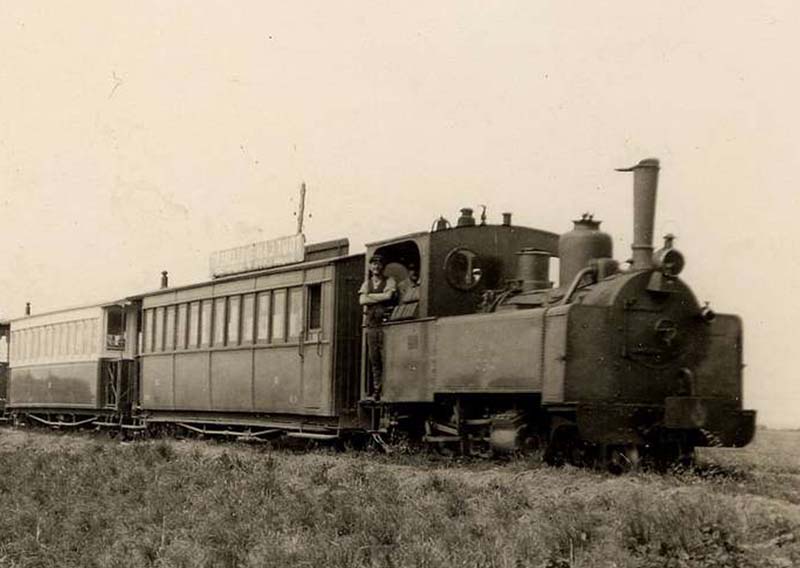
Crossing reclaimed land towards Porthdun c1880
History
Towns
Porthdun
Porthdun Maps
Porthdun
Stands proudly on Glynoch’s northern coast. Gatekeeper to Llanchala Bay.
Explore More Towns...
...View All Towns