


The Molasses Mine of South Rathmor
Treacle was an unusual resource found on the islands. The Molasses Mine was established in the mid 19th century after geologists discovered thick seams of molasses shale.
History
Industries

Molasses
Map
The Molasses Mine of South Rathmor
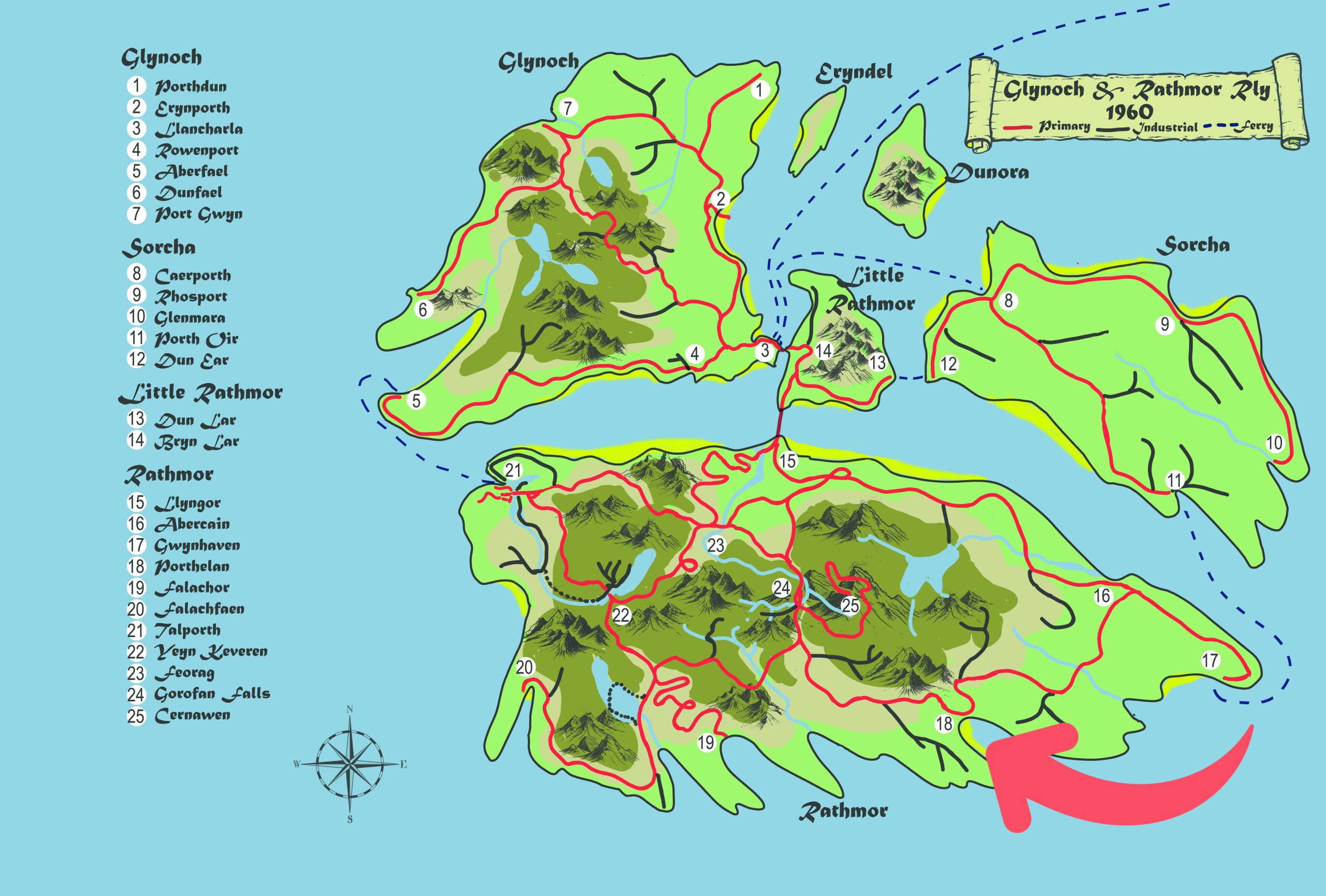
Set in the rugged southern slopes of Rathmor, the Molasses Mine was established in the mid 19th century after geologists discovered thick seams of molasses shale. Unlike sugar cane molasses (a byproduct of sugar production), “molasses shale” in this case refers to an organic-rich sedimentary rock which, when processed, yielded thick, sweet-smelling oils and compounds. Early investors borrowed heavily to build extraction pits, tramways, and processing works, along with a narrow-gauge rail spur to link the mines to Porthelan
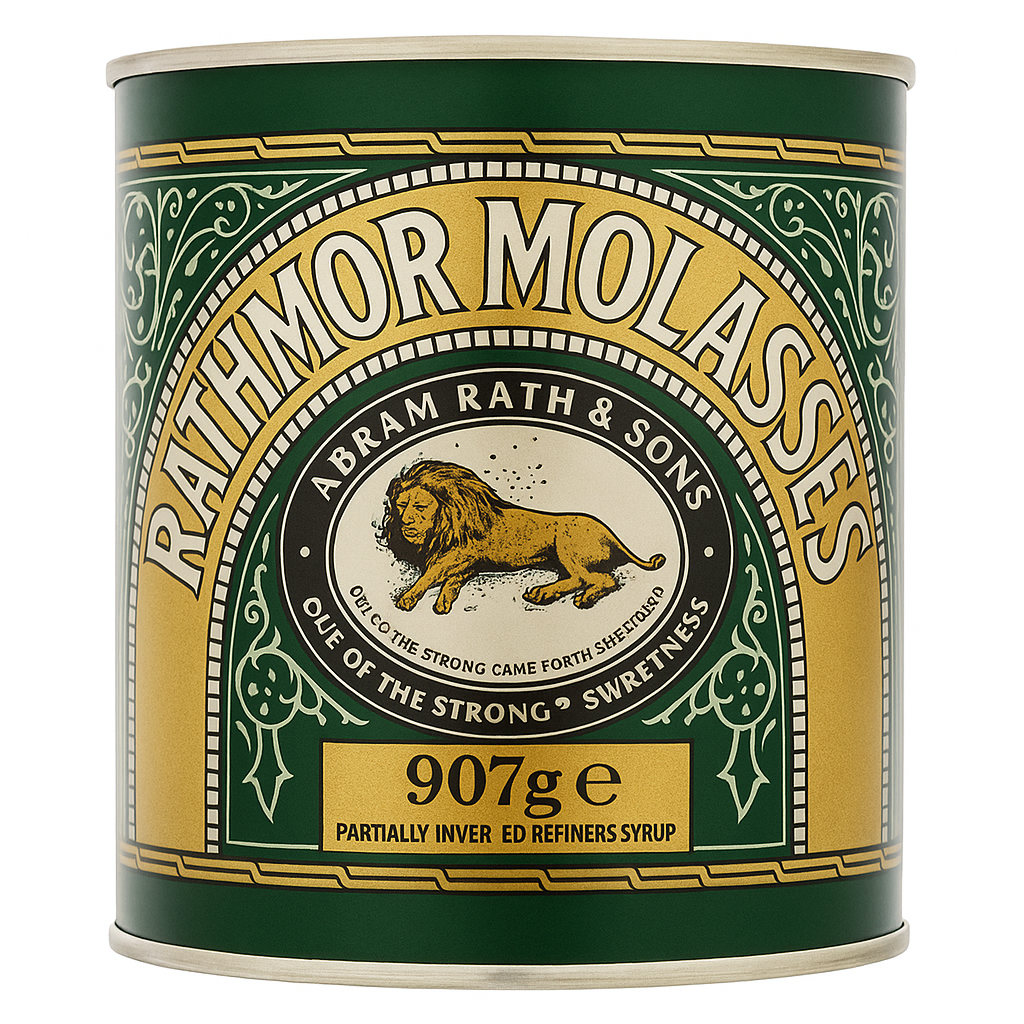
Rathmor Molasses
At its height, the mine supplied raw molasses shale to local refineries, where it was distilled for use in industrial lubricants, animal feed supplements, and as a precursor in certain fermentations. The mine employed miners, chemical engineers, and a host of ancillary workers — in transport, workshops, and refining. For a time the Molasses Mine was a source of prestige and profit for Rathmor, its products exported to other islands as well as overseas.
Decline and Closure
Several factors led to the mine’s decline and eventual closure:
-
Competition from Sorcha’s Sugar Cane Industry
As sugar cane plantations on Sorcha near Cearporth expanded heavily in the early to mid-20th century, the supply of true sugar-derived molasses grew dramatically. True molasses was cheaper, more widely available, and more familiar to users. Many of the same markets served by the Rathmor mine began to favor the genuine sugar molasses over shale-derived molasses products. Because sugar molasses could be produced in larger quantity, with simpler processing, it undercut the mine’s shale-derived produce on price. -
Rising Production Costs & Lower Yield
Molasses shale extraction proved energy-intensive, and processing required considerable chemical treatment. Over time, operating costs rose, especially as easier seams were exhausted. Transport of bulky shale also added costs, even with the spur line, especially compared with transporting refined sugar molasses from Sorcha to demand centers. -
Technological & Market Shifts
As chemical industries evolved, synthetic substitutes for some of the shale-derived compounds became possible, reducing demand. Also, changes in animal feed and lubricant formulations reduced reliance on the specific materials the mine produced. -
Regulatory, Environmental, & Health Pressures
Concerns about emissions, water runoff, and health impacts of shale dust grew, especially near residential areas. Regulations tightened, and the cost of meeting safety and environmental standards added burden.
By the mid-20th century, these pressures combined. A sharp drop in demand, coupled with slim profit margins, made the mine unsustainable. It ceased major operations in the 1960s. Today the mine is abandoned; old shafts, workshops, and the tramway remain visible in ruin, and local stories speak of the “sweet mine of Rathmor” and ghosts said to linger in the empty adits.
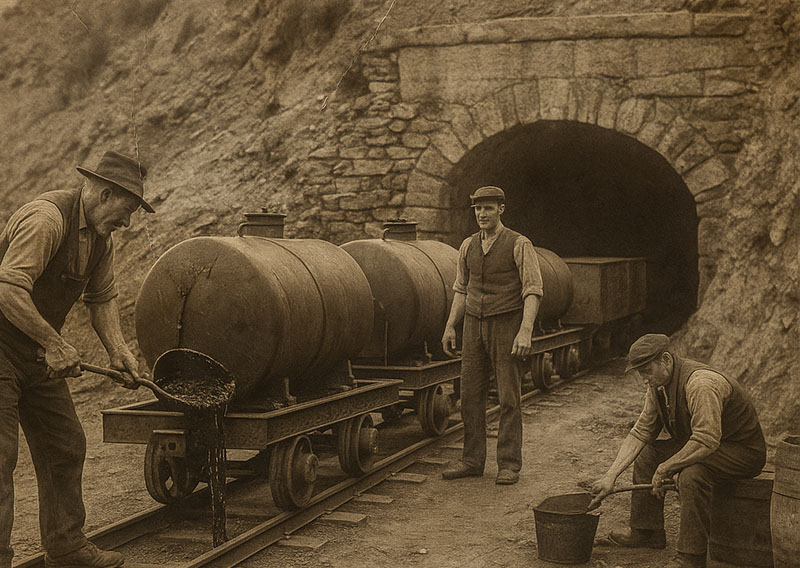
Rathmor Molasses Mine c1880
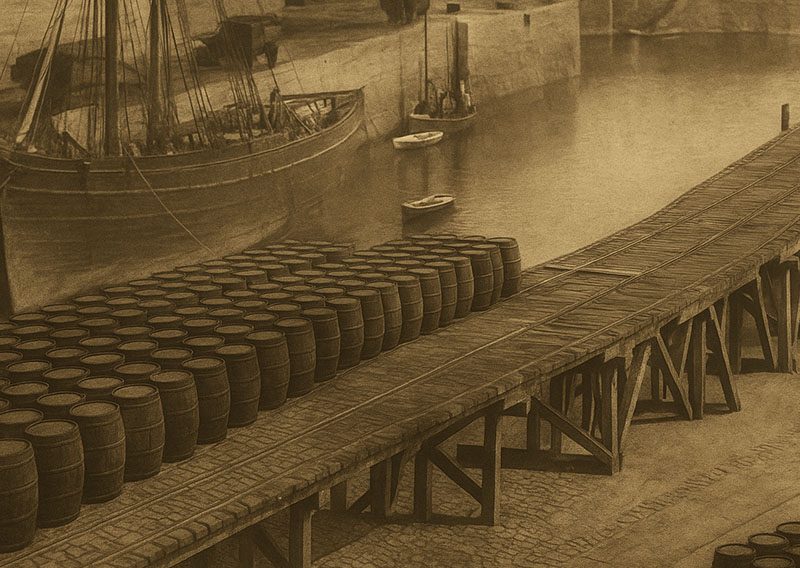
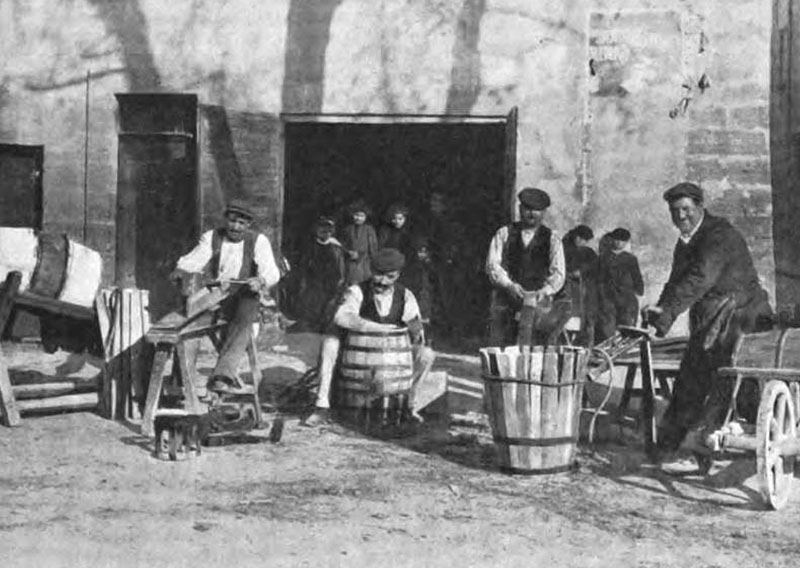
Molasses barrels at Porthelan Harbour c1870
History
Industries
Molasses
Map
The Molasses Mine of South Rathmor
Set in the rugged southern slopes of Rathmor