


5. Aberfael History
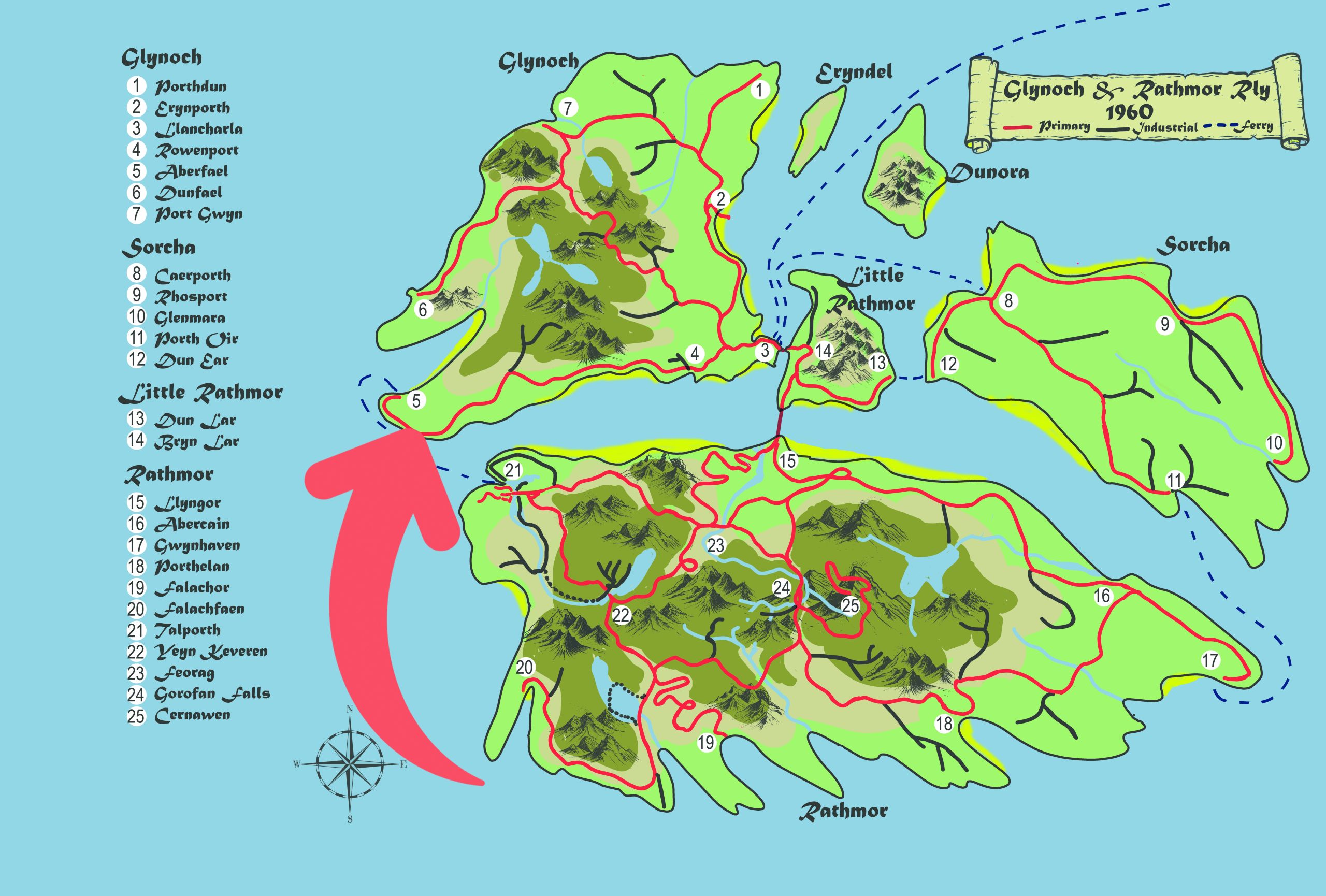
A small but busy fishing town on the South West corner of Glynoch. A regular ferry service connects Aberfael to Talporth on the island of Rathmor
History
Towns
Aberfael
Aberfael Maps
Aberfael
Aberfael (ABER-vi-al) – From the Celtic roots aber (“river mouth”) and fael (“wolf”), meaning “Mouth of the Wolf River.” A seaside resort town on Glynoch’s eastern coast, famed for its moonlit sands, Victorian pier, and tourist traditions.
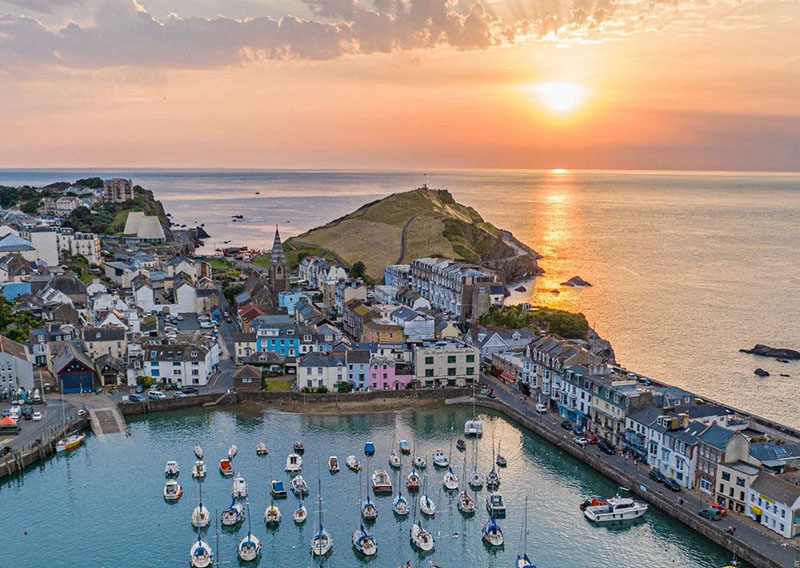
Aberfael
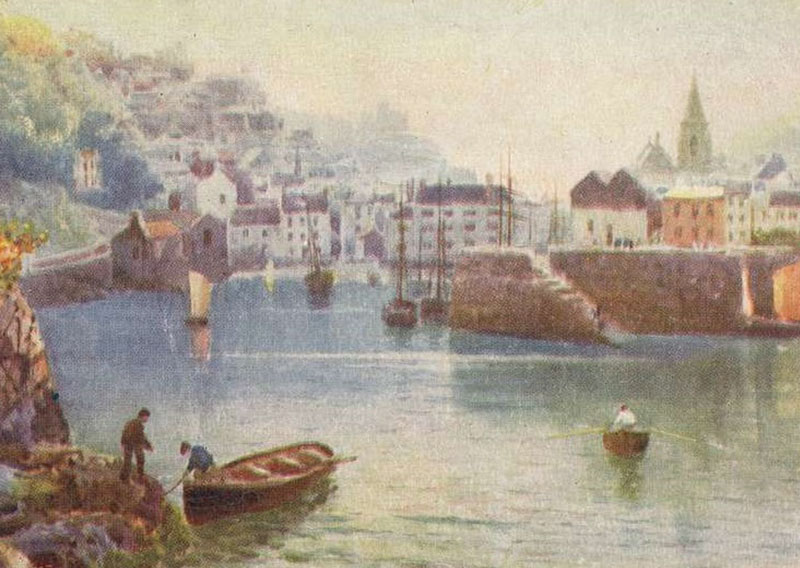
Aberfael Postcard 1890
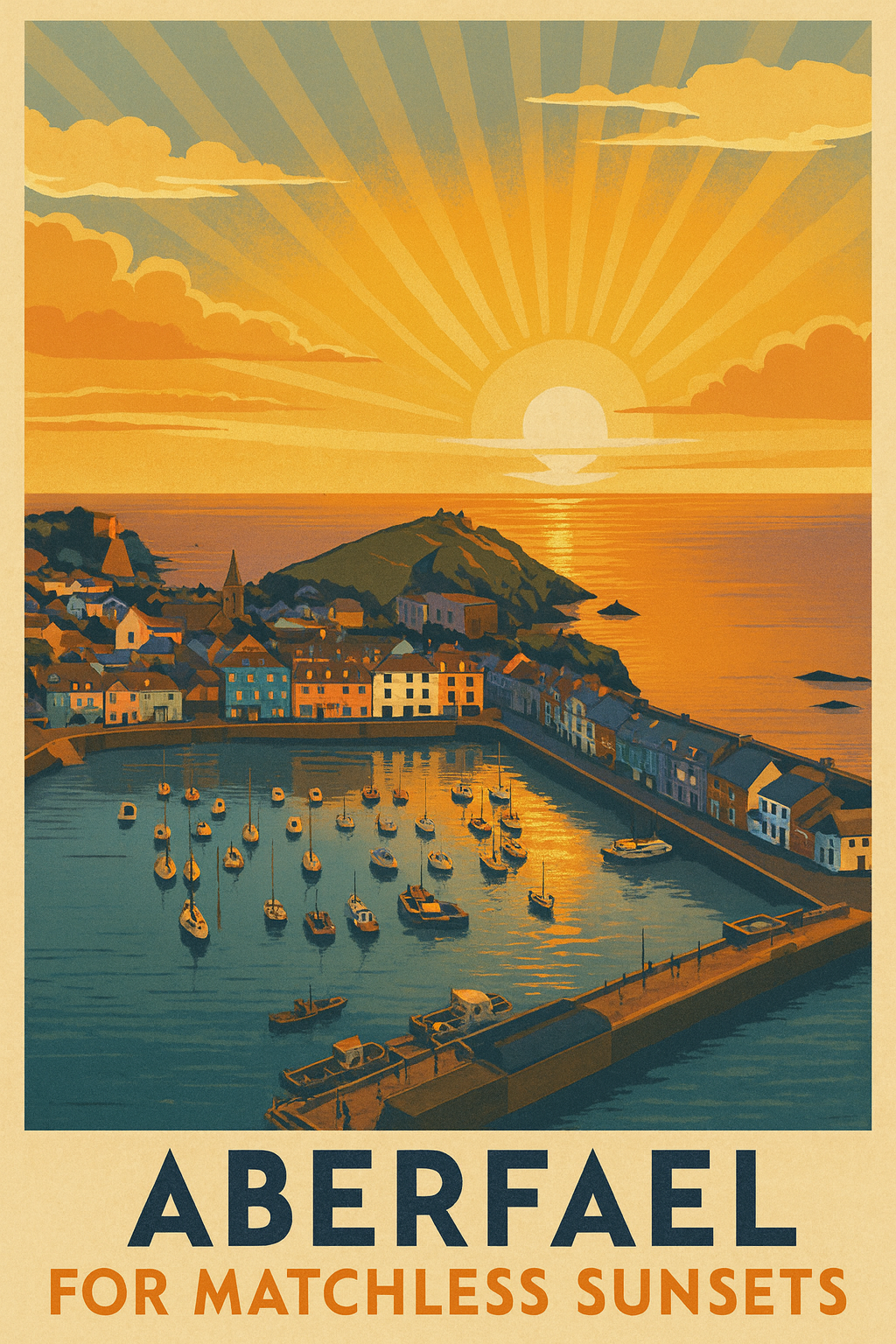
1920's advert
At the point where the Wolf River spills into the sea lies Aberfael, a town shaped as much by myth as by tides. The name itself speaks to its setting—aber, the river mouth, and fael, the wolf that haunts so much of Glynoch’s folklore.
Aberfael blossomed in the Victorian era, when rail and leisure collided to turn a quiet fishing hamlet into a seaside resort. Its long, sandy beach is unlike any other in the isles, for under the light of the moon it seems to glow faintly, a shimmer locals attribute to the ghosts of two drowned lovers. Known as the Lovers’ Sands, the tale claims their spirits bless the shore with eternal light, a story that enchanted Victorian tourists and still lends the beach an air of romance today.
The town’s pride is its Victorian pier, complete with bandstand and pavilions, where brass bands once played nightly for promenading visitors. Along the seafront, neat rows of painted guesthouses, tea rooms, and souvenir shops sprang up to cater for the sudden influx of holidaymakers from across Glynoch. By the 1880s, Aberfael had become the premier holiday resort of the island’s middle class, a place of Punch and Judy shows, donkey rides, and summer dances.
Though tourism remains Aberfael’s lifeblood, industry also plays its part. Inland hills provided deposits of china clay, and quarries around the town became major suppliers for pottery and porcelain works throughout the islands. Clay wagons once trundled down to the harbour and later to the railway, carrying the pale, chalky material that was as vital to Aberfael’s economy as holidaymakers with parasols.
Today, Aberfael balances both heritages: part seaside postcard, part working town. On summer evenings, as the pier glows with lanterns and music drifts across the sands, it remains clear why generations have cherished the town as a place where legend, leisure, and labour meet by the sea.
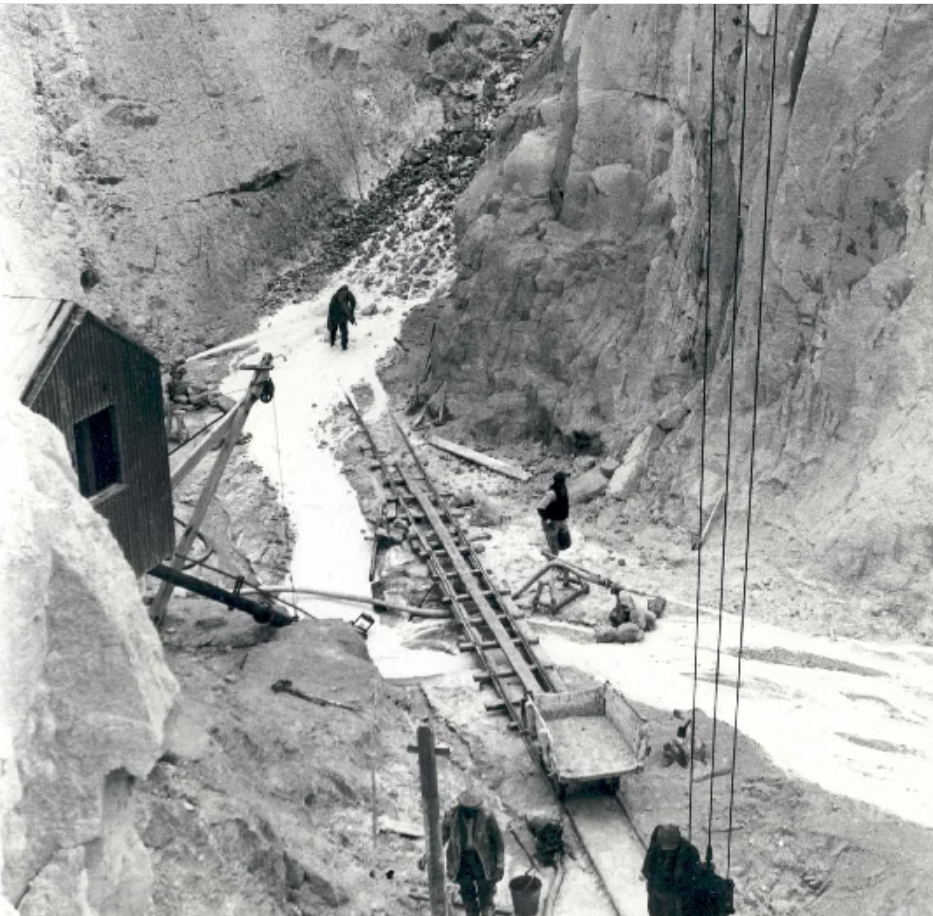
China Clay - Aberfael
China Clay on Glynoch
Beneath Glynoch’s rugged hills lies a treasure of a very different kind: china clay, or kaolin. First discovered in the 18th century in the foothills above Aberfael, it quickly became a prized material for pottery and porcelain. Local lore claims a shepherd stumbled upon the first deposits after noticing that rainwater running off a hillside left his flock ghostly white. From that discovery grew an industry that would reshape whole valleys.
The early pits were small, dug by hand and carried away in sacks, but demand soon surged. By the 19th century, great white scars streaked Glynoch’s southern landscape, and communities sprang up around the pits. Workers toiled in clouds of fine dust, their skin and clothes permanently dusted white, earning them the nickname “ghost men” in local songs. The work was hard, but wages were steady, and the industry supported schools, chapels, and shops in towns that would otherwise have withered.
The railway proved decisive. Heavy loads of clay could now be hauled efficiently to Llanchala for export. Rathmor’s pottery works thrived on Glynoch’s clay, and shipments even reached mainland markets, giving the island a global connection.
As the papermills have grown up, mainly thanks to the Esparto Grass praries on the reclaimed plains of northern Rathmor, the china clay industry has found a new market as a key ingrediant in the making of premium paper products, giving a pure white look and silky feel.
Even today, china clay remains part of Glynoch’s identity. Though modern extraction is smaller in scale, the pits and spoil heaps stand as monuments to the centuries when Glynoch’s white earth traveled far beyond its shores.
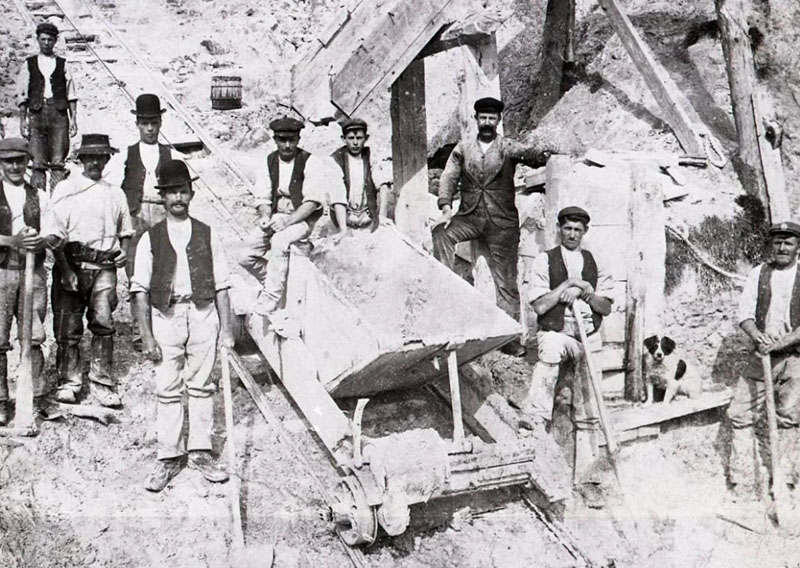
Early China Clay Extraction - Aberfael
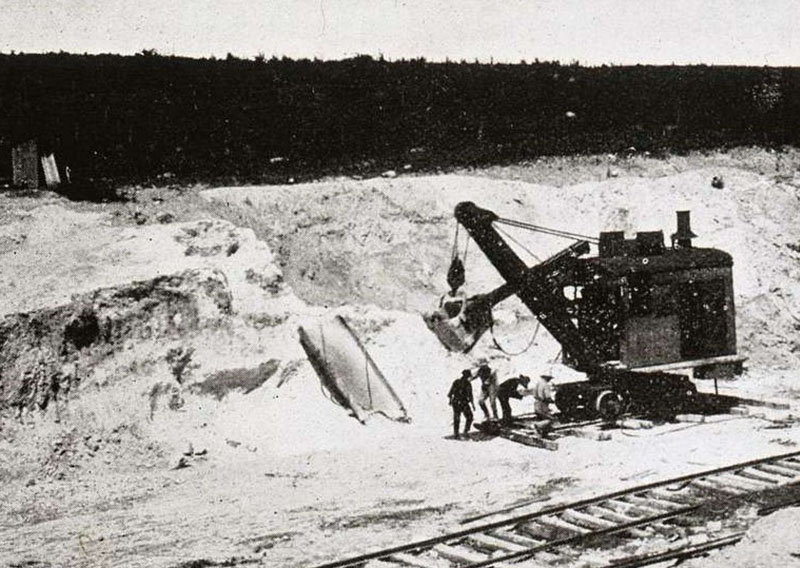
China Clay Extraction - Aberfael
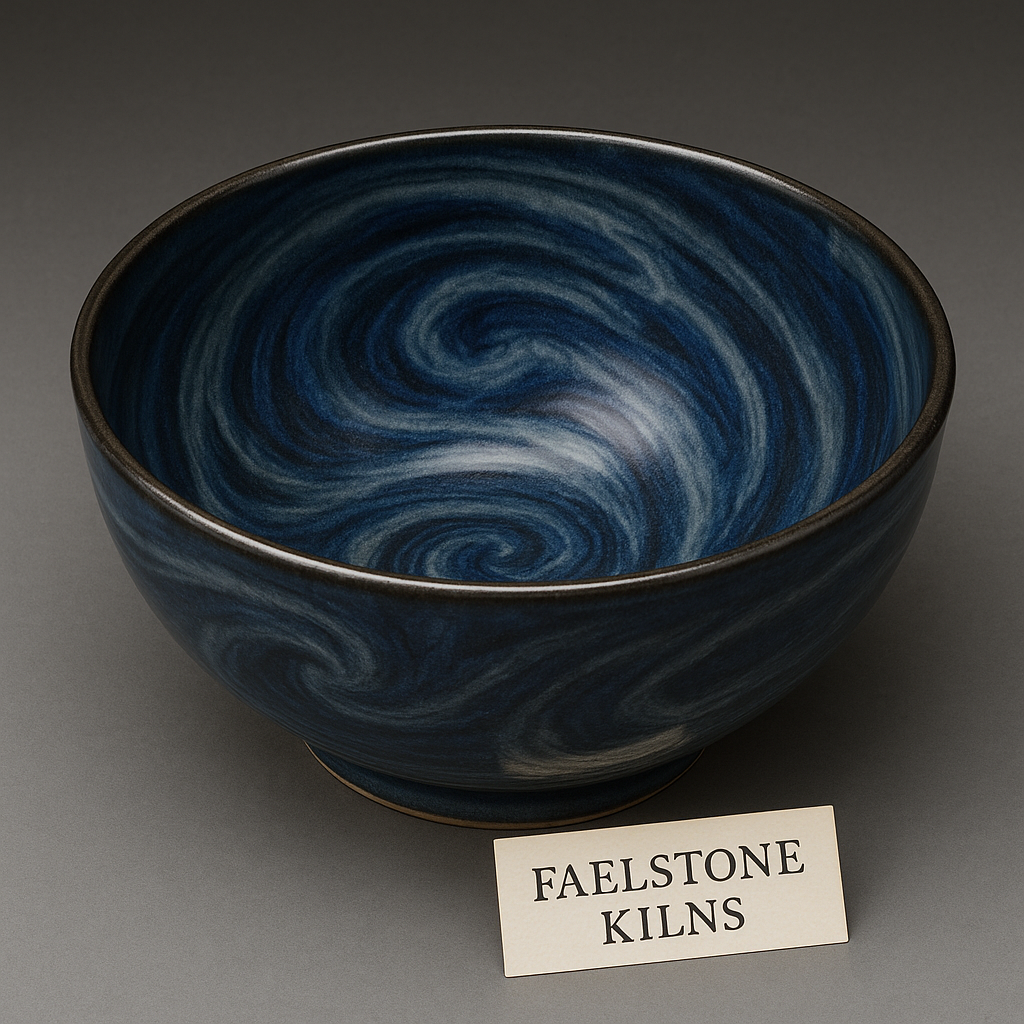
Faelstone Kilns bowl
The Pottery and Porcelain Industry of Aberfael
Located on the south west coast of Glynoch, the town of Aberfael has earned a distinguished reputation as the island’s centre of china clay production. Rich deposits of high-quality kaolin lie beneath the surrounding hills, and since the late 19th century these have fuelled a flourishing pottery and porcelain industry that continues to define the town’s identity. Today, Aberfael is known across the islands—and far beyond—for its master craftsmen, whose work blends traditional Celtic aesthetics with refined continental influences.
The processing of china clay begins in the quarries east of the town, where the pale, chalk-like material is extracted and washed to remove impurities. It is then dried and milled to a fine powder before being transported to Aberfael’s kilns and workshops. This exceptionally pure kaolin is prized for producing porcelain that is both translucent and remarkably strong, forming the backbone of the town’s artistic output.
Among the many businesses that have shaped Aberfael’s success, two names stand out as pillars of local craftsmanship. Faelstone Kilns, founded in 1884, is renowned for its distinctive Stormglass Pattern, a swirling design of deep blues and greys inspired by the turbulent seas off Glynoch’s northern coast. The pattern, achieved through skillful layering of glazes, gives each piece a sense of movement and depth, making Faelstone tableware and decorative bowls highly sought after by collectors.
Equally celebrated is Aberfael Porcelain Works, an early 20th-century factory famous for its delicate White Heather Line. Characterised by fine, raised reliefs of heather blossoms and subtle lilac detailing, these pieces exemplify the elegance for which Aberfael porcelain has become known. Their tea sets, vases, and ceremonial plates are particularly popular with visitors looking for a refined souvenir of the island.
Aberfael’s craftsmen produce a wide range of goods, from practical kitchenware and simple earthen mugs to intricate figurines, commemorative plates, and ornate decorative tiles. Many shops in the town centre offer on-site demonstrations, allowing travellers to watch potters painting intricate knotwork or applying glazes before firing.
Thanks to modern shipping routes and Glynoch’s efficient rail links, Aberfael pottery and porcelain are exported to all corners of Europe, appearing in galleries, boutique shops, and private collections. Yet despite its growing fame, the industry remains deeply rooted in local tradition, ensuring that every piece carries a touch of Glynoch’s cultural spirit and craftsmanship.
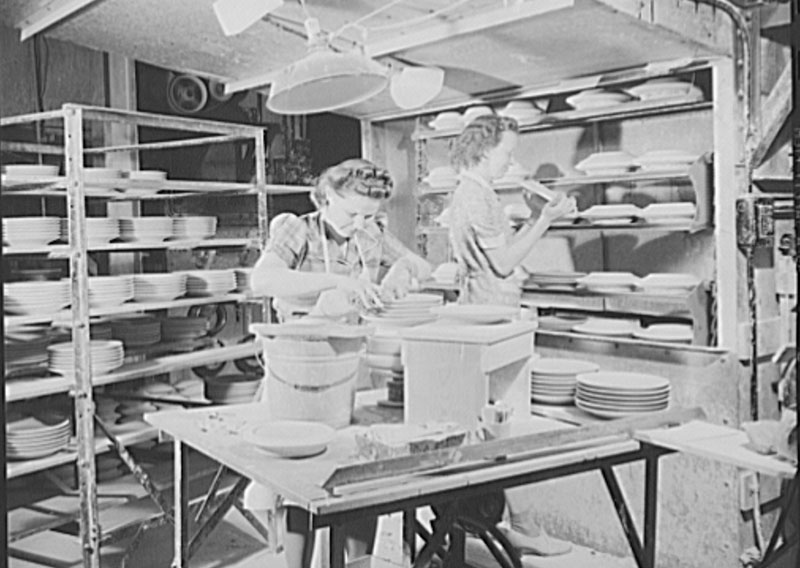
Porcelain bowl production - Glynoch c1960
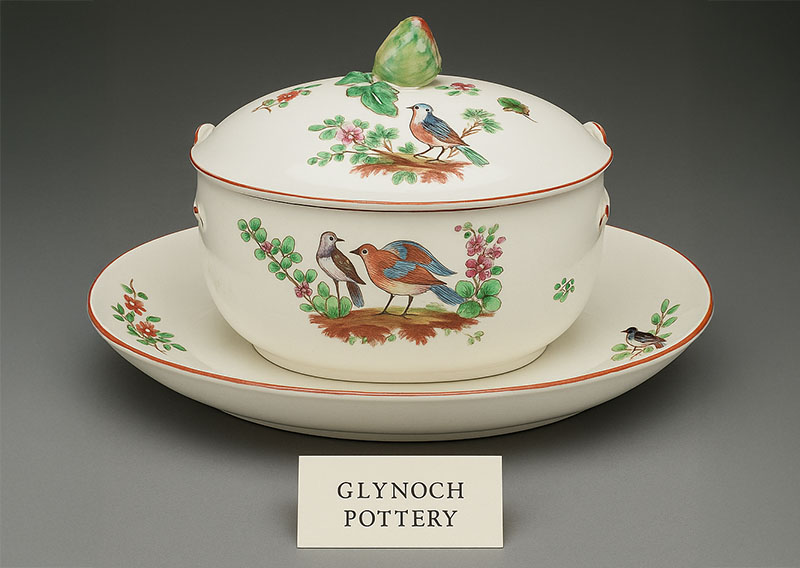
Glynoch Pottery Co
The Railway at Aberfael
Before the railway, Aberfael was known only to nearby fishing families and the occasional traveller following the Wolf River downstream. Its sands and scenery were treasured, but access was difficult—muddy tracks wound through clay pits and farmland, and carts often struggled to reach the shore. That changed dramatically with the arrival of the railway in the mid-19th century.
The line first came to serve the china clay industry in 1855, hauling heavy wagons from the quarries inland down to Aberfael’s harbour. But railway promoters quickly realised that the town’s golden sands and sea air could be just as profitable. As the line connected up with other towns along the south coast, in 1860, passenger coaches were added, and almost overnight Aberfael was transformed from a hidden gem into a seaside resort for Glynoch’s growing middle class. Families could now arrive by train within hours, bringing with them not only spending money but also a taste for promenades, concerts, and sea bathing.
The railway built a handsome station near the seafront, its canopies decorated with ironwork in seaside motifs. Excursion trains ran daily in summer, disgorging crowds with parasols and picnic baskets. Guesthouses and boarding houses multiplied, and Aberfael’s pier and promenade were soon thronged with visitors. The railway even ran special late-night services for dances and concerts, ensuring revellers could return inland after an evening by the sea.
For the china clay industry, the railway was equally vital. It allowed bulk transport directly to the island’s ports or to pottery works on Rathmor, Glynoch, and beyond. The marriage of industry and leisure was not without tension—tourists often complained of clay dust blowing across the promenade—but both trades together ensured Aberfael’s prosperity.
By the turn of the century, Aberfael was firmly established as both a holiday resort and an industrial hub, a dual identity it still carries. The railway not only put Aberfael on the map—it made the town’s legend and livelihood possible.
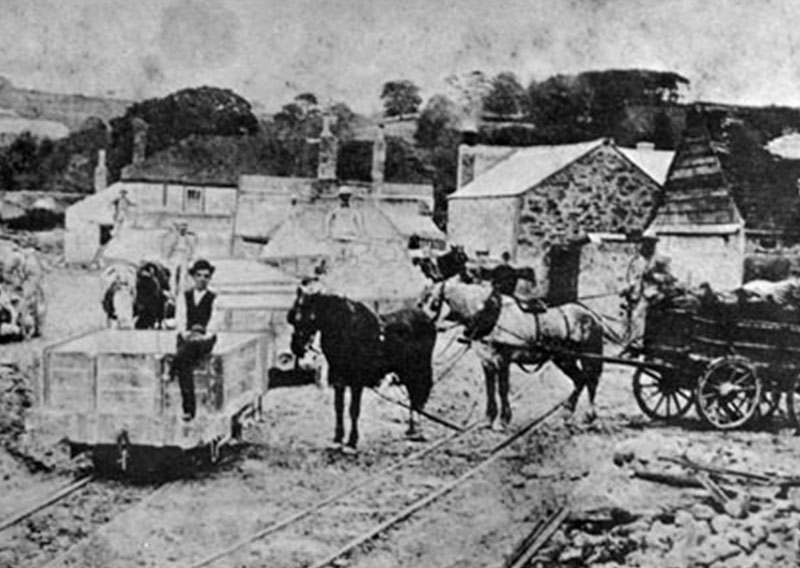
Early China Clay Extraction - Aberfael
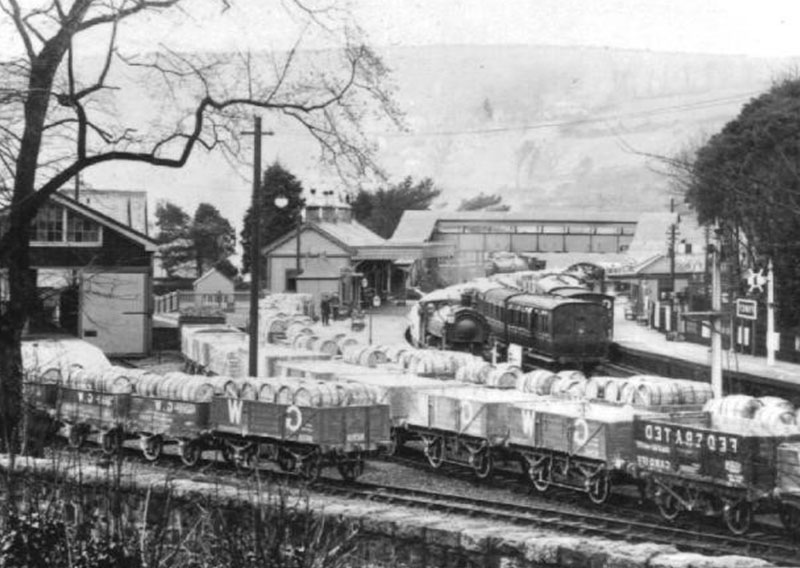
Aberfael Station and china clay sidings
History
Towns
Aberfael
Aberfael Maps
Aberfael
Located in the south west corner of Glynoch
Explore More Towns...
...View All Towns