


11. Porth Oir History
The 'Golden Harbour' and bread basket of the islands. A land of barley fields and mills
History
Towns
Llanchala
Llanchala Map
Porth Oir
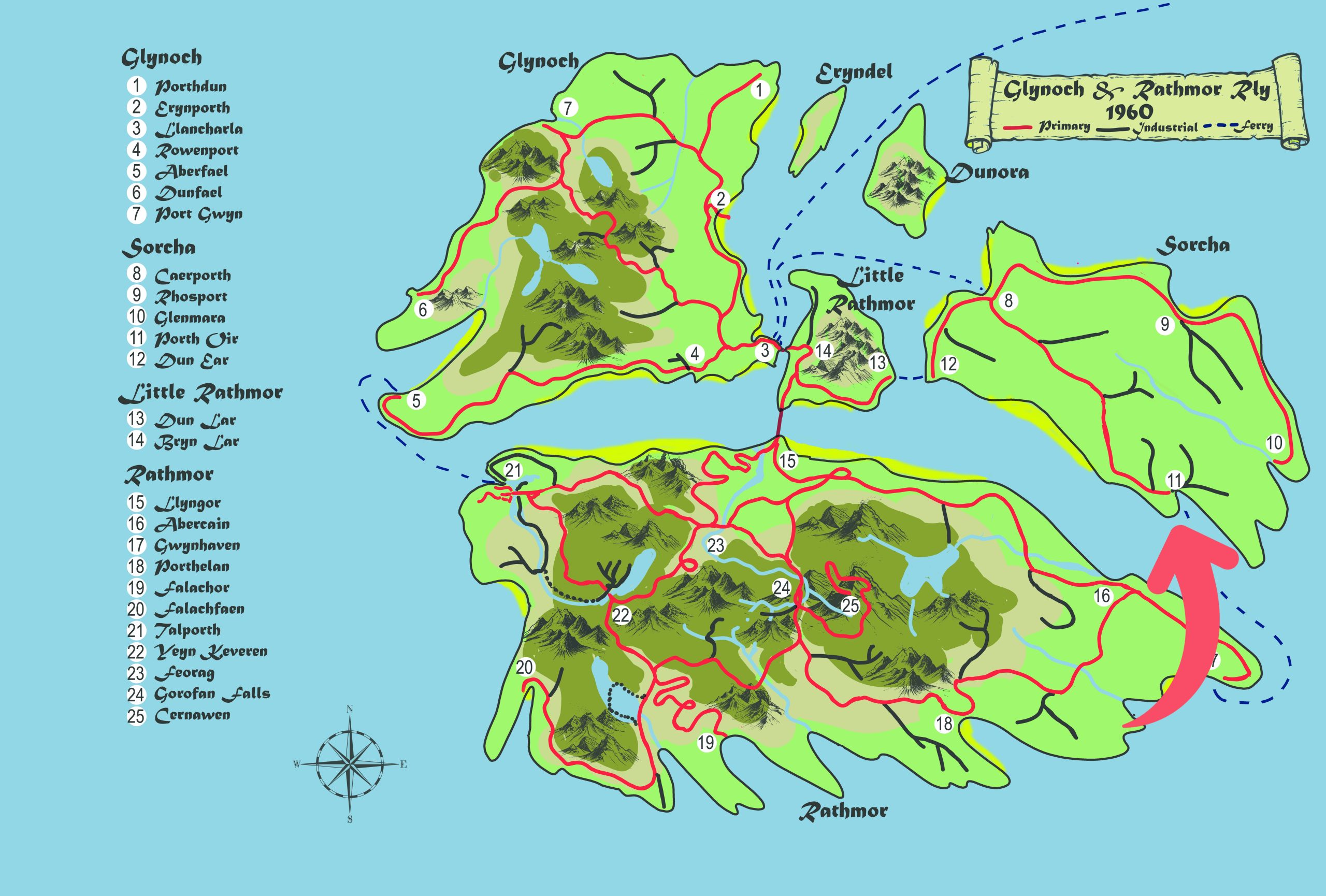
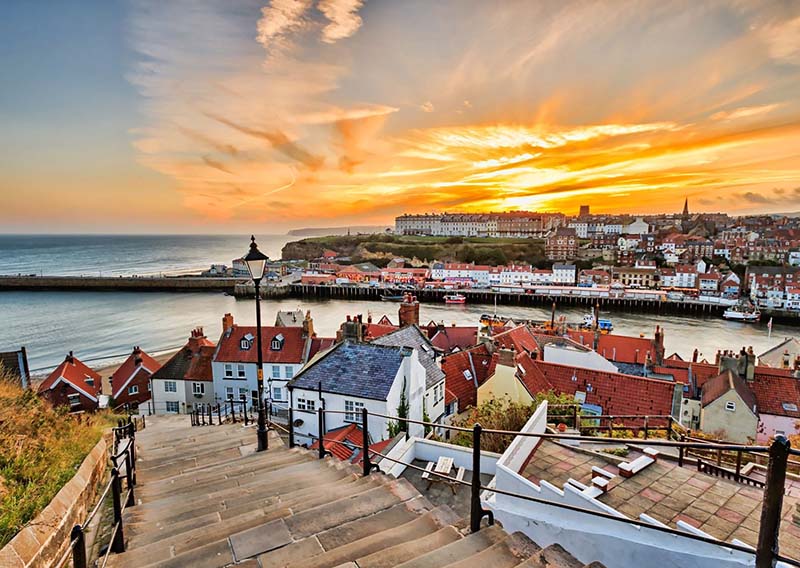
Porth Oir (pronounced: Porth-Oar) – From the Celtic porth meaning “harbour” and óir meaning “gold.” Translated as “Golden Harbour,” the name reflects both the sheltered bay on Sorcha’s southeastern coast and the fertile farmlands that produce wheat, barley, honey, and cider.
Porth Oir
Porth Oir Regatta 1885
1920's advert
Porth Oir, the Golden Harbour, where orchards meet the sea and the land yields its richest fruits.
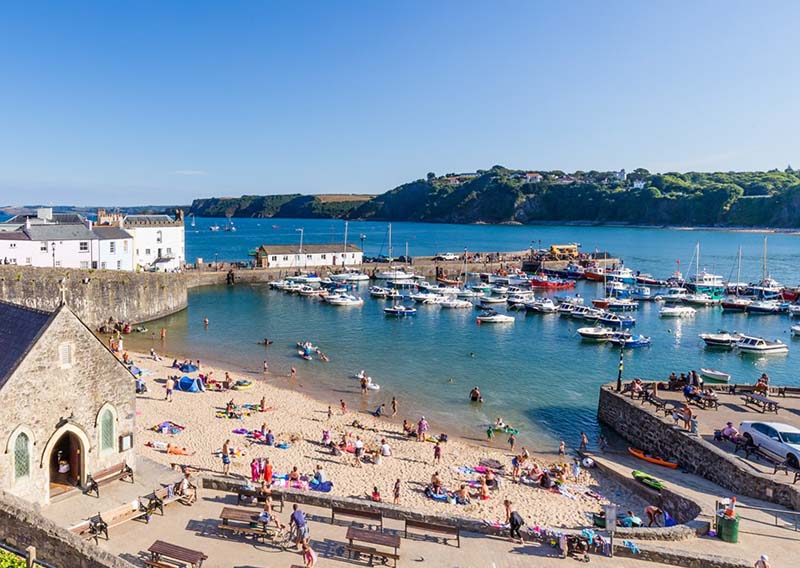
On the southeastern corner of Sorcha, where rolling farmland meets the sea, lies the town of Porth Oir – known across the islands as the Golden Harbour. Its name is more than poetic: the town is surrounded by some of the richest agricultural land in the archipelago, and every harvest seems to gild the fields in hues of gold. Wheat, barley, and grains are the backbone of Porth Oir’s economy, while the surrounding meadows hum with bees that produce fine island honey, another celebrated export.
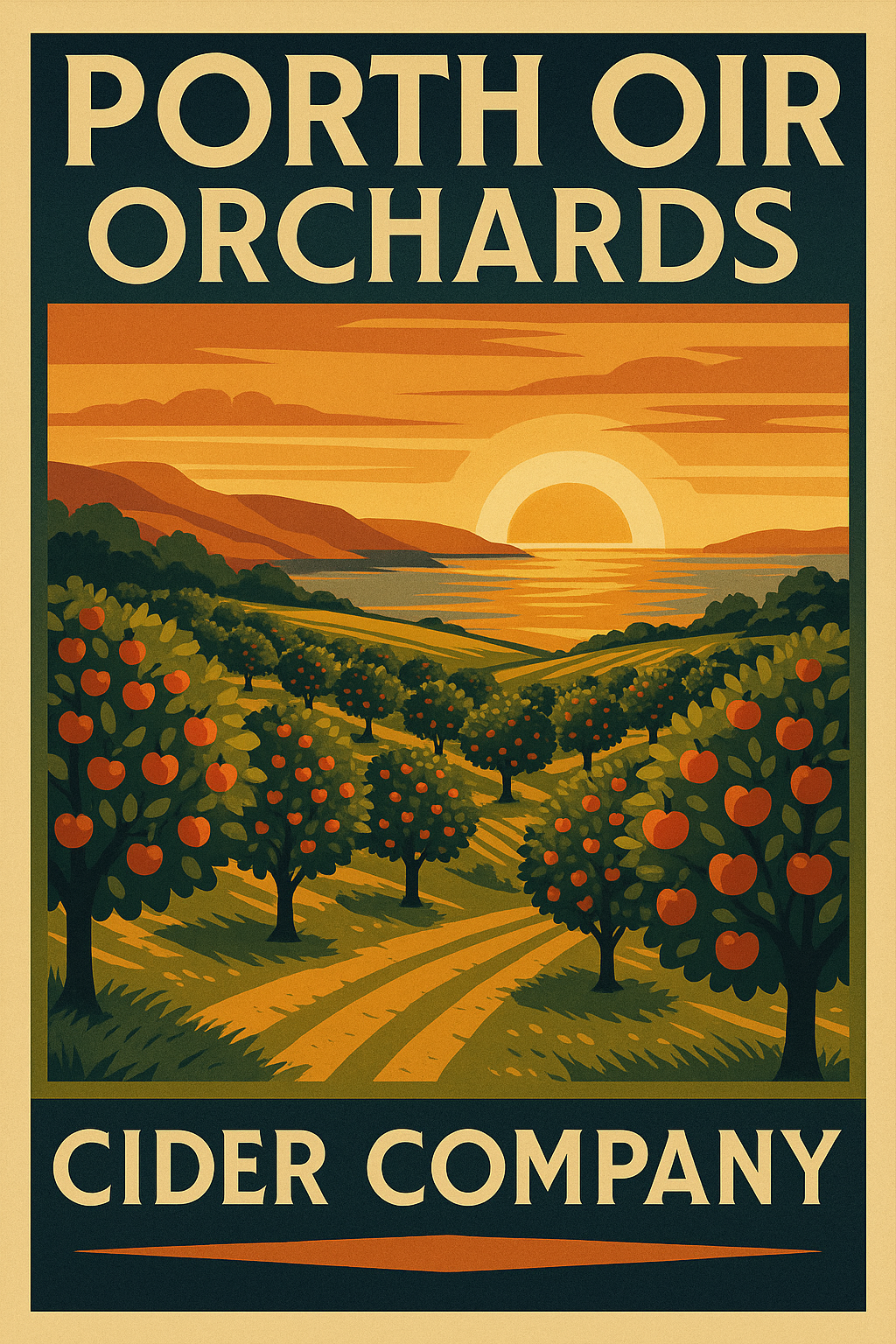
Perhaps most famous of all is the Porth Oir Orchards Cider Company, whose orchards have flourished here for centuries. Their presses turn the autumn crop into a cider of such character and quality that barrels are shipped across the islands and beyond. Locals proudly insist that no feast or festival is complete without a draught of Porth Oir cider, its taste said to capture the sweetness of the land itself.
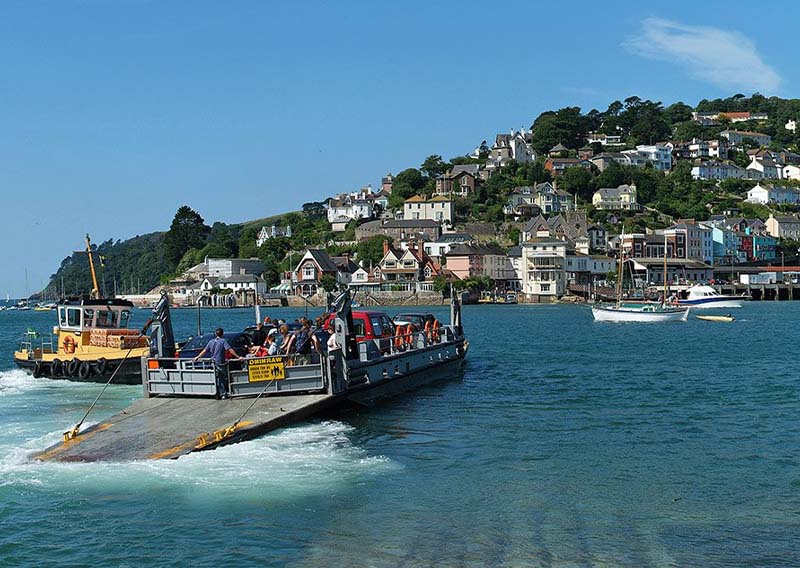
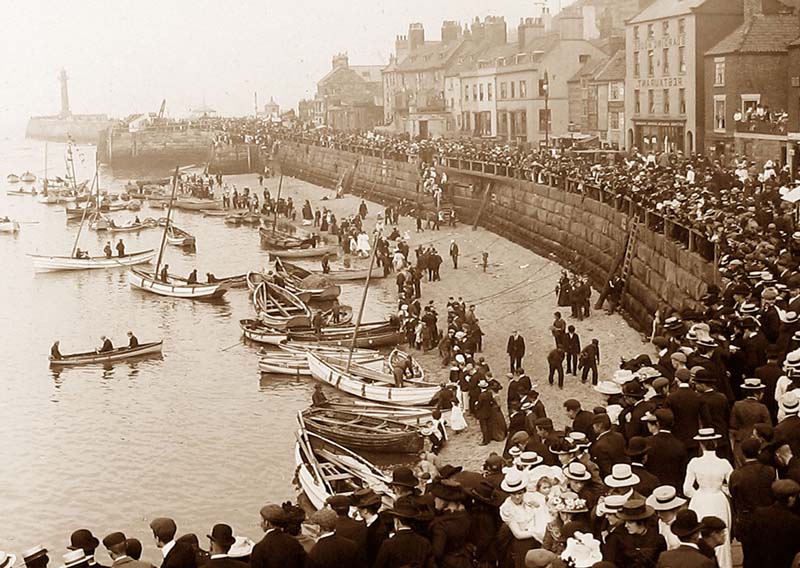
Porth Oir’s harbour is a busy one, with ferries and fishing boats sharing the waters. A regular ferry crosses The Straights to Gwynhaven on Rathmor, carrying both people and produce. This link has made Porth Oir a vital part of the island’s agricultural trade, ensuring its golden bounty reaches wider markets. The Rathmor Brewery being one of the biggest customers of grain. With its combination of fertile land, bustling harbour, and rich traditions, Porth Oir lives up to its title as the Golden Harbour of Sorcha.
Wheat and Barley – The Golden Harvest
The fertile lowlands of South East Sorcha have been shaped by wheat and barley since medieval times, when monks and farmers first carved neat strips of arable land from the forests and marshes. Early chronicles tell of miraculous harvests after prayers to St. Brigid, who became revered as the protector of grain. To this day, the first sheaf of either wheat or barley is ritually cut, bound, and woven into a corn doll, kept in cottages over the winter to ensure the fields’ blessing for the year ahead.
Wheat provided the flour for daily bread, while barley was the basis of hearty island ales and, later, distilled spirits. Together they became the backbone of Sorcha’s diet and trade. By the 17th century, fields of gold stretched across the lowlands, and surplus grain was shipped to Rathmor and Glynoch. The introduction of windmills and later water-powered mills improved yields dramatically, earning Sorcha the proud title of the “Granary of the Islands.”
Yet the abundance was not without hardship. Before modern transport, grain wagons struggled on rough tracks, and storms often ruined shipments bound for distant harbours. Farmers relied on local trade and modest surpluses, their livelihoods tied closely to the whims of weather and tide.
Everything changed with the arrival of the railway later in the 19th century. Grain could now be moved swiftly from inland farms to Porth Oir’s mills and harbour, reducing losses and opening new markets across the isles. Barley from Sorcha soon filled Rathmor’s breweries, while wheat sustained bakers, millers, and brewers across the archipelago. Larger mills sprang up beside the tracks, and farmers embraced new strains of grain, encouraged by the reliability of rail transport.
Today, wheat and barley remain inseparable from Sorcha’s identity. Harvest festivals each autumn fill villages with music, processions, and feasts where bread, ale, and cider are shared in abundance. Children still weave corn dolls, while farmers proudly show off sheaves of golden grain at community fairs. Both crops not only sustain Sorcha’s economy, but also nourish its soul, embodying the island’s enduring role as the breadbasket of the isles.
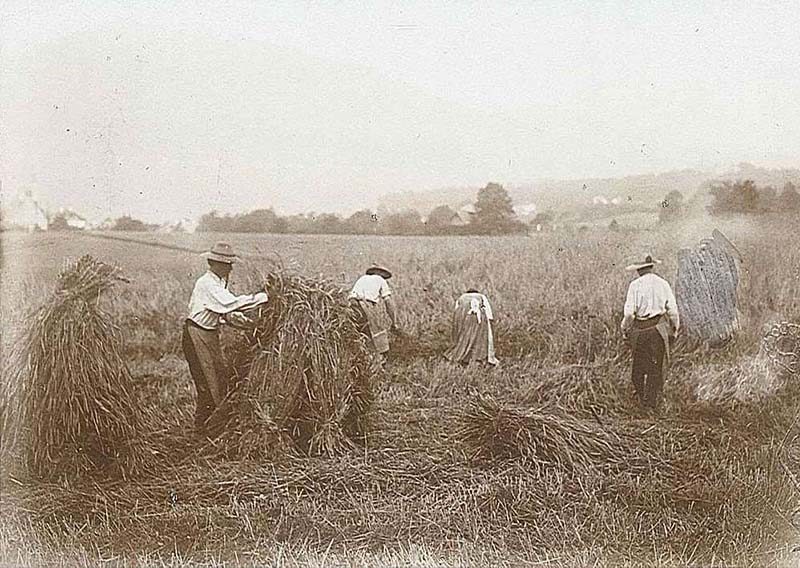
Porth Oir wheat harvest c1880
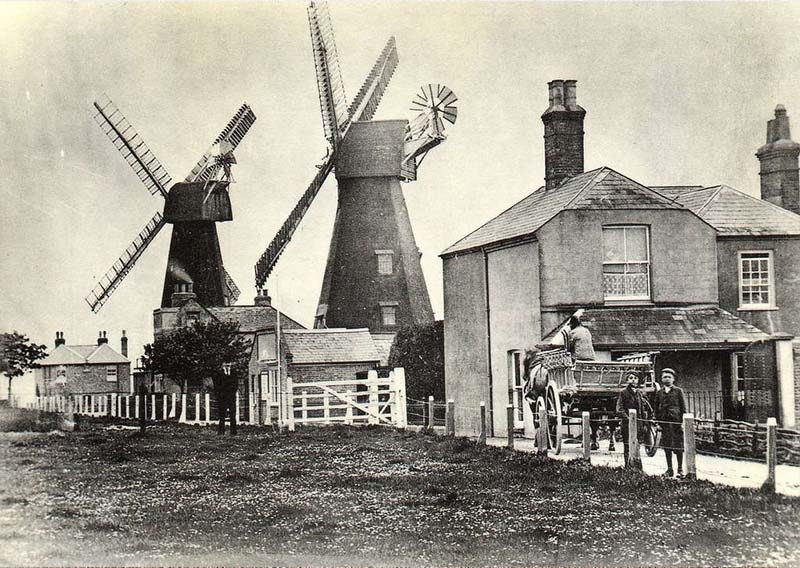
Windmills at Porth Oir c1900
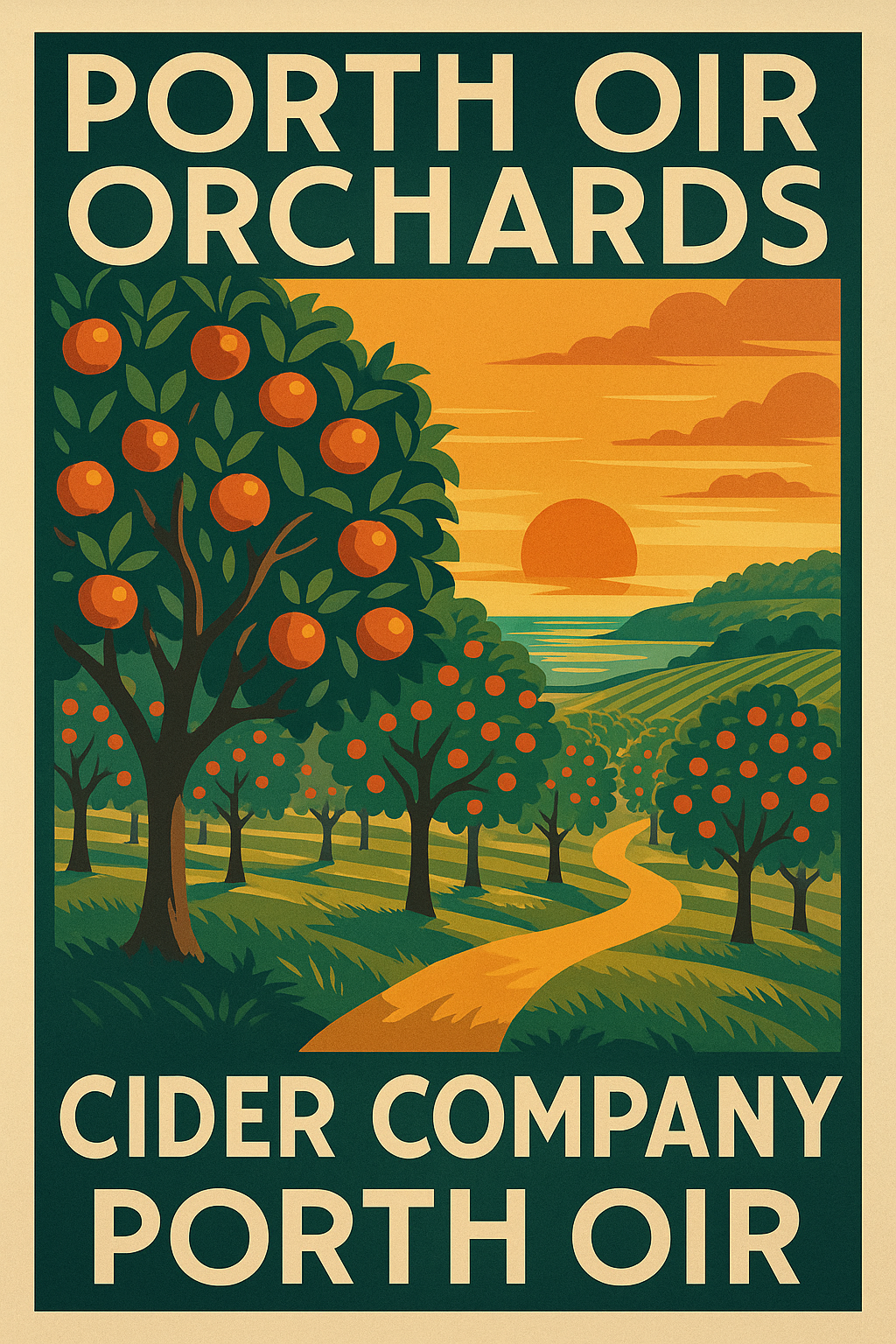
Porth Oir Orchards
Porth Oir Orchards and the Cider of the Isles
Tucked into the sun-warmed valleys surrounding Porth Oir, the island’s famed cider orchards stretch across gentle slopes that once held only grain. The first trees were planted in the early 1800s by the 2nd Earl of Rathmor, an enterprising landowner who sought to turn Sorcha’s rich southern soils into something more profitable — and more pleasurable. Inspired by cider farms he had seen in Devon and Normandy, he imported apple grafts, built a small stone press house, and began what would become one of the islands’ proudest and longest-standing industries.
By the late 19th century, the Porth Oir Orchards had grown into a busy operation. Barrel-makers, farmhands, and orchard keepers worked year-round — pruning, pressing, fermenting, and bottling. When the railway reached Porth Oir in 1880, the cider trade leapt from local to international scale. Barrels of golden cider rolled from the loading docks straight onto trains bound for the ports, and from there to taverns across Rathmor, Glynoch, and mainland Europe. The crisp, tangy taste of island cider soon became known as the “Sunshine of Sorcha.”
The flagship product, “Sunset Cider,” remains the pride of the orchards. It’s a rich, amber blend of three native apple varieties, with a smooth, slightly honeyed finish and a scent of wildflowers from the coastal breeze. Alongside it are the sharper “Highland Dry,” the sweet and mellow “Harvest Gold,” and the sparkling “Sorcha Light.” Each carries the unique character of the island’s soil and sea air.
Every autumn, when the apples are ripe and the air carries the scent of crushed fruit, Porth Oir hosts its annual Cider Festival. For three days, the town fills with music, dancing, and laughter. Locals raise their glasses to the year’s harvest while visiting musicians and storytellers entertain late into the night. Lanterns hang from the apple trees, children roll barrels in friendly races, and the first pint of “Sunset Cider” is always poured in honour of the Earl who started it all.
Even today, visitors can tour the orchards, sample the blends, and feel the rhythm of a tradition that has ripened with the island itself — golden, effervescent, and proudly Rathmorian.
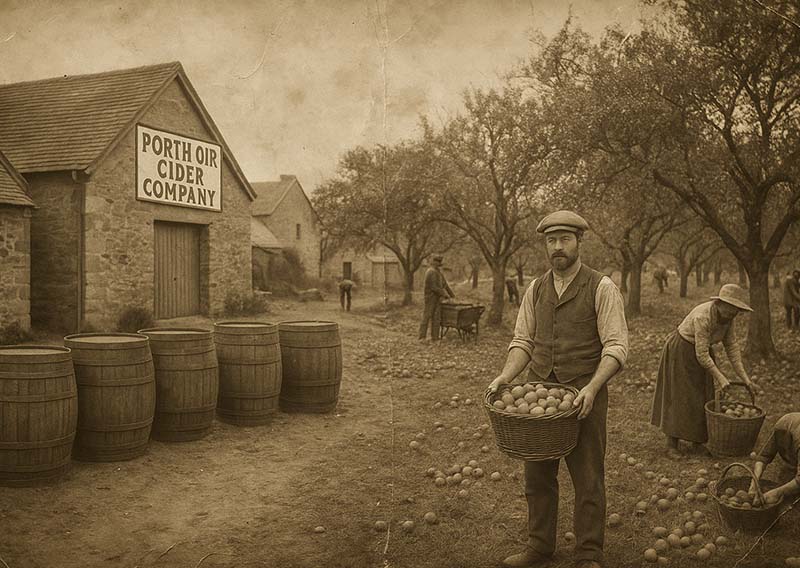
Porth Oir Cider Co
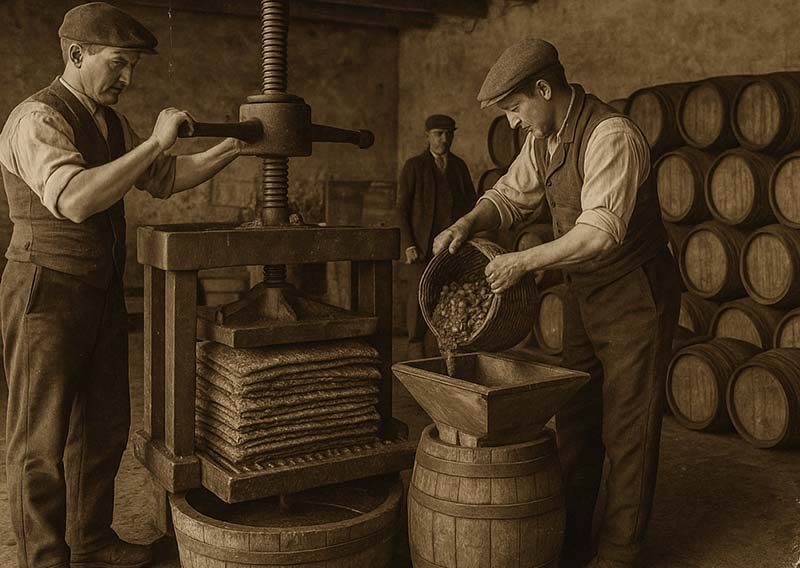
Apple pressing at Porth Oir
The Railways to Porth Oir
The railway reached Porth Oir from Caerporth in late 1880, marking the beginning of a new era for the Golden Harbour. Before then, a network of small industrial tramways criss-crossed the farmland and orchards from as early as 1860. These horse-drawn lines linked cider presses, barns, and fields to the town’s harbour, ensuring that apples, grain, and honey could be carried swiftly to ships at Porth Oir.
When the main railway line finally connected the town, it replaced these tramways with a more efficient system. The new line took a relatively direct route through the central farmlands using existing sugar cane lines from Caerporth and existing orchard tramways from Porth Oir to create a new central corridor across the island. Construction was swift because of the basic terrain and the reusing of many miles of existing plantation tracks. Much of the land required was already under the control of Lord Rhosper, the self titled 'sugar cane king' of the Caerwyn Isles. He wanted a fast way to get his goods to market, especially to the docks at Caerporth to be carried off on ships from the Caerporth Steam Packet Company which he just conveniently happened to be a major shareholder in. From a purely geographical standpoint, a south-coast railway continuing towards Dun Ear would arguably have served the region better, but such a route was certainly not in Lord Rhospers interests. A plan was proposed for one such railway by John Michael Stuart of the prosperous Stuart family, another of the big sugar cane and apple orchard families on Sorcha, but it failed to gain traction, particularly because of conflicting interests from other landowners.
Trains brought in supplies from the west – coal, tools, and imported goods – and carried out the produce that had made Porth Oir famous. Grain wagons rattled down to the harbour, while cider trains, laden with barrels marked for taverns across the islands, became a familiar sight. The honey trade also flourished, with hives transported inland and jars carried back by rail to Porth Oir’s markets.
The arrival of passenger services brought yet another change. Tourists soon discovered the charm of the Golden Harbour, arriving by rail to see its orchards in blossom, sample its ciders, and walk the surrounding golden fields. The ferry connection to Gwynhaven only added to its appeal, creating a seamless link between Sorcha’s fertile farmlands and Rathmor’s rugged eastern coast.
Today, the railway remains the lifeline of Porth Oir, a town whose name continues to shine in both heritage and harvest.
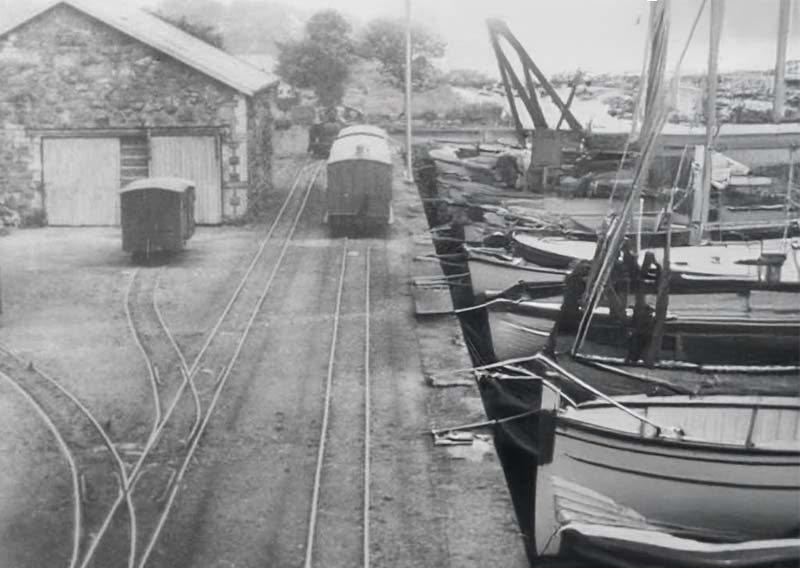
Porth Oir quayside c1910
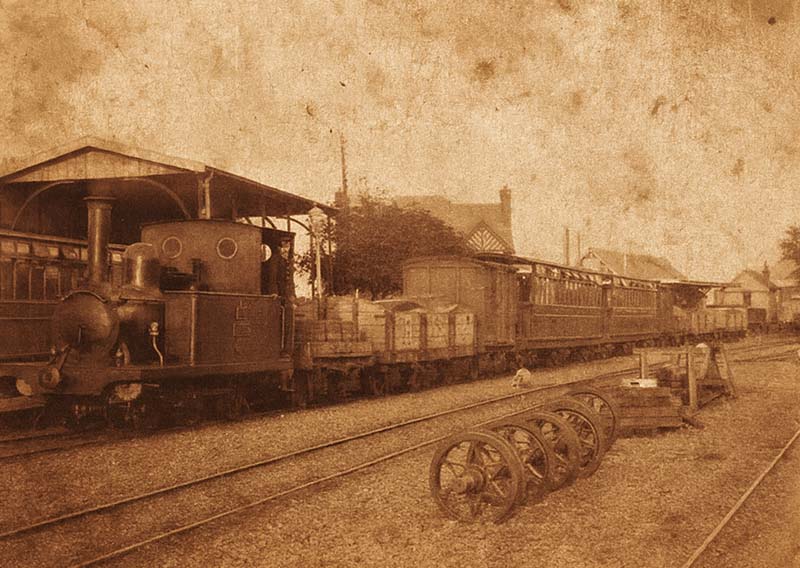
Porth Oir c1890
History
Towns
Porth Oir
Porth Oir Maps
Porth Oir
Located on the south coast of Sorcha