


13. Dun Lar History
The western fort town of the Rathmor Channel, known for its shipbuilding and latterly the home of Rathmor Gin.
History
Towns
Dun Lar
Dun Lar Map
Dun Lar
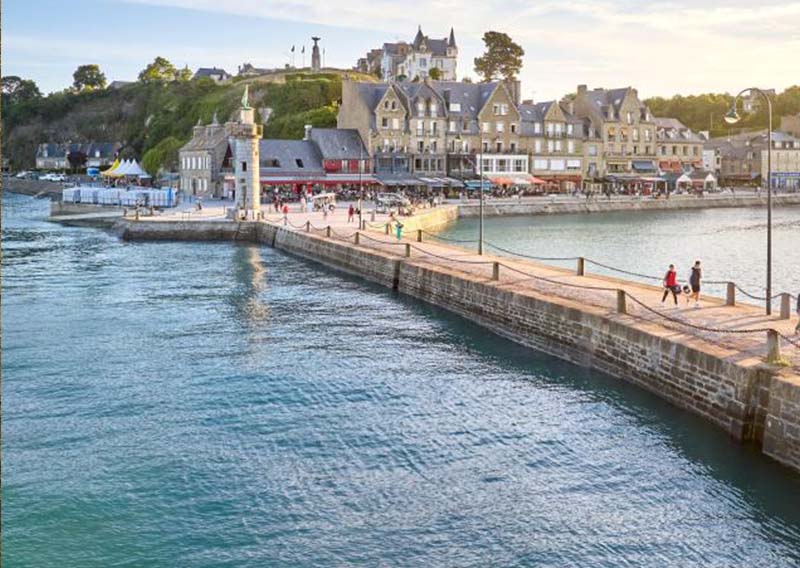
Dun Lar (Doon-Lahr) – From Gaelic dùn “fort” and làr “ground” or larach “site, stronghold,” meaning “Fort on the Shore” or “Stronghold of the Bay.” The name reflects its role as a fortress settlement guarding the southern approaches to Llanchala Bay together with its twin fort across the water at Dun Ear on Sorcha.
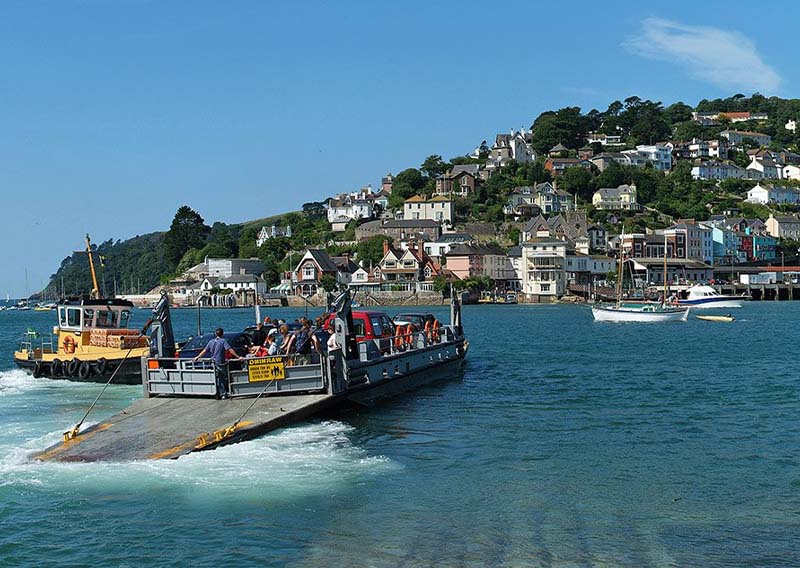
Dun Lar - Dun Ear ferry
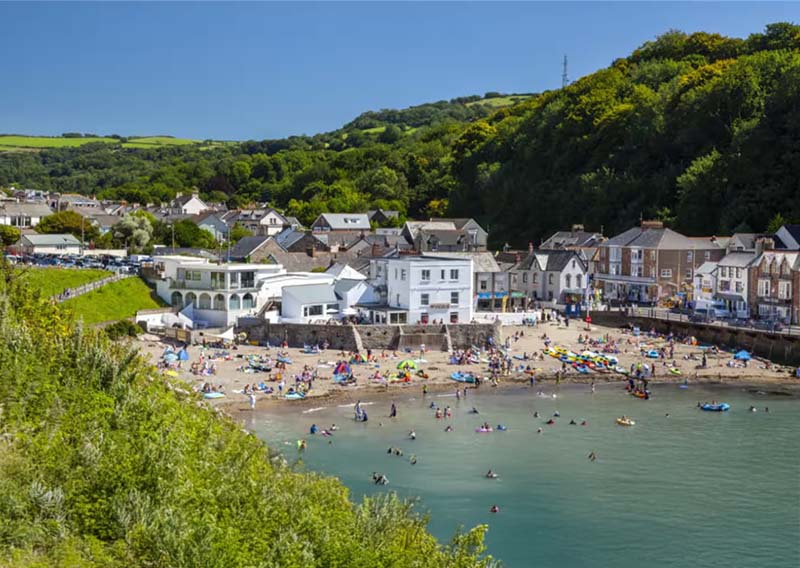
Dun Lar Beach
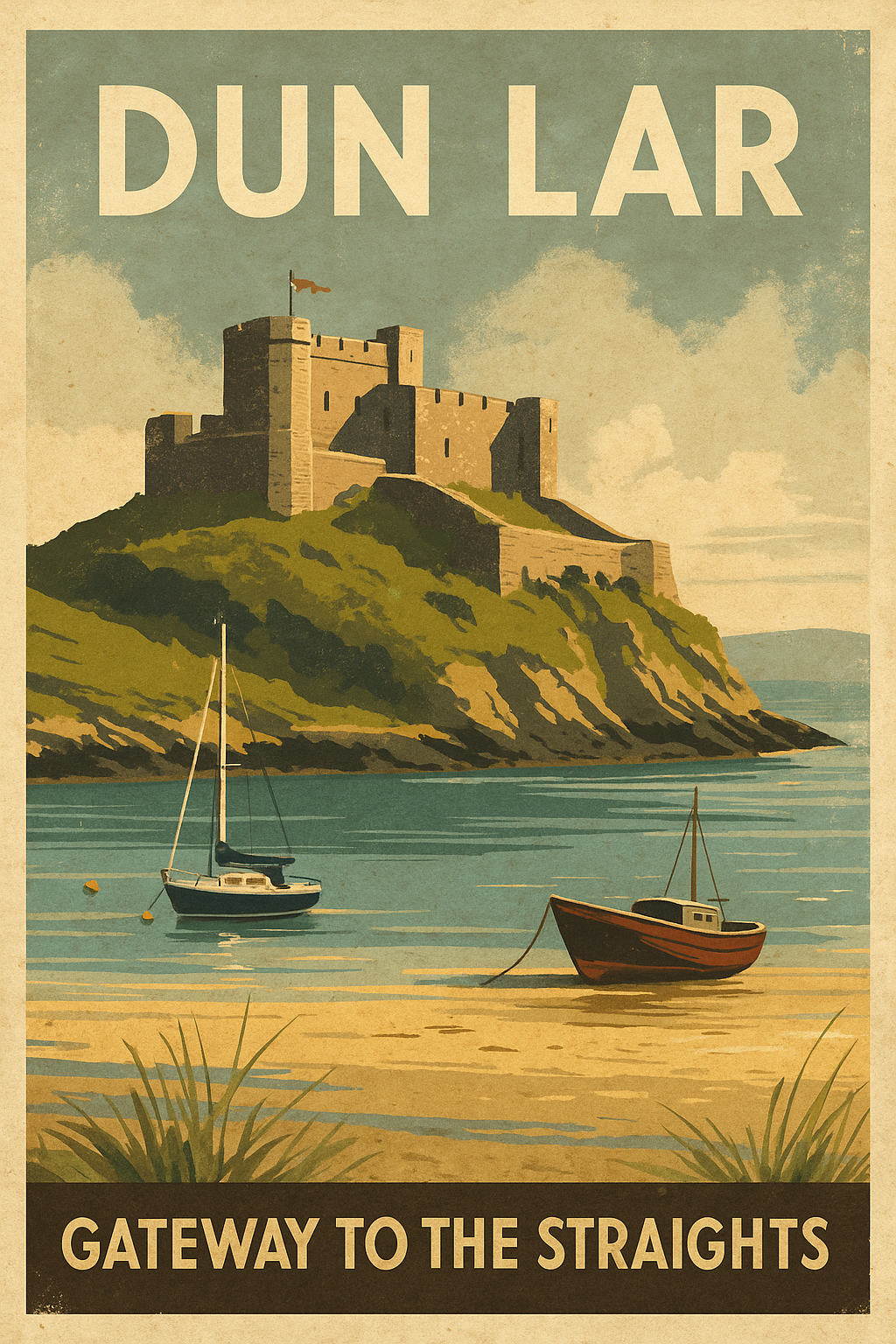
1920s advert
Dun Lar, once a fortress guarding the southern entrance to Llanchala Bay, has become a thriving town of woollen mills and gin-making, a sentinel of tradition and trade on the shores of Little Rathmor.
Perched on the south eastern edge of Little Rathmor, Dun Lar is among the island’s most historic communities. Its name recalls its origins as a fortress town, built to guard the southern entrance to Llanchala Bay from incursions across The Straights. Together with its twin fort at Dun Ear on Sorcha, the two strongholds formed a defensive chain that controlled one of the most strategic waterways of the islands. Centuries of watchmen and soldiers once patrolled these ramparts, keeping enemy sails at bay.
Over time, the military purpose gave way to commerce. The defensive walls provided shelter for merchants and fishermen, and the settlement flourished as a place of trade. By the 18th century, Dun Lar was known less for its fortress and more for its woollen mills, which harnessed the waters of nearby streams to power looms and spindles. Island sheep provided the raw fleece, and Dun Lar’s cloth became sought after across the archipelago.
In the 19th century another industry rose alongside wool: gin distilling. Using juniper and botanicals from the highlands of Rathmor, the Dun Lar distillery crafted a spirit that soon found its way into taverns and homes across the islands. Today the gin is a proud export, competing with the whiskies and ales of the larger towns.
Dun Lar remains a town of resilience and craft—its fortress stones still standing watch, even as its people weave, distill, and trade in the modern age.
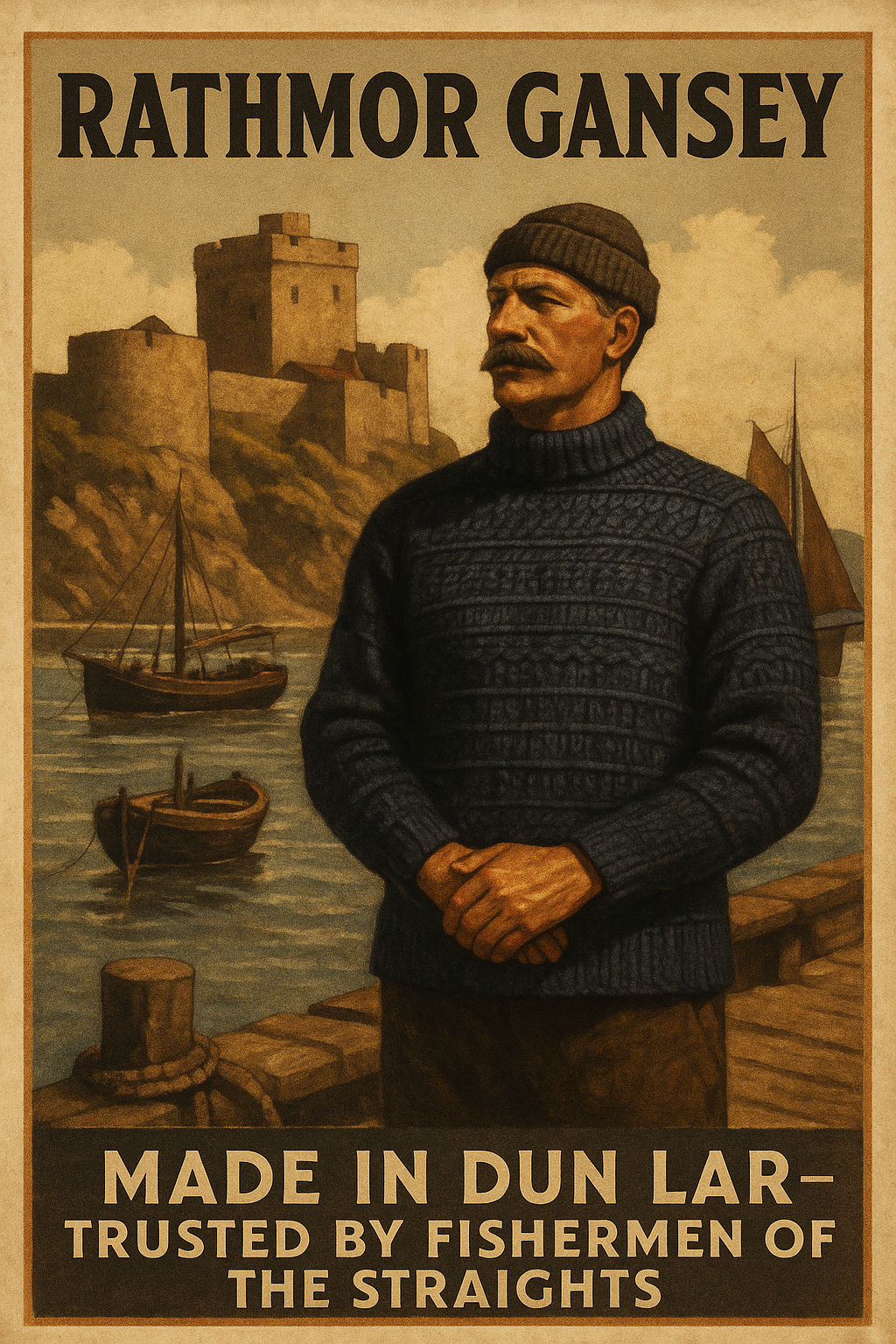
Rathmor Gansey Poster
The Dun Lar Woollen Mills
The town of Dun Lar, perched on the southern edge of Little Rathmor, has long been recognised as the center of the island’s wool industry. From the windswept hillsides of the island, where hardy sheep graze on coarse grasses and heather, the raw fleece makes its way into the town’s great mills. Powered originally by waterwheels and later by steam, these mills became the lifeblood of the community during the 18th and 19th centuries, providing steady work and a sense of pride for generations.
The most famous product of Dun Lar’s mills is the “Rathmor Gansey,” a garment woven to withstand the relentless gales and salt spray of the seas around the islands. Strong, warm, and practical, it became the trusted companion of fishermen and sailors who braved The Straights. Each jumper was traditionally knitted in distinctive local patterns, said to be unique enough that men lost at sea could be identified by their weave. Over time, the Rathmor Gansey came to symbolise not only utility but also heritage, passed down through families and treasured as a mark of island identity.
Beyond the jumper, the mills also produced cloth for trade: tweeds, blankets, and heavy outer garments that found buyers across the Islands. The industry helped bind Little Rathmor to the wider archipelago, its bales of wool and rolls of cloth carried out by ferry and train.
Though modern times have brought competition and decline, the woollen mills of Dun Lar remain active, blending old craftsmanship with new methods. Visitors can still tour parts of the historic mill buildings, hear the clatter of looms, and purchase garments made in the very place where the Rathmor Gansey was born.
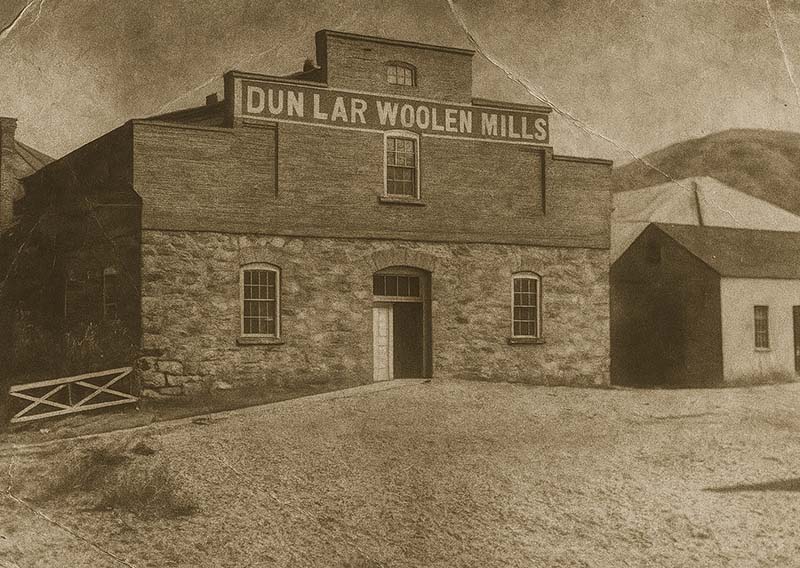
Dun Lar mills c1900
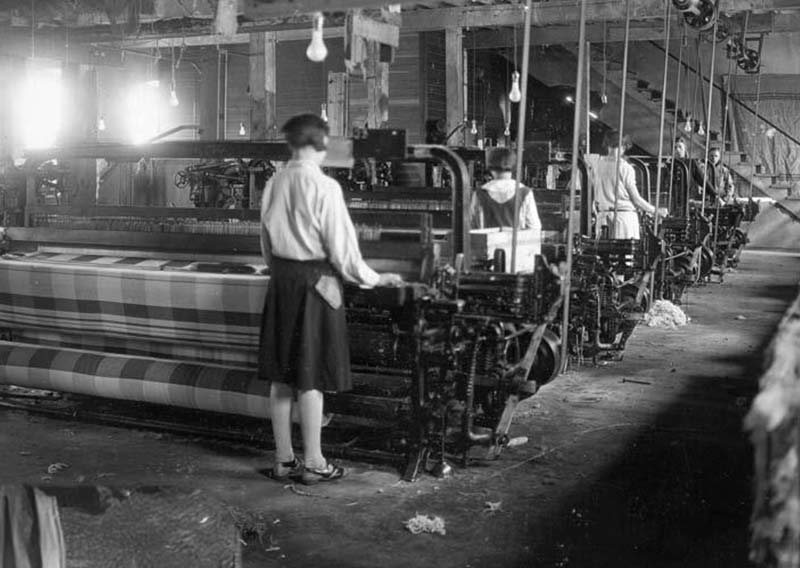
Dun Lar woollen mill c1940
The Home of Rathmor Gin
On the southern edge of Little Rathmor, where the fortress town of Dun Lar looks out across The Straights, lies one of the islands’ most celebrated industries – the gin distillery that produces the world-renowned Rathmor Gin. Established in the late 19th century, the distillery was born from the union of local traditions with the growing European taste for spiced and aromatic spirits. What sets Rathmor Gin apart is the marriage of native and imported botanicals. The rocky slopes of Little Rathmor are home to hardy juniper bushes, their berries ripening slowly under the salt-laden winds. These provide the essential heart of the spirit. To this base are added a host of island-sourced ingredients: heather blossoms from the moors, kelp and seaweed gathered at low tide, and a scattering of wildflowers that bloom in sheltered glens. Together, they create a distinctive flavour – floral, mineral, and touched with the tang of the sea. Imported spices such as coriander seed, angelica, and citrus peel complete the recipe, linking the island’s rugged character to global trade routes.
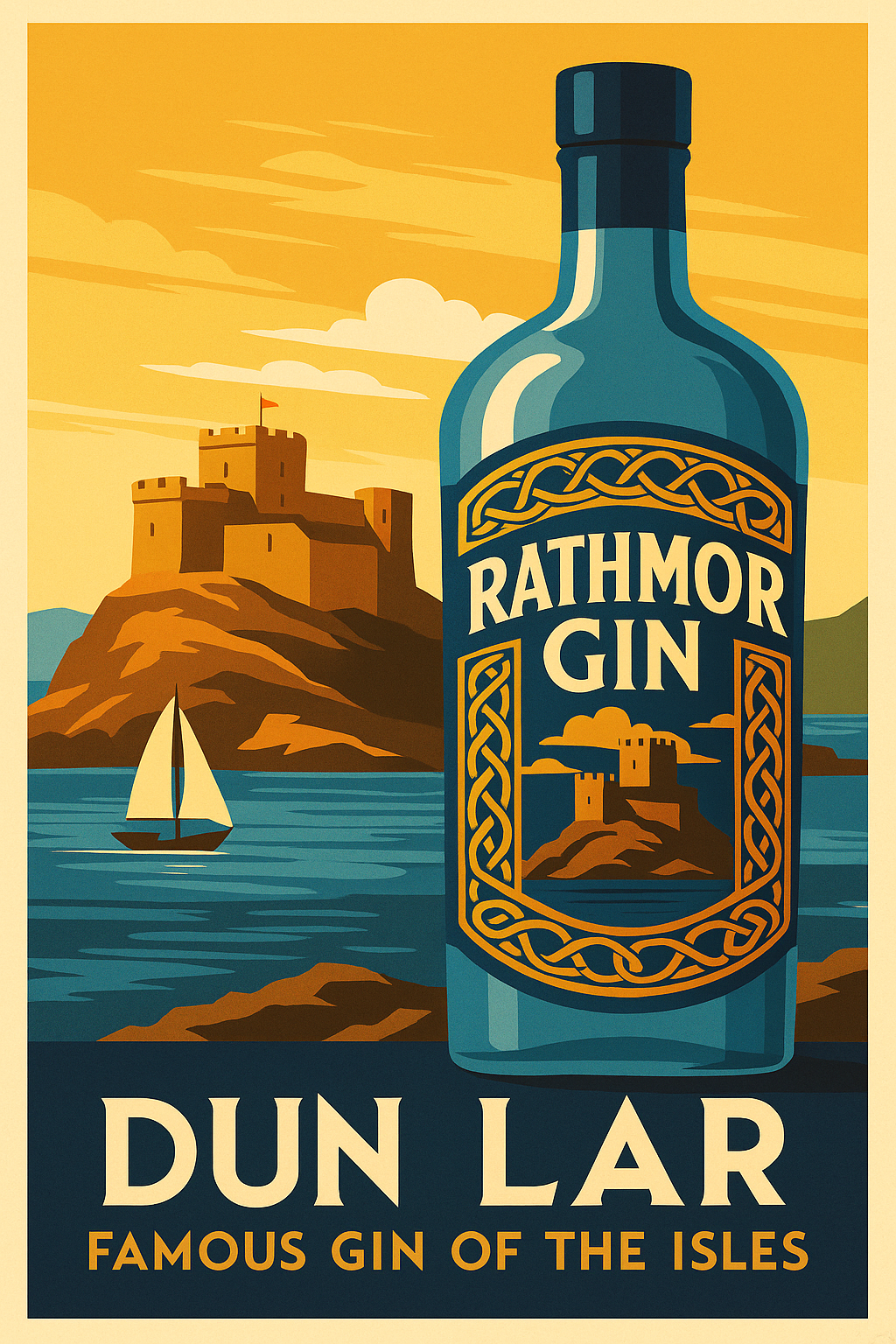
Rathmor Gin Advert
Local folklore holds that each bottle of Rathmor Gin carries “the soul of the Isles,” a distillation of moorland blooms and ocean spray. Its bottles, adorned with Celtic knotwork and island motifs, have become instantly recognisable. By the 1920s, Rathmor Gin was being poured in fashionable bars from London to Paris, celebrated for its bold yet balanced character.
Today, the distillery at Dun Lar continues to welcome visitors, offering tours where guests can see copper stills at work, sample limited editions, and walk the very moorland paths where the botanicals are gathered. To taste Rathmor Gin is to taste Little Rathmor itself.
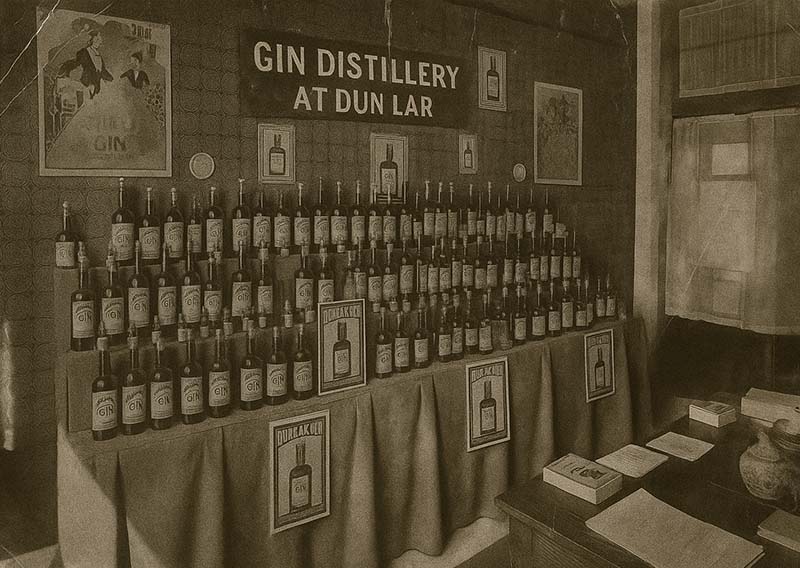
Dun Lar Gin c1900
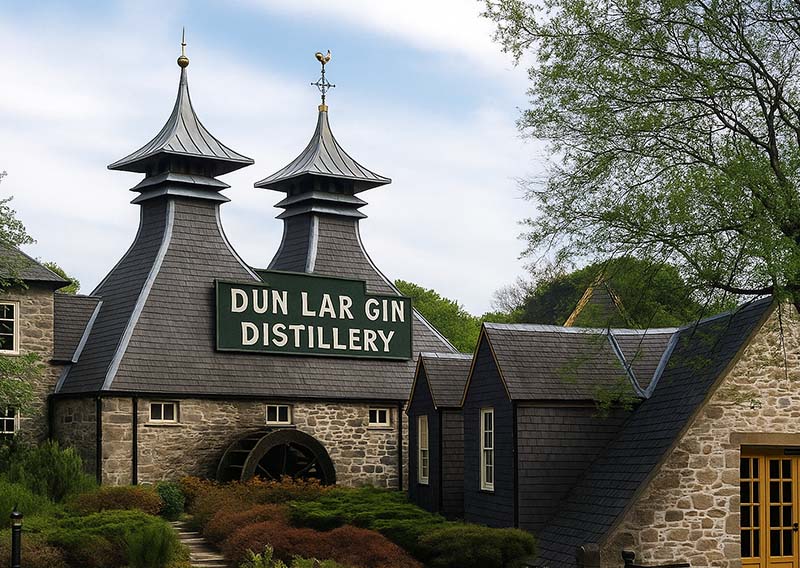
Dun Lar Distillery
The Railway at Dun Lar
The arrival of the railway in 1875 transformed Dun Lar from a quiet outpost into a critical railhead for goods flowing across the islands. With the proximity of Sorcha just across the water, Dun Lar naturally became the landing point for ferried goods, especially wheat, sugar cane, and timber from the fertile fields of Sorcha. Rail lines from the harbour carried these resources onwards to destinations throughout the archipelago and beyond.
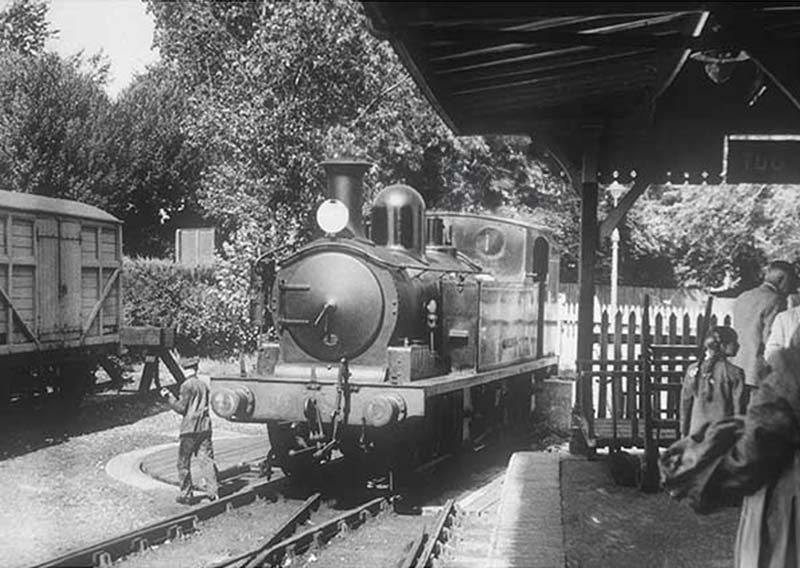
Locomotive turntable at Dun Lar c1910
From the earliest days of the Glynoch & Rathmor Railway, there was talk of a fixed crossing between Sorcha and Little Rathmor. Proposals ranged from an iron bridge spanning The Rathmor Channel to a great tunnel beneath the waters. Engineers drew up ambitious plans, and surveyors even drilled a handful of exploratory shafts. But the Admiralty strongly opposed any fixed crossing, arguing that it would obstruct naval movements and endanger the security of Llanchala Bay. The debate has rumbled on for decades, with merchants demanding faster trade and the military guarding their strategic freedom.
For now, Dun Lar thrives as the end of the line, where ferries meet trains. Heavy wagons roll off the boats from Sorcha and onto the rails, carrying grain to the mills, sugar to the refineries, and timber to the sawmills of Rathmor. Passengers too cross here, making Dun Lar an important interchange for those heading east or west.
The town’s railway station is unusually large for its size, built to handle both passenger and long goods trains. It has also become a symbol of what might be—many still dream of a day when a bridge or tunnel finally unites the breadbasket of Sorcha directly with the heart of the railway network. Until then, Dun Lar remains the vital link in the chain, a sentinel of both the past and the future.
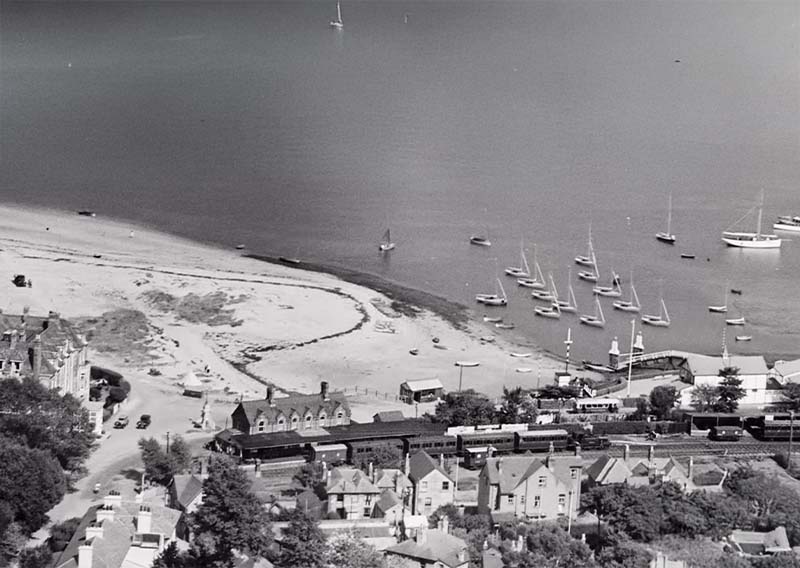
Dun Lar Station c1880
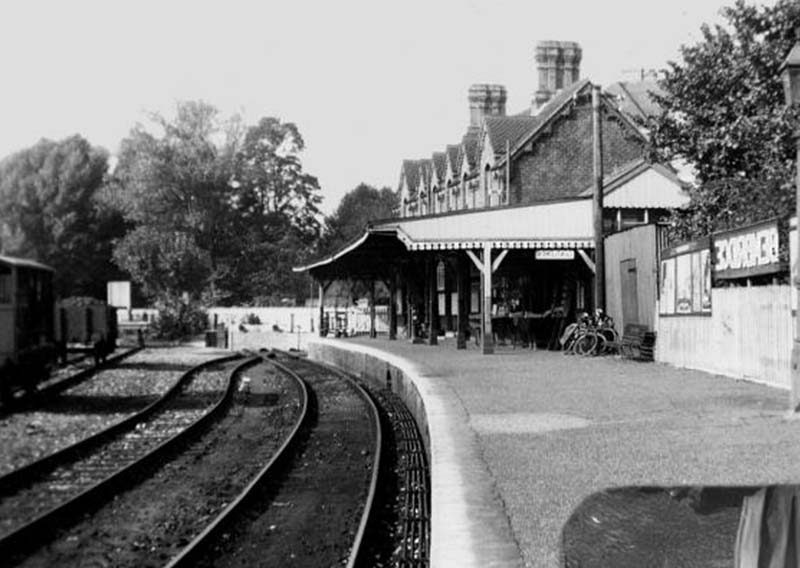
Dun Lar Station c1930
History
Towns
Dun Lar
Dun Lar Maps
Dun Lar
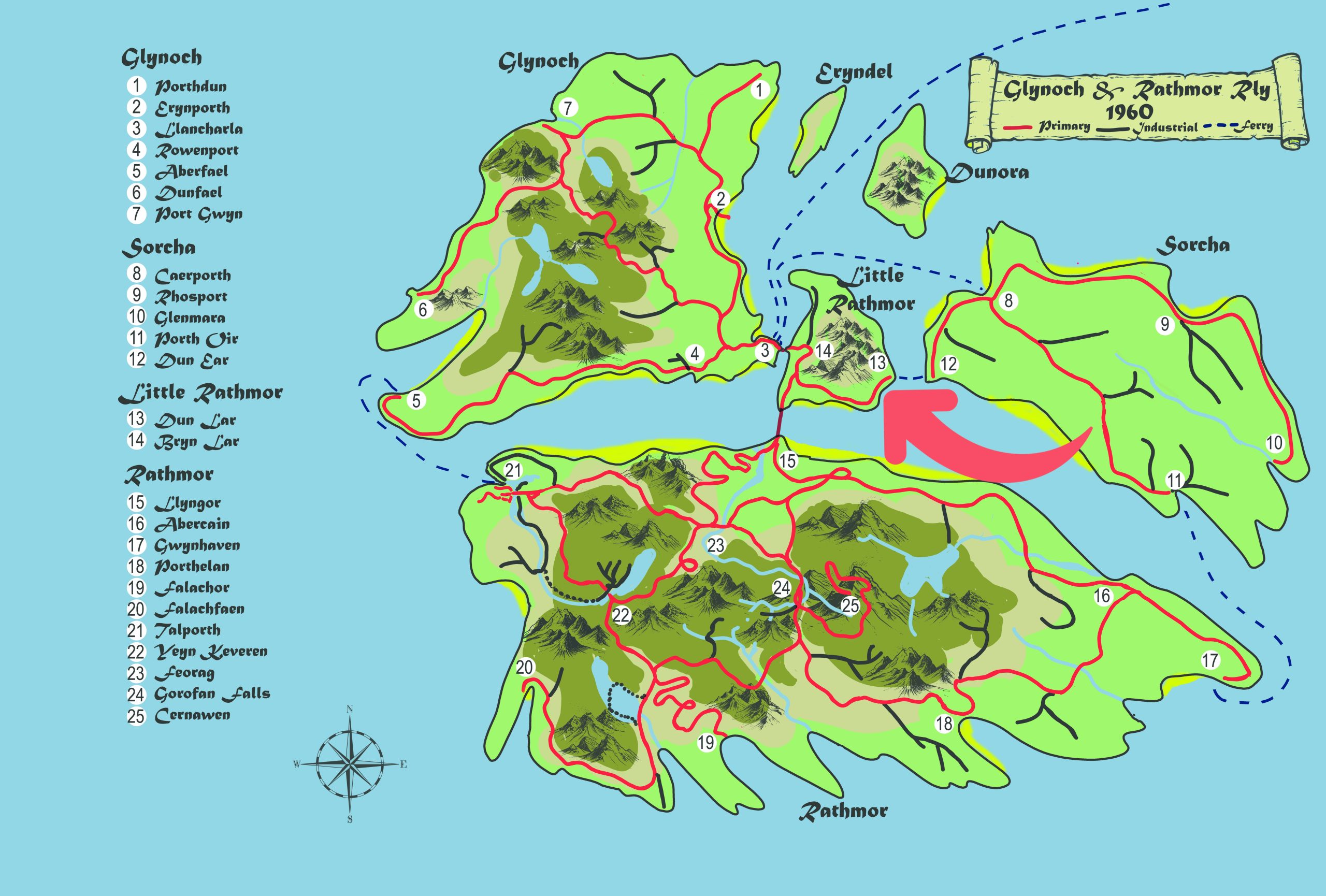
Located on the east coast of Little Rathmor
Explore More Towns...
...View All Towns