


1860: The Early Railways of Porth Oir
From orchard to harbour, cooperative and privately owned agricultural tramways laid the foundations of Sorcha's central railway network.
History

Railways

About Porth Oir
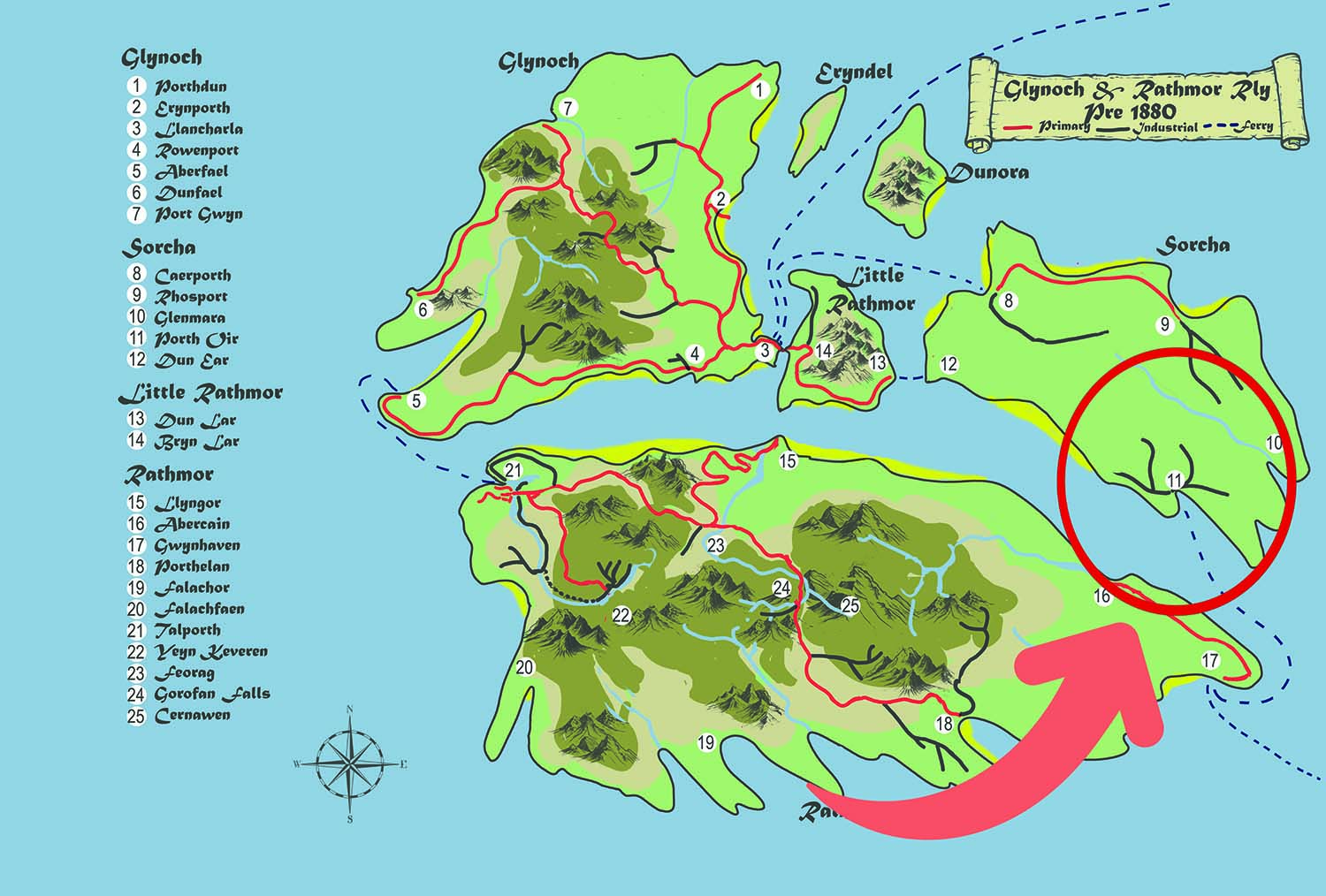
Porth Oir Maps
The Early Railways of Porth Oir
At a glance:
Porth Oir Agricultural Tramway (POAT) — c.1860; cooperative of farmers and merchants; agricultural freight;
Golden Orchard Tramway (GOT) — c.1863; owned by Golden Orchards; fruit, cider and later vineyard-related traffic;
Smaller farm tramroads — various dates; agricultural feeder lines.
All incorporated into GSCR 1879–1880.
Successor: Grand Sorcha Central Railway (GSCR), grouped into GWR in 1923.
Later Ownership: Glynoch & Rathmor Railway (1939)
Origins: Where the Orchards Met the Sea
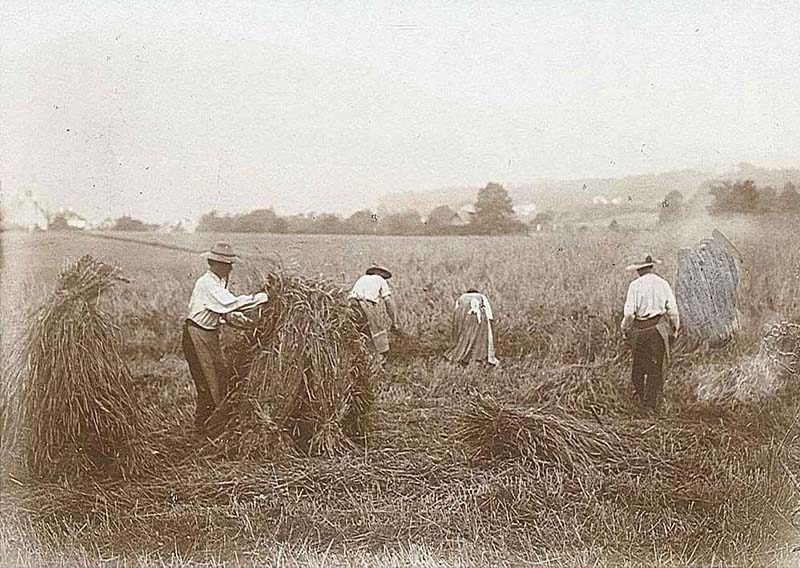
Long before the arrival of passenger trains and the grand railway companies, the countryside surrounding Porth Oir was served by modest tramways built to move the harvest. Grain, fruit, vegetables and barrels of cider travelled towards the harbour, where coastal vessels carried produce to markets across the Caerwyn Isles and beyond. Narrow roads, heavy carts and difficult harvest conditions encouraged local growers and merchants to seek a more reliable solution. Two undertakings emerged: the cooperatively owned Porth Oir Agricultural Tramway around 1860 and the privately established Golden Orchard Tramway around 1863. Their different origins would shape the district's early railway history.
Porth Oir Timeline
Together with the Early Railways of Caerporth these lines formed the basis for the Grand Sorcha Central Railway
Porth Oir Agricultural Tramway
Golden Orchard Tramway
Grand Sorcha Central Railway
Great Western Railway
Glynoch & Rathmor Rly

Porth Oir Agricultural Tramway
1860: The Porth Oir Agricultural Tramway
The Porth Oir Agricultural Tramway (POAT) was a cooperative enterprise formed by local farmers and merchants. No single wealthy landowner or financial backer controlled it. Instead, participating growers, traders and warehouse operators pooled resources to establish practical railway connections between farms, barns, produce-handling facilities and Porth Oir harbour. Shared investment enabled smaller producers to benefit from rail transport without constructing individual lines at their own expense. Horse-drawn wagons carried grain, fruit, vegetables and other produce to the quays, returning with tools, equipment and supplies arriving by sea. The tramway had no public passenger service and required little in the way of stations or passenger facilities; its infrastructure consisted chiefly of simple tracks, sidings, loading places and working quays.
A Railway Built Around the Harvest
The cooperative tramway's work followed the agricultural calendar. During harvest, traffic increased as wagons brought produce to the harbour; at quieter times, supplies and smaller consignments kept the system useful. Decisions about extensions and connections reflected the needs of participating farms and merchants rather than the ambitions of a single proprietor. POAT became an example of what Sorcha's agricultural communities could achieve through shared transport arrangements.
1863: The Golden Orchard Tramway
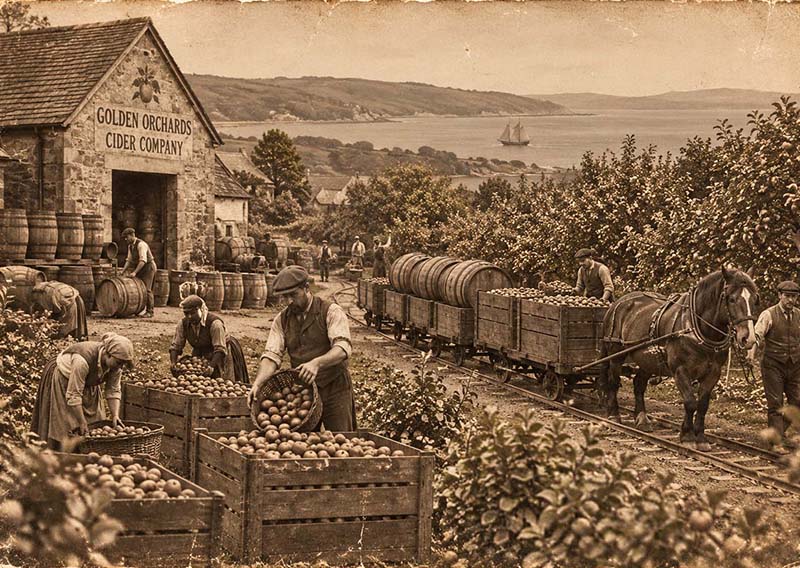
The Golden Orchard Tramway (GOT) had a very different origin. It was built around 1863 by Golden Orchards, an established private fruit-growing and cider-making business seeking efficient transport between its orchards, pressing facilities, stores and Porth Oir harbour. Unlike the cooperative POAT, the tramway served the commercial needs of one business. Horse-drawn wagons carried freshly harvested fruit, cider barrels, empty casks, packaging materials and agricultural supplies. Connections with POAT and other local farm lines, where arrangements permitted, helped Golden Orchards reach the quays and coastal merchants.
Golden Vineyards — A New Opportunity
As the tramway developed, Golden Orchards recognised opportunities beyond its original fruit and cider trade. Improved transport encouraged the business to diversify into grape cultivation and winemaking under the name Golden Vineyards. The vineyards followed the opening of the tramway; they were not its original reason for construction. Suitable coastal hillsides were brought into cultivation, and the new enterprise added grapes, wine barrels, bottles and vineyard supplies to the traffic associated with the Golden Orchards business. The exact founding year of Golden Vineyards remains to be established, but its beginnings belong to the early railway period. Golden Vineyards will also have its own page in the Industries section.
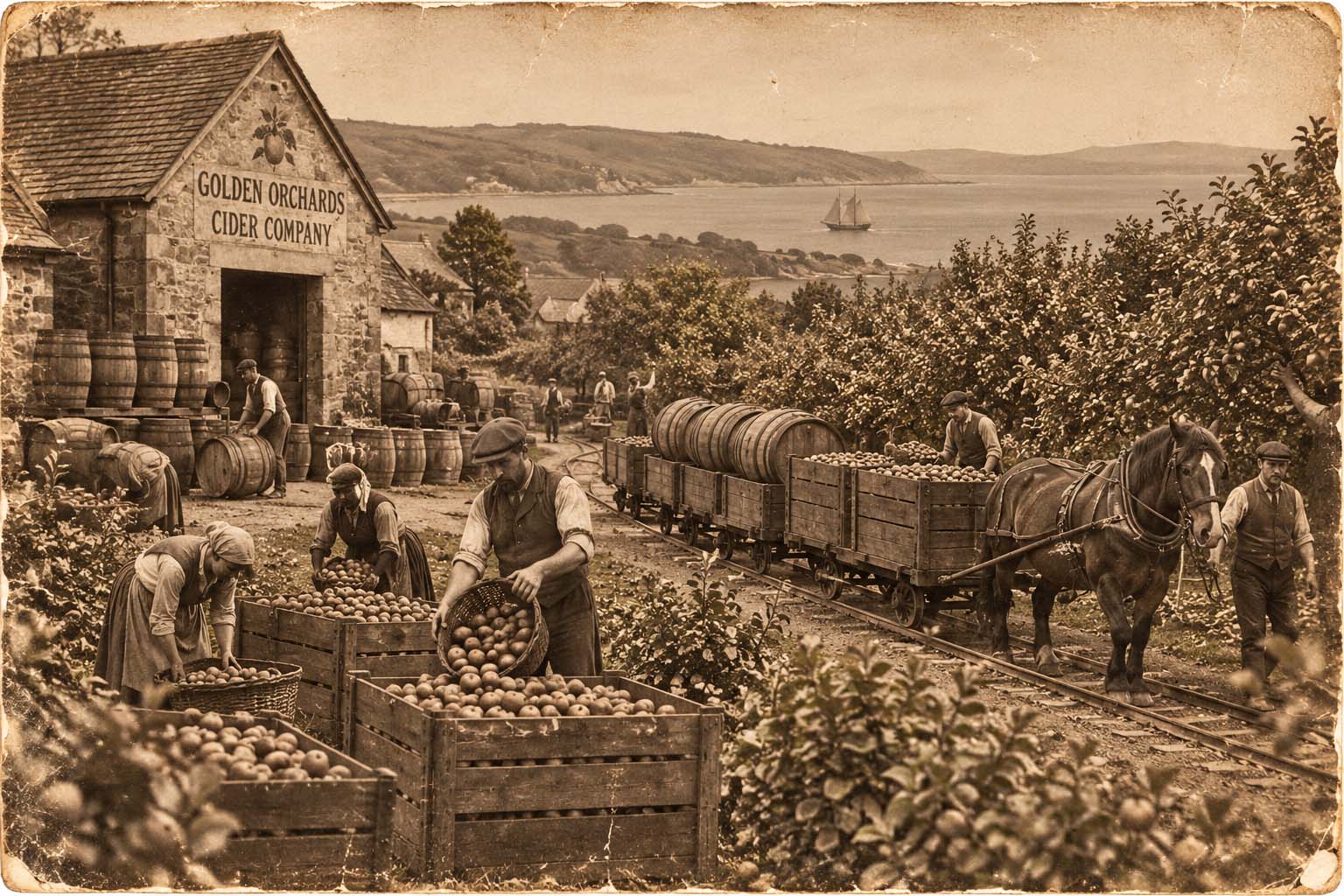
Golden Orchards Cider Harvest
Porth Oir Cider Co
The Smaller Farm Tramroads
Beyond the two principal undertakings, individual farms and agricultural businesses maintained short stretches of track connecting fields, barns, presses and loading points. Some were little more than simple wagon roads, while others became useful feeders to the established tramways. Their routes could be altered as crops, ownership and agricultural needs changed. Together they formed the first stage of many journeys that ended at Porth Oir harbour.
Two Tramways, One Harbour
By the later 1860s, Porth Oir possessed a modest but increasingly useful network. POAT served a cooperative of local producers; GOT carried the produce of Golden Orchards and its developing wine venture. Both depended on access to the same harbour, but they retained separate ownership and operating arrangements. Transfers between lines and the need to coordinate traffic could complicate journeys. As the wider ambitions of Sorcha's railway promoters grew, the advantages of a more unified system became increasingly apparent.
1879: From Agricultural Tramways to the Grand Sorcha Central Railway
By the late 1870s, the early railways of Porth Oir had established valuable transport links between the eastern agricultural districts and the harbour. The Porth Oir Agricultural Tramway (POAT) and Golden Orchard Tramway (GOT) had demonstrated the benefits of railway transport for the movement of grain, fruit, apples, cider and other produce, but their largely independent operations offered limited opportunities for trade beyond their immediate districts. Meanwhile, at the western end of the island, a similar network had developed around Caerporth. The Rhosper Estate Tramways (RET), West Cane Estate Railway (WCER) and Caer Valley Tramway (CVT) served the extensive agricultural estates of central Sorcha, carrying sugar cane and other produce towards the island's principal western port. The opportunity to connect these two groups of railways was increasingly attractive. Rather than remaining separate collections of agricultural tramways, the Caerporth and Porth Oir undertakings could become the foundations of a continuous railway linking the fertile central districts with important harbours on both sides of the island. In 1879, under the influence of Lord Joseph Rhosper and the powerful Rhosper interests, the railway undertakings of both Caerporth and Porth Oir were brought together to form the Grand Sorcha Central Railway (GSCR). During the consolidation of 1879–80, the five principal predecessor systems, together with other local tramways and connections, were incorporated into the new company. The GSCR set about connecting, improving and extending the inherited routes, transforming a collection of agricultural tramways into a substantial railway capable of handling a much wider range of commercial traffic and, increasingly, passengers. By late 1880, the company had completed its through route between Caerporth and Porth Oir, opening new markets and establishing a direct railway connection between the island's western and eastern commercial centres. For Porth Oir, this represented a fundamental transformation. What had begun as local tramways serving farms, orchards and agricultural businesses had become part of a major cross-island railway, an undertaking that would remain independent until its absorption into the Great Western Railway at Grouping in 1923.
A Different Beginning
Porth Oir's early railways offer a contrast to those around Caerporth. Where the latter were strongly influenced by sugar cultivation and powerful estate interests, Porth Oir's lines began with local agricultural cooperation on one hand and the commercial ambitions of a fruit and cider producer on the other. Neither began as a grand public railway. Yet together, and with their smaller feeders, they helped establish the western end of Sorcha's central railway network. The railway story of Porth Oir began with the harvest.
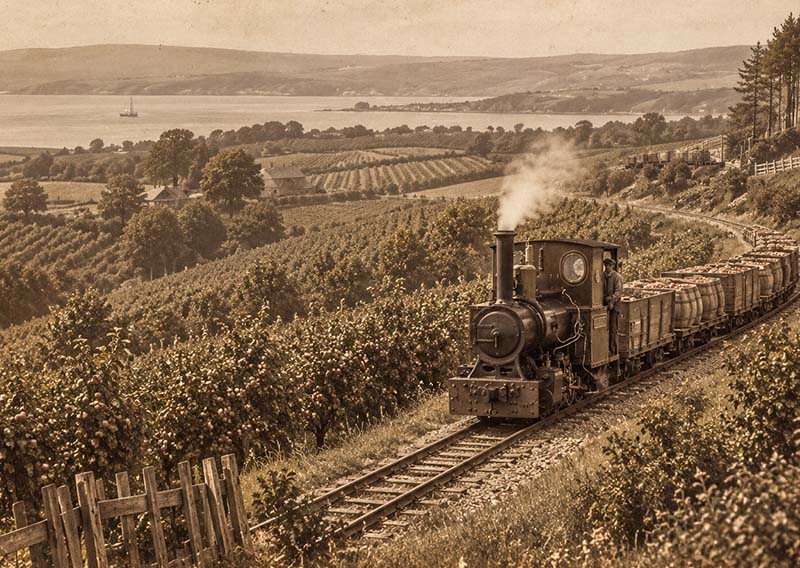
Golden Orchards Co Railway c1870
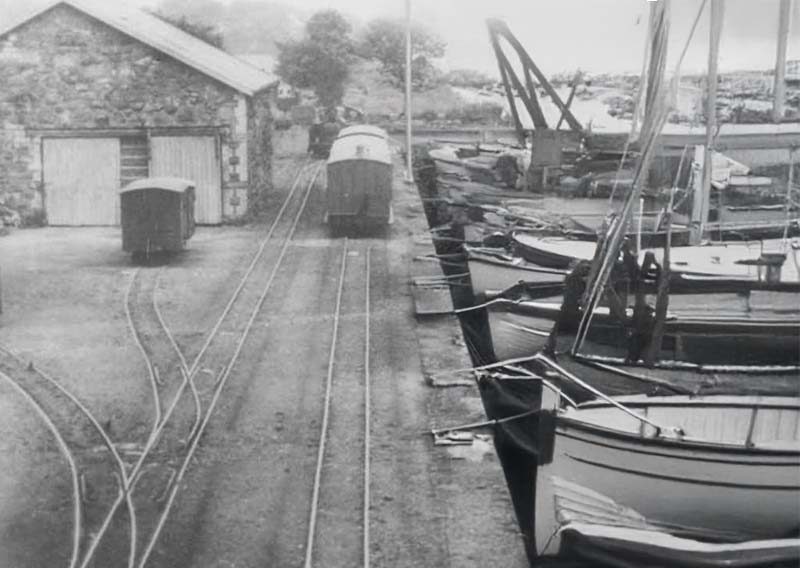
Porth Oir quayside c1910
History
Railways
About Porth Oir
Porth Oir Maps
Porth Oir Tramways




0 Comments