


19. Falachor History
A remote southern town known for sheep herding and lobster fishing.... and Nuclear Power!
History
Towns
Falachor
Falachor Maps
Falachor
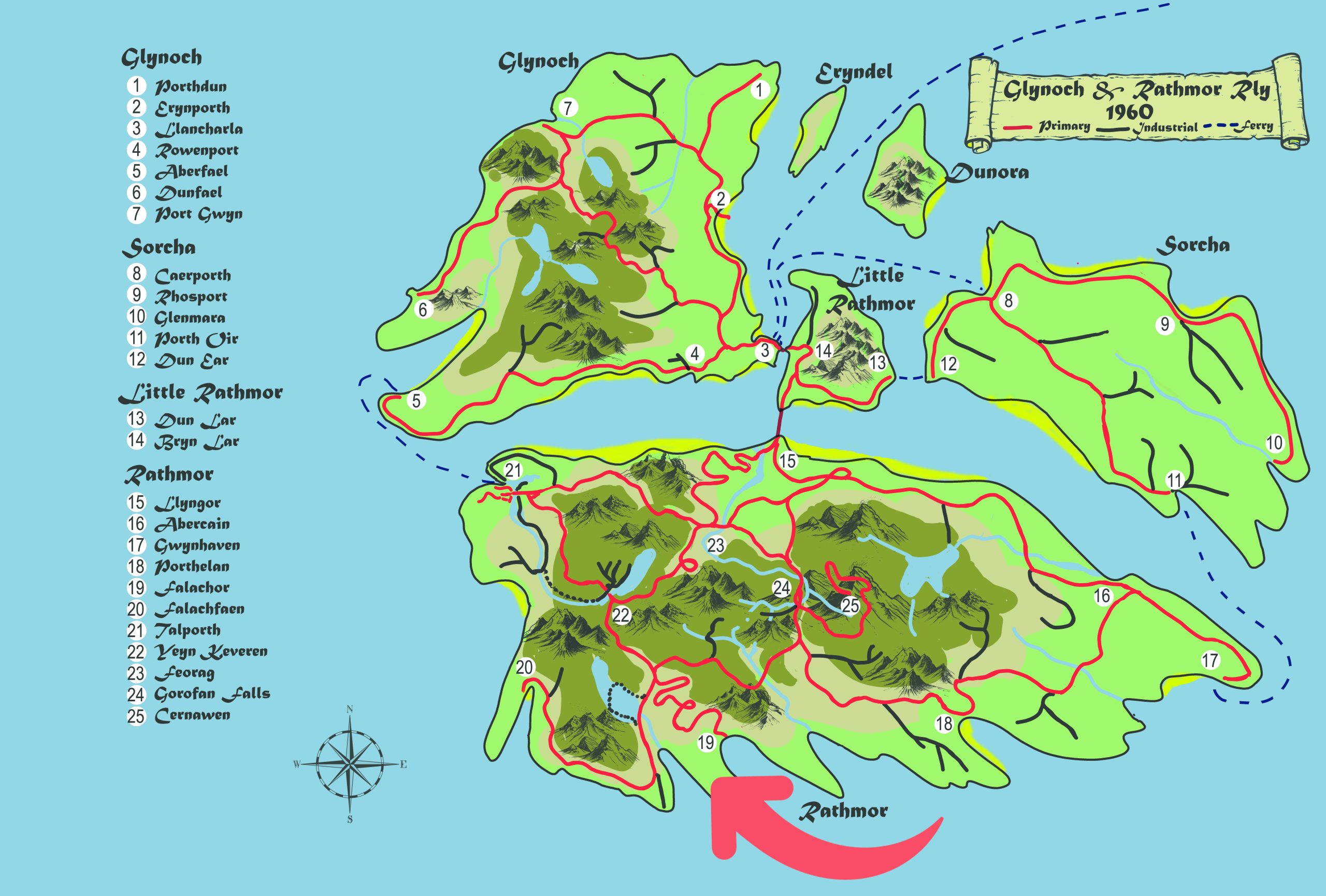
Falachor (FAH-lakh-or) – Likely from Welsh ffalach “hidden” or “secluded” and Cornish chor from corra “harbour.” Meaning “Hidden Harbour” or “Secluded Haven,” reflecting the town’s position on a deep, narrow inlet sheltered by high cliffs and ridges.
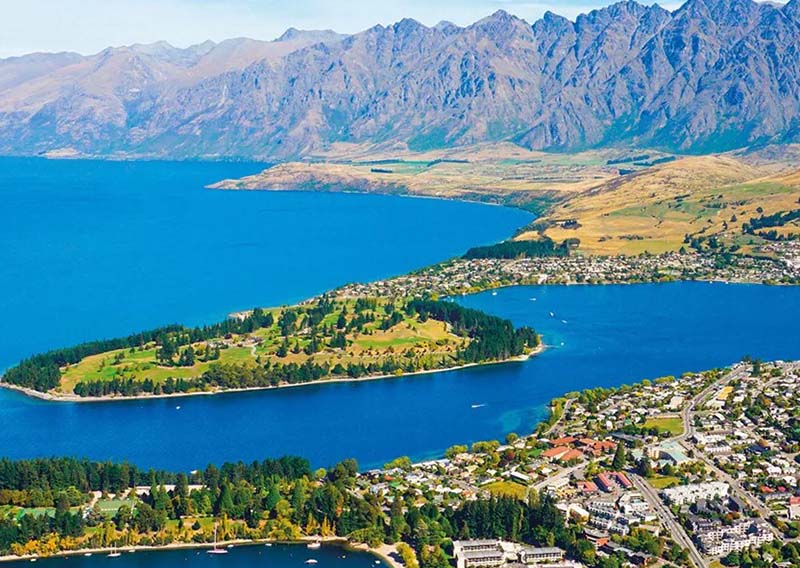
Falachor
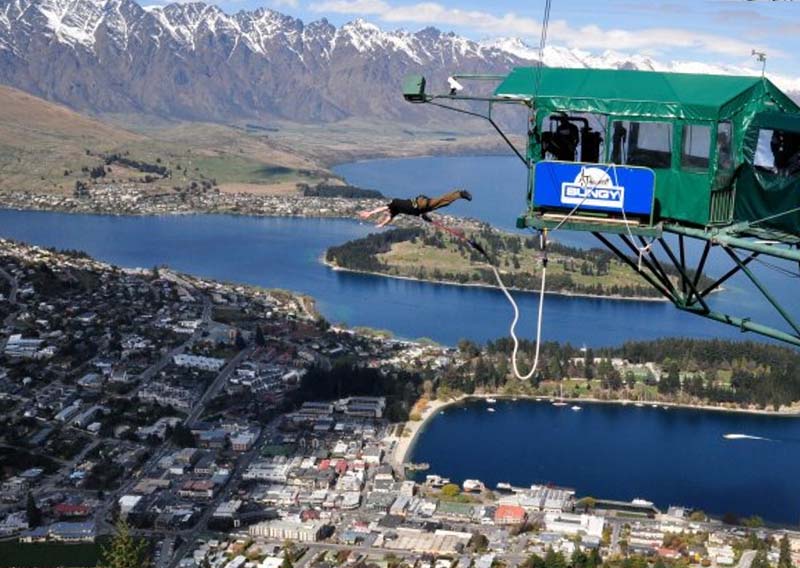
Adventure sports are now hugely popular
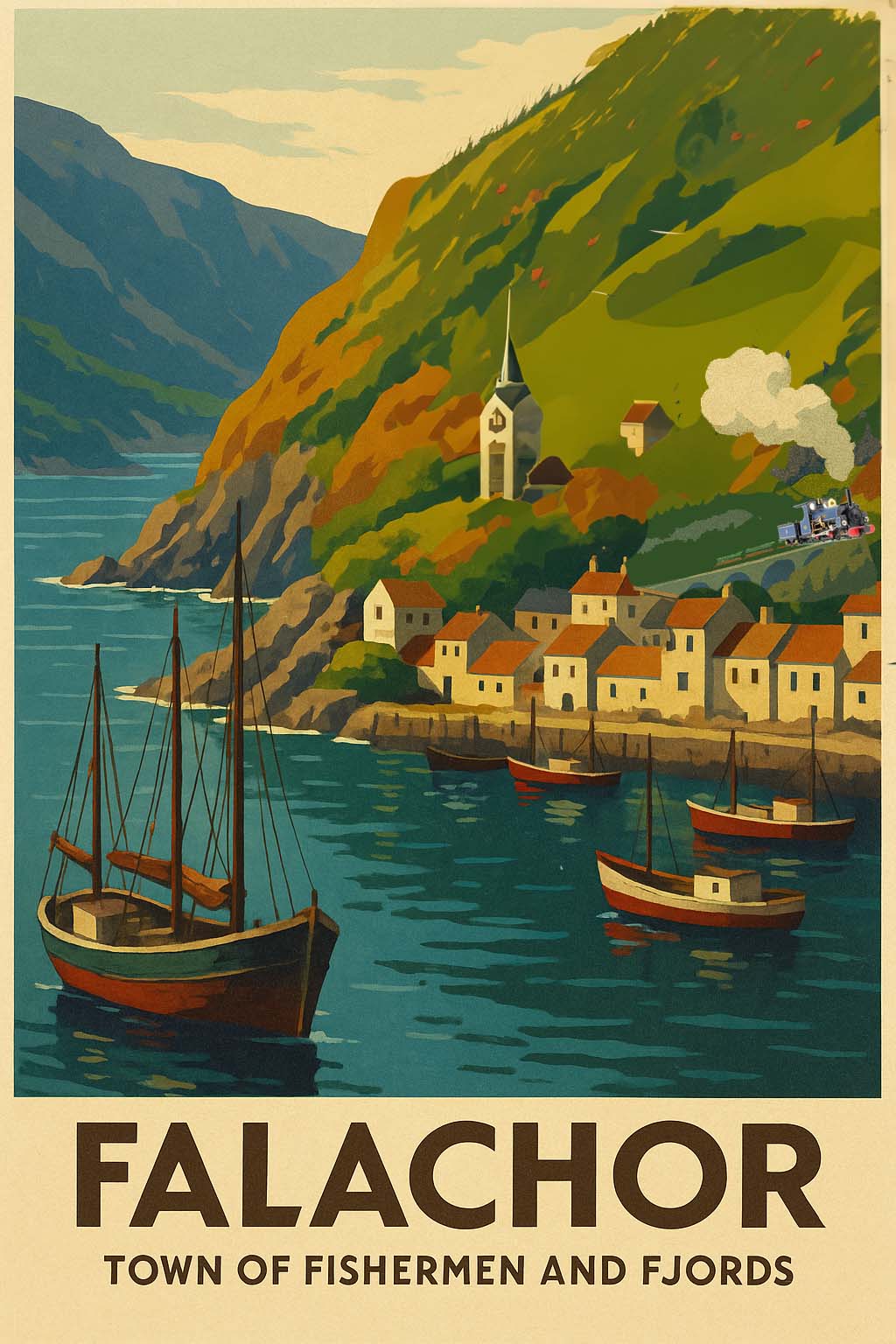
1920s advert
Falachor is a town of fishing and fjords, its deep sheltered waters rich in life, its valleys shaped by dams and power stations, and its population forever tied to the sea.
Nestled along the rugged southern coast of Rathmor, Falachor is a town defined by both sea and stone. Its natural setting is dramatic: deep-water fjords carved into the cliffs provide some of the best and most sheltered fishing grounds in the islands. Here, generations of fishermen have cast their nets for herring, mackerel, and lobster, their brightly painted boats crowding the harbour at dawn and returning with holds full of the sea’s bounty. The fjords, narrow and steep-sided, not only protect the fishing fleet from Atlantic storms but also create a harbour of rare depth, capable of sheltering much larger vessels.
Beyond fishing, Falachor is tied to two major developments of the 20th century. Inland, in the next valley, lies the Bodmin Dam, one of Rathmor’s great hydro-electric projects, which also provides fresh water to surrounding communities. Just down the coast stands the formidable Rathmor Nuclear Power Station, built in the 1950s as part of a bold experiment in modern energy. Though decommissioned in the 1990s, its legacy still looms large, and many in Falachor remember the “Atomic Years” when the station’s hum joined the sea breeze.
Today, Falachor blends these identities. Still very much a working fishing town, but now with added tourism. It has gained a reputation for adventure sports, including bungee jumping, mountaineering, caving, and thanks to the railway, access to the higher peaks for skiing and snowboarding amongst many more. A community shaped by modern industry and tourism, and a place of scenic beauty where fjords and headlands meet the restless sea. Visitors come for the seafood, the views, and the sense of history that lingers in every tide.
The Mussel Beds of Falachor
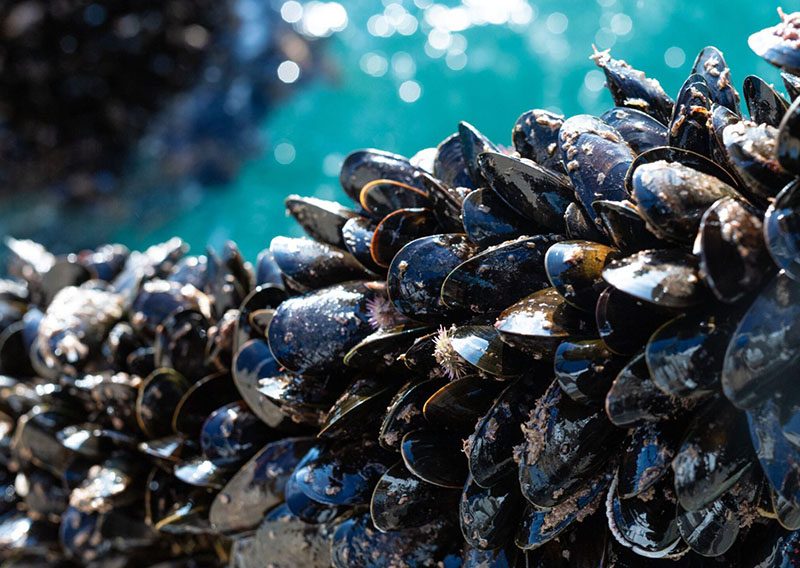
The rugged southern coast of Rathmor has long been defined by the glittering expanse of its fjords, and nestled along these winding inlets lies one of the island’s oldest and most enduring industries: the Falachor mussel beds. Cultivated for countless generations, these tidal farms are a testament to the patience, skill, and deep ancestral knowledge of the coastal families who have tended them. Unlike the more uncertain, seasonal nature of open-water fishing, the mussel beds provide a steady, year-round source of food and income, making them a vital cornerstone of southern Rathmor’s economy.
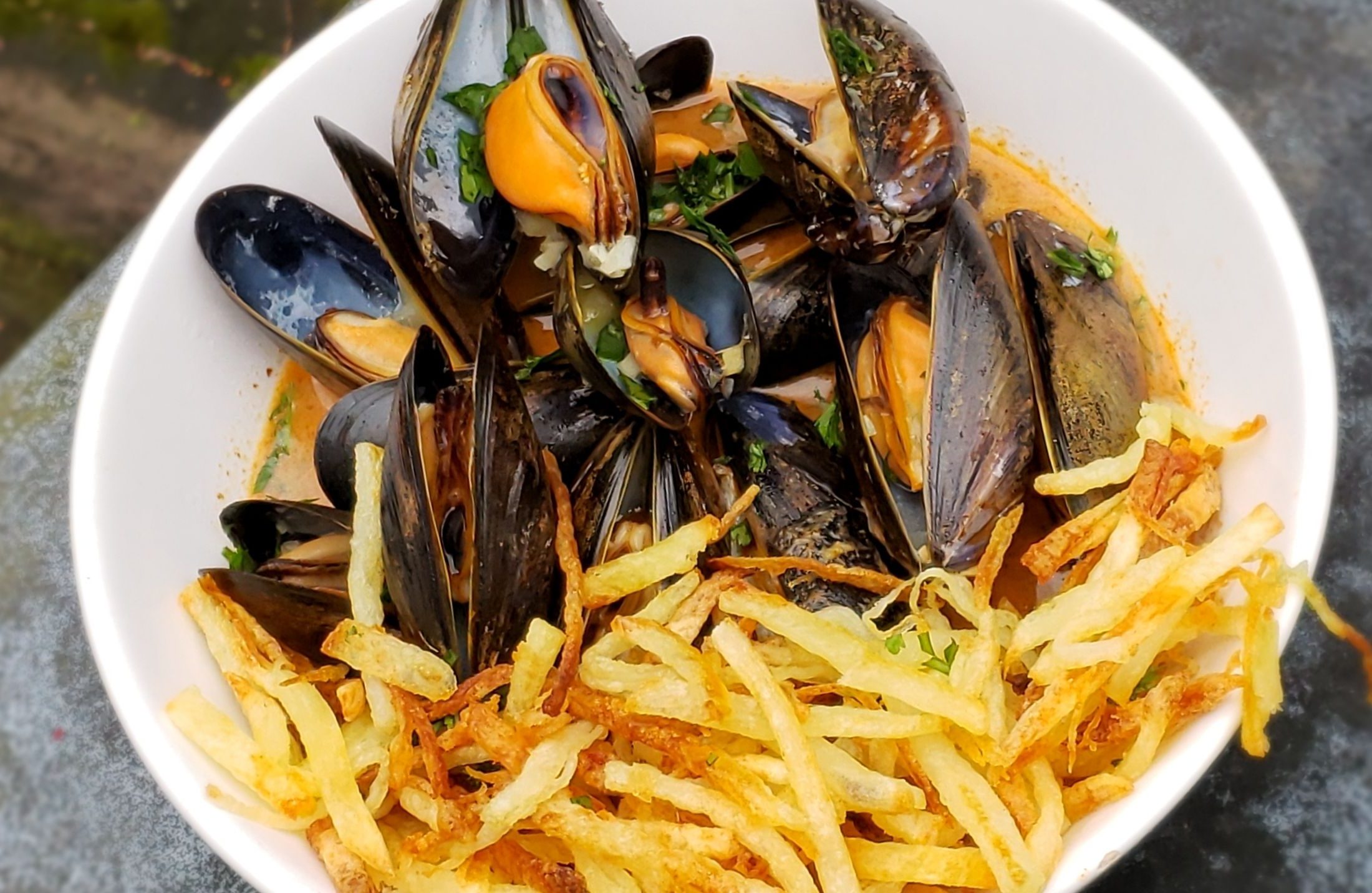
Falachor Moules Frites
The secret to their remarkable success lies in the fjords themselves. Fed daily by the nutrient-rich Gulf Stream waters, the southern inlets maintain a clarity and mineral balance almost unmatched elsewhere in the islands. These crisp, clean tides carry a constant supply of plankton—nature’s perfect mussel fodder—creating an environment in which the shellfish grow quickly, cleanly, and with a flavour that has become synonymous with Falachor itself. Many locals insist that no two fjords taste alike, and connoisseurs claim they can identify the origin of a mussel by its subtle briny sweetness.
Traditionally, the mussel beds are family-run holdings, passed down from father to son, though today many daughters and granddaughters are equally skilled in the craft. The oldest beds are said to be more than two centuries old, with their boundary markers still preserved in weathered oak stakes and stone cairns along the shoreline. Harvesting remains a hands-on process: conducted at low tide, workers wade between long, roped cultures heavy with mature mussels, gathering them by hand or with simple rakes before sorting and packing them in shore-side sheds.
The arrival of the railway network transformed the industry, allowing fresh Falachor mussels to reach towns across the islands within hours. From the bustling seafood markets of Abercain to the inns of Talporth, they have become a beloved staple. Modern refrigeration and efficient shipping routes now carry them even farther—exported from the port of Llanchala to mainland Europe, where they are celebrated for their exceptional quality.
Today, the Falachor mussel beds remain both a thriving trade and a cherished cultural heritage—living proof that the southern fjords of Rathmor continue to sustain the island just as they have for generations.
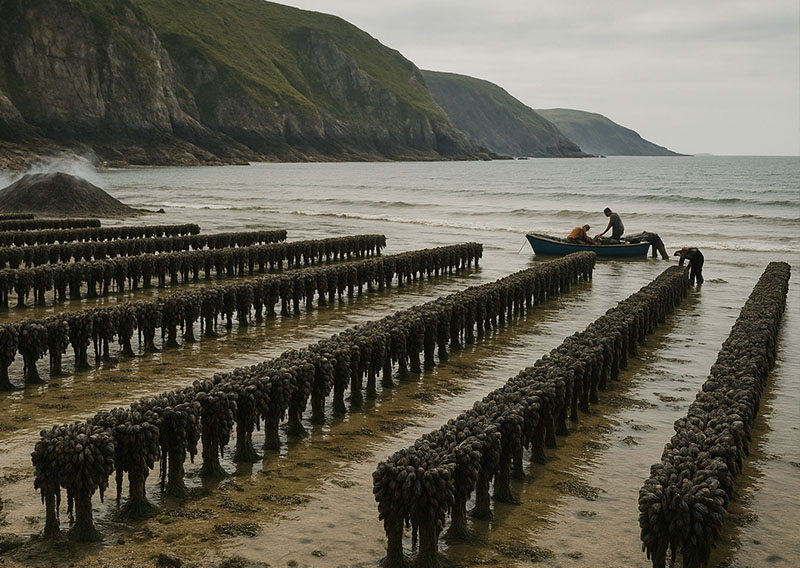
Falachor mussel beds
Crossing the Bodmin Dam - c1940
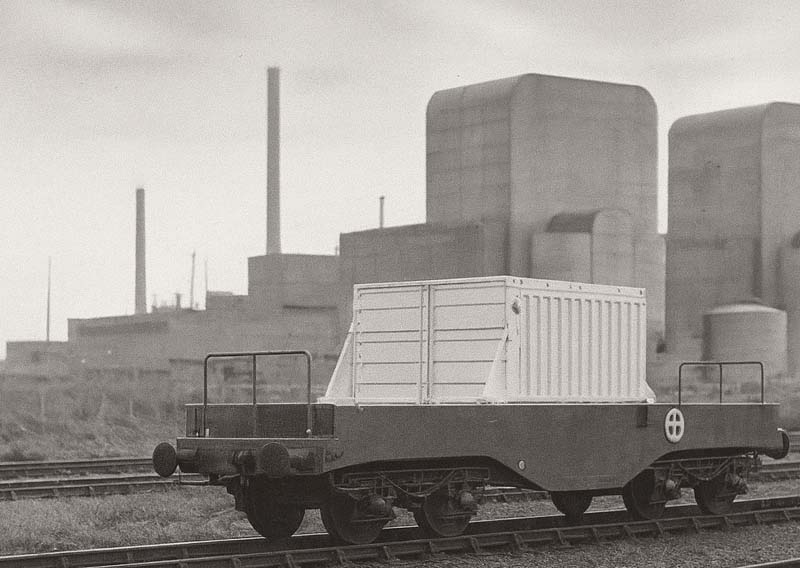
Nuclear Flask on the G&R
The Nuclear Power Station of South Rathmor
In 1954, as Britain entered the nuclear age, the government sought a remote yet secure site for a new type of power station. Rathmor, with its windswept southern headland and proximity to Ministry of Defence training lands near Falachfaen, was chosen. Construction began soon after, aided by a newly built railway extension that carried in heavy machinery, steel, and concrete. For nearly four decades, the Rathmor Nuclear Power Station stood as both a symbol of modern ambition and a point of pride for the islanders, who saw their homeland at the forefront of technological progress.
The station’s design was innovative for its time. Alongside its reactors, it incorporated a pioneering system of pumped-storage hydro-electricity. During the night, when demand was low, surplus power was used to pump water uphill into the nearby Bodmin Reservoir, created when the Bodmin Dam was constructed nearly twenty years earlier. By day, at times of peak demand, the stored water was released back down through turbines, generating additional electricity exactly when it was needed. This clever system made Rathmor’s station one of the most efficient in the country, balancing the unpredictability of power use with the constancy of nuclear output.
Folklore, as ever on the islands, clung even to this modern marvel. Locals whispered of “the humming cliffs,” where the sound of turbines mingled with the sea wind, and of strange lights over the reactor domes on stormy nights. To some, the station was a beacon of progress; to others, an unsettling presence amid an ancient landscape.
By the late 1990s, after nearly forty years of service, the station was decommissioned as newer technologies replaced it. Today, the domes and chimneys stand silent, fenced and weathered, while the reservoir nearby remains active, still used in the island’s hydro-electric network. There has been talk of 'Rathmor B', based on a newer design, but so far no decision has been finalised. For now the site remains quiet, while whispering tales of Cold War ambition, of engineering ingenuity, and of an island that carried both tradition and modernity in its stride.
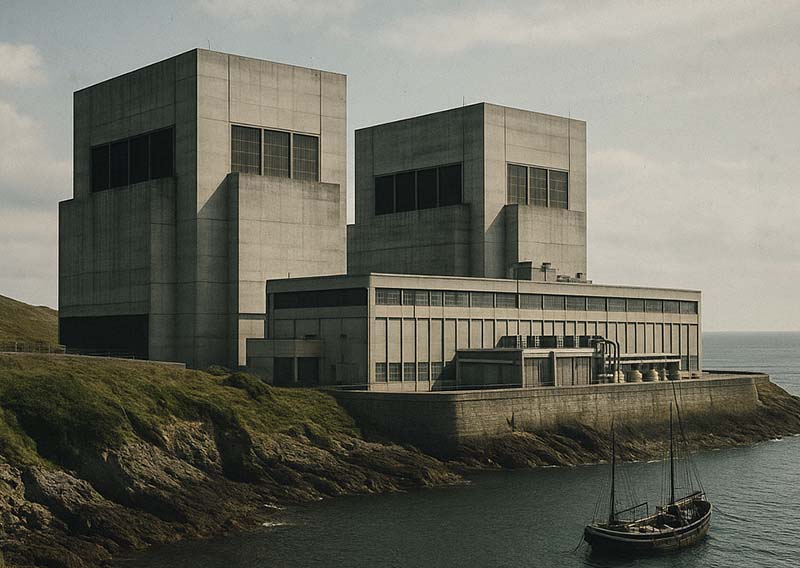
Rathmor Nuclear Power Station
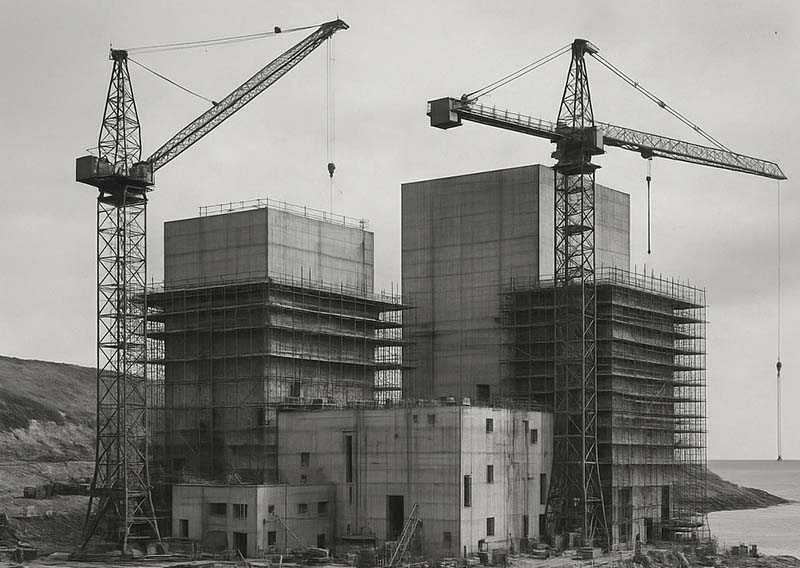
Rathmor 'A', under construction - 1954
Rails to Falachor
The arrival of the railway at Falachor was an engineering marvel as well as a triumph of perseverance. For decades, the town was linked to the highland industries of Yeyn Keveren only by rough mule tracks and to other coastal communities by boat. The push for a railway was driven by both fishing exports and the slate trade, but the descent from the highland plateau to the fjord-strewn coast posed formidable challenges.
The solution, opened in late 1882, was one of the most ambitious railway lines yet constructed on Rathmor. The route from Yeyn Keveren was forced into a series of detours: no fewer than three tunnels bored through the cliffs and ridges, and two dramatic spiral loops carved into the valleys. These spirals allowed the railway to shed altitude gradually, winding around itself in great arcs to make the descent manageable for locomotives. Travellers today still marvel at the sight of their train curving across a viaduct while glimpsing the same track far below or above them—a testament to Victorian ingenuity.
When the line finally reached Falachor, the effect was transformative. Fish and slate could be loaded directly into wagons and carried inland, while supplies and visitors poured in by rail. The once-isolated fishing community now had a direct link to the industrial heart of the island and beyond.
Though challenging to build, the railway to Falachor remains one of the most spectacular journeys on Rathmor, combining feats of engineering with views of fjords, cliffs, and open sea. It is a route where the grandeur of nature and the determination of man are woven inseparably together.
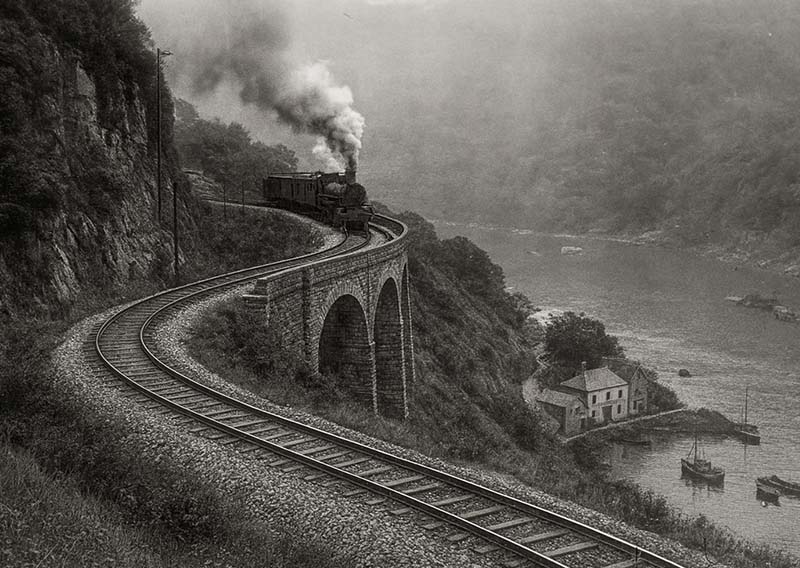
Climbing hard out of Falachor c1885
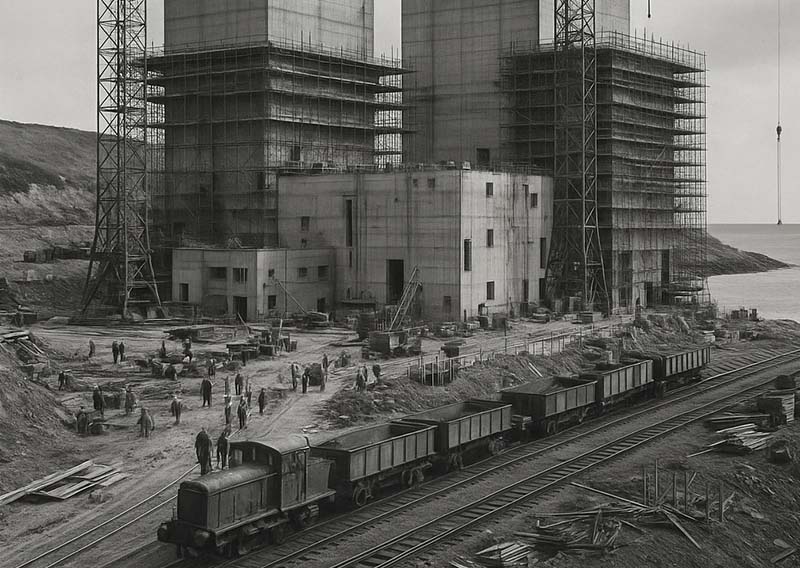
Rails to the power station - 1954
History
Towns
Falachor
Falachor Maps
Falachor
Located on the south coast of Rathmor
Explore More Towns...
...View All Towns