


Esparto Grass Production
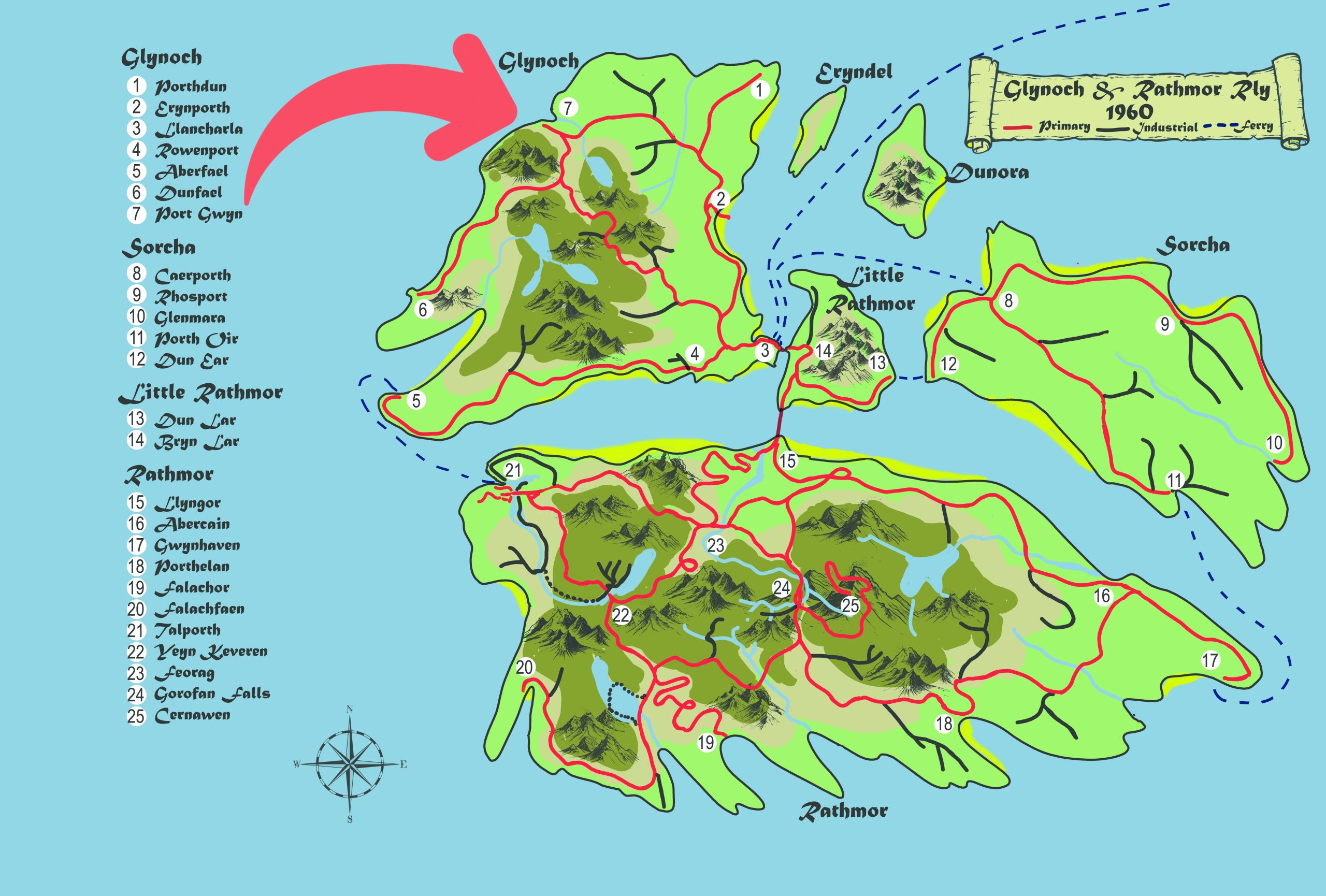
The reclaimed northern plains of Glynoch—flat, wind-brushed expanses stretching between Porthdun and Port Gwyn—are today dominated by vast fields of Esparto grass
History
Industries

Esparto Grass
Map
Esparto Grass Production on the Northern Plains of Glynoch
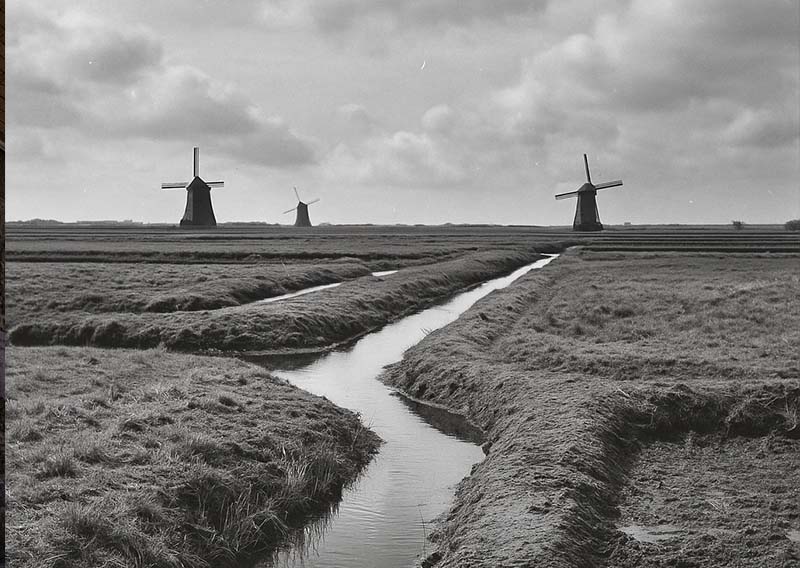
The reclaimed northern plains of Glynoch—flat, wind-brushed expanses stretching between Porthdun and Port Gwyn—are today dominated by vast fields of Esparto grass, one of the most distinctive and valuable crops of the Celtic Islands. Yet these fertile tracts were once little more than tidal mudflats and brackish marshes, cut off from the rest of Glynoch by shifting channels and unpredictable floods. It was only through the ambitious land-reclamation schemes of the mid-19th century, with their drainage dykes, sluice gates, and great windmills pumping the marshes dry, that these once inhospitable flats were transformed into productive farmland.
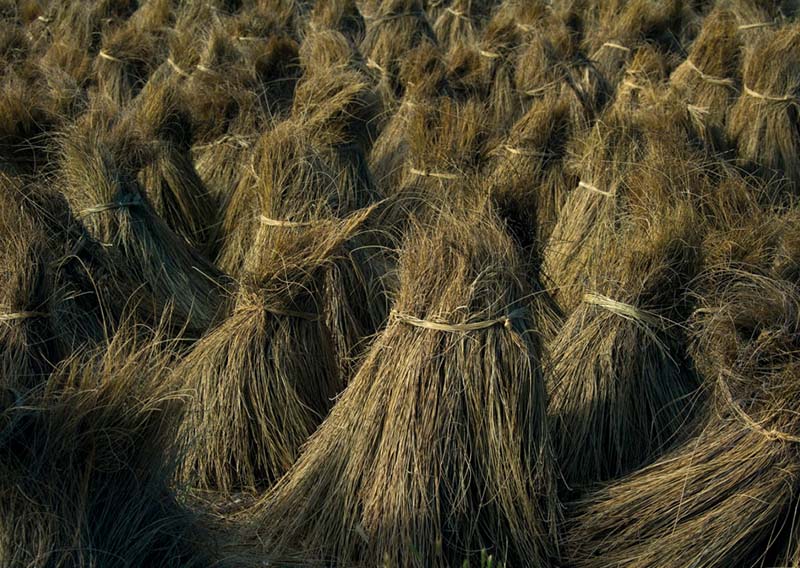
Esparto Grass bales
Esparto grass proved perfectly suited to the reclaimed soils—tough, salt-tolerant, and able to thrive where more delicate crops withered. By the 1880s, Port Gwyn had become the center of Esparto production, its surrounding plains shimmering pale-green in summer and golden in autumn as the grass matured. Families cut the tall, wiry blades with hand sickles or mechanical mowers, bundling them into tight sheaves that were left to dry in the sea breeze before being transported south.
The destination was almost always the great paper mills of Llanchala, which emerged as the industrial heart of the islands’ growing publishing trade. Esparto grass, when pulped and processed, produced a fine, resilient paper—whiter and smoother than many wood-based varieties, and far less prone to yellowing. Known simply as Esparto paper, it gained a reputation for durability throughout the Celtic Islands and far beyond. It soon became the preferred medium for printed books, maritime ledgers, school primers, and even official government documents, prized for its ability to withstand damp climates and constant handling.
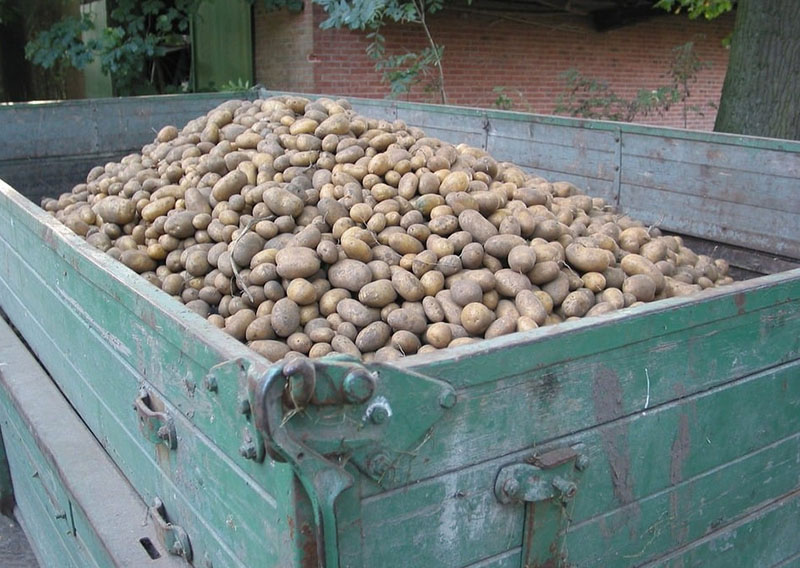
Port Gwyn prospered as wagonloads and later narrow-gauge rail trucks carried the grass to Llanchala’s mills. Entire communities found seasonal work in cutting, drying, loading, and transporting the crop. Even today, Esparto remains an iconic product of northern Glynoch—less dominant than in its heyday, but still an important thread in the islands’ tapestry of agriculture, industry, and cultural heritage.
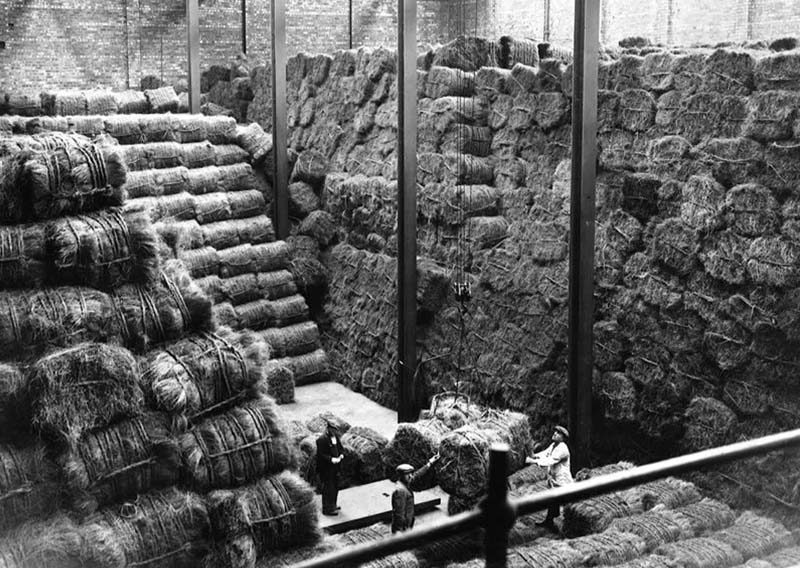
Esparto grass stores at Llanchala paper mill c1900
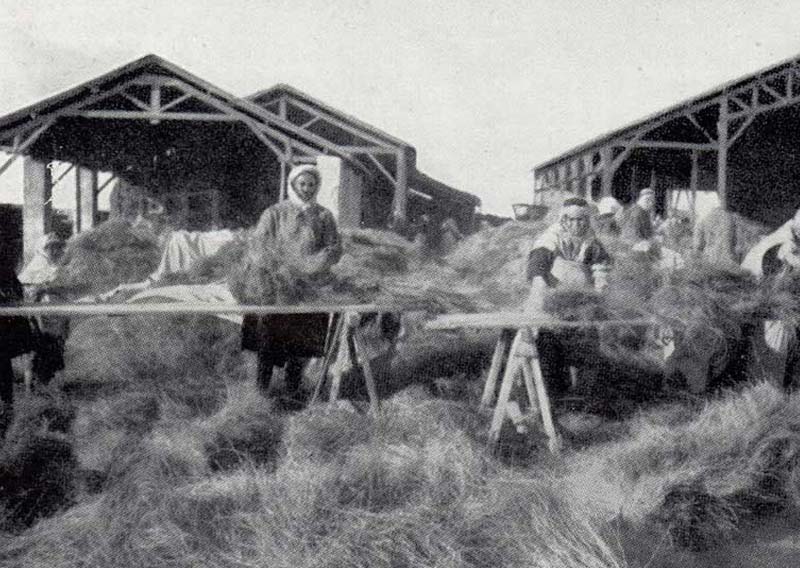
Esparto grass harvest c1880
History
Industries
Esparto Grass
Map
Esparto Grass Production on the Northern Plains of Glynoch
Located in the lowland plains of nothern Glynoch