


1859: Llanchala & South West Railway
The railway that united Glynoch's southern coast, linking coastal communities Llanchala to Aberfael.
History

Railways

About the L&SWR
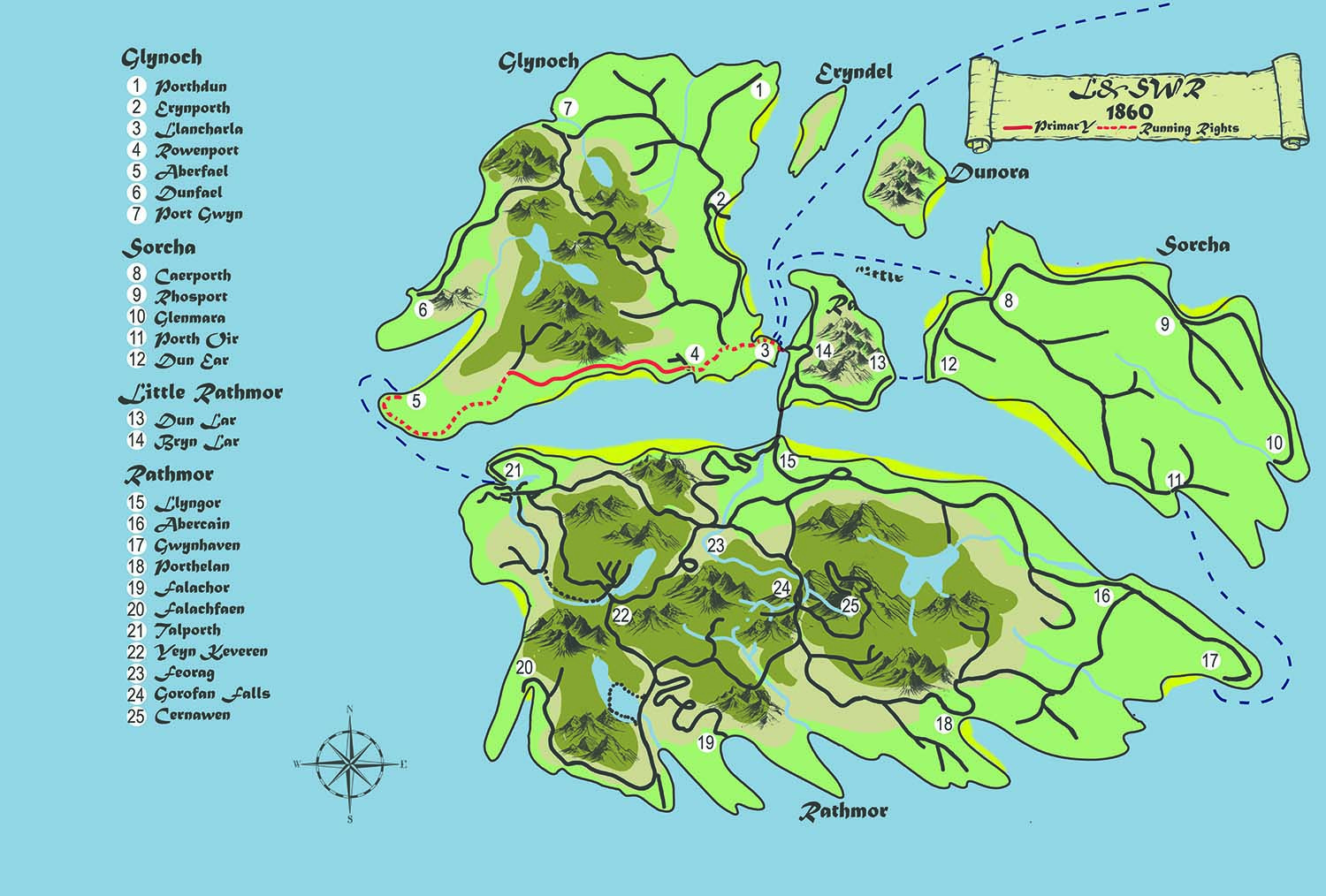
L&SWR Maps
Llanchala & South West Railway (L&SWR)
At a glance:
Established: 1859
Through service opened: 1860
Independent company ended: 1876
Location: Southern Glynoch
Type: Passenger and goods railway
Primary colour-scheme: Olive Green locomotives and carriages
Principal route: Llanchala–Rowenport–Aberfael
Operating arrangements: Running rights over GMRC southern infrastructure and ACCR coastal section; estate connections around Rowenport
Passenger services: Operated by L&SWR
Successor: Llanchala Railway Ltd (1876)
Later Ownership: Glynoch & Rathmor Railway (1885)
Origins: A Railway for the Southern Coast
By the late 1850s, Glynoch possessed several useful railways, but they had not been built as parts of a single transport system. Each served its own purpose, whether carrying minerals from inland workings, moving agricultural produce towards a harbour, or supplying the industries surrounding Llanchala. The Glynoch Mineral Railway Company had established a steam-worked route westwards from Llanchala in 1855, reaching the outskirts of Rowenport. Further west, the Aberfael China Clay Railway conveyed valuable white clay from the southern highlands to the quayside at Aberfael. Between these undertakings lay the opportunity for something much more ambitious: a continuous railway serving the towns, industries and ports of Glynoch's southern coast.
The Llanchala & South West Railway (L&SWR) was established in 1859 to turn that ambition into reality.
Timeline of the L&SWR
Llanchala & South West RaiIway
Llanchala Railway
Glynoch & Rathmor Rly

Traversing the 'Ledge' shortly after leaving Aberfael
Three Railways, One Route
Rather than constructing an entirely independent railway between Llanchala and Aberfael, the new company pursued a more practical arrangement. At its eastern end, the L&SWR negotiated running rights over the southern railway infrastructure of the Glynoch Mineral Railway Company. Around Rowenport, it drew upon existing estate railway interests and the connections necessary to carry the route westwards. At Aberfael, the company secured access to the coastal section of the Aberfael China Clay Railway. This final arrangement was particularly important. The ACCR had been built for mineral traffic, and its branches climbed inland towards the clay workings. The L&SWR's rights applied to the coastal section required for its through route, not to the clay railway's highland mineral branches. The result was a railway assembled through negotiation, cooperation and new connections — a continuous passenger and goods route created from infrastructure that had originally served quite different purposes.
The Through Route Opens
In 1860, the Llanchala & South West Railway established its through service between Llanchala, Rowenport and Aberfael. For the first time, these communities were linked by a continuous railway service along Glynoch's southern coast. The new connection offered a significant improvement over journeys previously dependent upon roads, coastal vessels or a combination of separate local transport arrangements. Passengers could travel between the island's principal southern commercial centre and the smaller coastal settlements, while goods could move more efficiently between harbours, farms, workshops and industrial districts. The distinction between ownership and operation remained important. Although L&SWR trains used portions of the GMRC and ACCR systems, those companies continued to exist independently. In particular, the Aberfael China Clay Railway did not become a passenger operator. The passenger trains using its coastal rails belonged to the L&SWR.
Freight, Harbours and the Southern Economy
Passenger travel gave the new railway a public identity, but goods traffic remained essential to its business. China clay from the Aberfael district could be carried towards coastal shipping facilities, while coal, timber, machinery and general supplies moved in the opposite direction. Around Rowenport, agricultural and estate traffic gained improved access to the wider southern railway system. At Llanchala, the railway connected with an established commercial and industrial centre, opening further possibilities for the movement of materials and finished goods. The L&SWR therefore served two closely related purposes: it connected communities and brought together the freight traffic of several previously separate railway undertakings. Its success depended not simply upon the rails it controlled, but upon its ability to maintain workable arrangements with the companies whose lines it shared.
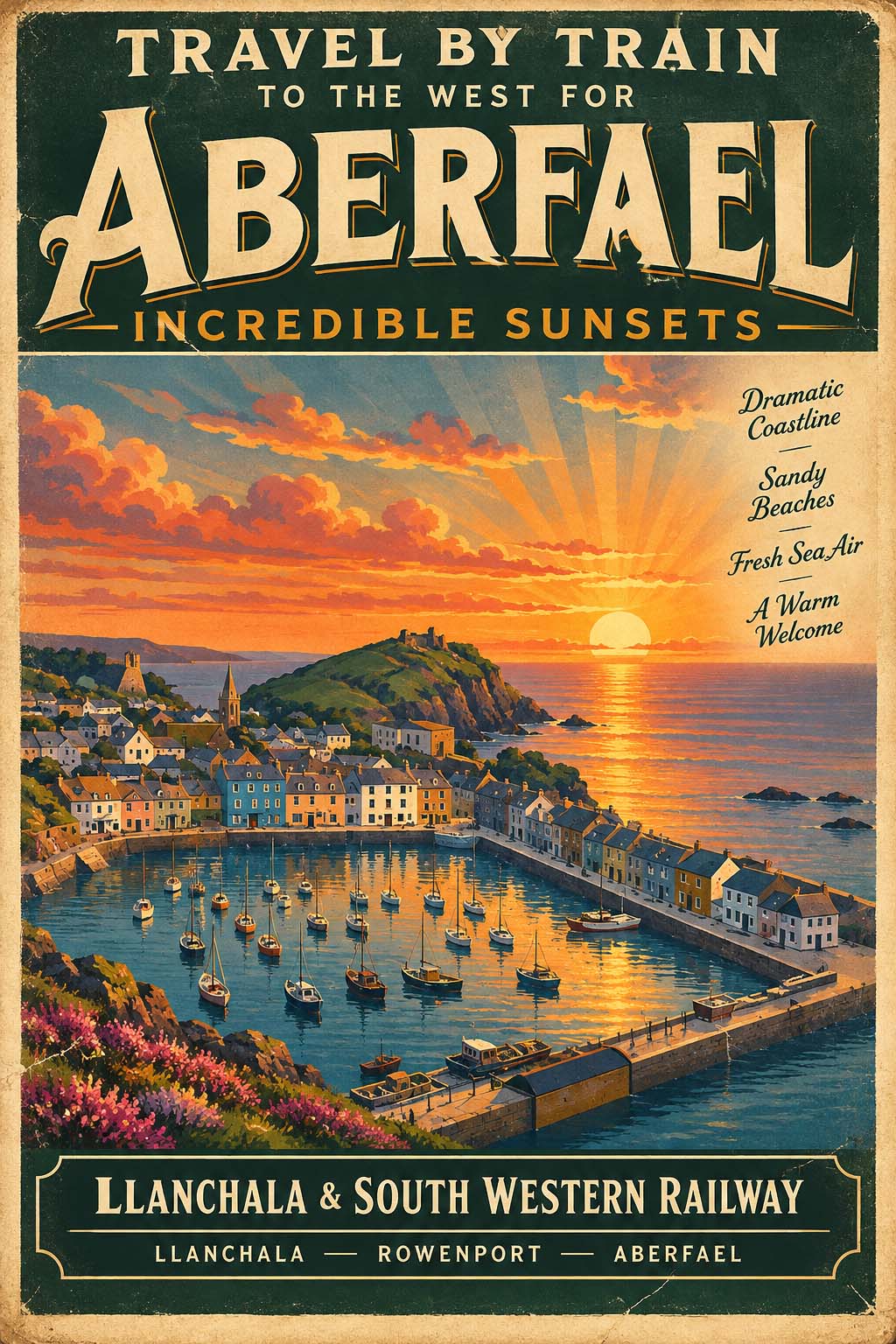
L&SWR Advert promoting trips to Aberfael
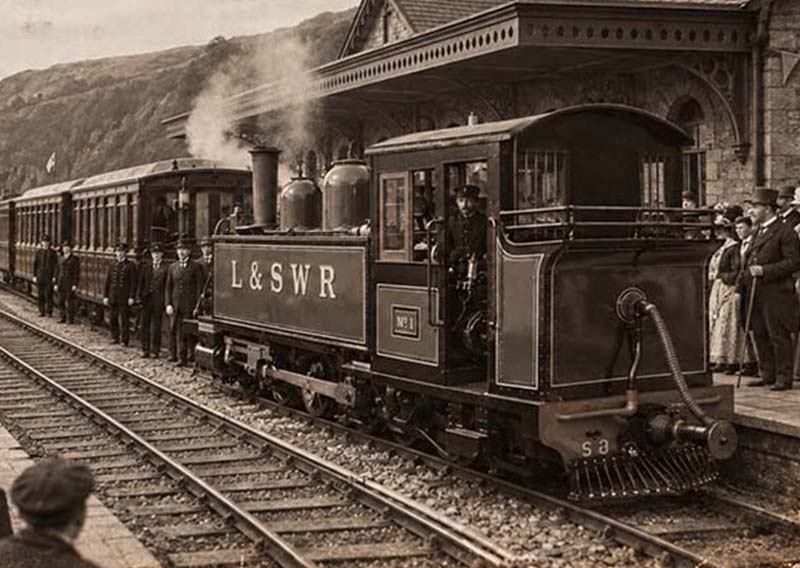
Inaugural train arrives at Rowenport 1860
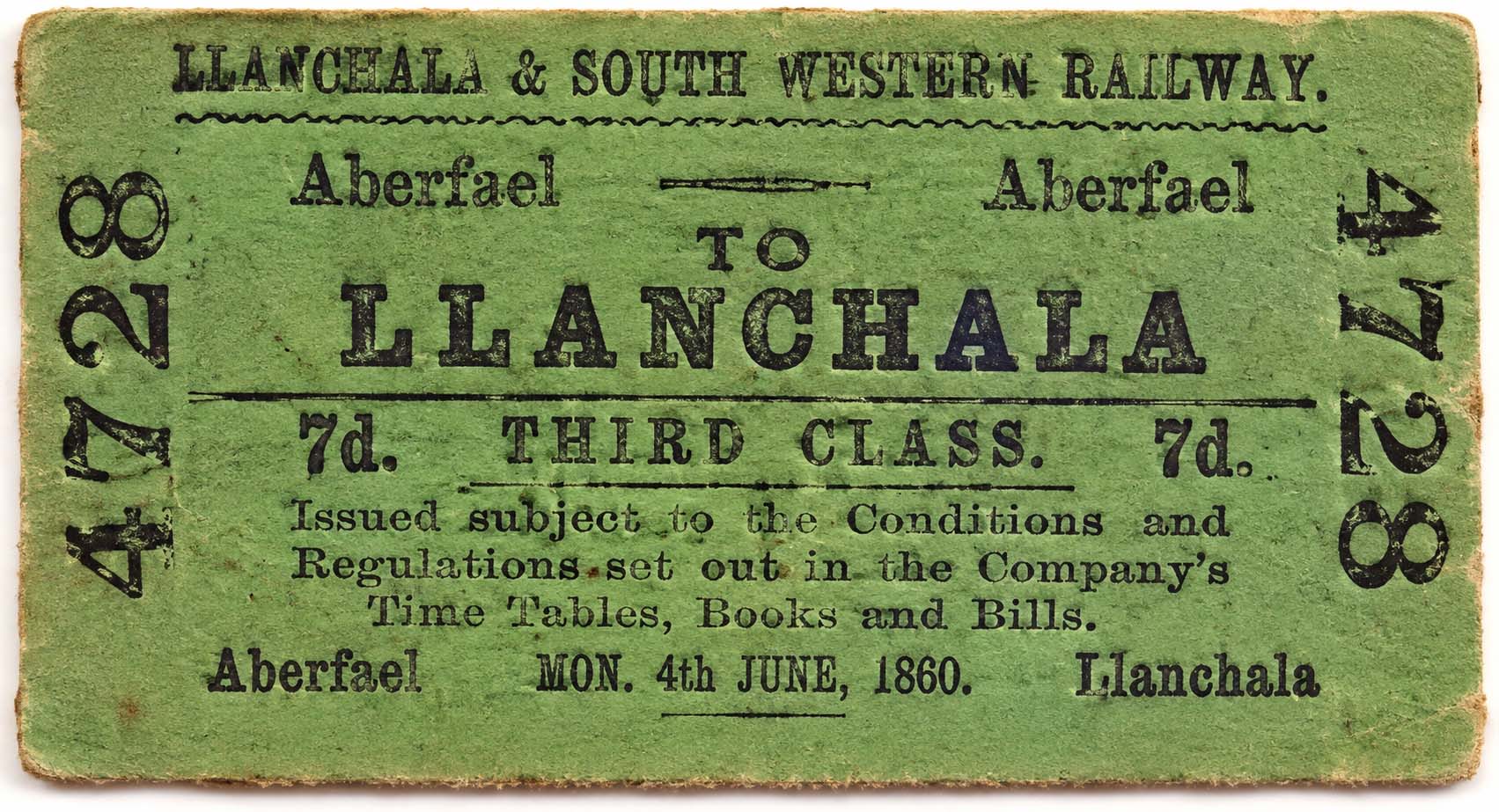
Ticket from first public service 1860
Aberfael's Changing Fortunes
The railway also helped alter the prospects of Aberfael. The town's original railway connection had been built for china clay, not visitors. With the arrival of through passenger services in 1860, however, Aberfael became more accessible to travellers from Rowenport and Llanchala.
Over time, that accessibility would contribute to the town's development beyond its industrial origins. Its harbour, coastal scenery and nearby sands offered attractions quite different from the clay workings that had first justified a railway. The later emergence of Aberfael as a fashionable coastal destination was a gradual development, rather than the immediate purpose of the L&SWR's formation. Nevertheless, the railway provided an important foundation for that change.
Sixteen Years of Independence
From the opening of the through route in 1860 until 1876, the L&SWR operated within a network whose different sections were not all under its ownership. The arrangement demonstrated that railway companies could achieve substantial commercial benefits through running rights and cooperation without immediately surrendering their independence. It also revealed the limitations of such an arrangement. Passenger services, mineral trains and local goods movements all depended upon access to shared infrastructure. Timetabling, maintenance, investment and the competing priorities of different owners required continued agreement. As traffic developed, the advantages of placing the southern railway system under more unified control became increasingly apparent.
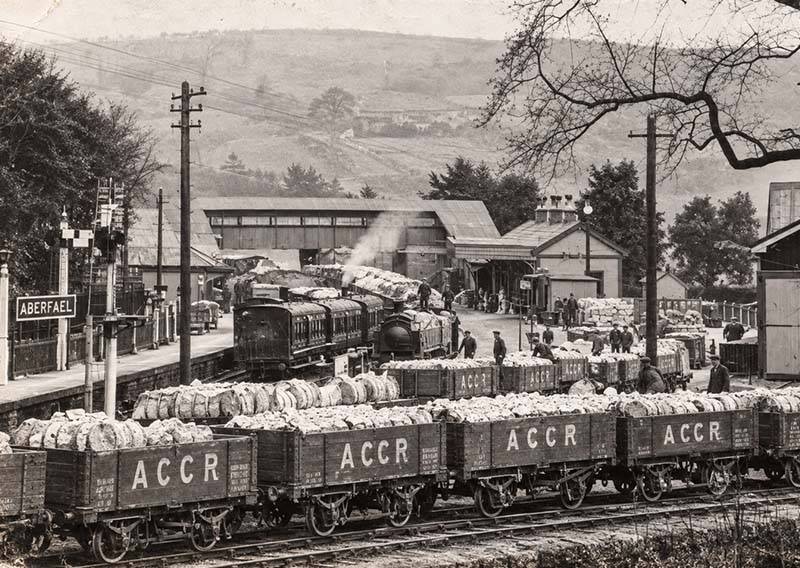
Aberfael yard and LSWR station c1880
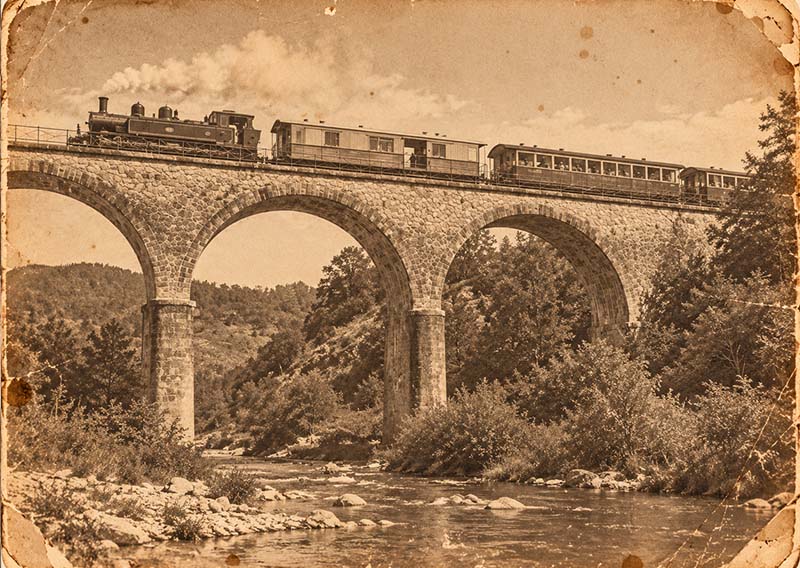
Crossing the Haverforde Viaduct near Rowenport
The Formation of Llanchala Railway Ltd
In 1876, the southern railway network underwent a major reorganisation. Three interests were brought together in a single consolidation: the Llanchala & South West Railway, the Aberfael China Clay Railway and the southern section of the Glynoch Mineral Railway Company. Together they formed Llanchala Railway Ltd.
The arrangement ended the L&SWR's seventeen-year existence as an independent company, while preserving the through route that had been its greatest achievement. It also marked the end of the ACCR's independence. The GMRC's central and highland interests followed a separate course, becoming the Glynoch Central Railway. What had begun as a practical agreement between distinct railway undertakings was now a consolidated southern railway organisation.
A Lasting Legacy
The Llanchala & South West Railway's importance lay less in the amount of entirely new railway it built than in the connections it made possible. It turned a collection of industrial and estate lines into a coherent route for passengers and goods. It linked Llanchala, Rowenport and Aberfael, strengthened the relationship between the island's southern ports, and helped create the conditions for further commercial and social development. In 1885, Llanchala Railway Ltd would combine with the Rathmor Railway to form the Glynoch & Rathmor Railway. The independent L&SWR had disappeared nine years earlier, but its southern coastal route remained an important part of the railway network it helped to create.
History
Railways
About the L&SWR
L&SWR Maps
Llanchala & South West Railway
Owns and operates the route along the south coast of Glynoch. Running rights into Aberfael over the Aberfael China Clay Railway lines and into Llanchala over the Glynoch Mineral Railway lines





0 Comments