


The Peat Industry of Feorag
Long before coal reached the islands, peat was the essential fuel of rural life.
History
Industries

Peat
Map
The Peat Industry of Feorag
The high moorlands surrounding Feorag are known for their wet, spongy ground where mosses and sedges thrive. Over centuries, these bogs slowly built up thick layers of peat—dark, fibrous earth rich in organic matter and, above all, energy. Long before coal or oil reached the islands, peat was the essential fuel of rural life, dug from the ground and dried into blocks to warm homes, cook meals, and fire the small forges and workshops of the uplands.
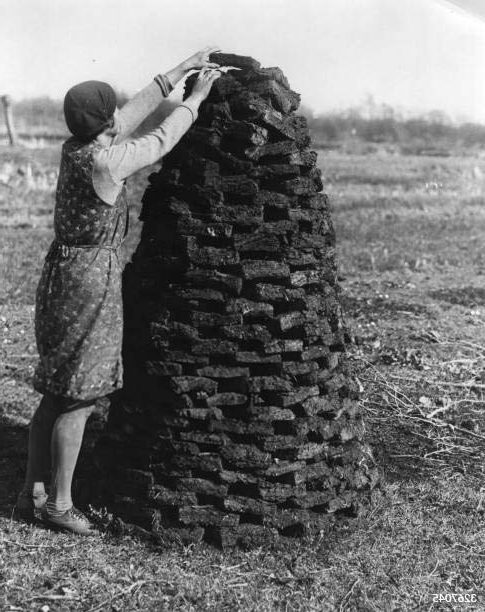
Feorag Peat Pyramid
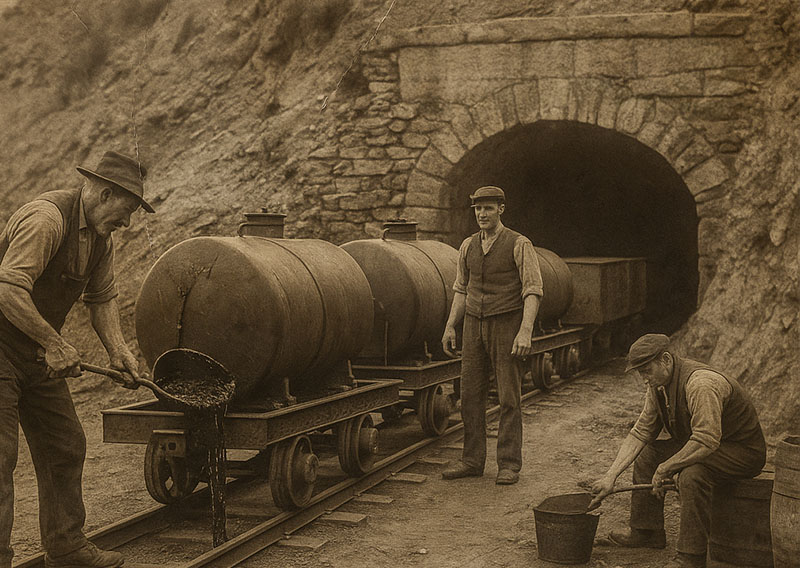
In Feorag, peat cutting became a seasonal ritual. Families would venture out in spring and early summer with long-handled spades called tairsgeirs, slicing the bog into neat, brick-like slabs. These were stacked into airy pyramids or low walls to dry in the wind and sun, their smoky scent drifting across the moor. When dried, the peat was carted into town or laterly loaded onto railway wagons. For generations, it provided a steady and affordable fuel, particularly prized in the cool, damp upland winters.
By the late 19th century, as the railway expanded, peat cutting in Feorag grew from a household practice into a small industry. Merchants leased bogland, hiring gangs of cutters and sending wagon loads of peat to the growing coastal towns. The industry supported many local families, though it was tough and muddy work.
Today, large-scale cutting has declined, replaced by modern fuels, but the tradition remains alive. Visitors to Feorag can still see old peat stacks and, in some places, demonstrations of the craft. The earthy aroma of burning peat, once the very breath of Feorag’s hearths, lingers as a reminder of a time when the bogs sustained the people as surely as the falls and forests.
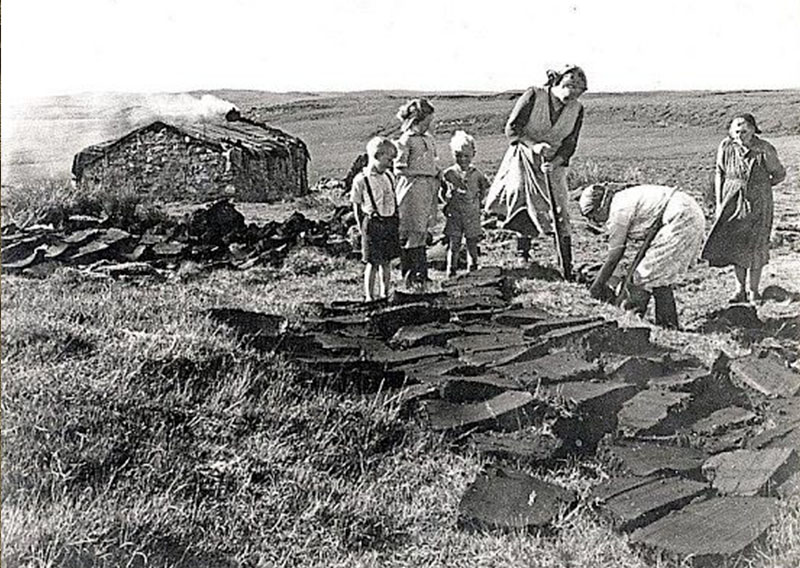
Peat Production
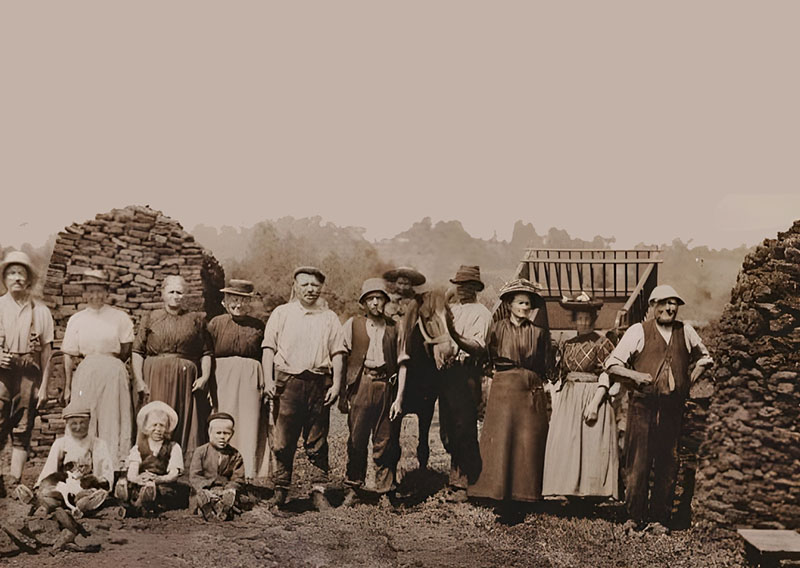
Feorag Peat Harvest
History
Industries
Peat
Map
The Peat Industry of Feorag
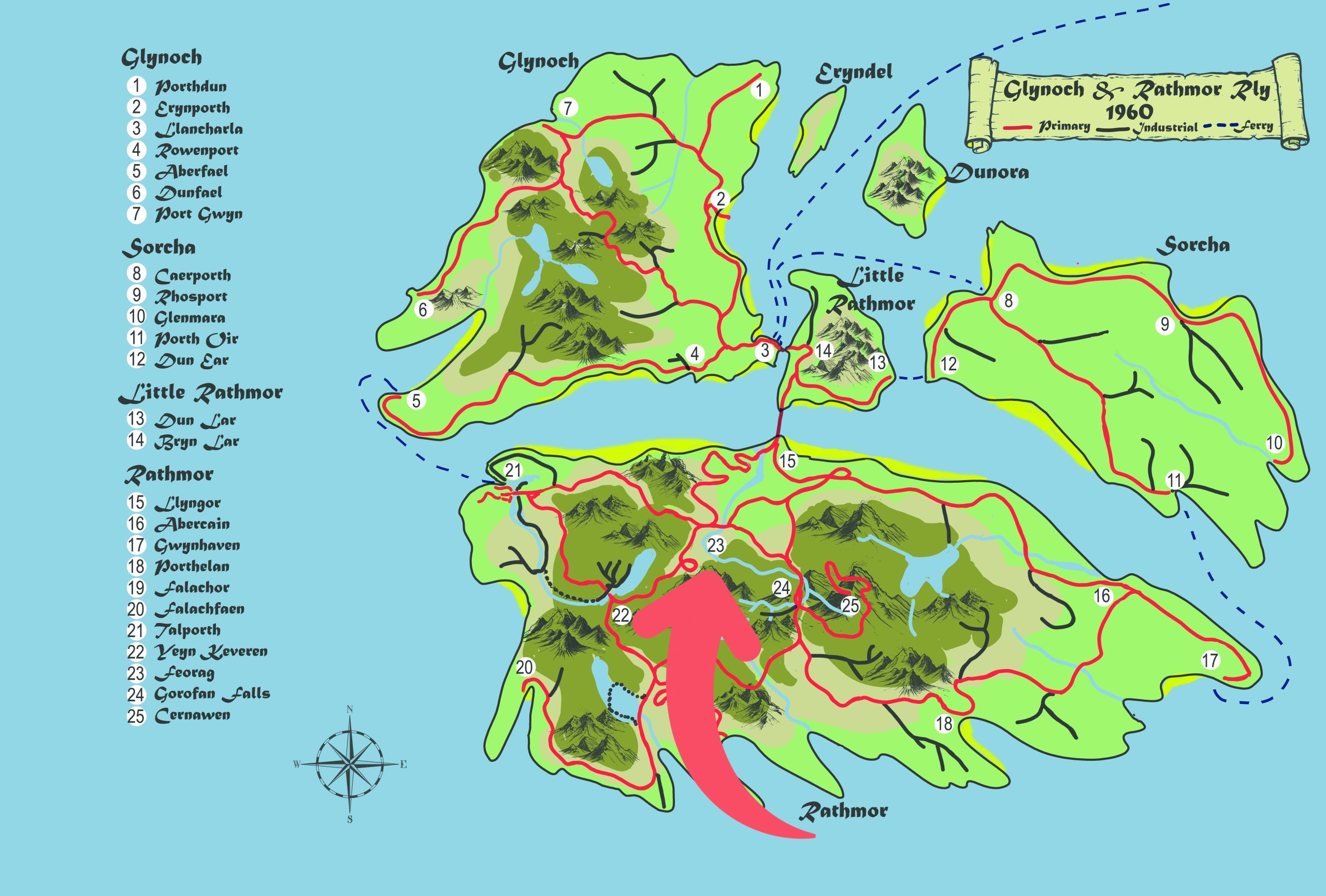
Located in the high moorlands of northern Rathmor
Related Articles...

0 Comments