


The Rope-Making Industry of Dun Ear
For centuries, the town’s fortunes rose and fell with the sea, and as the fishing and shipbuilding industries expanded, Dun Ear naturally evolved into the islands’ main supplier of ropes and nets.
History
Industries

Rope Making
Map
The Rope-Making Industry of Dun Ear
Perched on the rugged south west corner of Sorcha, the town of Dun Ear has long been recognised as the island’s premier centre for rope-making—a craft as essential to the region’s maritime livelihood as boatbuilding itself. For centuries, the town’s fortunes rose and fell with the sea, and as the fishing and shipbuilding industries expanded, Dun Ear naturally evolved into the islands’ main supplier of ropes and nets.
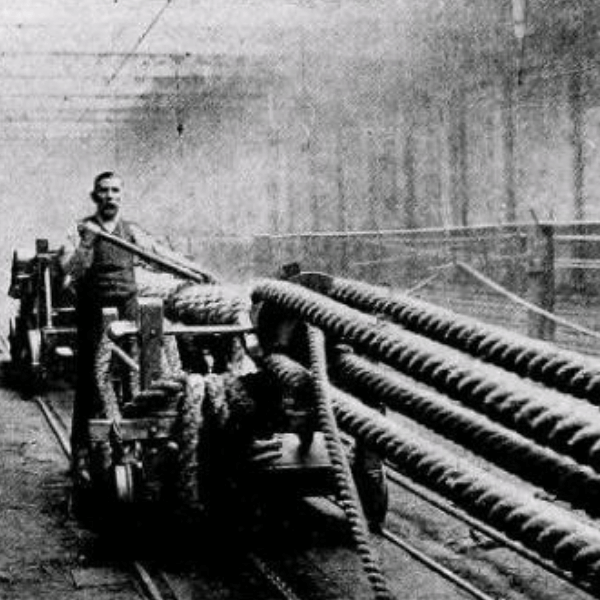
Rope Making - Dun Ear c1900
The industry’s success began with the fertile fields east of the town, where hemp was cultivated extensively throughout the 19th and early 20th centuries. The plant thrived in the mild, sheltered microclimate of the coastal plain, producing strong, flexible fibres ideal for cordage. Once harvested, the hemp stalks were retted, dried, and beaten to release their long fibres, which were then spun into yarn in workshops along the waterfront. This ready supply of local raw material gave Dun Ear a substantial advantage over other ports, allowing rope merchants to meet the ever-growing demands of fishermen, sailors, and merchants across the island chain.
To accommodate the production of the long, heavy cordage required by sailing vessels, the town built a series of impressive rope walks—narrow, elongated buildings stretching for hundreds of metres. Inside these structures, teams of ropemakers worked in careful coordination, walking the full length of the building as they twisted, stretched, and wound multiple strands into durable ship’s rope. The rhythmic creak of wooden wheels and the steady call-and-response of the workers became a familiar soundtrack to life in Dun Ear.
Complementing the rope walks were the town’s expansive net-weaving warehouses, where skilled workers knitted fishing nets in vast, airy halls. These nets were indispensable to the islands’ herring fleets, and Dun Ear’s output reached harbours far beyond Sorcha, supplying fishing communities throughout the archipelago.
Today, the rope-making tradition remains a proud part of Dun Ear’s identity. Though modern materials and machines have transformed aspects of the craft, several workshops continue to produce traditional hemp rope for heritage boats, coastal museums, and specialist maritime uses. Visitors to Dun Ear can tour restored rope walks, watch demonstrations of net weaving, and purchase small coils of rope or decorative knotwork—tangible reminders of a community built on strength, skill, and seafaring necessity.
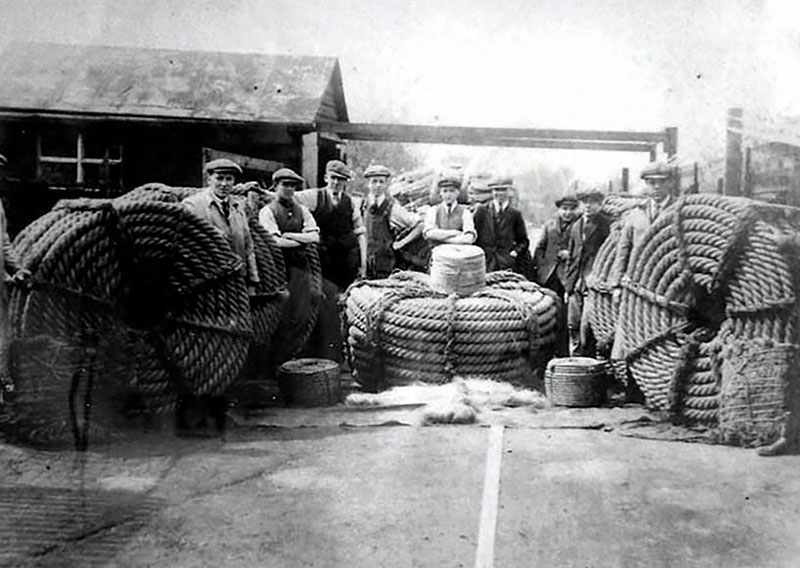
Rope makers - Dun Ear c1920
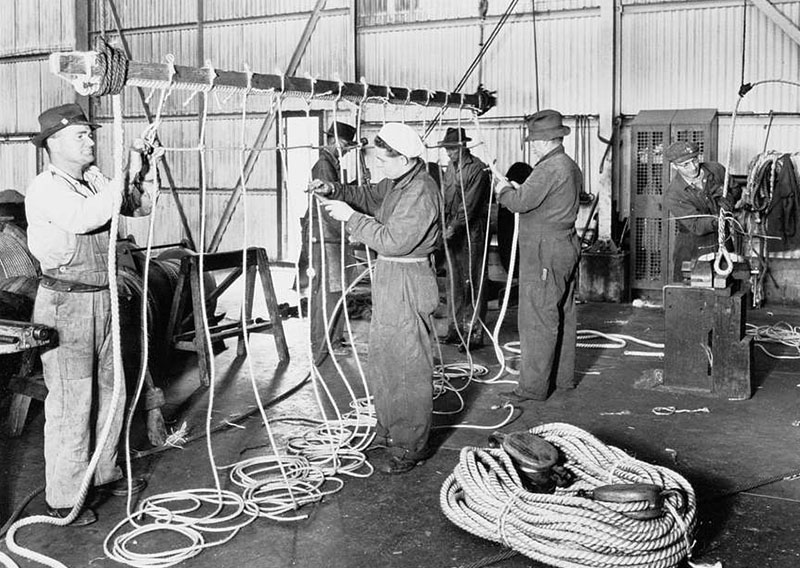
Net Making - Dun Ear c1930
History
Industries
Rope Making
Map
The Rope-Making Industry of Dun Ear
Located on the south west coast of Sorcha
More Industries....
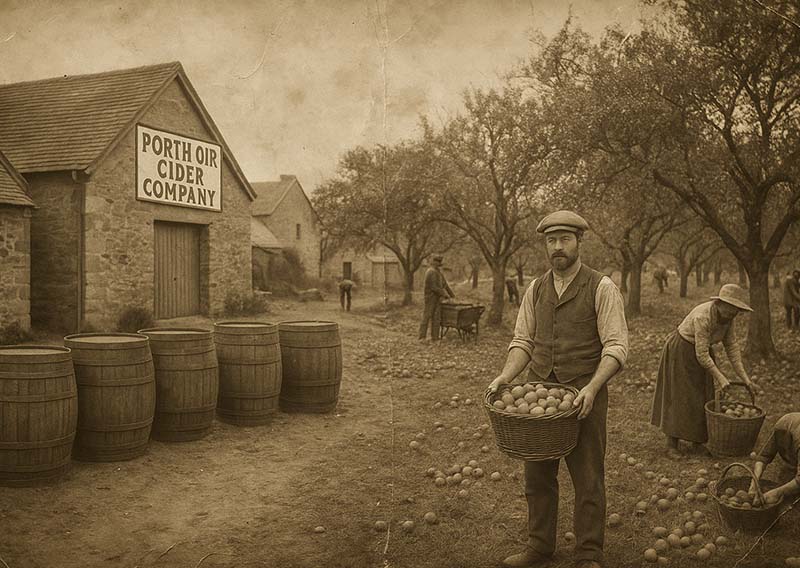
Porth Oir Orchards and the Cider of the Isles
By the late 19th century, the Porth Oir Orchards had […] ...
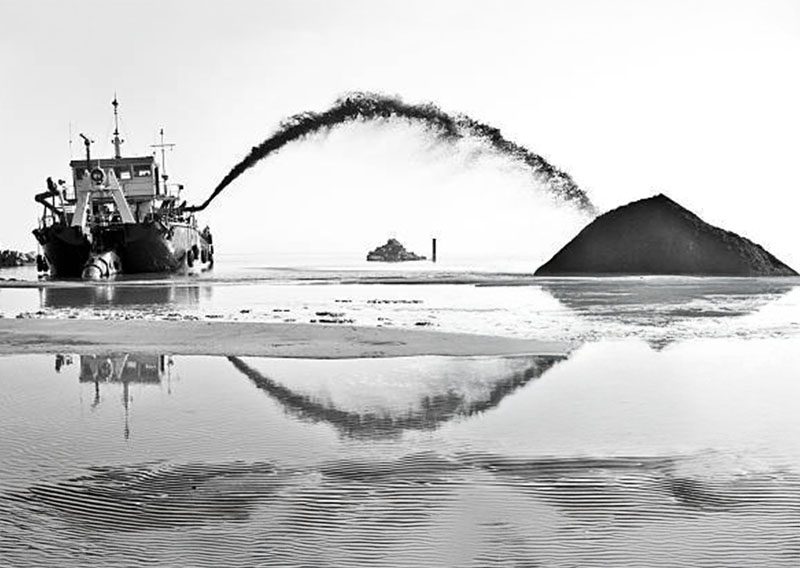
Gravel and Sand Extraction on Sorcha’s North Coast
The sweeping northern coastline of Sorcha is shaped by a […] ...
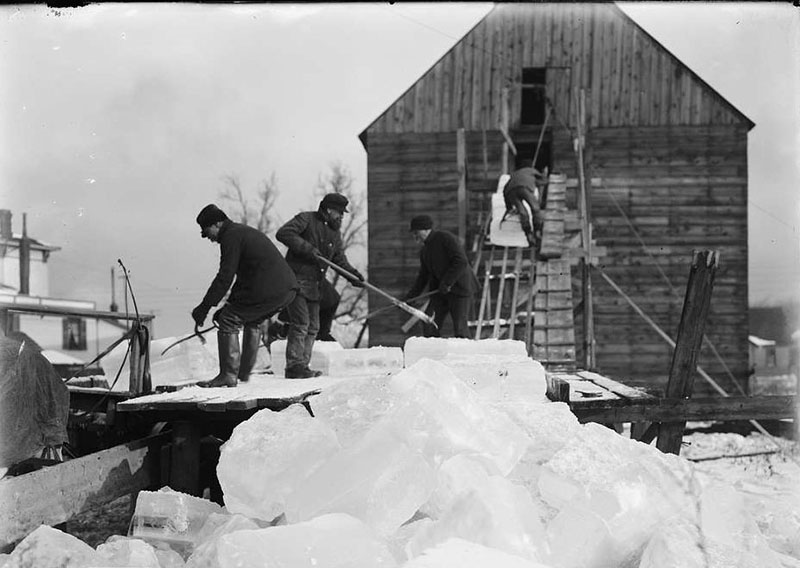
The Ice Harvest of Rathmor
Long before the age of refrigeration, islanders developed an industry […] ...