


15. Llyngor History
A small fishing village, grew hugely after the opening of the Llyngor Bridge into a bustling railway junction and trade hub.
History
Towns
Llyngor
Llyngor Maps
Llyngor
Llyngor (HLIN-gore) – From Welsh llyn “lake, water” and gor/gŵyr “bend, slope, land” – meaning “Waters by the Bend” or “River-bend Haven.” The name reflects its location at the estuary of the Caileach River, where river meets sea along The Straights.
Llyngor
Llyngor quay
1920s advert
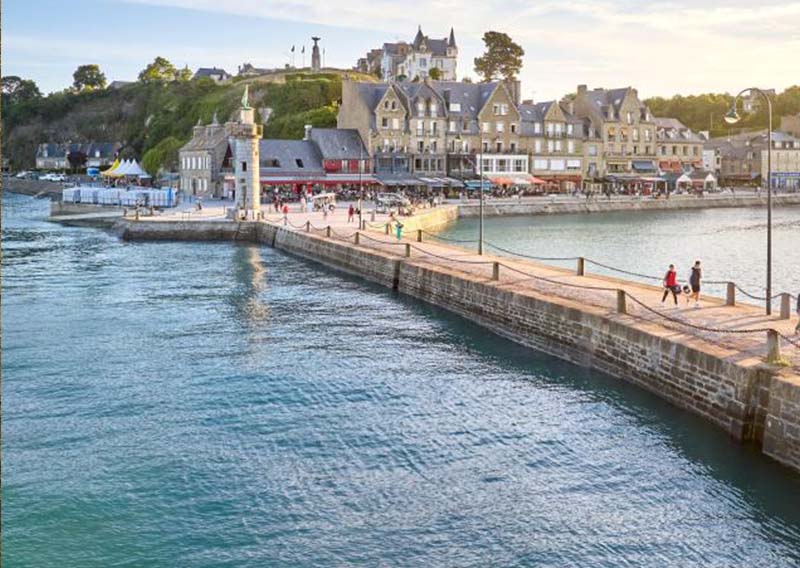
Llyngor, once a lonely fishing hamlet at the mouth of the Caileach, is today a bustling railway junction and the forestry capital of Rathmor, though its roots in the mackerel trade are still proudly remembered
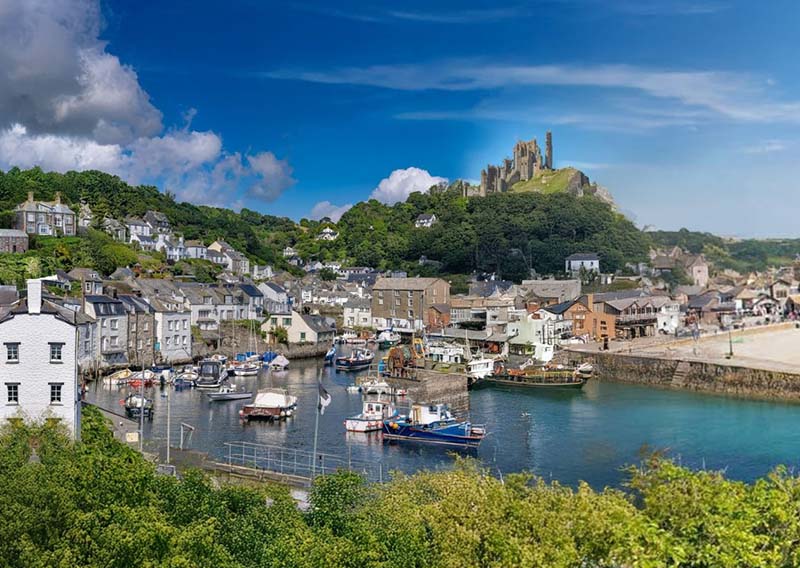
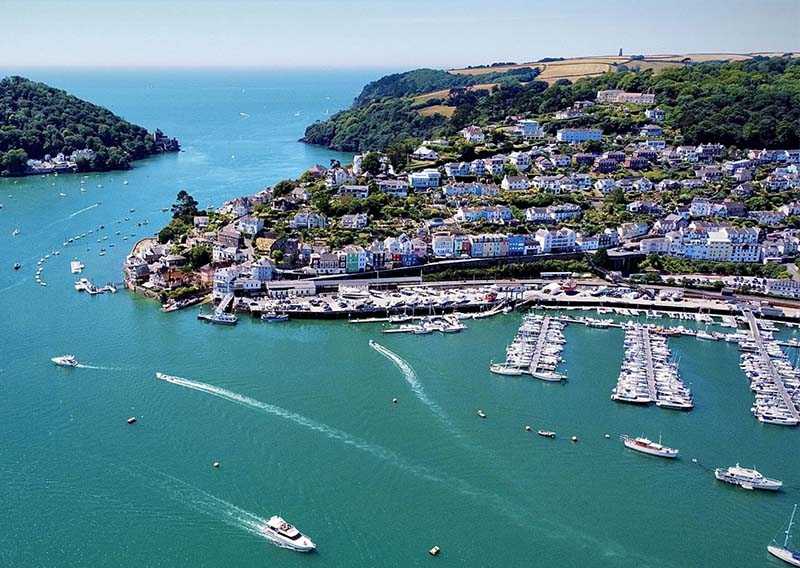
Perched on the north coast of Rathmor at the mouth of the Caileach River, Llyngor gazes out over the channel known simply as The Straights, which separate Rathmor from the surrounding islands. The town began as little more than a scattering of cottages on the shoreline, its people eking out a living by fishing—especially mackerel, which thrived in the nutrient-rich waters of The Straights. Smokehouses and salt pans once lined the shore, sending barrels of preserved fish away to markets.
Everything changed with the arrival of the railway in the mid-19th century. What had been an isolated hamlet was thrust into prosperity, becoming both a railway junction and a centre of industry. Today, Llyngor is celebrated as the forestry capital of Rathmor. Great rafts of timber float down the Caileach, hauled to sawmills and carried away by train. The woodlands of Rathmor’s highlands are still actively worked, and Llyngor has become synonymous with both the trade of lumber and the craft of woodworking.
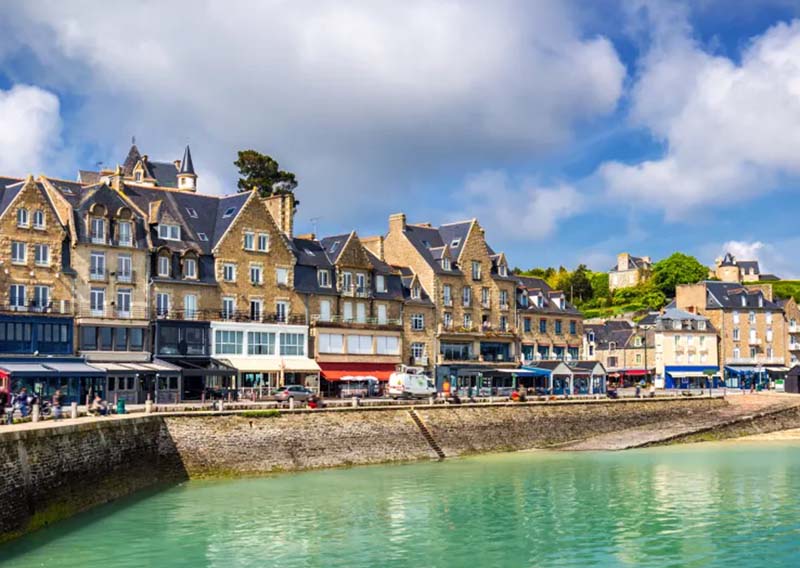
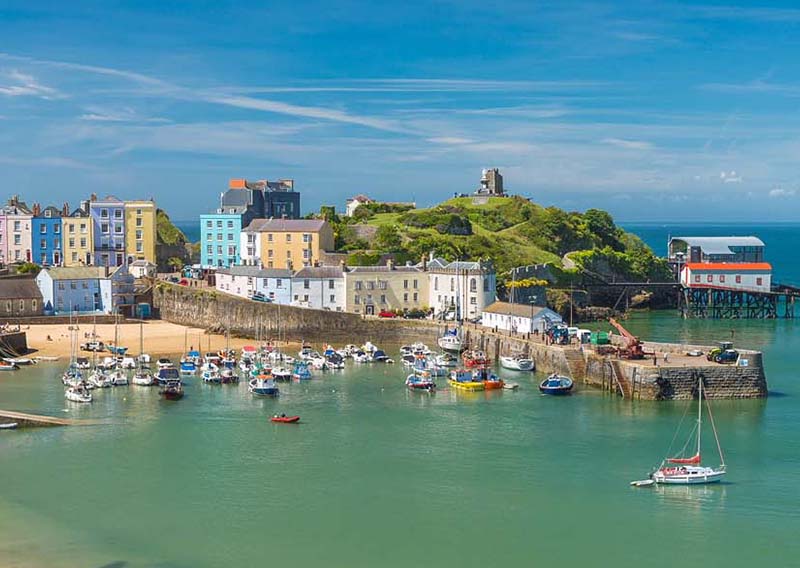
Despite this transformation, fishing remains at its heart. The harbour is still lined with small boats, and mackerel continues to feature proudly on local tables and in festivals. Llyngor’s character lies in this balance: a place where the salt of the sea and the scent of fresh-cut timber mingle in the air, and where old traditions endure alongside industrial modernity.
Mackerel Fishing
Mackerel fishing thrives in summer, when shoals chase smaller fish close to shore. They are caught with handlines or drift nets, their shimmering green-blue bodies often described in local lore as “the jewels of the sea.” Llyngor is known for its seasonal mackerel feasts, where fish are grilled on large community fires on the beaches and eaten with bread and ale. In the 19th century, mackerel was the everyday fish of the working class, easy to catch and quick to spoil, making it both a staple and a challenge. The railway solved that problem: trains sped fresh mackerel inland, and the fish became a common sight even on urban tables. Today, while not as commercially dominant as herring or oysters, mackerel remains beloved both for its flavor and for the lively festivals that celebrate its arrival.
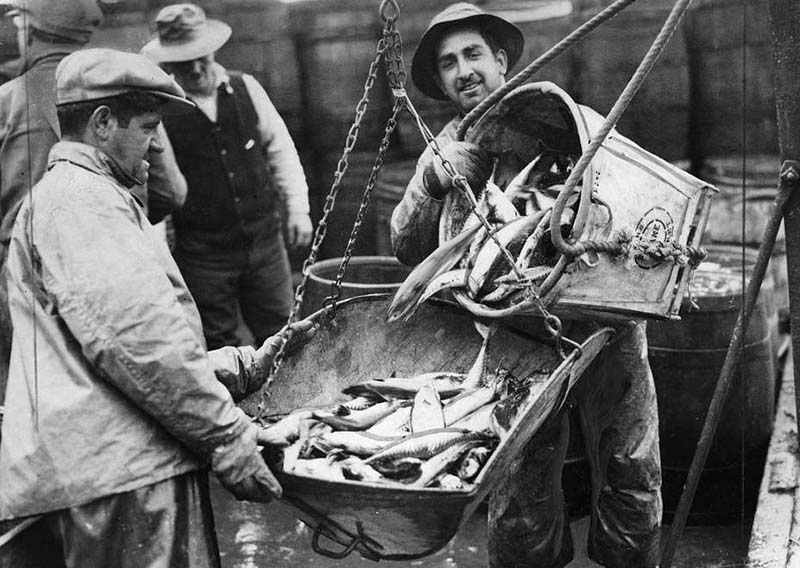
Mackerel fishing - Llyngor c1950
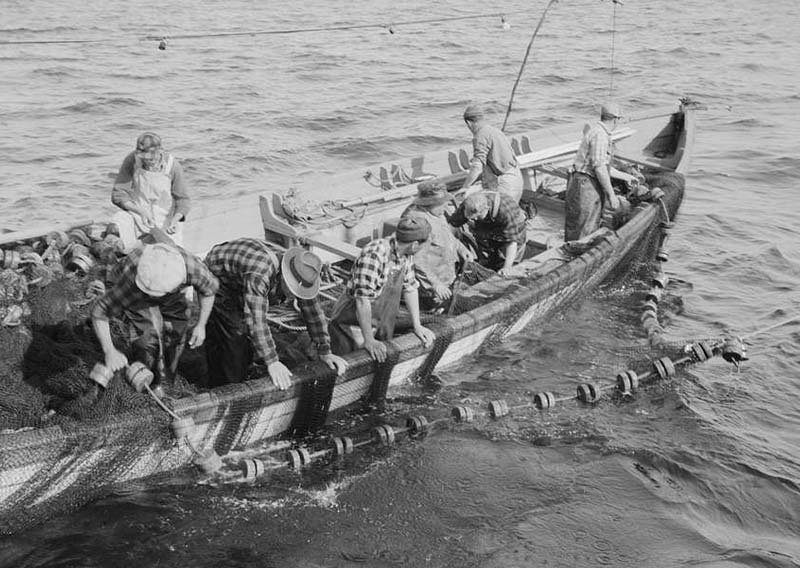
Mackerel fishing - Llyngor c1920
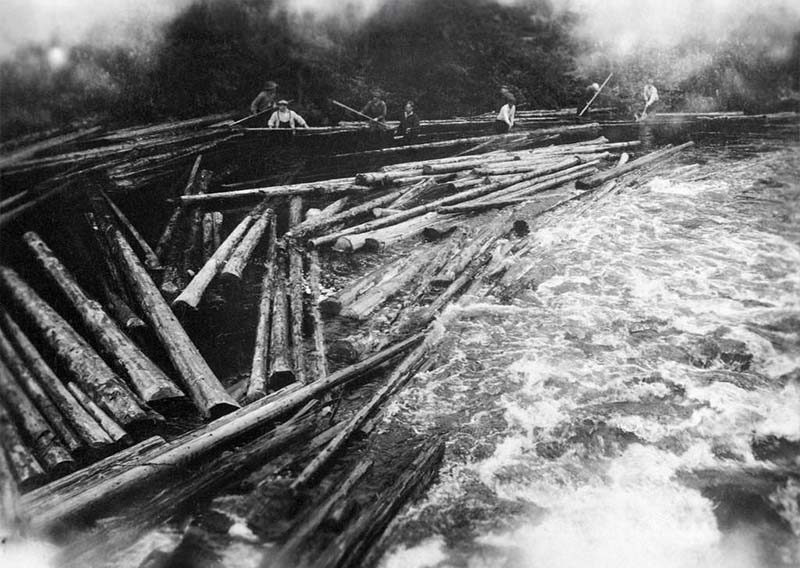
Rathmor Forestry
Forestry on Rathmor
Rathmor’s central forests, especially near Feorag, Gorofan and Yeyn Keveren, have long been a source of wealth and tradition. Oak, ash, and pine once blanketed the hills, providing timber for everything from cottages to ships. Folklore speaks of the “Green Man of Rathmor,” a guardian spirit who appears during midsummer festivals, crowned in leaves, to bless the harvest of wood. For centuries, cutting timber was accompanied by rituals: a prayer whispered before the first swing of the axe, and a libation of ale poured into the roots of felled trees.
In medieval times, forests were jealously guarded by lords and monasteries, their timber reserved for shipbuilding and fortification. By the 18th century, logging had become a major industry, supplying planks and beams to towns and ports across the islands. The sawmills of Llyngor became legendary, their waterwheels churning day and night. Furniture-making, too, flourished, giving Rathmor a reputation for skilled joiners and carvers.
The railway gave forestry an unprecedented boost. Logs could be hauled directly from felling grounds to sawmills, and from there to harbours or inland towns. Llyngor, especially, grew into a centre of furniture and paper-making. Though deforestation was a risk, replanting schemes and managed woodlands ensured continuity. Forestry thus remains both a practical livelihood and a cultural emblem of Rathmor’s endurance, shaping the island’s landscape and its people alike.
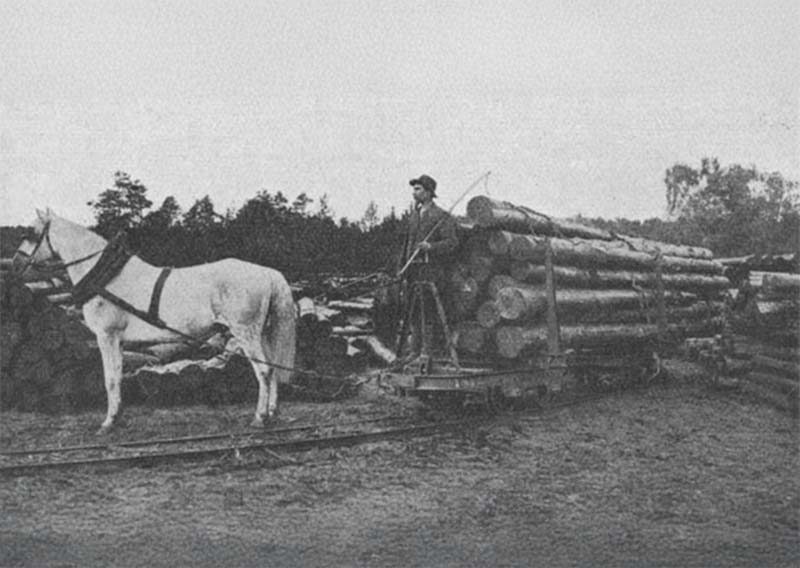
Rathmor Forestry Tramway
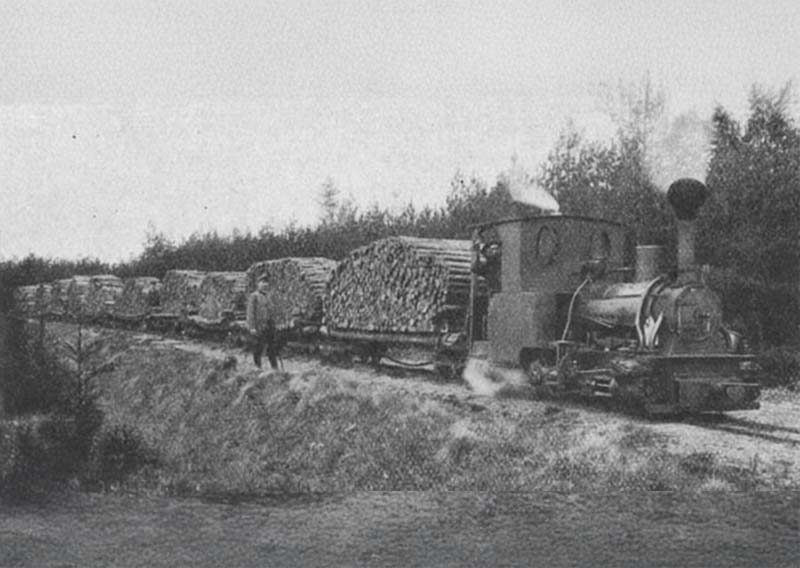
Feorag Forestry Company Railway
The Railways of Llyngor
The first steps in Llyngor’s rise came with the Feorag Forestry Company Railway, built in 1862. Winding its way down from Feorag to Llyngor, it was intended primarily for the transport of logs and stone, feeding the growing timber trade. Yet the line quickly became more than a freight route: tourists, drawn by the romance of steam travel and the majesty of the Caileach Falls near Feorag, began to flock to the line.
Excursion trains soon became as important as timber wagons, and Llyngor began to develop as both a working town and a visitor gateway.
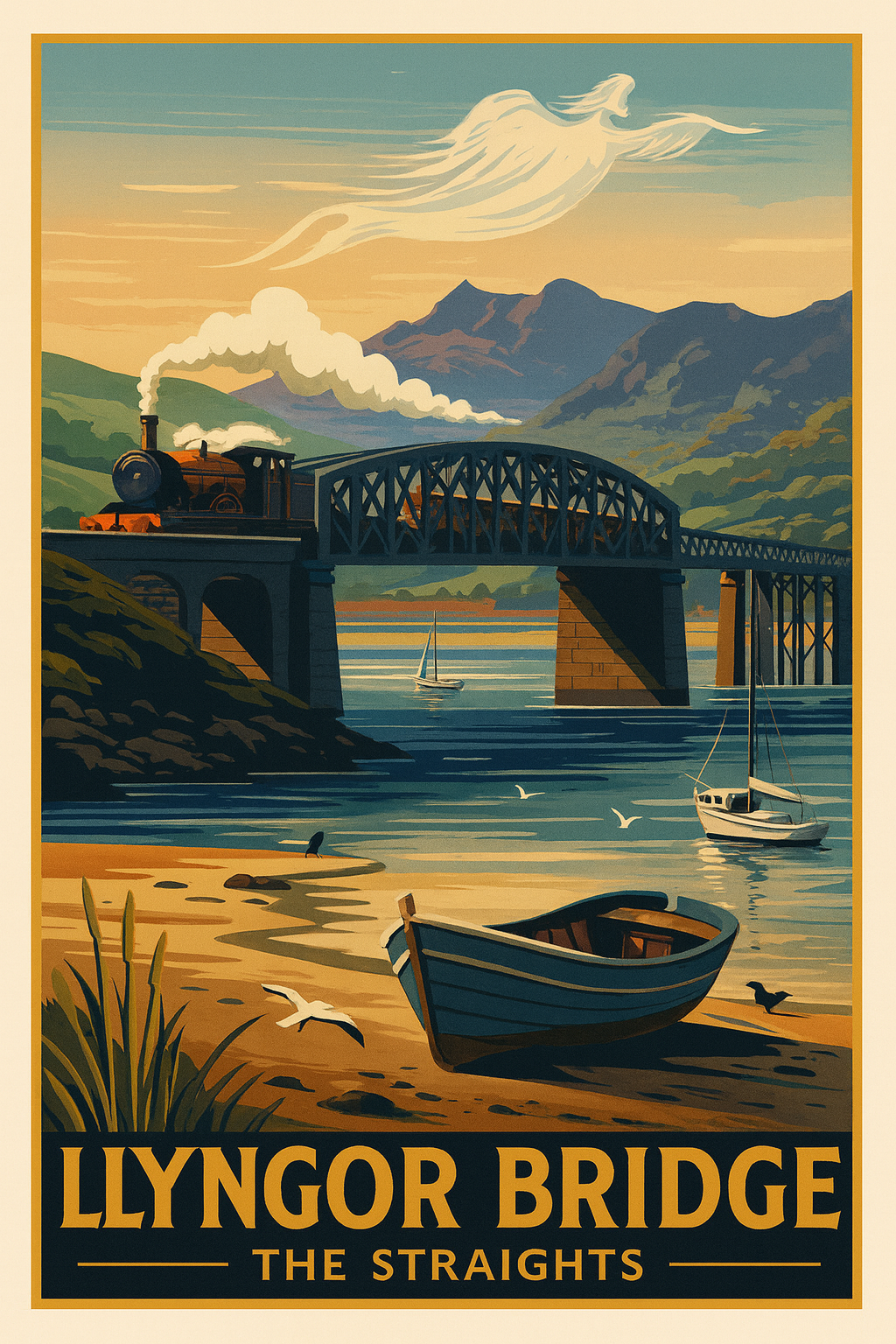
But the most dramatic and defining moment in Llyngor’s railway history came with the construction of the Llyngor Bridge. Opened in 1885, this vast timber and iron structure spanned The Straights from Little Rathmor to Llyngor, linking the northern coasts directly into the island-wide system. It was, at the time, the most ambitious engineering project attempted in the islands, taking nearly a decade to complete.
The bridge was the brainchild of the Eighth Lord Keveren, who wanted access to the deep water of Llanchala bay to export his minerals. The harbour at Talporth was simply becoming too shallow for the larger vessels now being used. He used his influence with the Rathmor Railway Co to put up the finances, which almost broke the company. In fact the building of the bridge basically ended the existance of the stand alone Rathmor Railway Co as it merged almost immediately with the Llanchala Railway Ltd to become the initial parts of the G&R as we know it today.
The building of the bridge was plagued with misfortune. Piles meant to anchor the structure sank into treacherous quicksands, and political battles raged over whether such a crossing might obstruct shipping in The Straights. Twice during construction, vessels struck the works—though locals whispered darkly that these “accidents” were deliberate sabotage by shipping companies fearful of losing trade to the railways. Storms, too, lashed the half-built bridge, and in one catastrophic night much of it was destroyed, with men lost to the sea. To this day, there are those who claim the bridge is haunted by their restless souls, and some travellers still avoid crossing it.
Despite these trials, the completion of the bridge transformed Rathmor. For the first time, passengers and goods could flow swiftly across the islands without relying on ferries or circuitous coastal routes. For Llyngor, it was a moment of destiny. The small fishing hamlet had become a vital junction town, its sawmills and yards echoing with the clang of industry and the bustle of trade.
The Llyngor Bridge remains both a monument to ambition and a reminder of sacrifice. Haunted or not, it stands as the enduring link between Rathmor’s north coast and the wider world, and Llyngor’s fortunes remain tied to the iron road that transformed it.
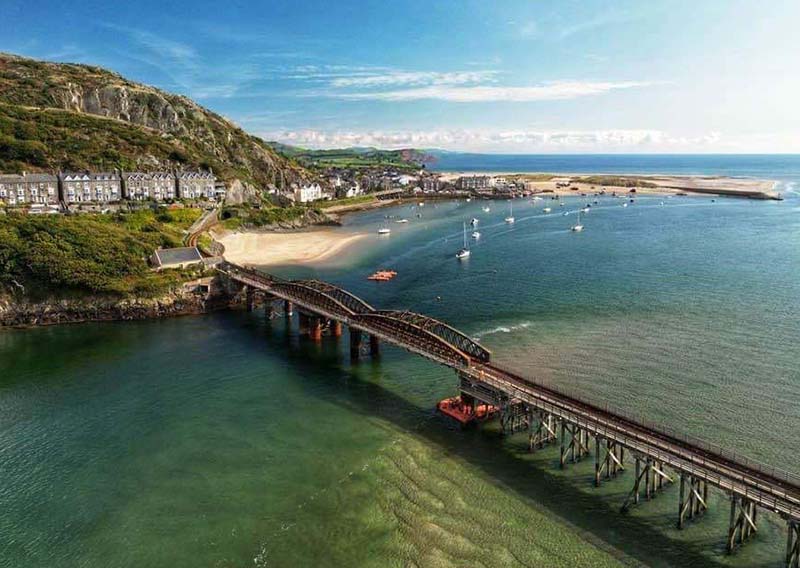
The Llyngor Bridge
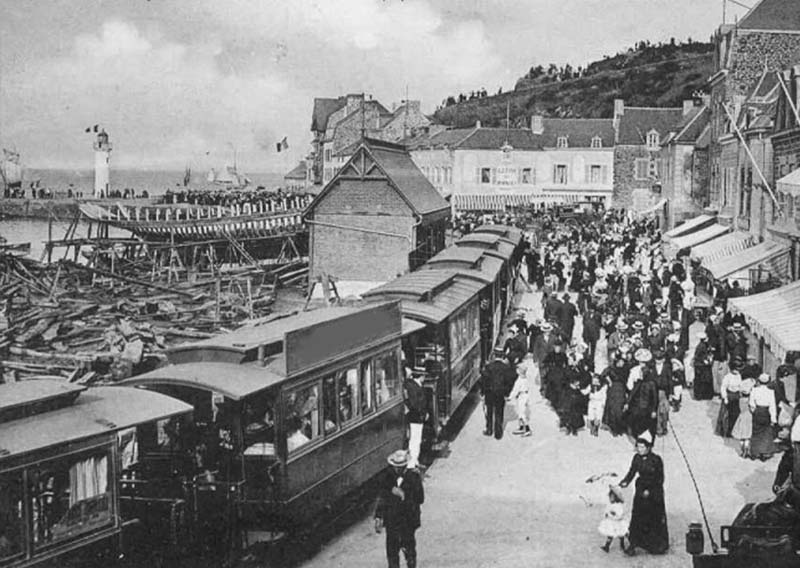
Llyngor Bridge opening day, 17th September 1885
History
Towns
Llyngor
Llyngor Maps
Llyngor
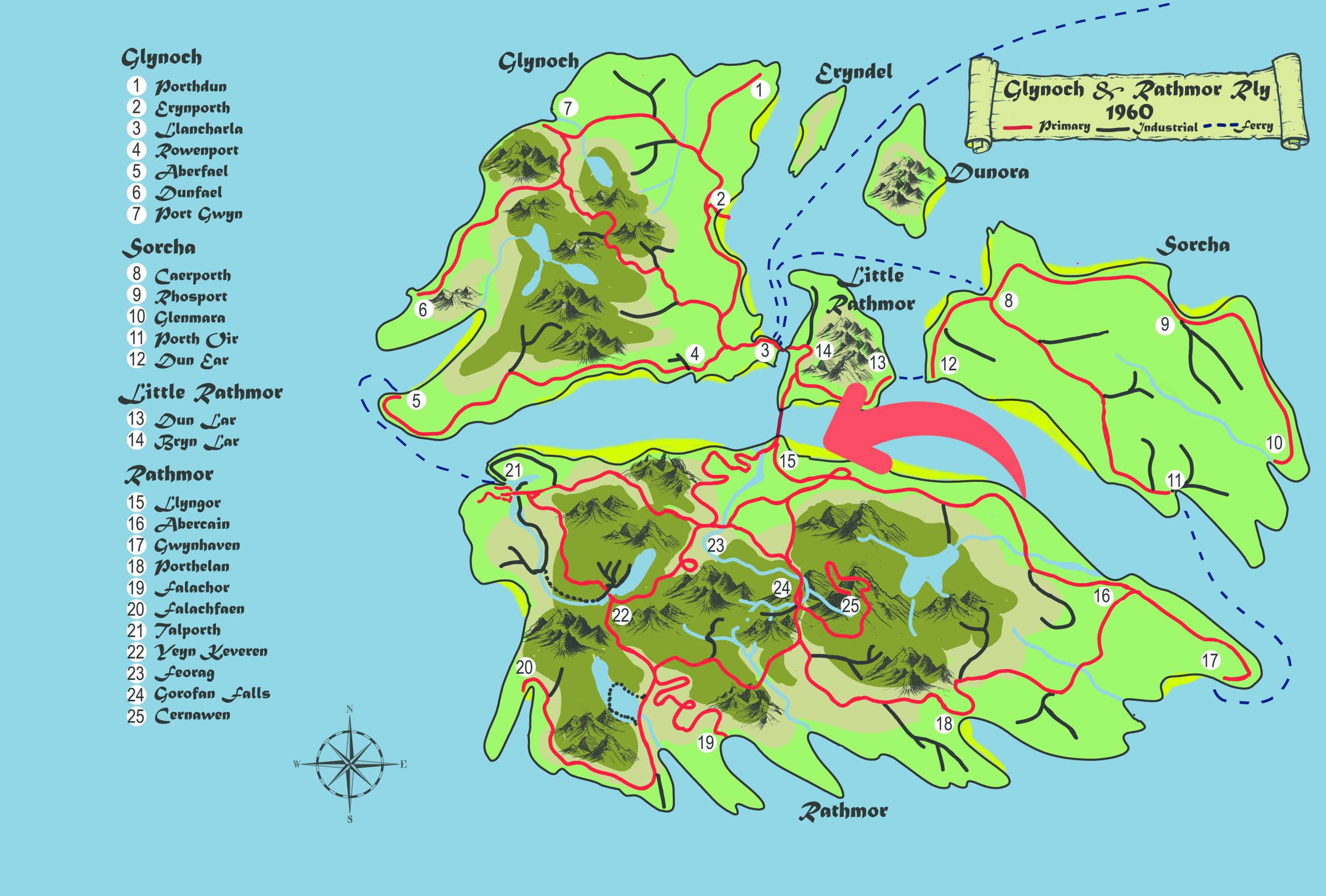
Located on the north coast of Rathmor
Explore More Towns...
...View All Towns