


14. Bryn Lar History
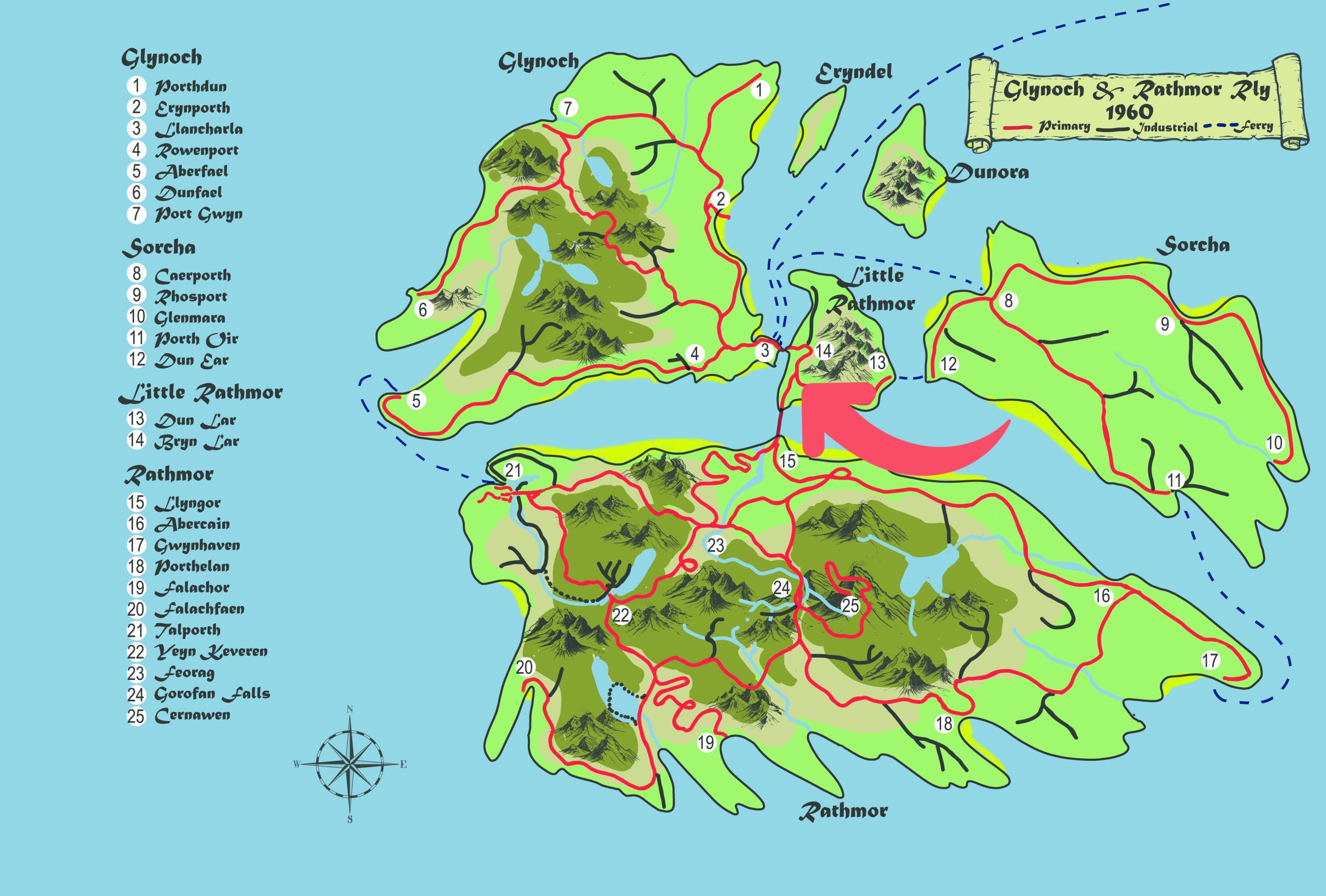
One of the earliest recorded settlements on the islands. Site of the first rails to be laid and now home to the railways main locomotive works.
History
Towns
Bryn Lar
Bryn Lar Maps
Bryn Lar
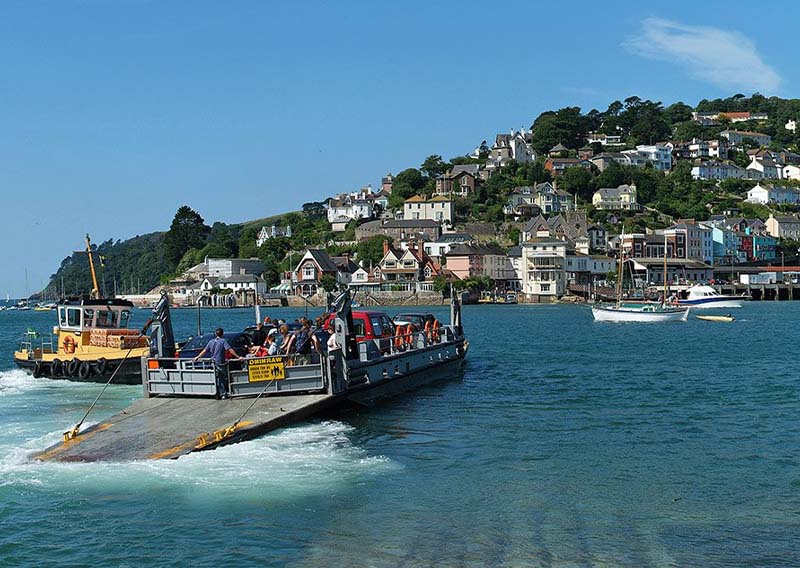
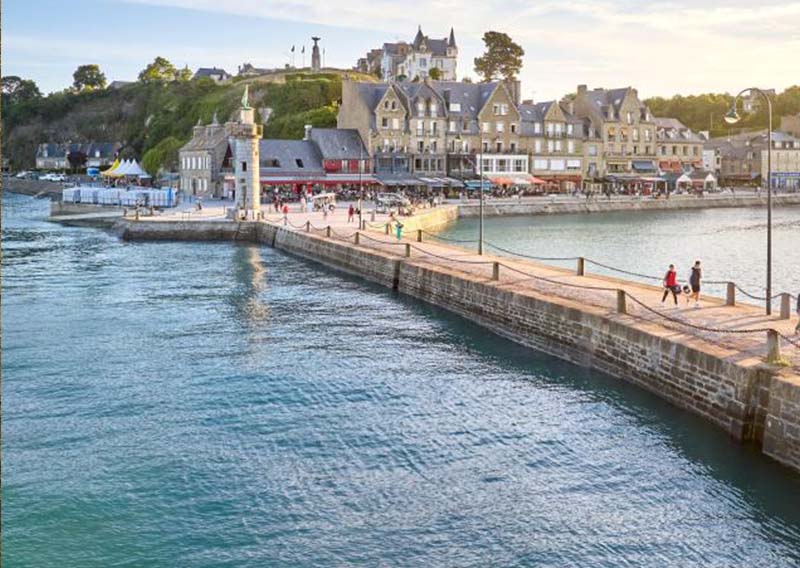
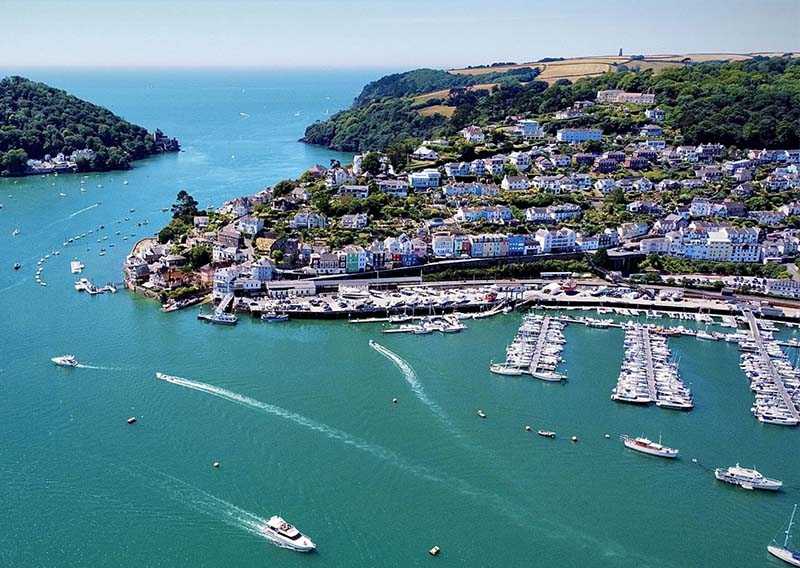
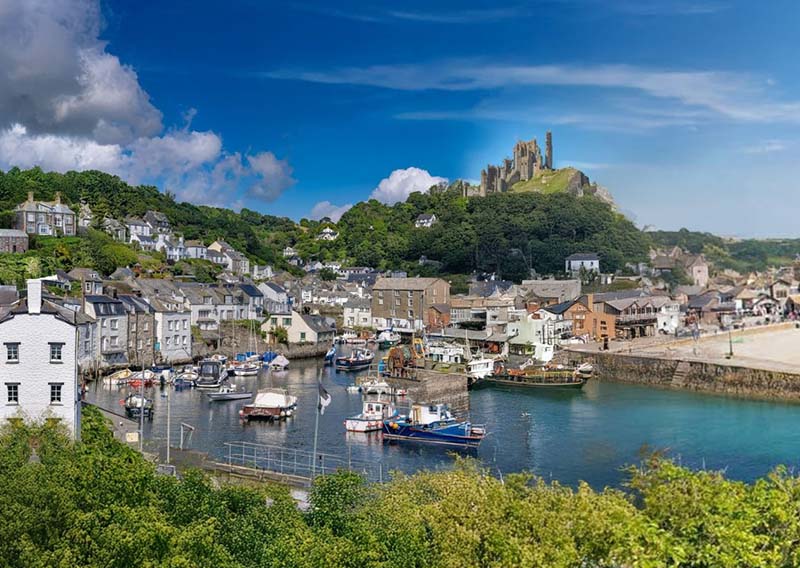
Bryn Lar / Bryn-Lar (Brin-Lahr) – From Welsh bryn “hill” and llawr/llar “plain, slope, ground” – meaning “Hill on the Shore” or “Slope by the Sea.” The name reflects the cove where steep hills of Little Rathmor descend to the natural harbour.
Bryn Lar
Bryn Lar Harbour c1900
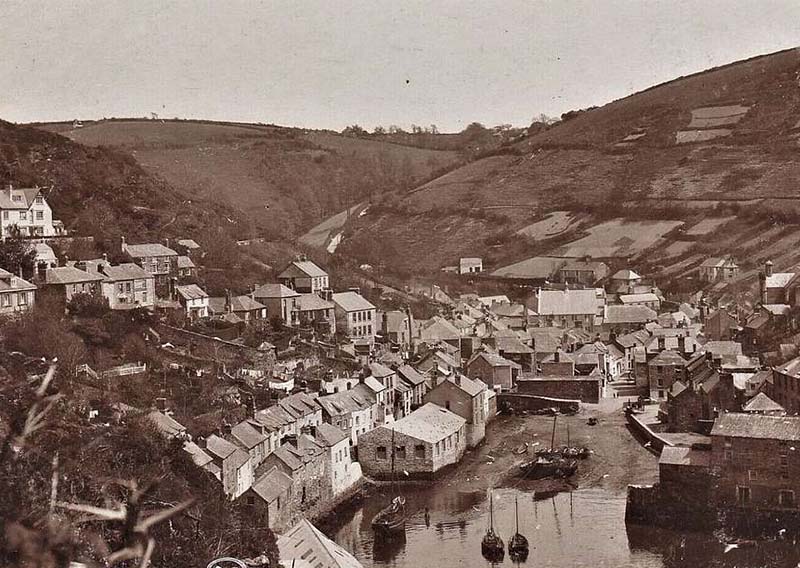
Bryn Lar, one of the oldest recorded settlements on the islands, began as a sheltered harbour for fishermen and grew into a hub of limestone quarrying, sheep farming, and seafaring tradition.
Bryn Lar is often described as the cradle of settlement on the islands. Nestled in a sheltered cove on Little Rathmor, its natural harbour offered protection from the gales of the open sea, making it a safe haven for the earliest fishermen. Archaeological finds of ancient net weights and boat timbers suggest that seafarers were landing here long before the written history of the islands began.
Through the centuries, the town’s fortunes have been tied both to the sea and the land. The busy little fishing fleet continues to land a wide variety of seafood: lobsters and crabs from the rocky shallows, herring and mackerel from the deeper waters of The Straights, and oysters that thrive in the nearby beds. On market days, the dockside bursts with life as stalls overflow with fresh catch, smoked fish, and salt-cured delicacies.
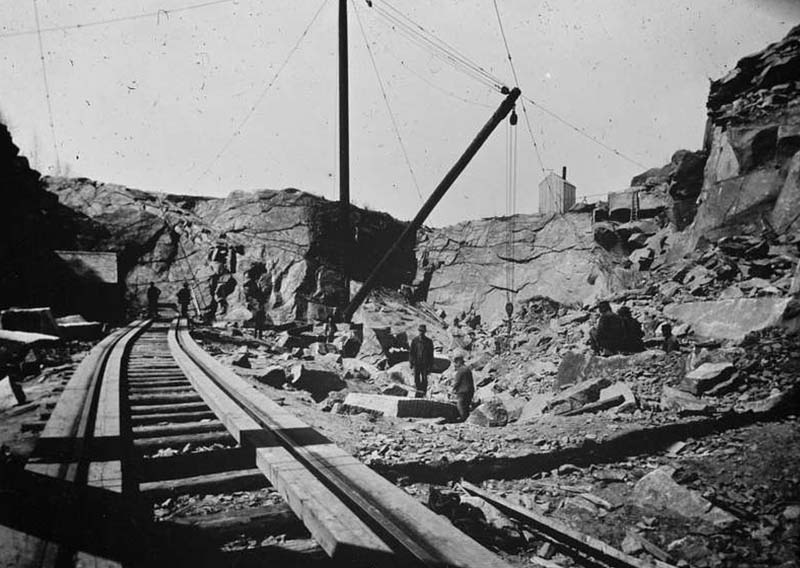
Little Rathmor may be small, but it is mighty. Built on a bed of durable limestone, there were only two main land based industries, digging up the hills, or grazing animals on them. The people of Little Rathmor excelled in both. The surrounding hills have long been grazed by sheep, producing wool that was once exported widely, and meat and dairy that still serve the island communities. But perhaps the most important industry has been the quarrying of Rathmor Limestone. This durable stone was cut from the northern quarries of Little Rathmor and shipped across the islands, forming the harbours and sea defences that allowed towns like Llanchala to thrive. Today, traces of old quarry workings can still be seen in the hills, reminders of Bryn Lar’s central role in shaping the built environment of the islands.
Rathmor Limestone
Little Rathmor is famed for its quarries of Rathmor Limestone, a pale and durable stone that has long been one of the island’s greatest treasures. Prized across the islands, it is instantly recognizable by its subtle sea-washed hues—creamy white streaked with hints of grey and blue. For centuries, quarrymen have hewn this stone from the island’s cliffs and uplands, sending block after block to the harbours where waiting ships bore it to distant shores.
From the fortified harbour walls of Llanchala to the stout piers of Bryn Lar, Rathmor Limestone has shaped the very bones of island life. Its enduring strength against salt spray and storm surges made it the natural choice for maritime construction. Harbours, breakwaters, and sea walls across the archipelago rose from it, standing firm against winter gales that would have swept lesser works away. In many towns, the limestone was not just practical but symbolic: to build with Rathmor stone was to anchor oneself in permanence and protection, a reminder that the sea could be both friend and foe.
Generations of quarrymen carved their livelihoods from the rock, and their traditions still echo in local memory. Folklore insists that the stone “holds the memory of the sea,” its pale surface whispering with the voices of ancient waves. To ensure safe passage, masons developed a ritual of tapping each block three times with their hammers before loading it onto the carts bound for harbour. This was not mere superstition; it was believed to awaken the stone and carry a blessing of protection to the builders who would set it into the foundations of towns far beyond Little Rathmor.
With the coming of the railway in the mid-19th century, the limestone trade entered a golden age. Rail wagons, far swifter and more efficient than ox-carts, carried vast tonnages from quarry face to harbour. Rathmor stone now went not only to harbours but also to civic buildings, churches, lighthouses, and even the great railway viaducts that stitched the communities together.
The work was harsh, the risks many—falls, dust, and sudden rockslides—but it bound the community with pride. Quarry families often worked the same faces for generations, passing down skills and stories alongside the hammers and chisels. Today, many harbours and seawalls across the islands still stand strong, their pale blocks a living monument to Little Rathmor’s enduring gift.
Bryn Lar limestone tramway c1840
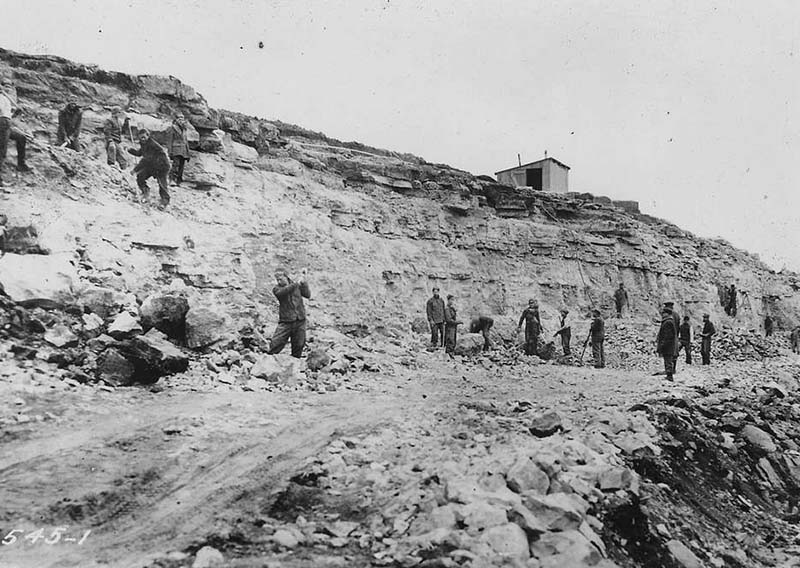
Little Rathmor limestone quarry
Sheep Farming on Little Rathmor
The windswept hills of Little Rathmor have never been kind to crops, but sheep have thrived there since the earliest settlements. Archaeological finds suggest that flocks were kept here in the Bronze Age, their wool spun into rough cloth. In medieval times, monasteries managed vast flocks. Folklore abounds: shepherds tell of spectral dogs appearing in storms to lead lost flocks home, and every spring the people still perform the “Blessing of the Lambs,” a ritual rooted in both Christian and pagan tradition.
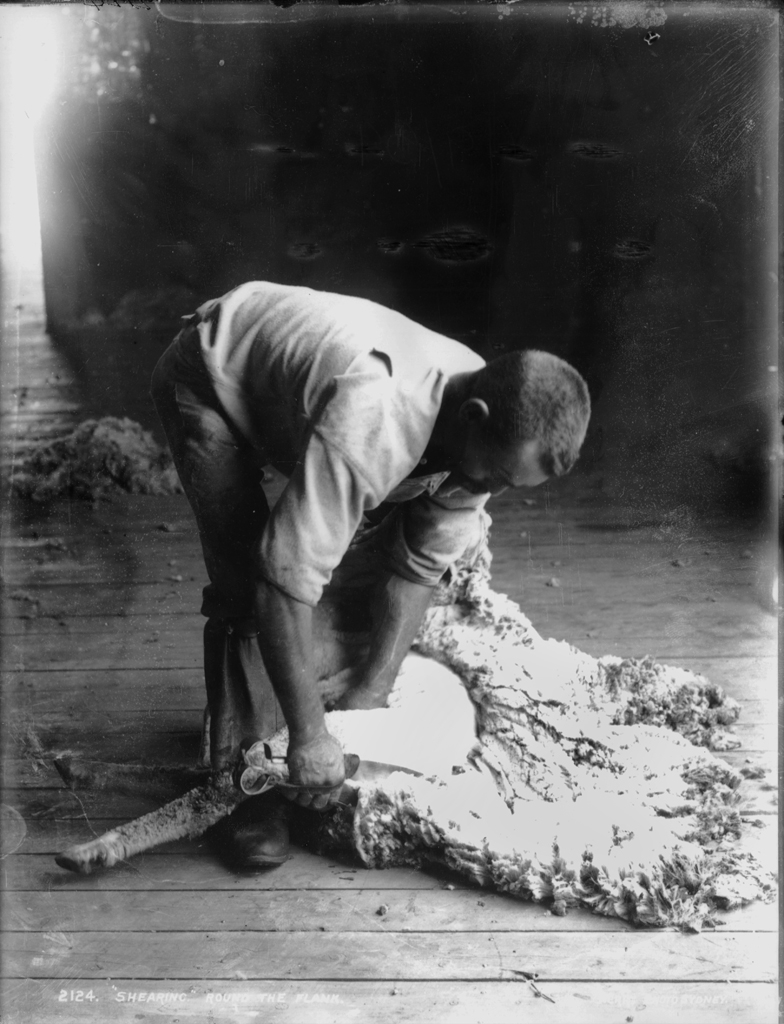
Bryn Lar Shearer c1910
Wool was a very useful currency of Little Rathmor life. Families spun it at home, selling yarn and woven cloth at market. By the 17th century, Rathmor wool was sought across the isles for its durability, used in mills to make hardwearing cloth for sailors and workers. Woolen mills grew up around the town of Dun Lar where the trade grew to become the largest employer on the island, specialising in the production of the now famous ‘Rathmor Gansey’ worn by fishermen all over the islands. The railway expanded this trade exponentially, allowing fleeces to reach urban markets and export opportunities within hours of shearing.
Today, sheep farming remains Little Rathmors backbone, sustaining its villages both economically and culturally. Seasonal wool fairs grew into grand events, with music, feasting, and competitive shearing contests. Fairs, festivals, and wool crafts tie each new generation to the hills, ensuring that the old traditions still live in the shadow of modernity.
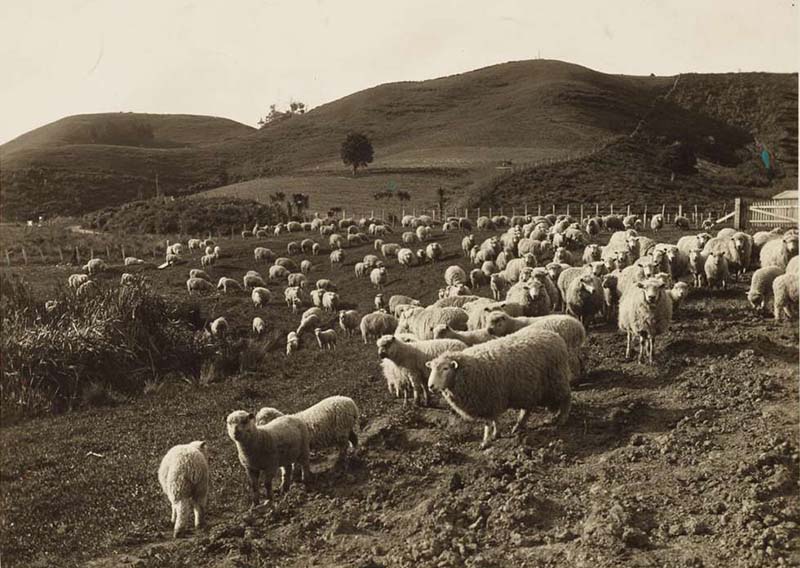
Sheep Farm,, Little Rathmor c1880
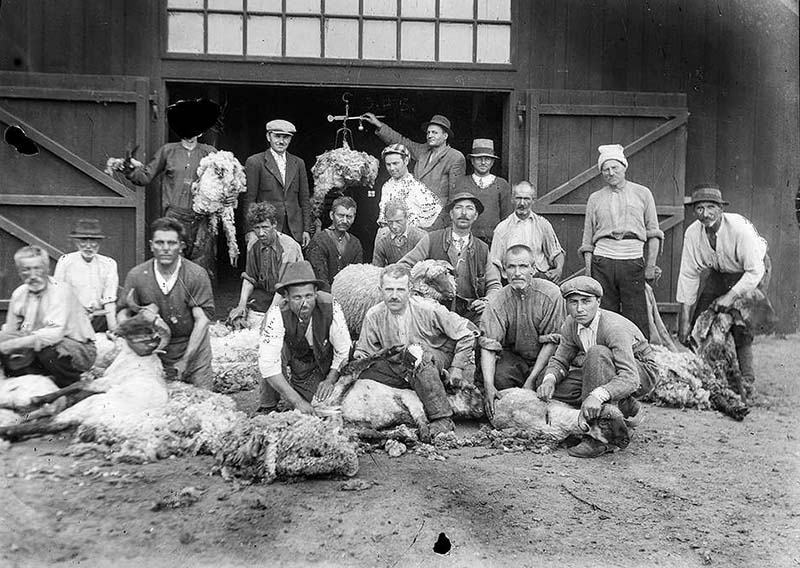
Sheep shearing, Bryn Lar c1855
The Railways at Bryn Lar
The story of the railways on the islands begins here, at Bryn Lar. The first rails ever laid were part of the Bryn Lar and Llancharla Harbour Company’s tramway, built in 1825 to move limestone from the quarries in the north of Little Rathmor down to the harbour. This primitive line was constructed from timber, cut from the island’s forests, and laid directly onto the ground. The wagons were nothing more than ox-carts modified with crude flanges on their wheels to keep them from sliding off the tracks.
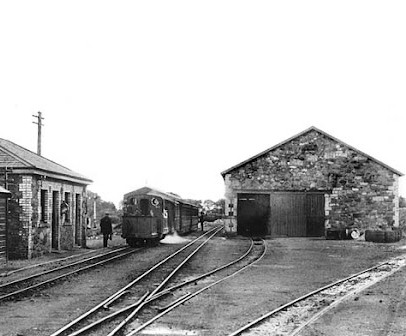
Bryn Lar Works c1910
Despite their simplicity, they proved revolutionary. For the first time, stone could be carried efficiently from the quarries to the shore, enabling the construction of Bryn Lar’s wharves and later the massive harbour works at Llancharla.
Though the wooden rails wore quickly and required constant repair, the tramway’s success demonstrated the potential of rail transport. Metal rails soon replaced timber, allowing for heavier loads, and eventually steam locomotives replaced animals. Some traces of the original timber alignments can still be found near the old quarry faces, a fascinating relic of the island’s industrial dawn.
After various land fill operations and extensions of the harbourside at Bryn Lar and to the ever expanding Llanchala docks, the gap between the two towns was little more than a small tidal channel, that could be easily bridged. A competition was run to design the bridge, which was won by McTorch & Wrench Ltd of Dublin, who used the local supplier of Bryn & Beam Ironworks of Little Rathmor to provide the materials and much of the labour. The bridge had to carry both trains and allow use by pedestrians, cycles and horse draw carriages. It also had to allow for boats of all sizes to continue to use the channel, so it had to be able to lift or move in some form. No simple task then, but in 1870 The opening of the bridge to Llancharla marked a huge turning point for the town and the railway.
Bryn Lar’s once-essential harbour became increasingly redundant. Its stone wharves and warehouses, once alive with stone boats, fell quiet as the ships were now using the larger docks in Llanchala. But the railways themselves brought new purpose. Much of the harbour site was repurposed into a vast locomotive works and engine sheds. The cramped facilities at the western end of Llancharla simply could not cope with the demands of the growing Glynnoch & Rathmor Railway, and Bryn Lar’s spacious harbourfront provided the perfect solution.
Today, Bryn Lar remains synonymous with the railway. The echoes of hammers in its locomotive works remind visitors that this little harbour town—one of the oldest settlements on the islands—was also the birthplace of the modern age of transport that transformed Rathmor and beyond.
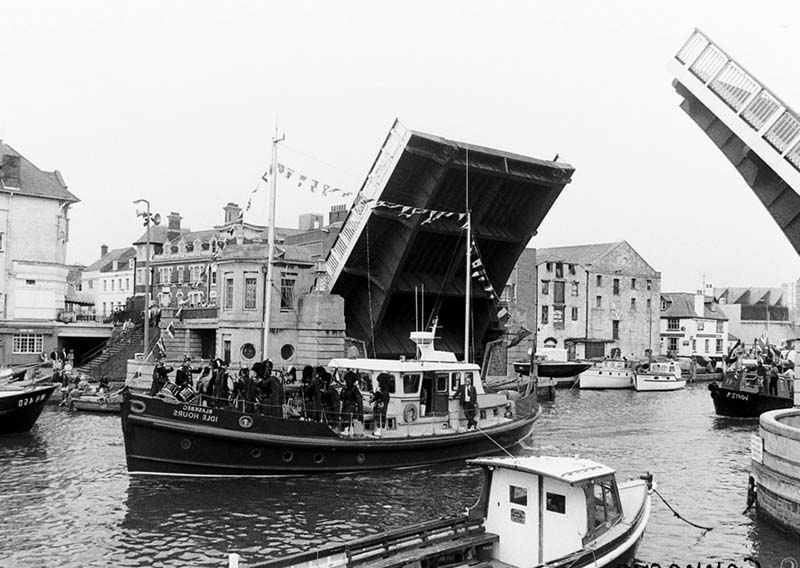
Opening day of the Llanchala Bridge 1870
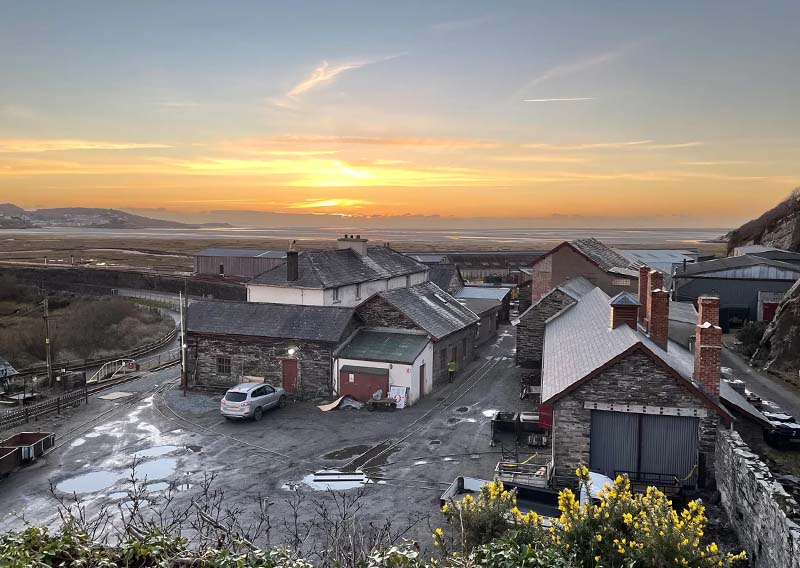
G&R Railway works at Bryn Lar
History
Towns
Bryn Lar
Bryn Lar Maps
Bryn Lar
Located on the west coast of Little Rathmor