


1871: Little Rathmor Railway
From the limestone quarries to woollen mills and bustling harbours, the LRR transformed the oldest rails on the islands into a strategically important railway connecting four islands.
History

Railways

About the LRR
LRR Maps
Little Rathmor Railway (LRR)
At a glance:
Established: 1871
Island: Little Rathmor
Predecessor: Bryn Lar & Llanchala Harbour Company
Principal route: Llanchala – Bryn Lar – Dun Lar
Major extension: Dun Lar, 1875
Important bridges: Llanchala Bridge (1870); Llyngor Bridge (1885)
Principal traffic: Limestone, wool, textiles, agricultural produce, general merchandise and passengers
Through-running partners: Llanchala & South Western Railway; Llanchala Railway; Llanchala & Eastern Coast Railway
Locomotive livery: Dark grey / charcoal black
Passenger carriages: Second-hand LSWR stock, olive green
Locomotive works: Bryn Lar Locomotive Works, owned and developed by the LRR
Successor: Caerwyn Junction Railway, 1885
The Railway That United the Islands
From the limestone quarries of Bryn Lar to the woollen mills of Dun Lar, the Little Rathmor Railway transformed the Caerwyn Isles' oldest transport undertaking into a strategic railway crossroads connecting Glynoch, Rathmor and Sorcha.
Origins: A Railway Ready for Change
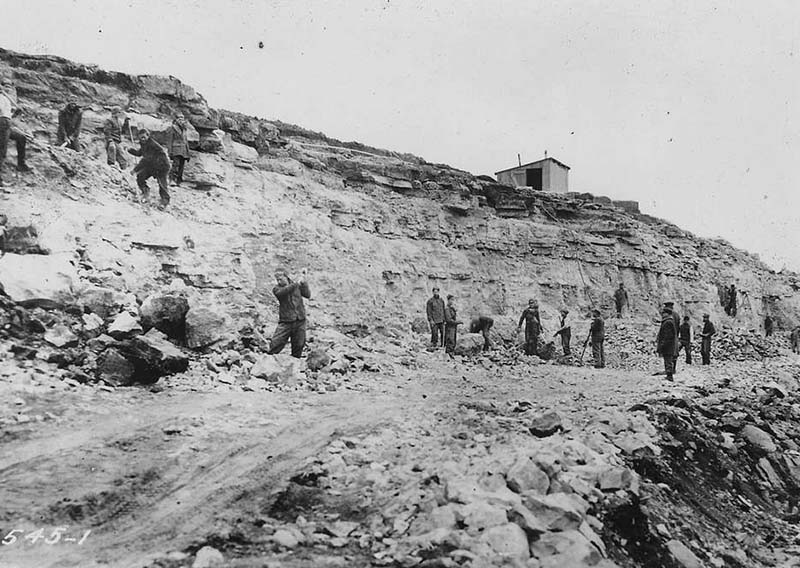
The Little Rathmor Railway was born from the oldest transport enterprise in the Caerwyn Isles. Its predecessor, the Bryn Lar & Llanchala Harbour Company, had begun operations in 1825 with an extraordinarily simple objective: to carry limestone from the quarries above Bryn Lar down to the harbour. For nearly half a century, the company had concentrated upon this single industry. Its earliest wagons were hauled by oxen along timber rails, and its principal customers were the quarry owners and merchants who depended upon the limestone trade. The system was primitive, but successful. As the decades passed, wooden rails gave way to more substantial track, and the railway gradually acquired the characteristics of a modern industrial undertaking. Yet the greatest change came not from the quarries, but from the water. For generations, Bryn Lar and Llanchala had been separated by a tidal channel. Limestone arriving at Bryn Lar harbour had to be transferred to vessels before continuing its journey to the larger port across the water. Successive harbour improvements and land reclamation schemes gradually narrowed the crossing, until the construction of a railway bridge became a practical proposition. When the Llanchala Bridge opened in 1870, it transformed the prospects of the entire enterprise. For the first time, trains could pass directly between Little Rathmor and Glynoch without the expense and delay of transferring their cargo to boats. The old limestone tramway had suddenly become part of something much greater.
Little Rathmor Rly Timeline
Bryn Lar & Llanchala Harbour Company
Little Rathmor Railway
Caerwyn Junction Railway
Glynoch & Rathmor Rly

Llanchala Bridge
1871: A New Company for a New Era
The establishment of the Little Rathmor Railway in 1871 recognised the extraordinary opportunities created by the bridge. The change was more than a new name. The original undertaking had been organised around a single industrial commodity, whereas the new company sought to serve the wider economic and social needs of Little Rathmor. Limestone remained an important source of revenue, but the railway's ambitions now extended to agricultural produce, livestock, manufactured goods and passengers. The existing route between Bryn Lar and the quarries formed the nucleus of the new undertaking. Sidings and loading facilities were improved, while the railway's connection with Llanchala provided direct access to a much larger commercial market. For the inhabitants of Little Rathmor, the change promised something equally significant. A journey which had once involved a combination of poor roads, carts and boats could increasingly be accomplished by railway. Farmers could reach markets more readily, merchants could arrange regular deliveries, and ordinary travellers gained a more dependable means of reaching the neighbouring island. The Little Rathmor Railway was no longer simply a means of carrying stone. It was becoming an essential public service.
The Railway Crosses Little Rathmor
The company's most ambitious undertaking was the extension eastwards across Little Rathmor towards Dun Lar. The island's western districts had long been dominated by quarrying and harbour activities, but its eastern communities possessed a very different economy. Sheep farming was widespread across the island's uplands, while Dun Lar had developed into an important centre for woollen manufacture. Its mills produced hard-wearing cloth, blankets and garments, including the celebrated Rathmor Gansey, whose reputation among fishermen and sailors extended far beyond the island. Transport, however, remained a persistent difficulty. Wool and manufactured cloth had to be moved overland by cart or shipped from coastal landing places. Both methods were vulnerable to the weather, while the costs of transport restricted the markets available to local producers. The Little Rathmor Railway offered a solution. Construction of the eastward extension brought the railway through the island's agricultural heartland, connecting farms and settlements with the industrial communities along the eastern coast. The work represented a considerable departure from the company's modest beginnings. Instead of merely following a short established industrial corridor, the railway now had to establish an entirely new cross-island route. By 1875, the line had reached Dun Lar. For the first time, Little Rathmor possessed a railway linking its western and eastern shores.
A Railway Shared: The Through Trains of Little Rathmor
Although the Little Rathmor Railway was established as a public railway, its principal business remained the movement of freight. Limestone, agricultural produce and, increasingly, wool and manufactured goods provided the foundation of its prosperity. Passenger traffic was important, but the company adopted a rather different approach from many of its contemporaries. The opening of the Llanchala Bridge in 1870 had created the opportunity for trains from Glynoch to run directly onto Little Rathmor. The enterprising management of the Llanchala & South Western Railway (LSWR) was quick to recognise the possibilities. Through-running agreements allowed the company's passenger trains to operate over Little Rathmor Railway tracks, offering convenient journeys from Llanchala and beyond without requiring passengers to change trains at the bridge. As the Little Rathmor Railway extended eastwards, so too did these services. By the time the railway reached Dun Lar in 1875, passengers could enjoy a through railway journey across the island from as far away as Aberfael in the South West of Glynoch, connecting with the ferry services to Sorcha. When the Llanchala Railway succeeded the Llanchala & South Western Railway in 1876, the arrangements continued, ensuring that Little Rathmor remained connected to the expanding passenger network of Glynoch. The Llanchala & Eastern Coast Railway (L&ECR) also secured running arrangements over the Little Rathmor system, allowing its trains to reach destinations beyond its own coastal lines. The daily Porth Dun to Dun Lar service was especially popular. Consequently, passengers on Little Rathmor became accustomed to seeing locomotives and carriages belonging to several different railway companies. The Little Rathmor Railway itself had relatively little need to maintain an extensive passenger fleet. Where its own passenger services were required, they could be operated using rolling stock acquired from its partners. Not every railway enjoyed these privileges, however. The Glynoch Central Railway (GCR) was notably excluded from the through-running arrangements, a distinction which reflected the commercial rivalries developing between the competing railway companies of Glynoch.
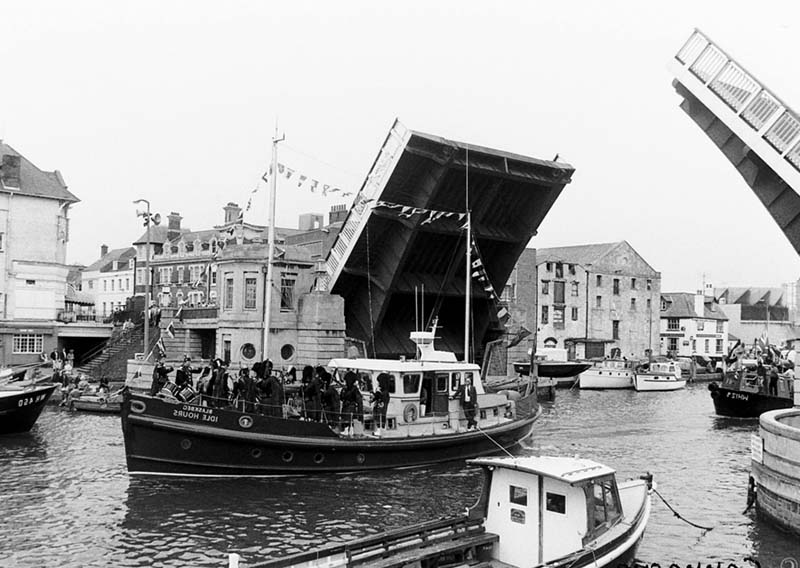
Llanchala Bridge opening day 1870

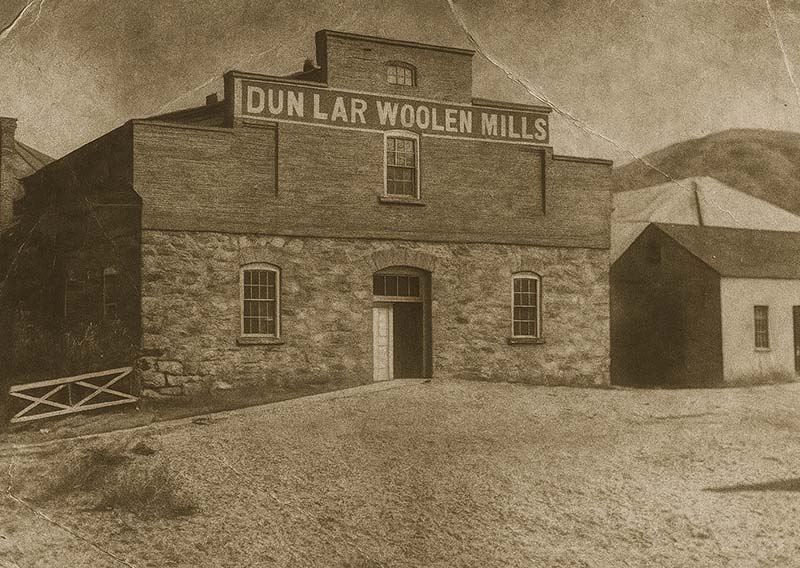
Dun Lar 1875
Dun Lar: A New Gateway to the East
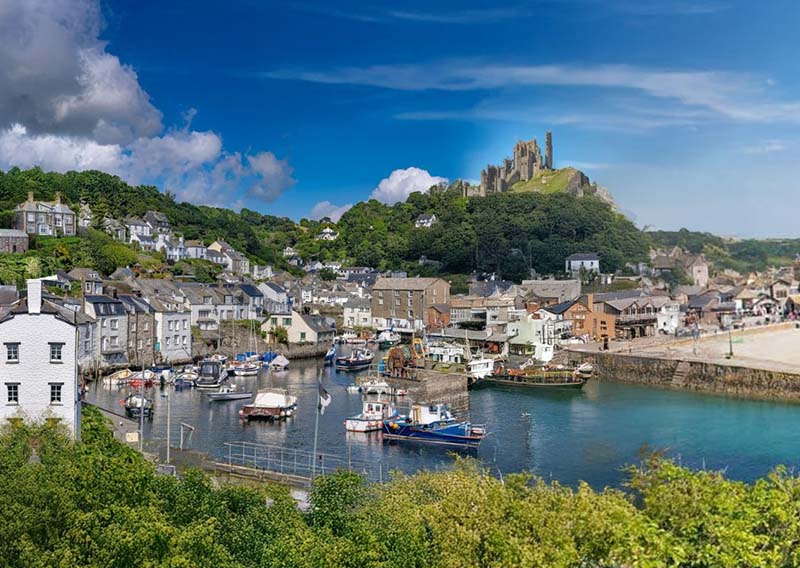
The arrival of the railway at Dun Lar in 1875 marked a major achievement of the independent Little Rathmor Railway. Dun Lar was already a town of considerable history. Its ancient fortress had once guarded the southern approaches to Llanchala Bay, working in conjunction with the fortifications of Dun Ear across the Rathmor Channel. By the nineteenth century, however, commerce had become more important than defence. Woollen mills employed a substantial proportion of the local population, while the harbour supported fishing, coastal shipping and trade with neighbouring Sorcha. The railway transformed the town's commercial possibilities. Raw wool could be brought from the island's farms to the mills more efficiently, while finished cloth could travel westwards towards Llanchala and the wider markets of Glynoch. Coal, machinery and other supplies required by local industries could be delivered by rail, reducing the town's dependence upon small coastal vessels. The railway also encouraged the development of Dun Lar as an interchange between land and sea. Across the channel lay Dun Ear, an important harbour serving the agricultural districts of Sorcha. Grain, timber and other produce could be shipped across the water and transferred to the Little Rathmor Railway for onward distribution. Within a year of opening the resulting passenger growth justified a short extension through the initial station and across the esplanade onto a purpose built jetty platform, allowing users to step directly from the train onto the waiting Sorcha ferry. The commercial benefits were unmistakable. Little Rathmor was becoming an intermediary between the fertile lands of Sorcha and the industrial and commercial centres of Glynoch.
A Faster Route to Sorcha
Perhaps the most immediately appreciated benefit of the new railway was the dramatic improvement in travel between Glynoch and Sorcha. Previously, passengers and merchants travelling between Llanchala and Sorcha had depended largely upon the coastal steamers and sailing vessels operating to Caerporth. Although well established, these services involved a lengthy passage, frequently subject to delays caused by adverse weather and difficult sea conditions. The opening of the railway to Dun Lar in 1875 offered an attractive alternative. Passengers could now travel by train from Llanchala across Little Rathmor, before making the comparatively short ferry crossing to Dun Ear. The journey was not entirely immune to the weather, but the shorter sea crossing considerably reduced its influence upon travelling times. For merchants, commercial travellers and ordinary passengers alike, the new route offered greater speed, convenience and reliability. It was a development welcomed enthusiastically by almost everyone. Almost everyone.
Opposition from Caerporth: A Threat to the Old Order
For generations, Caerporth had enjoyed a privileged position in the trade between Sorcha and the neighbouring islands. Its harbour merchants, shipping agents and warehouse proprietors had prospered from the movement of passengers and goods through the port. Cargo for Sorcha would almost certainly arrive at Caerporth, where it was unloaded, stored, transferred and distributed, providing employment and substantial commercial revenues. The opening of the Little Rathmor Railway to Dun Lar in 1875 threatened this established arrangement. The new route allowed passengers and an increasing proportion of commercial traffic to bypass Caerporth altogether, travelling instead by railway across Little Rathmor and ferry to Dun Ear. For the merchants of Caerporth, this was no mere inconvenience. It represented a direct threat to their commercial influence. Opposition was particularly fierce when proposals emerged to extend Sorcha's railway system towards Dun Ear. A railway connection at the eastern end of the ferry crossing would create a far more effective through route, enabling goods and passengers to travel between Glynoch and the interior of Sorcha without passing through Caerporth's warehouses or employing its shipping agents. The prospect was deeply unpopular among those whose livelihoods depended upon the established port. Caerporth's commercial interests used their considerable influence to challenge railway proposals, question their financial viability and delay the necessary authorisations wherever possible. Their objections were presented in terms of commercial prudence and the protection of existing transport services, although critics saw a determined effort to preserve Caerporth's lucrative position in the island's trade. Despite this resistance, the economic advantages of the new route proved increasingly difficult to ignore. When the Dun Ear Railway finally opened in 1882, it strengthened the connection between the two islands and confirmed Dun Lar's growing importance as a transport gateway. Caerporth remained a major port, but its long-standing dominance of cross-island trade had been challenged. The railway had not merely shortened a journey. It had begun to redraw the commercial geography of the Caerwyn Isles.

Dun Lar Station and Pier 1876
Passengers, Markets and Everyday Life
Although mineral traffic had provided the foundations of the railway, passenger services became an increasingly important part of its identity. The opening of the Dun Lar extension enabled journeys across Little Rathmor which would previously have required considerable time and effort. Market traders could travel with their goods, families could visit relatives in neighbouring towns, and workers gained access to employment beyond their immediate communities. The railway also strengthened the relationship between the island's two principal centres. Bryn Lar, with its quarries and developing railway facilities, remained closely connected to Llanchala. Dun Lar, with its mills, harbour and ferry services, looked eastwards towards Sorcha. The railway brought these different economies together. Passenger journeys involving Sorcha still required a ferry crossing, but the combination of train and boat offered a more practical route than the older arrangements of road and coastal transport. For many islanders, the Little Rathmor Railway represented their first regular experience of railway travel. Its importance was measured not simply in tons of freight, but in the opportunities it created for the communities along its route.
Bryn Lar: From Harbour to Railway Centre
The railway's expansion brought significant changes to its birthplace. For decades, Bryn Lar harbour had been the indispensable transfer point for limestone travelling towards Llanchala. The opening of the bridge fundamentally altered that relationship. Instead of unloading stone into vessels for the short crossing, railway wagons could continue directly into the larger docks at Llanchala. As traffic increasingly followed this new route, the old harbour gradually lost much of its original purpose. Yet the railway's continued expansion created new demands. Locomotives required servicing, wagons needed repair, and additional sidings and storage facilities became necessary as traffic increased. The former harbour lands offered valuable space for these activities. The harbour which had once given birth to the railway was slowly becoming a harbourside devoted to the railway itself.
Bryn Lar Locomotive Works, an Industry in Its Own Right
One of the Little Rathmor Railway's most enduring achievements was the development of Bryn Lar Locomotive Works. The opening of the Llanchala Bridge had placed Bryn Lar in an unusually advantageous position. Situated between the railway systems of Glynoch and Little Rathmor, it was ideally located to serve locomotives working across several neighbouring companies' lines. The Little Rathmor Railway recognised the commercial possibilities and began developing its own locomotive servicing and maintenance facilities on land formerly associated with the old limestone harbour. Initially intended to support the company's own modest locomotive fleet, the facilities soon attracted work from other railways. The Llanchala & South Western Railway, followed by the Llanchala Railway in 1876, became important customers. The Llanchala & Eastern Coast Railway also benefited from the works, with locomotives regularly visiting Bryn Lar for servicing, repairs and more substantial maintenance. As the business expanded, the works developed the capability to undertake major overhauls as well as routine maintenance. Crucially, Bryn Lar Locomotive Works remained an undertaking of the Little Rathmor Railway. Visiting companies paid for the services they received, providing the LRR with a valuable source of income beyond its traditional freight business. Its central location offered a considerable geographical advantage. Locomotives could reach Bryn Lar without lengthy journeys to distant workshops, while the concentration of skilled engineers, machinery and facilities allowed maintenance work to be carried out efficiently. There was, however, one notable exception. The Glynoch Central Railway did not enjoy the same cooperative arrangements and remained outside the circle of companies regularly using Bryn Lar's facilities. By the end of the Little Rathmor Railway's independent existence in 1885, Bryn Lar had established itself not merely as a railway depot, but as an important engineering enterprise serving much of the developing island railway network.
The Little Rathmor Railway's Own Trains
Despite its growing engineering interests, the LRR remained predominantly a freight railway. Its goods locomotives carried a practical dark grey or charcoal-black livery, reflecting the company's industrial origins and the hard-working nature of its operations. Passenger services were largely provided by neighbouring companies under through-running agreements, reducing the need for the LRR to maintain an extensive passenger fleet of its own. The carriages it did acquire came second-hand from the Llanchala & South Western Railway, retaining the olive-green livery of their former owner. Although perfectly serviceable, these vehicles were already of an older generation, and by the mid-1880s they presented a rather antiquated appearance alongside the newer passenger trains operating across the islands. Their modest appearance was characteristic of a company whose priorities lay in freight transport, engineering and the maintenance of its increasingly busy railway. The formation of the Caerwyn Junction Railway in 1885 would bring a significant change. Newer carriages originating with the Dun Ear Railway would introduce a distinctive dark green and cream appearance, marking a new chapter in the railway's passenger operations.
Sorcha and the Growing Importance of the Eastern Connection
The railway's arrival at Dun Lar created opportunities that extended well beyond Little Rathmor. Across the Rathmor Channel, Sorcha possessed extensive agricultural resources, including productive farmland and important timber industries. Its ports had long maintained maritime connections with Little Rathmor and Glynoch, but the availability of a railway at Dun Lar made those links considerably more attractive. The development of Sorcha's own railway system strengthened the relationship further. The opening of the Dun Ear Railway in 1882 was particularly important. Dun Ear now possessed its own railway connections, while Dun Lar provided access to the railway network on the opposite shore. The two towns became complementary gateways, separated by water but increasingly connected through trade. Goods arriving by rail at Dun Ear could be transferred to vessels for the crossing, then continue westwards by the Little Rathmor Railway. Passengers could make similar journeys, although the ferry remained an unavoidable interruption. The possibility of a permanent bridge or tunnel between the two islands would become a recurring subject of railway ambition. For the time being, however, the ferry was essential. The Little Rathmor Railway had helped create a transport corridor linking the commercial centres of Glynoch with the agricultural wealth of Sorcha.
1882: The Dun Lar Train Ferry: A Railway Across the Water
The opening of the Dun Ear Railway in 1882 coincided with the introduction of a remarkable new service: a railway train ferry connecting Dun Ear with Dun Lar. Although no bridge or tunnel linked Little Rathmor with Sorcha, specially equipped ferry vessels allowed railway wagons to be rolled directly aboard and transported across the channel without unloading their cargoes. This dramatically reduced handling costs and journey times, creating a much faster and more efficient freight route between the islands. The service also brought new opportunities for Bryn Lar Locomotive Works. As its reputation for engineering excellence grew, locomotives from Sorcha could be easily transferred across the channel for major repairs and overhauls, allowing the island's railway companies to benefit from Bryn Lar's increasingly sophisticated facilities. What began as an innovative freight connection would become another vital part of the Caerwyn Isles' interconnected railway network.

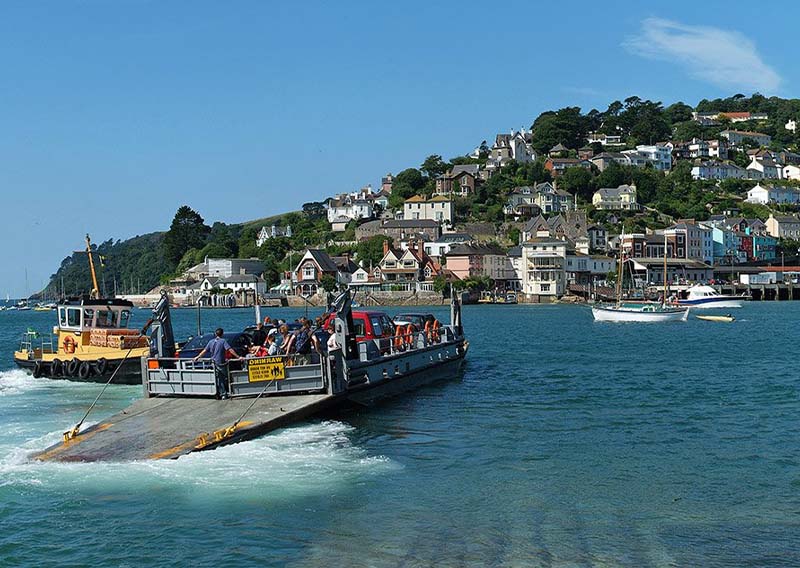
Dun Lar to Dun Ear Train Ferry

Bryn Lar Works c1910
1885: The Bridge That Changed Everything
For all its achievements, the greatest transformation in the fortunes of the Little Rathmor Railway came during the final year of its independent existence. The opening of the Llyngor Bridge in 1885 fundamentally altered the railway geography of the Caerwyn Isles. Until then, the LRR had principally served as a route between Glynoch and Little Rathmor, with an important onward ferry connection to Sorcha at Dun Lar. Its railway connections were concentrated upon the Llanchala Bridge, while traffic towards Rathmor remained dependent upon shipping. The Llyngor Bridge changed that. Promoted and financed principally by the Rathmor Railway, the ambitious engineering project was intended to establish a direct railway connection between Rathmor and Little Rathmor, and from there onwards to Llanchala and the wider railway system of Glynoch. The bridge was therefore much more than a means of crossing the water. It was conceived as part of a strategic through route, one which depended upon the existing tracks of the Little Rathmor Railway. For the Rathmor Railway, the commercial attractions were considerable. Freight from the industries and communities of Rathmor could now travel towards Llanchala without the delays and expense of transhipment by sea. Passengers likewise gained the prospect of direct railway journeys between the islands. For the Little Rathmor Railway, the consequences were even more profound. The company's tracks, originally laid to carry limestone to Bryn Lar, had become an indispensable link in an expanding inter-island railway system.
Four Islands, One Railway Crossroads
The opening of the Llyngor Bridge completed a remarkable transformation. To the west, the Llanchala Bridge connected Little Rathmor with Glynoch. To the east, the railway to Dun Lar provided access to the ferry crossing to Sorcha, where the Dun Ear Railway had established its own connections. And now, to the south, the Llyngor Bridge opened a direct railway route to Rathmor. Little Rathmor was no longer simply an island served by a railway. It had become a crossroads through which the railway traffic of several islands could converge. The significance was not lost upon the railway companies involved. The LRR possessed the established tracks, stations and engineering facilities through which much of this traffic would pass. The Rathmor interests had invested heavily in their new bridge, possibly even over-reaching with its finances, resulting in a merger almost instantly with the Llanchala Railway, creating the name Glynoch & Rathmor Railway in the process. This new company clearly had a direct interest in the efficient operation of the resulting Little Rathmor network, which connected the two halves of their combined system. The owners of the Dun Ear Railway on Sorcha also had good reason to seek a voice in the future of the railways on Little Rathmor. Their railway formed an important part of the eastern connection, and its commercial prospects were increasingly tied to the movement of traffic through Little Rathmor. The railway had become too important to remain merely a local concern.
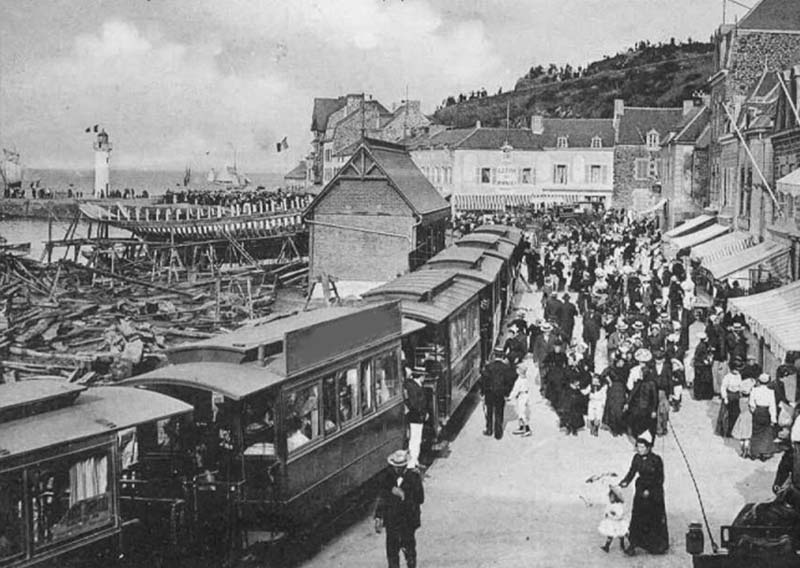
Llyngor Bridge opening day, 17th September 1885

1920s Advert
The Birth of the Caerwyn Junction Railway
The convergence of these interests led to the formation of the Caerwyn Junction Railway (CJR) in 1885. The new company brought together interests from the existing Little Rathmor Railway, the newly emerging Glynoch & Rathmor Railway, and the ownership of the Dun Ear Railway on Sorcha. Members of the LRR board played a part in the creation of the new undertaking, ensuring that the experience and interests of the original company were represented in the new arrangements. The CJR was conceived as a jointly controlled railway, reflecting the importance of its lines to several different companies rather than placing the strategic connections of Little Rathmor entirely under the influence of one. Its informal nickname, The Joint, would become familiar throughout the railway network. The reorganisation also promised improvements to passenger services. The elderly olive-green carriages inherited from the Llanchala & South Western Railway had served the LRR for many years, but the new company would introduce newer stock originating with the Dun Ear Railway, establishing a distinctive dark green and cream appearance. At Bryn Lar, the locomotive works developed by the LRR would continue to provide valuable engineering services, benefiting from an even greater concentration of railway traffic. The formation of the CJR was therefore not simply the disappearance of one company into another. It was a recognition that the railway built by the Little Rathmor Railway had become a shared asset of considerable strategic importance. The detailed ownership arrangements, commercial agreements and subsequent development of the Caerwyn Junction Railway belong to the next chapter of this history. For the LRR, however, the events of 1885 marked the culmination of fourteen extraordinary years. A railway which had inherited a modest limestone tramway had become the connecting link between the principal railway systems of the Caerwyn Isles.
Legacy: The Railway at the Heart of the Islands
The Little Rathmor Railway existed as an independent company for just fourteen years, from 1871 to 1885, but few railways in the Caerwyn Isles underwent such a remarkable transformation. It inherited the pioneering limestone tramway of the Bryn Lar & Llanchala Harbour Company, whose origins stretched back to 1825. It developed that modest industrial undertaking into a public railway, extended its tracks across Little Rathmor to Dun Lar, and established an increasingly important route between Glynoch and Sorcha. It welcomed the passenger trains of neighbouring companies, developed its own successful locomotive works at Bryn Lar, and helped transform the commercial fortunes of the communities it served. Yet its greatest legacy was perhaps something its founders could scarcely have imagined. With the opening of the Llyngor Bridge in 1885, the railway became an essential part of a much larger inter-island network. Railways from Glynoch, Rathmor and Sorcha now converged upon Little Rathmor, bringing together companies whose commercial interests had not always been aligned. The creation of the Caerwyn Junction Railway was the natural consequence of that convergence. The new company inherited not merely the tracks and facilities of the LRR, but a railway whose importance extended far beyond the boundaries of Little Rathmor itself. The Little Rathmor Railway had begun as the successor to the oldest transport undertaking in the Caerwyn Isles. It ended as the foundation of one of their most strategically important railway connections. From a quarry tramway to the crossroads of the Caerwyn Isles, that was the achievement of the Little Rathmor Railway.
History
Railways
About the LRR
LRR Maps
Little Rathmor Railway

Dun Lar Station and Pier 1876




0 Comments