


23. Feòrag History
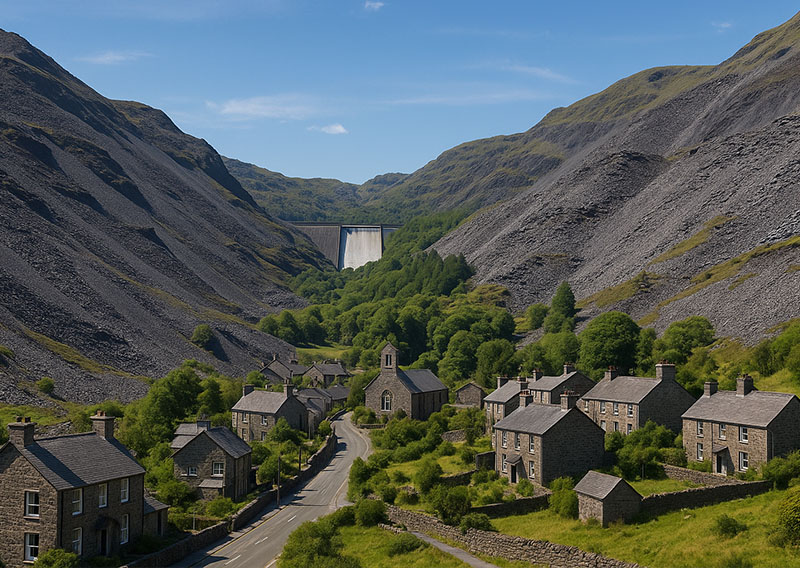
An important junction in the central highlands of Rathmor. Home to the Caileich Falls and the famous Glen Feorag Viaduct
History
Towns
Feòrag
Feòrag Maps

Feòrag Layout Information:
NOTE: This is a post all about the town of Feòrag and its history. There is a separate page documenting the Feòrag layout, including the design and build of the exhibition layout of the same name. Go to Feòrag Layout Page
Feorag
Feorag (FEE-or-ack) – From Gaelic feòrag, meaning 'squirrel'. The name reflects the forests once thick with red squirrels, a symbol of the wooded glens and natural richness of the region.
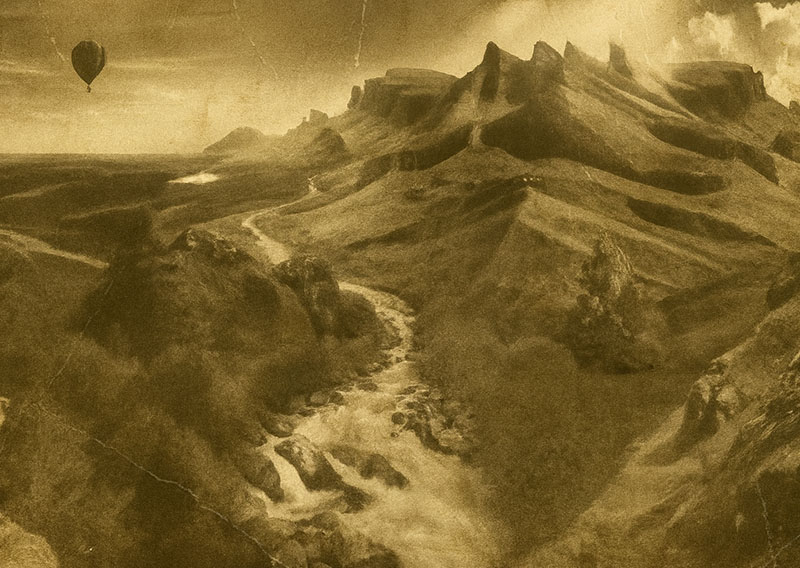
Glen Feorag c1850
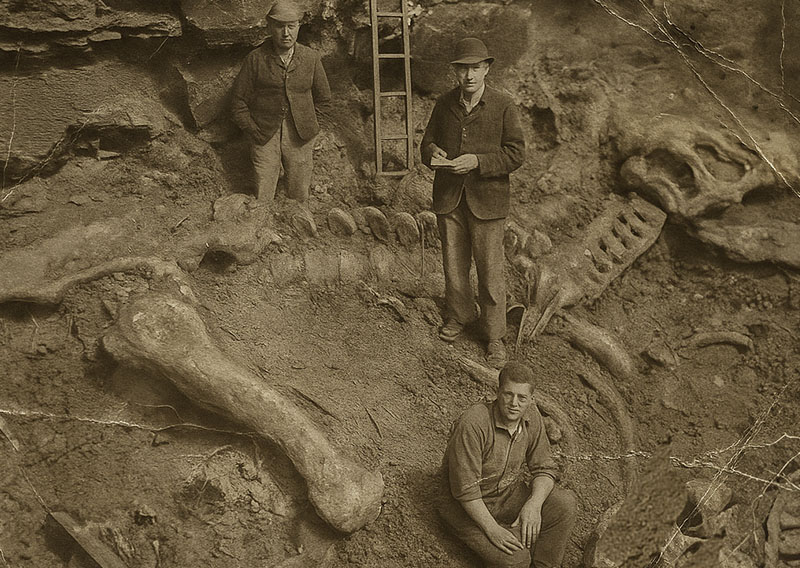
The Feorag Rex 1927
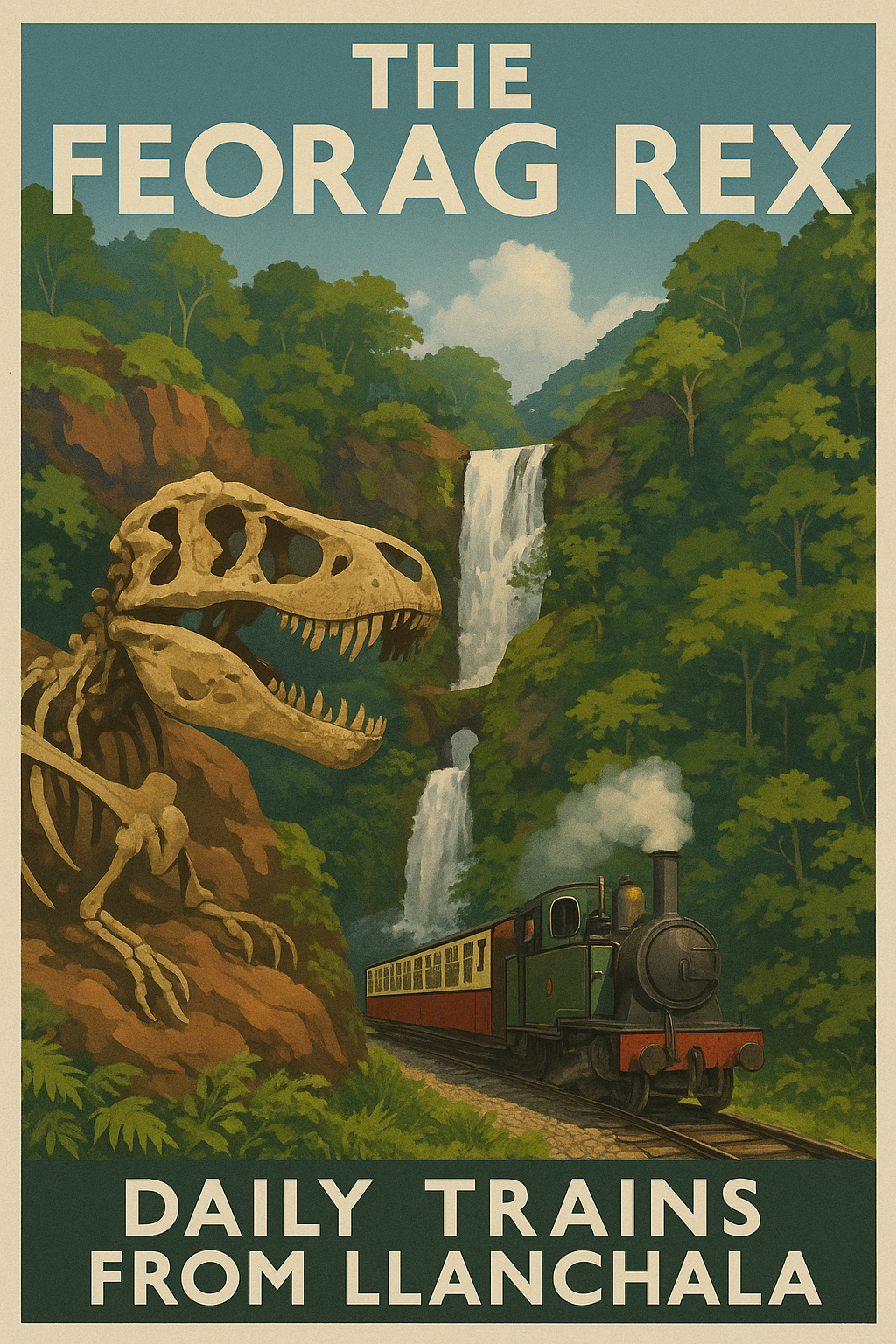
1930s advert
Known as the home of the Caileich Falls and a haven for nature lovers, Feorag blends wild beauty with deep history. From tumbling waters to the astonishing discovery of dinosaur bones, it is a place where myth, natural beauty, and the railway age converge.
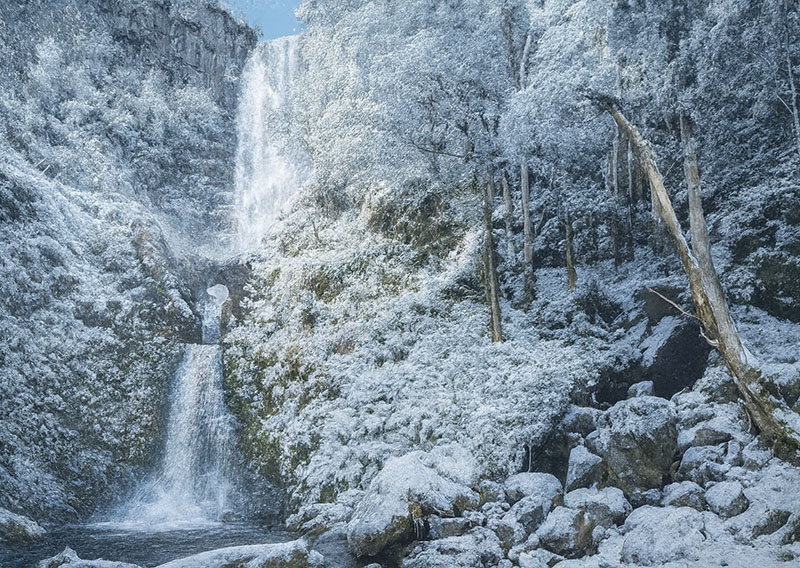
The village of Feorag sits nestled in the wooded hills of Rathmor, where the Caileich River plunges in a spectacular series of cascades known as the Caileich Falls. These falls are one of the islands’ most beloved natural wonders: a paradise for walkers, artists, and naturalists, with spray-dappled glens echoing to the calls of birds and the rush of water. Long before tourism, the place was revered in folklore as the dwelling of the “Caileich,” a spirit who guarded the waters and kept the valley fertile.
But Feorag’s fame took on a whole new dimension in 1927, when builders working near the falls uncovered the colossal bones of a Tyrannosaurus Rex embedded in the sandstone strata. The discovery stunned the scientific world and was hailed as one of the most complete dinosaur skeletons ever unearthed in Europe. Almost overnight, Feorag became a centre of international attention. Palaeontologists, journalists, and tourists flocked to see the excavation site, and soon a small museum was established to house the fossils. The “Feorag Rex,” as it became known, remains a star attraction today, bringing scholars and families alike to the village.
Blending natural beauty, myth, and prehistory, Feorag stands apart as a destination where visitors can marvel at the roar of waterfalls, wander deep forests, and contemplate a world millions of years older than the human story.
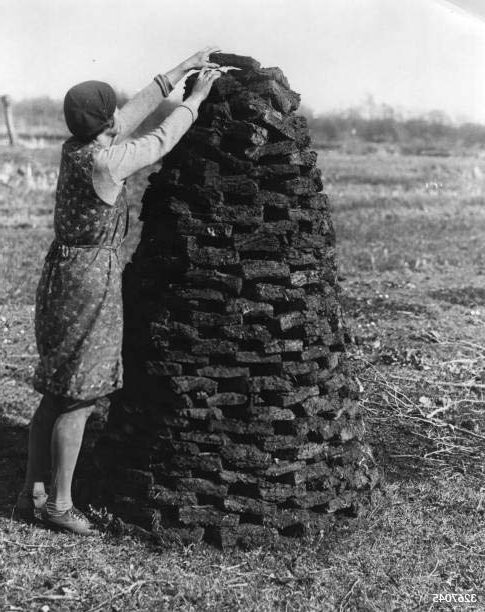
Feorag Peat Pyramid
The Peat Industry of Feorag
The high moorlands surrounding Feorag are known for their wet, spongy ground where mosses and sedges thrive. Over centuries, these bogs slowly built up thick layers of peat—dark, fibrous earth rich in organic matter and, above all, energy. Long before coal or oil reached the islands, peat was the essential fuel of rural life, dug from the ground and dried into blocks to warm homes, cook meals, and fire the small forges and workshops of the uplands.
In Feorag, peat cutting became a seasonal ritual. Families would venture out in spring and early summer with long-handled spades called tairsgeirs, slicing the bog into neat, brick-like slabs. These were stacked into airy pyramids or low walls to dry in the wind and sun, their smoky scent drifting across the moor. When dried, the peat was carted into town or later loaded onto railway wagons. For generations, it provided a steady and affordable fuel, particularly prized in the cool, damp upland winters.
By the late 19th century, as the railway expanded, peat cutting in Feorag grew from a household practice into a small industry. Merchants leased bogland, hiring gangs of cutters and sending wagon loads of peat to the growing coastal towns. The industry supported many local families, though it was tough and muddy work.
Today, large-scale cutting has declined, replaced by modern fuels, but the tradition remains alive. Visitors to Feorag can still see old peat stacks and, in some places, demonstrations of the craft. The earthy aroma of burning peat, once the very breath of Feorag’s hearths, lingers as a reminder of a time when the bogs sustained the people as surely as the falls and forests.
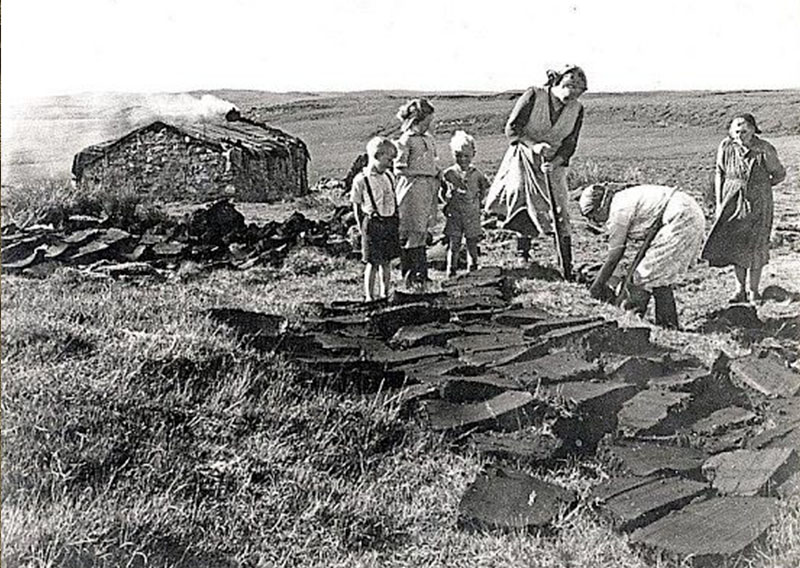
Peat Production
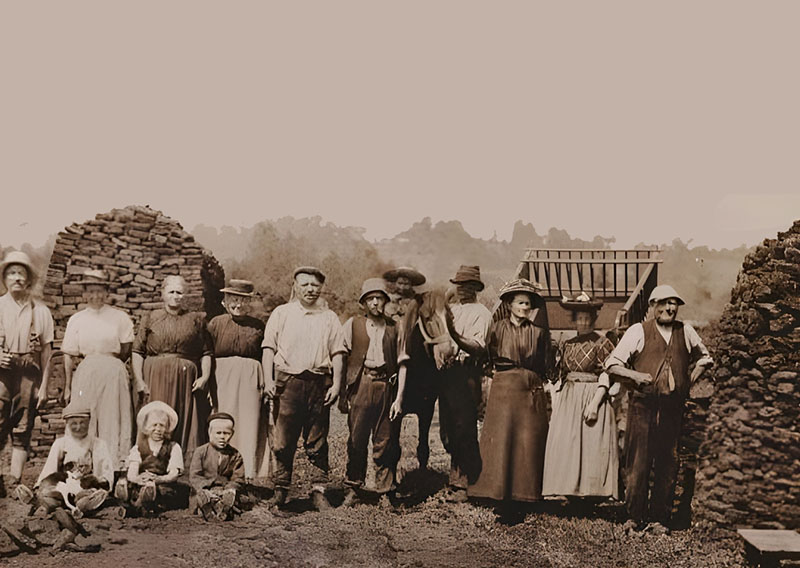
Feorag Peat Harvest
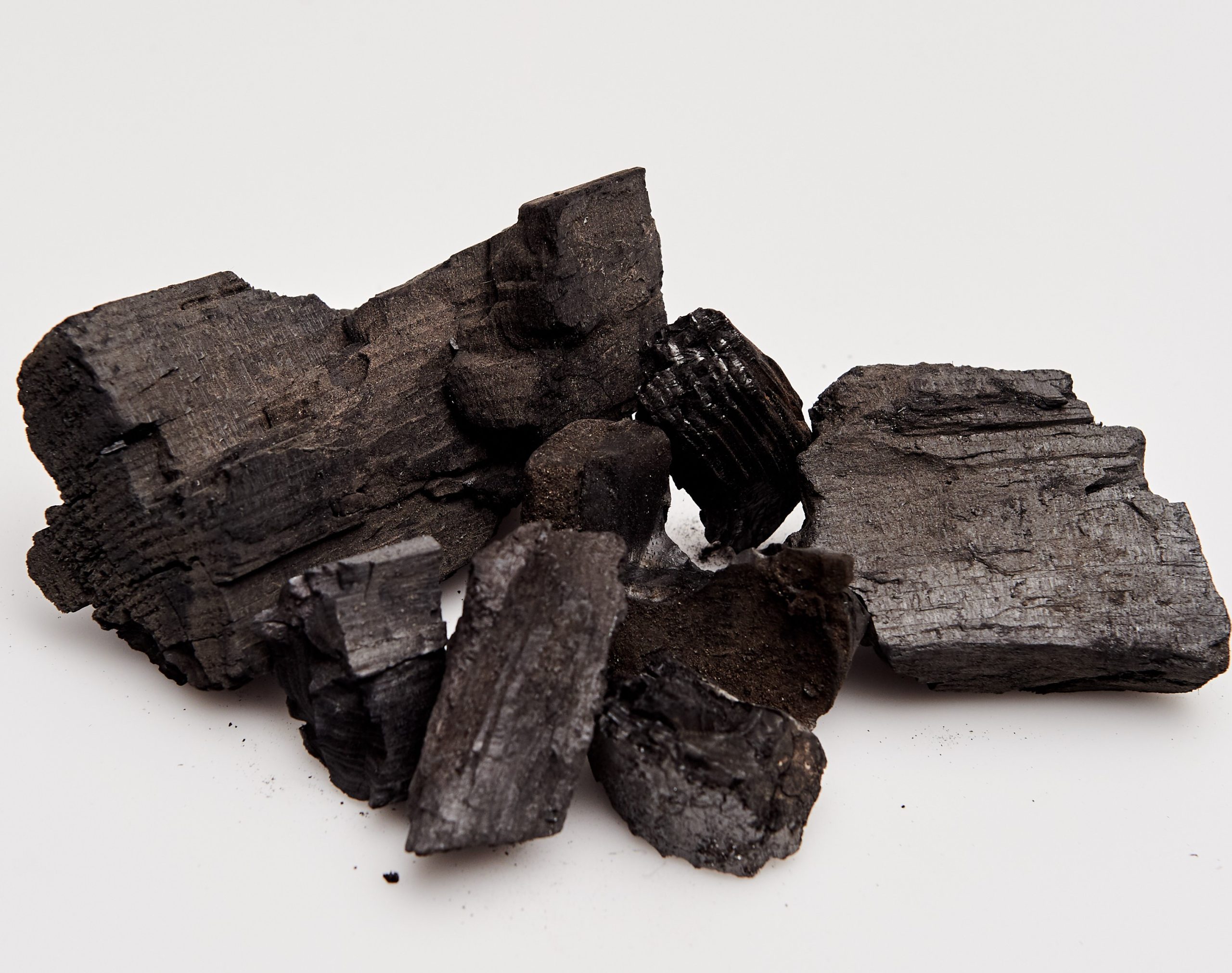
Feorag Charcoal
The Charcoal Industry of Feorag
High in the rugged central highlands of Rathmor lies Feorag, a settlement long defined by its surrounding forests and the ancient craft of charcoal making. For centuries, these dense woodlands provided not only timber for building and fuel for the hearth, but also the raw material for the island’s once-thriving charcoal industry, an enterprise that shaped both Feorag’s culture and its economy.
Charcoal production in Feorag followed a carefully honed process, preserved through generations of skilled colliers. Timber—usually oak, birch, or pine—was cut and seasoned before being arranged into large, conical stacks known as charcoal clamps. These stacks were covered with turf and earth, leaving only small vents to regulate airflow. Once ignited, the clamps were allowed to smoulder slowly over several days. This controlled burn removed moisture and volatile compounds from the wood, leaving behind the lightweight, carbon-rich charcoal so prized by metalworkers, artisans, and households alike. The process required constant vigilance, with colliers working in shifts to maintain the delicate balance between heat and oxygen. Too much air and the wood burned to ash; too little and it failed to convert properly.
The resulting charcoal had numerous uses across Rathmor. It served as a vital fuel for early metalworking, powering forges and smelteries long before coal became commonplace. It also fuelled glassmaking, pottery kilns, and many domestic fires, particularly in remote communities where alternatives were scarce. As industrial activity increased in the late 19th century, demand for Feorag’s charcoal expanded dramatically.
The arrival of the Talporth and Feorag Railway transformed the industry further. Purpose-built depots in Feorag enabled charcoal to be transported swiftly across the islands, supplying workshops, factories, and urban households. Large quantities were also dispatched to the port of Talporth, where they were exported to neighbouring archipelagos and even mainland markets. For decades, Feorag charcoal became an essential commodity, its high quality recognised far beyond Rathmor’s shores.
Though the forests are now more carefully managed and charcoal is produced on a smaller scale, the legacy of Feorag’s colliers remains woven into the landscape. Visitors wandering the highland trails can still find traces of old clamp sites, silent reminders of an industry that helped fuel Rathmor’s earliest growth and prosperity.
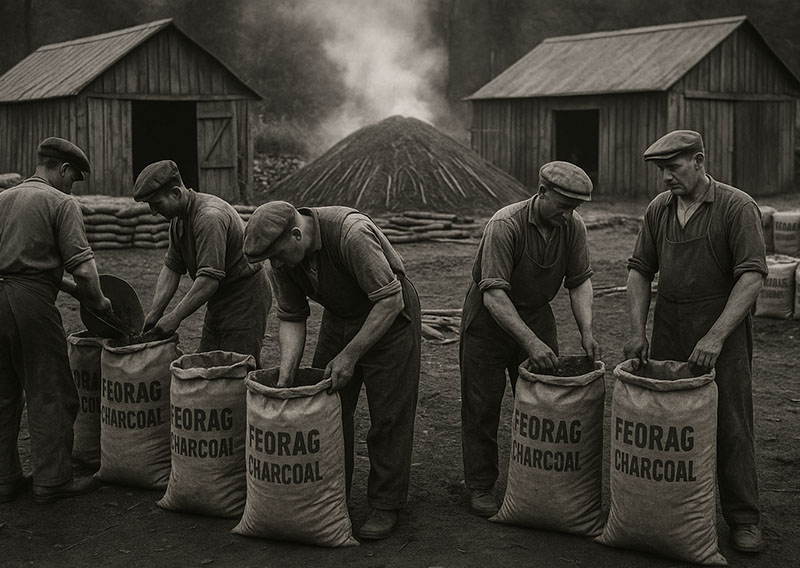
Feorag Charcoal c1900
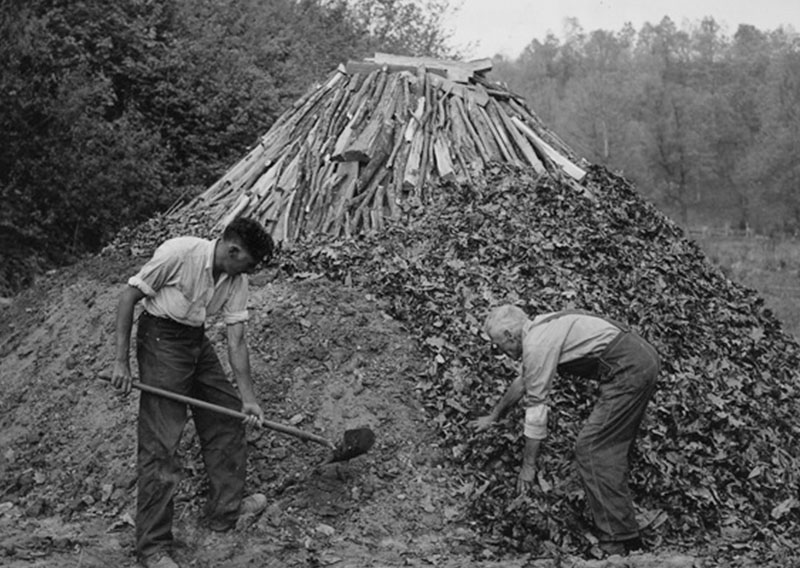
Charcoal clamp, Feorag c1910
The Railways to Feorag
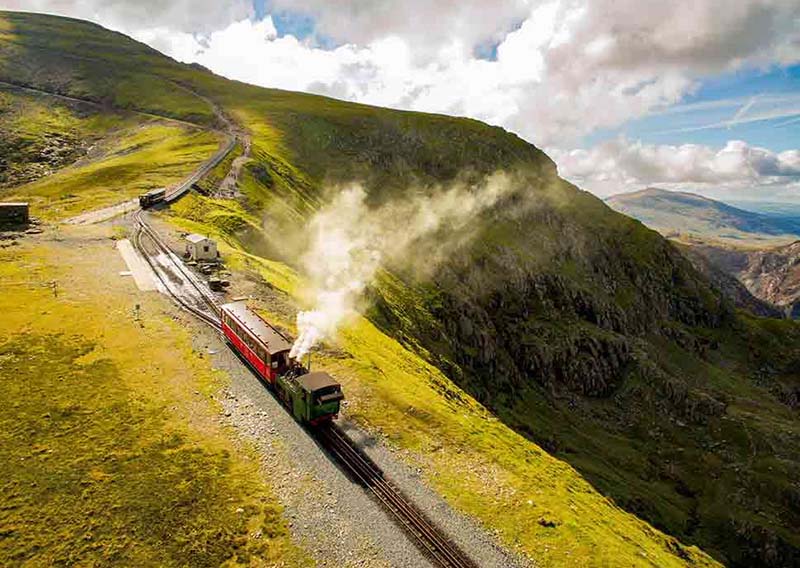
The coming of the railway in the 19th century transformed Feorag from a quiet upland village into one of Rathmor’s key junctions. The Talporth and Feorag Line, opened in 1860, climbed steadily from the port at Talporth to the peat moors near Feorag. Passengers were initially just a tiny part of the business, until an article in the Sunday Times in March 1870 about the healing waters and fresh air found here set the village on a tourist map for good.
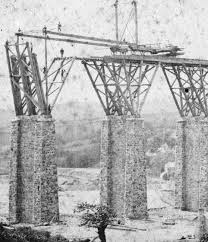
Viaduct Construction c1875
A second line to the village had already been completed by this point up from Llyngor, initially for the stone and logging industries, but tourism soon provided much of the traffic on that too.
After the Glen Feorag Viaduct was opened in 1875, a much faster route to the north coast was created which, after some initial delays, was eventually connected to the new Llyngor Bridge which finally opened in 1885, connecting to Little Rathmor and onwards to Llanchala.
The station at Feorag quickly became an important passing place, often seeing up to 30 trains a day. With the rise of tourism, the railway also brought walkers, painters, and naturalists into the glen. Excursion trains soon advertised the wonders of the Caileich Falls, with posters proudly depicting the soaring viaduct.
As well as tourist trains, there were the various quarry trains heading to the ports, as well as the regular 'express' services passing through Feorag with the twice daily service from Talporth to Llanchala.
The peat industry has slowed down in recent years, but the rise in traffic from the Ministry of Defence at Falachfaen and the large hydro and nuclear building projects in the south-west have kept the line extremely busy, more than justifying the retention of two separate routes to the north coast.
Farmers could now move livestock with ease, timber flowed down from the forests, and the fresh produce of the uplands reached Llanchala’s markets within hours rather than days.
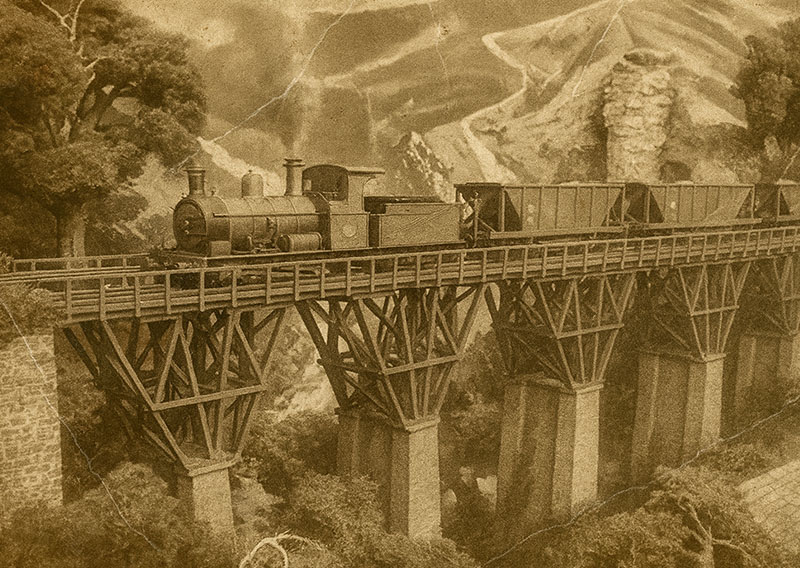
Glen Feorag Viaduct c1910
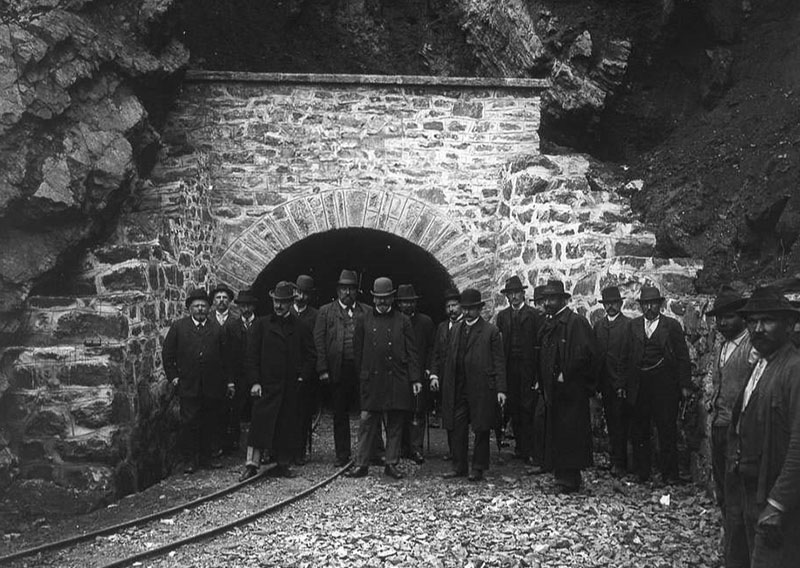
Feorag 'New Tunnel' c1878
History
Towns
Feòrag
Feòrag Maps
Feorag
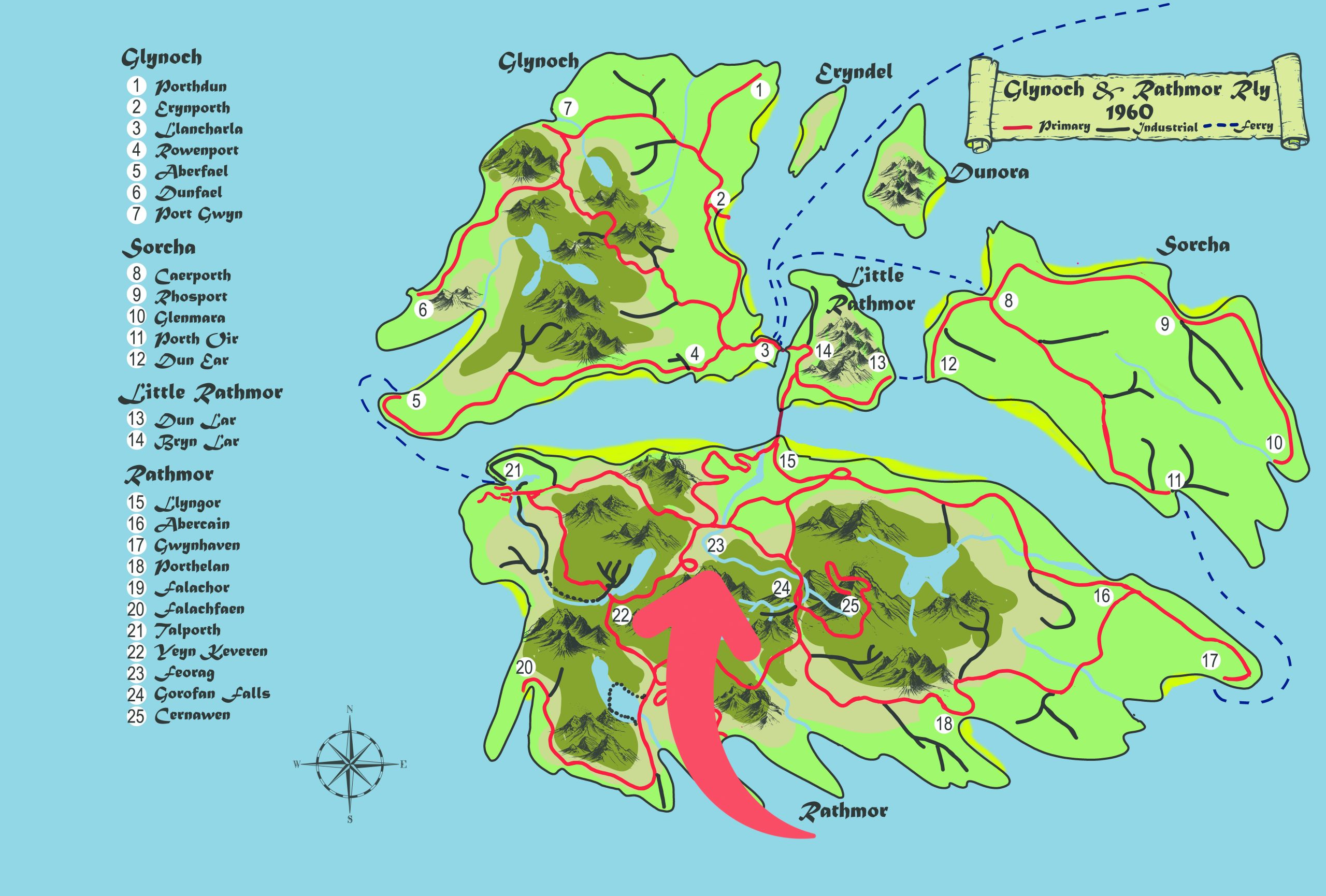
Located in the central highlands of Rathmor
Explore More Towns...
...View All Towns