


1852: Early Railways of Caerporth
Various independent industrial tramways primarily for moving goods from inland farms and industries to the coast at Caerporth
History

Railways

Caerporth
Caerporth Maps
Early Railways of Caerporth
At a glance:
Period: c.1852–1877
Island: Sorcha
Principal area: Caerporth and the agricultural districts to its east and north-east
Principal early systems: Rhosper Estate Tramways (RET); West Cane Estate Railway (WCER); Caer Valley Tramway (CVT); Northern Estates Railway (NER); Caerporth Sugar Cane Ltd Railway (CSCLR); Caerporth Harbour Board Railway (CHBR); Penrath & Caerporth Railway (P&CR)
Primary traffic: Sugar cane, agricultural produce, livestock, dairy produce, fish, rum-related traffic, marine supplies and harbour goods
Character: estate, agricultural, industrial, fishing and harbour railways rather than a single public railway system
Successor influence: Sections, traffic, land rights and operating experience contributed to the later Grand Sorcha Central Railway and Caerporth & Rhosport Railway systems
Origins
Caerporth’s railway history began long before the arrival of a conventional public railway. By the middle of the nineteenth century the town had become the principal outlet for a rich agricultural hinterland, with sugar cane, livestock and other produce moving towards its harbour. The difficulty was not a lack of trade, but the cost and delay of moving bulky goods over poor roads and through an increasingly congested port.
The earliest railways were therefore practical estate and industrial systems. They were built to move crops and supplies rather than passengers, and they grew in fragments according to the needs of individual landowners and businesses. Taken together, these small lines created the first railway landscape around Caerporth and established routes that later companies could enlarge, connect and rebuild. The early railways of Caerporth developed in three broadly distinct groups, each reflecting different commercial interests and geographical requirements.
The Central Sector was dominated by the agricultural estates associated with the Rhosper family and would eventually contribute to the development of the Grand Sorcha Central Railway.
The Northern Sector developed through three quite different commercial interests: the agricultural estates north-east of Caerporth, the expanding sugar industry and the fishing merchants of Penrath. Their separate railways would eventually combine to form the Caerporth & Rhosport Railway in 1877.
The Harbour Sector developed independently, providing neutral access to Caerporth's docks and warehouses for competing estate, industrial and public railway interests.
The Central Sector
Together with the Early Railways of Porth Oir these lines formed the basis for the Grand Sorcha Central Railway
Timeline:
Rhosper Estate Tramway
West Cane Estate Railway
Caer Valley Tramway
Grand Sorcha Central Railway
Great Western Railway
Glynoch & Rathmor Rly

West Cane Estate Railway
1852: The Rhosper Estate Tramways
The earliest substantial system associated with Caerporth was the Rhosper Estate Tramways, established around 1852. Controlled by the Rhosper estate and closely associated with the growing interests of Lord Joseph Rhosper, the tramways served agricultural land in central Sorcha and carried sugar cane and other estate produce towards the Caerporth area. The RET was probably better understood as a network of estate tramways than as a single main line. Its purpose was simple: reduce dependence on carts, improve the speed with which cane reached processing and shipping facilities, and make the Rhosper estates more productive. Passenger operation was not part of its original purpose.
1856: The West Cane Estate Railway
Around 1856 the West Cane Estate Railway added another agricultural system to the Caerporth hinterland. Its principal purpose was the movement of sugar cane from western and central plantations together with estate supplies travelling in the opposite direction. Although separate from the Rhosper Estate Tramways, the WCER formed part of the same developing pattern: isolated private railways beginning to establish useful transport corridors through otherwise difficult agricultural districts. The railway would later become one of the systems drawn into the Rhosper-backed central consolidation of 1879–80.
1858: The Caer Valley Tramway
The Caer Valley Tramway followed around 1858. Using the favourable geography of the Caer Valley, it provided a low-cost route for agricultural produce towards the Caerporth area. Sugar and general farm produce formed the principal traffic, with supplies returning inland. The CVT is particularly important because its alignment demonstrated how the natural valleys of central Sorcha could be used to create a more continuous railway route. What began as a modest agricultural tramway later provided useful formation and access for the railway system that would cross the centre of the island.
1879: The Central Railways Unite
By the late 1870s, the agricultural tramways of central Sorcha had established a network of useful routes, but their fragmented ownership and limited connections increasingly restricted their potential. The Rhosper Estate Tramways, West Cane Estate Railway and Caer Valley Tramway had each developed to serve particular estates and agricultural interests around Caerporth. Meanwhile, the early railways of Porth Oir, including the Porth Oir Agricultural Tramway and Golden Orchard Tramway, had established a similar network serving the fertile eastern districts and their important harbour. Although these undertakings had developed independently, their commercial interests were closely related. All depended upon the efficient movement of agricultural produce, and the prospect of connecting the western and eastern railway systems offered considerable advantages. Under the influence of Lord Joseph Rhosper, the separate railway interests of both Caerporth and Porth Oir were brought together in 1879 to form the Grand Sorcha Central Railway. The new company united the established estate and agricultural tramways of central Sorcha with those serving Porth Oir, laying the foundations for an ambitious cross-island railway. During 1879–80, the company set about connecting, improving and extending the inherited routes. By late 1880, the Grand Sorcha Central Railway had completed its through route between Caerporth and Porth Oir, transforming a collection of local agricultural tramways into a substantial railway serving the fertile heart of the island.
The Northern Sector
Three independent railway ventures, serving agriculture, sugar production and the fishing industry, would provide the foundations for Sorcha's northern railway network.
Timeline:
Northern Estates Railway
Caerporth Sugar Cane Ltd Railway
Penrath & Caerporth Railway
Caerporth & Rhosport Rly
Great Sorcha Railway
Sorcha Grand Junction Railway
Great Western Railway
Glynoch & Rathmor Rly
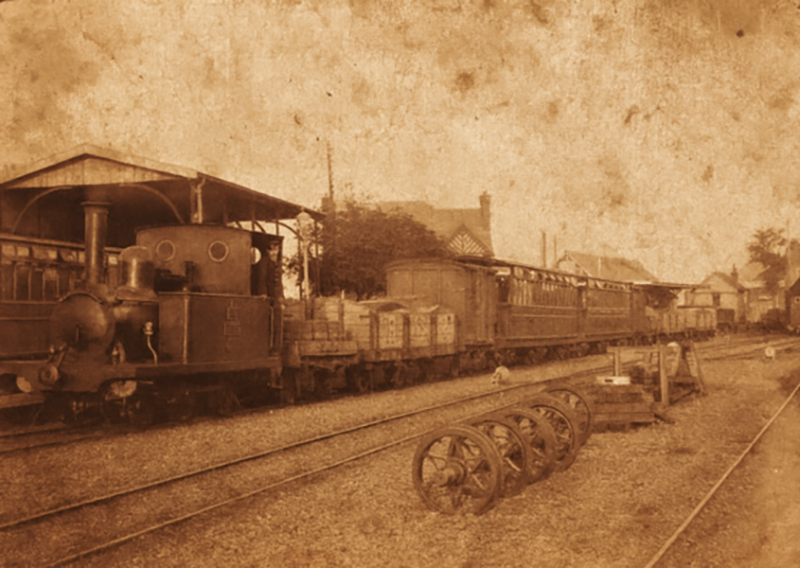
Northern Estates Railway c1875
1863: The Northern Estates Railway
A further strand appeared in 1863 with the opening of the Northern Estates Railway. Backed by landowners and agricultural interests in the countryside north-east of Caerporth, the NER was concerned less with sugar than with cattle, milk, butter, cheese and general farm produce. Unlike the estate tramways of central Sorcha, which were principally concerned with transporting crops from individual plantations, the Northern Estates Railway sought to serve a wider agricultural district. Its backers recognised that reliable transport could transform the commercial prospects of farms that were otherwise dependent upon slow and expensive road journeys. The railway was modest, and its principal business remained agricultural. Nevertheless, it brought together useful land rights, established traffic and parts of a railway corridor pointing north-east from Caerporth. These assets would prove particularly valuable when the Caerporth & Rhosport Railway was formed in 1877. Rather than disappearing without trace, parts of the NER became incorporated into the later public railway and helped explain how the new company was able to develop its route towards Rhosport.
1864: The Caerporth Sugar Cane Ltd Railway
The formation of the Caerporth Sugar Cane Ltd Railway in 1864 marked a significant change in the scale and ambition of railway development around the town. Where the earlier estate tramways had largely served individual landowners, the new undertaking was backed by substantial commercial interests connected with Caerporth's profitable sugar industry. Its promoters sought a more efficient means of moving cane and associated goods between the producing districts, processing facilities and the harbour. The sugar trade was becoming increasingly important to Caerporth's prosperity, but its success also created serious transport problems. Large quantities of cane had to be moved promptly, while finished products, supplies and rum-related traffic competed for space on roads and at the waterfront. The new railway promised greater carrying capacity, more dependable transport and improved access to the markets served by Caerporth's shipping trade. Unlike the smaller agricultural undertakings, the CSCLR possessed both the financial resources and the commercial ambition to become a much more influential railway. Its interests extended beyond the immediate movement of sugar cane, and the company increasingly recognised the advantages of carrying other merchandise and developing a broader transport business. This growing influence was not universally welcomed. The company's formation immediately raised concerns among existing merchants, railway operators and harbour interests that one wealthy undertaking might come to dominate access to Caerporth's docks. The response was the establishment, also in 1864, of the independent Caerporth Harbour Board Railway. This jointly governed undertaking ensured that the new sugar railway, alongside its competitors, could reach the harbour under agreed regulations without acquiring exclusive control of its facilities.
The two railways therefore developed alongside one another but with very different purposes. The CSCLR was an ambitious commercial enterprise seeking to expand its business, while the Harbour Board Railway existed to protect neutral access for the wider trading community. During the following decade, the sugar company's railway interests became increasingly important to the developing northern network. What had begun primarily as an industrial transport undertaking gradually acquired a broader role, including the movement of general goods and the development of passenger services. By 1877, the limitations of operating as a largely independent industrial railway were becoming apparent. Greater opportunities lay in combining its resources with those of neighbouring undertakings to create a continuous public railway. The CSCLR consequently became one of the principal constituent interests of the new Caerporth & Rhosport Railway, contributing established railway infrastructure, valuable traffic and substantial commercial backing.
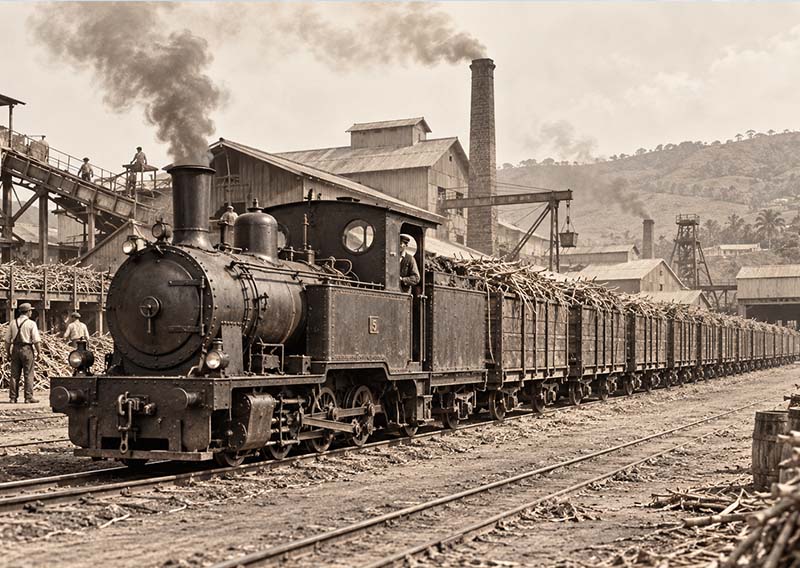
The Caerporth Sugar Cane Ltd used much larger locomotives than other estate railways of the time.

Penrath Quay - Penrath and Caerporth Railway
1874: The Penrath & Caerporth Railway
The Penrath & Caerporth Railway was established in 1874, representing a third and quite different ambition for railway development in northern Sorcha. While the Northern Estates Railway served agricultural landowners and the Caerporth Sugar Cane Ltd Railway represented powerful industrial interests, the P&CR owed its origins primarily to the fishing merchants and maritime businesses of Penrath. Penrath's fishing industry depended upon moving its catch to market quickly. Fish was a valuable but perishable commodity, and delays caused by poor roads, difficult weather or unreliable coastal shipping could turn a profitable landing into a considerable loss. For generations, Penrath had relied upon the sea for much of its trade. Fishing vessels brought their catches into the harbour, while coastal craft carried produce and supplies between settlements. Yet the very dependence upon maritime transport that had helped establish the town also limited its commercial opportunities. A railway offered a different prospect: a dependable rail connection towards Caerporth, from where Penrath's fish could reach a wider range of merchants, markets and shipping services. The company was promoted principally by local fish merchants and investors, with some financial support from Caerporth interests. Its ambitions were considerable, but its resources were more limited than those available to the wealthy sugar railway. Construction began following the company's formation, and the first operational section opened in 1875. The new railway provided an important improvement to local transport, carrying fish and marine supplies alongside general merchandise and agricultural produce. Supplies needed by the fishing fleet and harbour businesses could also travel towards Penrath. However, the intended route towards Caerporth was not completed in its entirety during the company's independent existence. The costs of construction, the difficulty of raising sufficient capital and the challenge of establishing useful connections with other railway interests restricted progress. The railway therefore occupied an awkward position. It had demonstrated the value of railway transport to Penrath's maritime economy, but it lacked the resources to realise the full potential of its intended route. By the middle of the decade, similar problems were being encountered by other northern railway undertakings. Each possessed something valuable, whether established traffic, railway formation, land rights or commercial influence, but none could independently provide the comprehensive transport network that northern Sorcha increasingly required. The solution came in 1877, when the Penrath & Caerporth Railway joined the Northern Estates Railway and Caerporth Sugar Cane Ltd Railway interests in the creation of the Caerporth & Rhosport Railway. Although the P&CR's independent life had lasted only three years, its contribution was significant. It brought Penrath's fishing trade into the emerging northern railway system and established a maritime connection that would remain important to the commercial character of the later railway.
1877: Three Railways Become One
By 1877, the northern districts of Sorcha possessed three separate railway undertakings whose interests were increasingly complementary. The Northern Estates Railway provided agricultural traffic, useful land rights and established railway formation. The Caerporth Sugar Cane Ltd Railway contributed industrial infrastructure, substantial commercial backing and valuable freight business. The Penrath & Caerporth Railway brought the fishing industry and the prospect of a more dependable connection between Penrath and the island's principal port. Each had been created to solve a particular transport problem. Together, however, they offered the foundations of something considerably more ambitious. Their consolidation into the Caerporth & Rhosport Railway in 1877 marked the transition from a collection of specialised local undertakings towards a genuine public railway serving northern Sorcha. The new company could draw upon the resources, routes and commercial relationships of its predecessors while planning a more coherent railway towards Rhosport. Agricultural produce, sugar, fish, general merchandise and passengers could increasingly be treated as parts of a common transport business rather than the separate concerns of individual companies. The significance of the merger extended beyond the disappearance of three company names. It established the principal northern railway enterprise from which the Great Sorcha Railway would eventually emerge.
The full story of the Caerporth & Rhosport Railway, its expansion towards Rhosport and its subsequent development, belongs to the next chapter in Sorcha's railway history.
The Harbour Sector
Steadfastly independent until the Great Western Railway takeover of 1923
Timeline:
Caerporth Harbour Board Railway
Great Western Railway
Glynoch & Rathmor Rly
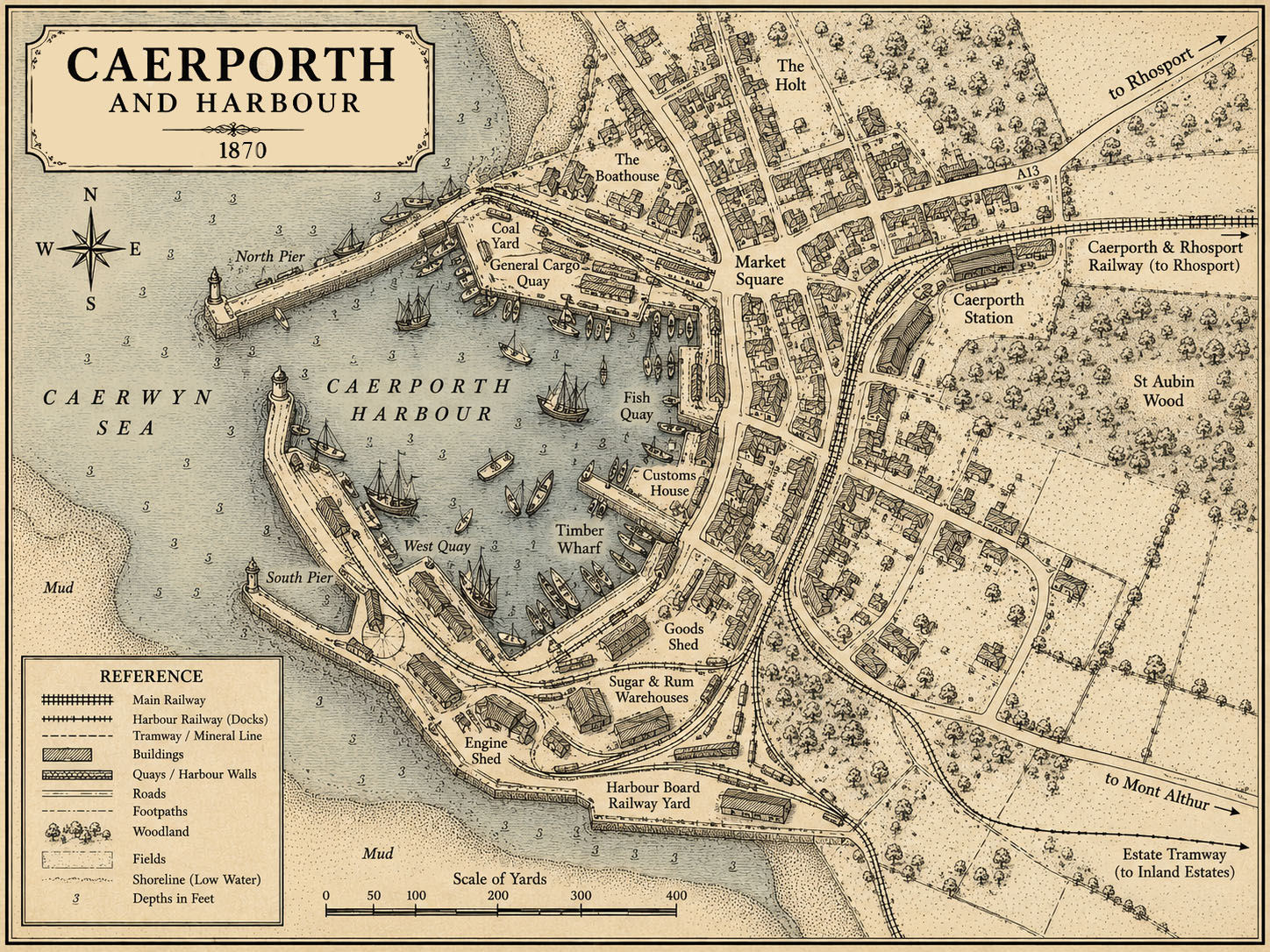
Vintage Caerporth Harbour Railway Map 1870
Caerporth Harbour Board Railway
By 1864, the growing concentration of traffic at Caerporth harbour had created a difficult railway problem. Several private interests required access to the docks, warehouses and trans-shipment facilities, but the formation of the wealthy and ambitious Caerporth Sugar Cane Ltd Railway that year brought matters to a head. With substantial financial backing and considerable commercial influence, the new company threatened to dominate the harbour approaches, raising concerns that other railway operators, merchants and shipping interests might find themselves at a serious disadvantage.
To prevent any one company from controlling access to the port, the interested parties agreed to establish the Caerporth Harbour Board Railway as a jointly governed, independent undertaking. Its board brought together representatives of the harbour authority, established commercial and railway interests, and the new sugar company itself. This arrangement ensured that all operators could use the harbour facilities under agreed regulations and charges, without favouring one railway over another.
The CHBR handled and redistributed general goods, fish, sugar, rum-related traffic and imports and exports within the dock area, while providing interchange with private industrial sidings and, later, public railway companies. Its independence became an important part of Caerporth's railway geography, ensuring that access to the port was not automatically controlled by whichever railway happened to be strongest elsewhere on the island. Even as the surrounding railway companies merged and expanded, the Harbour Board Railway retained its neutral position, serving the wider commercial interests of Caerporth rather than those of any single company.
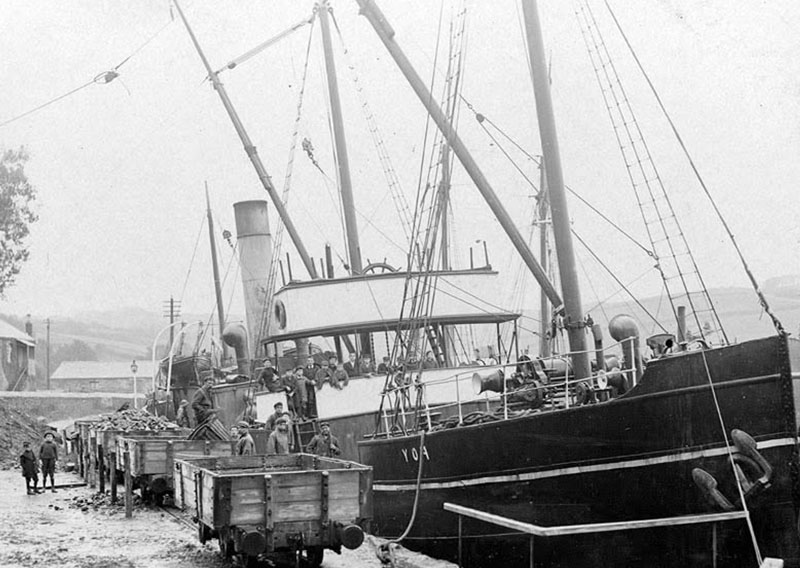
Caerporth Wharf c1860
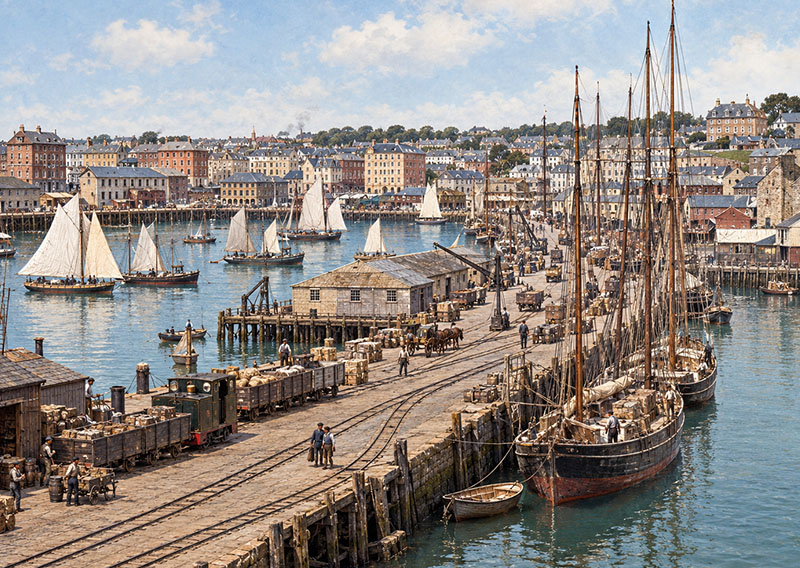
Caerporth Harbour c1900
How the early lines were operated
The early Caerporth railways were lightly engineered working systems whose equipment reflected their specialised purposes. Horse traction was important on the earliest estate tramways, while steam traction appeared as traffic and investment increased. Rolling stock was initially dominated by simple cane wagons, agricultural opens, livestock vehicles and general-purpose goods stock, with little need for passenger accommodation. As the northern companies developed, the range of traffic broadened considerably. The sugar railway required wagons suited to substantial industrial loads, while the Northern Estates Railway handled livestock and dairy produce. The Penrath & Caerporth Railway introduced the particular demands of transporting fish, where speed and reliable connections were especially important. Passenger accommodation gradually became more relevant as railway promoters looked beyond their original industrial or agricultural purposes. The Harbour Board system also became an interchange point where vehicles belonging to different owners and later railway companies could appear together. These differences in equipment and operating practice reflected the fragmented origins of Caerporth's railway network. The companies had been established for different purposes, and their eventual consolidation required the development of more consistent methods of working.
From Private Tramways to Public Railways
By the 1870s, Caerporth no longer possessed merely a collection of isolated industrial and agricultural tramways. It had the foundations of a developing railway network. Two distinct railway ambitions were emerging.
To the North East, three separate enterprises had demonstrated the commercial potential of a more substantial railway. The Northern Estates Railway served agricultural districts, the Caerporth Sugar Cane Ltd Railway provided industrial transport and increasing commercial influence, and the Penrath & Caerporth Railway represented the maritime interests of the fishing industry. Their combination in 1877 created the Caerporth & Rhosport Railway, bringing together the resources and traffic necessary to establish a more ambitious northern public railway.
Across central Sorcha, the Rhosper family's agricultural and commercial interests encouraged a different development. The Rhosper Estate Tramways, West Cane Estate Railway and Caer Valley Tramway had established a collection of useful transport corridors. Together with the developing railway interests around Porth Oir, these would contribute to the formation of the Grand Sorcha Central Railway in 1879.
Meanwhile, the Caerporth Harbour Board Railway continued to provide neutral access to the docks, ensuring that neither emerging railway system enjoyed automatic control of the town's maritime trade.
The result was not one unified railway, but the beginnings of competing networks whose relationships would shape Sorcha's railway history for generations.
Legacy
Few of the early Caerporth systems survived under their original identities, but their influence lasted for decades. Some alignments became parts of later public railways, some survived as industrial branches or sidings, and others disappeared beneath expanding farms, roads and urban development. The northern railway companies left a particularly important inheritance. Their combination demonstrated how agricultural, industrial and maritime interests could achieve more through cooperation than through the continued operation of isolated undertakings. The creation of the Caerporth & Rhosport Railway in 1877 was therefore not simply another company formation. It was the beginning of the railway network that would develop into the Great Sorcha Railway, linking the northern districts and their diverse industries. More importantly, the early railways created the commercial habits that shaped Sorcha's later railway politics. Landowners expected railways to serve estate interests, harbour authorities guarded neutral access, merchants understood the value of through transport, and competing families learned that control of a railway could be as important as ownership of the land it crossed. The later railway companies of Sorcha did not begin with a blank map. They inherited a landscape already crossed by the ambitions, compromises and physical remains of these early lines.
History
Railways
Caerporth
Caerporth Maps
Early Railways of Caerporth
Caerporth and the agricultural districts to its east and north-east
Northern sector dominated by the Northern Estates Railway. Multiple lines and estates in the central area.
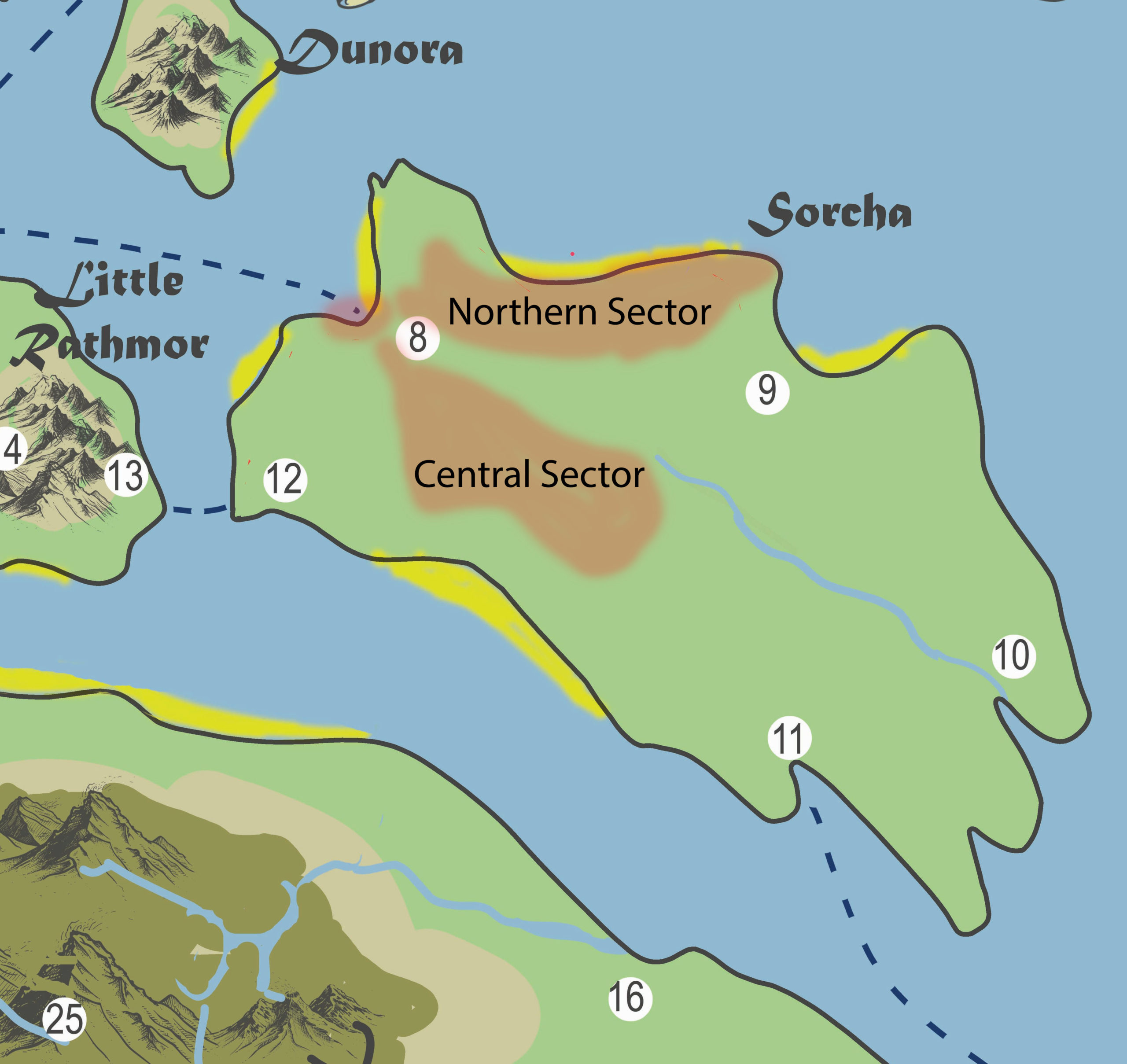
Caerporth and surrounding area
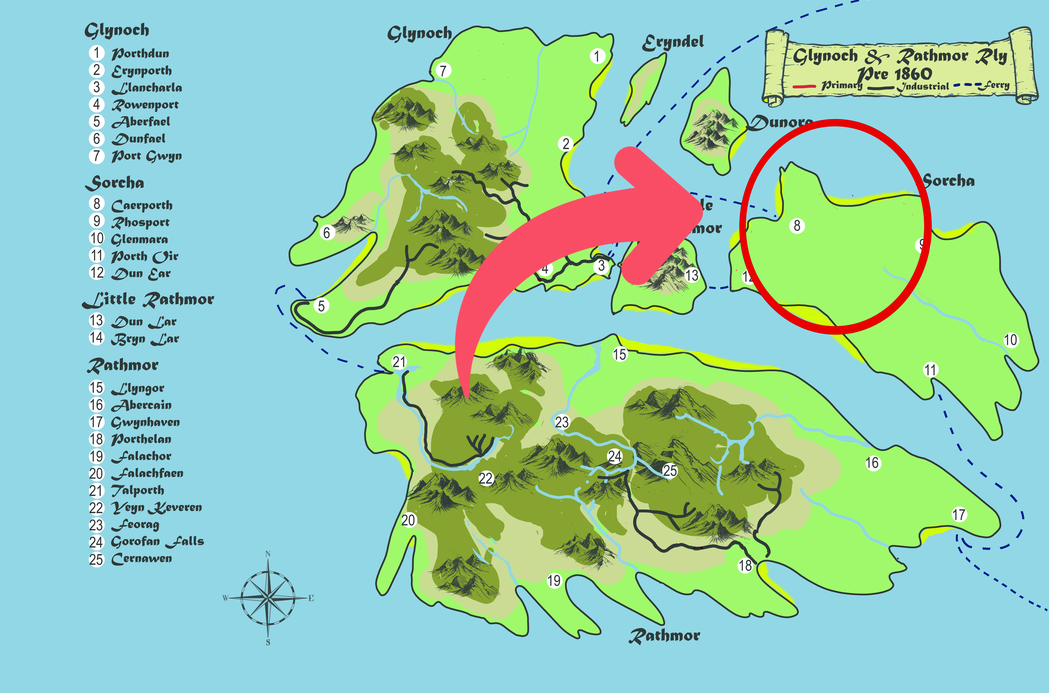
Related Articles....
Sugar Cane – The sweet surprise of Sorcha
Introduced in the late 18th century, Sorcha’s warm southern plains […] ...
Explore More Railways of Glynoch and Rathmor....


0 Comments