


1825: Bryn Lar & Llanchala Harbour Company
The railway history of the Caerwyn Isles begins not with a steam locomotive or a passenger train, but with limestone.
History

Railways

BLHC
BLHC Maps
Bryn Lar & Llanchala Harbour Company (BLHC)
At a glance:
Founded: 1825
Island: Little Rathmor
Principal route: Bryn Lar limestone quarries – Bryn Lar harbour
Original purpose: Transport of limestone from the quarries to the harbour
Original traction: Oxen
Original track: Timber rails
Principal traffic: Limestone and quarry supplies
Passenger services: None originally
Later development: Metal rails and steam traction
Successor: Little Rathmor Railway, 1871
Historical importance: Earliest known railway in the Caerwyn Isles
Origins
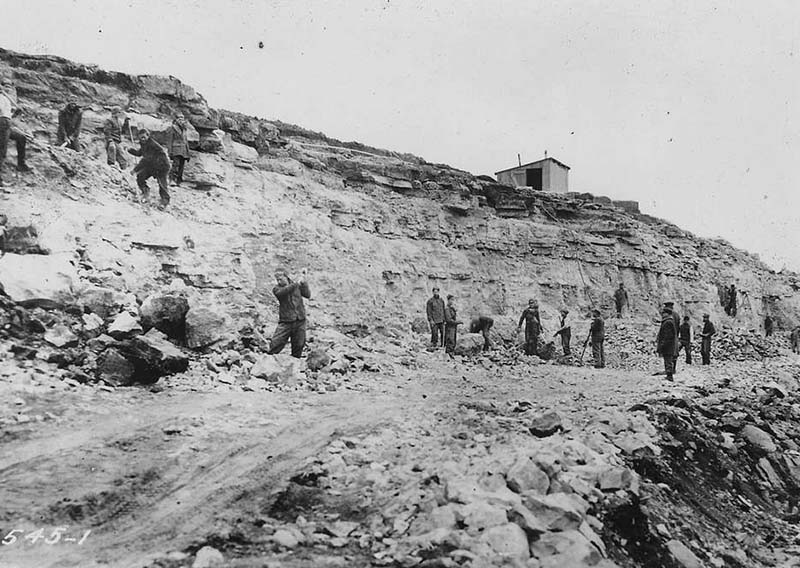
The railway history of the Caerwyn Isles begins not with a steam locomotive or a passenger train, but with limestone. By the early nineteenth century, the quarries of northern Little Rathmor were becoming increasingly important to the economy of the islands. Their stone was required locally for buildings, roads and harbour works, while growing demand from neighbouring Glynoch created the opportunity for a much larger trade. The difficulty was getting the stone from the quarry faces to the coast. Road transport was slow, expensive and poorly suited to moving large quantities of heavy stone. The Bryn Lar & Llanchala Harbour Company was established to solve that problem, creating a direct transport system between the quarries and the harbour at Bryn Lar.
Timeline of the BLHC
Bryn Lar & Llanchala Harbour Company
Little Rathmor Railway
Caerwyn Junction Railway
Glynoch & Rathmor Rly
BLHC crest
Destination Llanchala
The choice of Llanchala in the company's name reflected the importance of the larger harbour and market across the water. The railway itself did not reach Llanchala in 1825. Stone was brought by rail to Bryn Lar, transferred to vessels and carried across the channel.
The railway of 1825
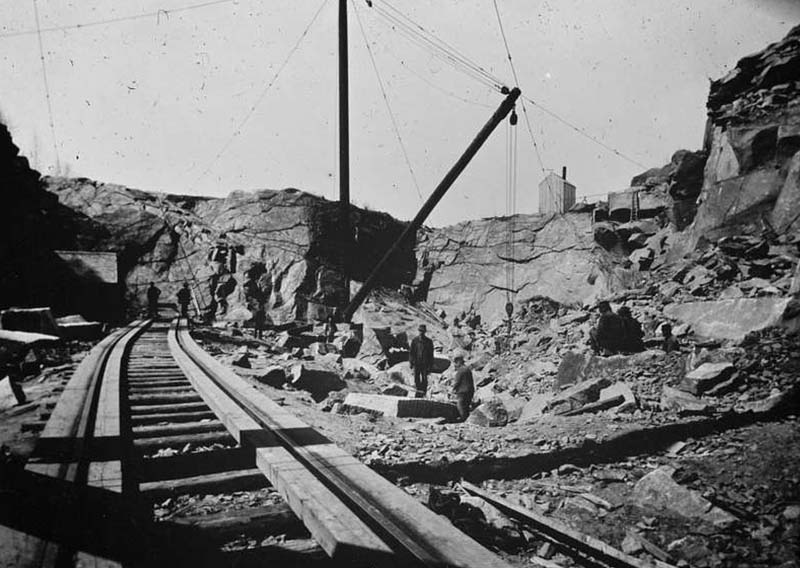
Opened in 1825, the company's tramway was an extraordinarily simple railway by later standards. The earliest track was constructed from timber cut from the island's forests. Rather than the engineered permanent way that would characterise later railways, these wooden rails were laid directly onto the ground along the route between the limestone workings and the harbour. The vehicles were equally primitive. Existing ox-carts were adapted with crude flanges on their wheels, allowing them to follow the rails rather than being steered along a road. Oxen provided the motive power. Yet this apparently modest system represented a considerable technological advance. Heavy loads of limestone could now be moved repeatedly along a defined route with considerably less effort than had been required by conventional carts. For the first time, Bryn Lar possessed a transport system designed specifically around the continuous movement of bulk goods.
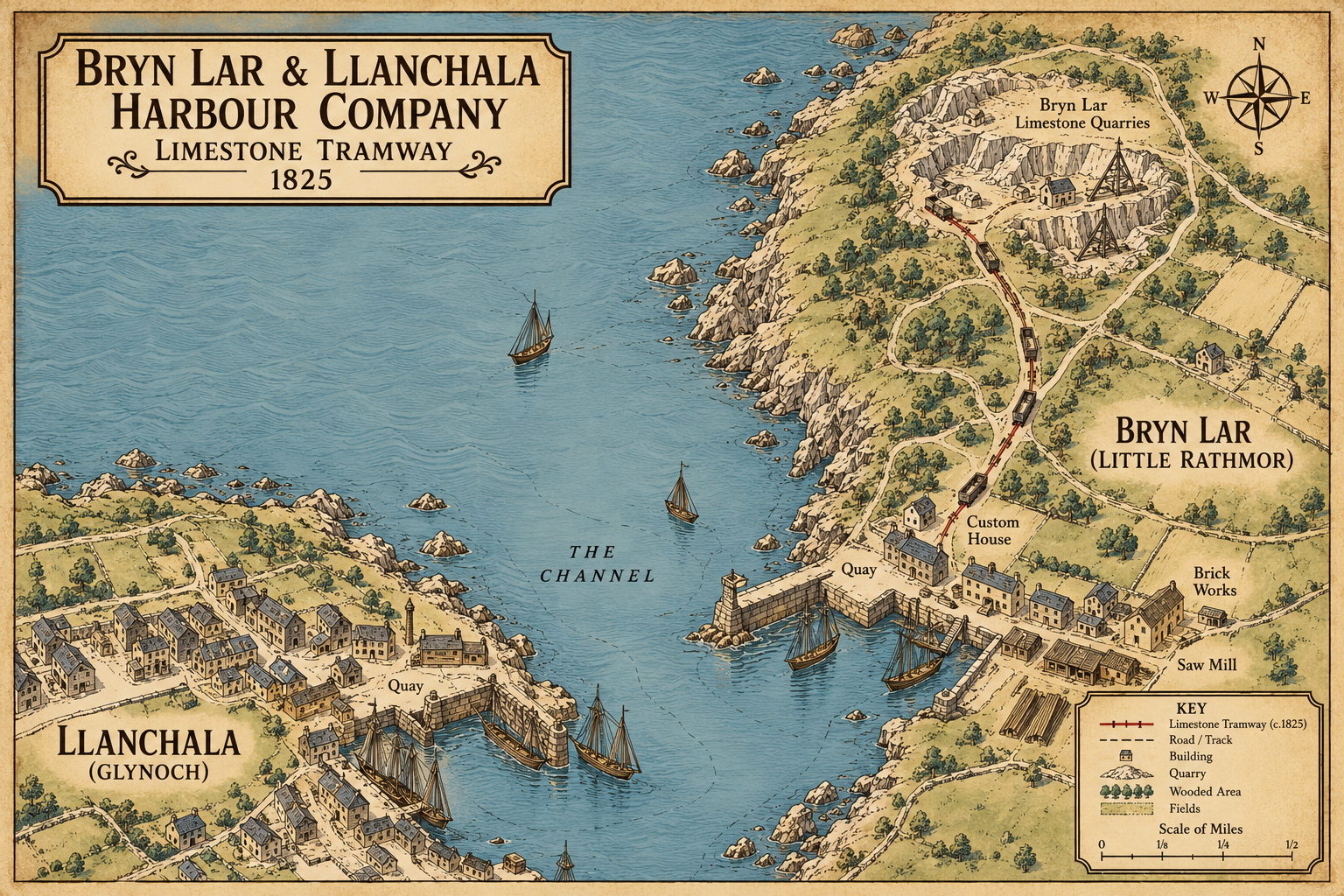
Bryn Lar map 1825

Bryn Lar limestone tramway c1840
Limestone and the harbour
At Bryn Lar the tramway terminated amongst the wharves, stone yards and loading facilities of the harbour. Here limestone arriving from the quarries could be stockpiled before being loaded aboard small coastal vessels. Much of the trade crossed the narrow waterway to Llanchala, where increasing quantities of stone were required as the port expanded. The railway therefore became part of a much larger chain of transport:
quarry → tramway → Bryn Lar harbour → coastal vessel → Llanchala
Its importance went beyond simply carrying commercial stone. The same transport system helped supply the material required for the expansion of wharves and harbour works on both sides of the channel. This created an interesting relationship between railway and harbour. The railway helped the ports expand, while that expansion generated still greater demand for the railway.
From timber to iron
Success also exposed the weaknesses of the original system. Timber rails carrying heavily loaded stone wagons wore rapidly and required constant attention. As traffic increased, sections were progressively improved and wooden rails gave way to metal. The stronger permanent way permitted larger loads and more reliable operation. Animal traction also eventually gave way to steam, transforming what had begun as a primitive quarry tramway into something increasingly recognisable as a conventional industrial railway. The transformation was gradual rather than a single rebuilding. For much of the nineteenth century, old and new technology could therefore be found alongside one another as the company adapted its infrastructure to growing traffic.
Operations
For much of its early existence the railway was overwhelmingly concerned with freight. Limestone travelled from the quarries towards Bryn Lar, while tools, supplies and other materials required by the workings travelled in the opposite direction. Rolling stock was initially little more than modified carts and simple quarry wagons. As metal rails and eventually steam traction appeared, more substantial mineral wagons could be introduced. The railway was never conceived as a passenger undertaking. Its importance lay in doing one repetitive industrial job exceptionally well: moving large quantities of heavy stone between quarry and harbour. That simplicity would ultimately help establish the principle upon which many later railways of the Caerwyn Isles were built.
The railway reaches Llanchala
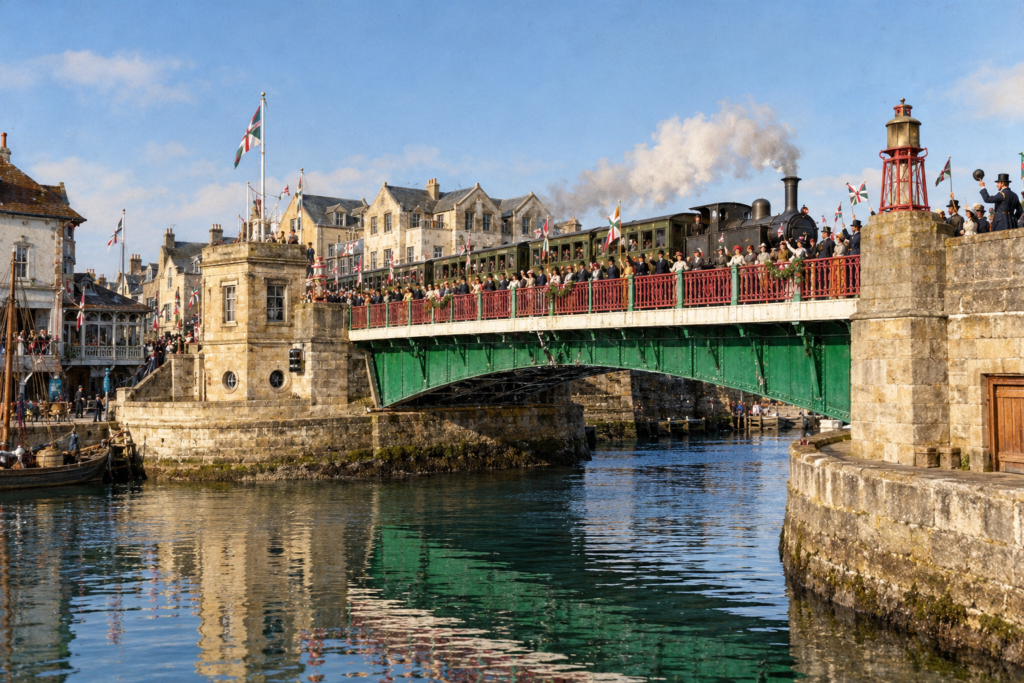
By the middle decades of the nineteenth century the geography around Bryn Lar harbour was itself changing. Successive reclamation and harbour-extension schemes reduced the stretch of water separating Bryn Lar from the expanding docks at Llanchala until little more than a tidal channel remained. The increasingly cumbersome transfer of railway traffic to boats for such a short crossing became difficult to justify. A competition was therefore organised for a bridge capable of carrying the railway directly into Llanchala. The successful design came from McTorch & Wrench Ltd of Dublin, with Bryn & Beam Ironworks of Little Rathmor supplying materials and much of the labour. The engineering requirements were unusually demanding. The bridge had to carry trains while also providing passage for pedestrians, cycles and horse-drawn vehicles. At the same time, shipping still required access through the channel, meaning that some form of opening or movable span was necessary. In 1870 the bridge opened. For a railway whose traffic had crossed the water by boat for nearly half a century, the change was profound. Bryn Lar and Llanchala were now physically connected by rail.
A new railway for a new era
The opening of the Llanchala bridge fundamentally changed the character of the railway. What had begun as a quarry tramway could now carry goods directly beyond Little Rathmor, while the possibility of regular passenger traffic opened an entirely new market. The old company name no longer reflected the railway it had become. In 1871 the Bryn Lar & Llanchala Harbour Company was reconstituted as the Little Rathmor Railway, beginning the next chapter in the development of the island's railway network. The change was an evolution rather than a takeover. The railway, its experience and much of its infrastructure continued, but its purpose had expanded far beyond the limestone trade for which it had been created in 1825.
A harbour loses its purpose and gains a new role
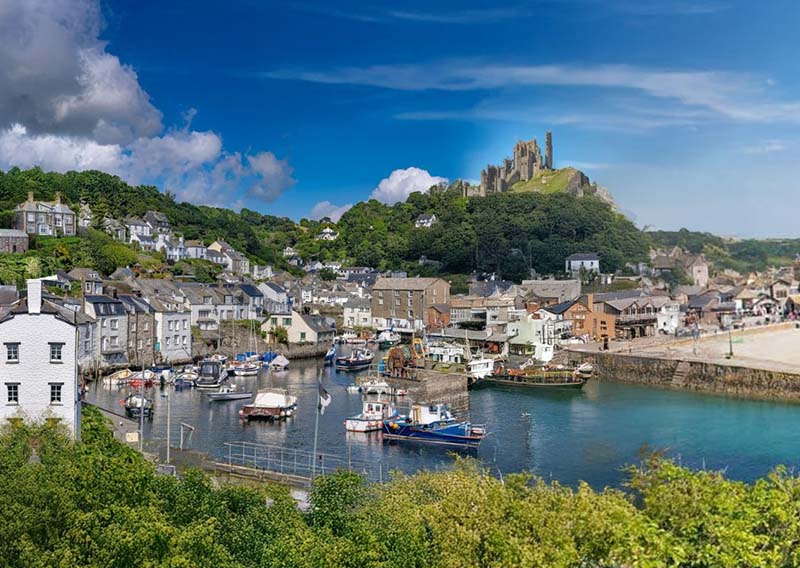
Ironically, the railway connection which gave Bryn Lar direct access to Llanchala also began the decline of Bryn Lar's own harbour. Once trains could cross directly into the much larger Llanchala docks, there was increasingly little reason to unload stone at Bryn Lar simply to transfer it aboard vessels for the short journey across the channel. The old stone wharves and warehouses gradually became quieter as shipping concentrated at Llanchala. But the railway did not abandon Bryn Lar. Instead, the extensive harbour land created by the old railway and maritime industries offered something increasingly valuable: space. As the wider railway system expanded, the cramped facilities at the western end of Llanchala became inadequate for the locomotives, wagons and engineering work required by the growing network. Bryn Lar provided the solution.
Parts of the former harbour were progressively converted into locomotive works, engine sheds and railway facilities. A place which had begun as the transfer point between a primitive limestone tramway and coastal shipping evolved into an important railway engineering centre. The transformation neatly encapsulated Bryn Lar's railway history. The railway had first been built to serve the harbour; eventually the railway outgrew the harbour and took over much of its land.
Little Rathmor c1860
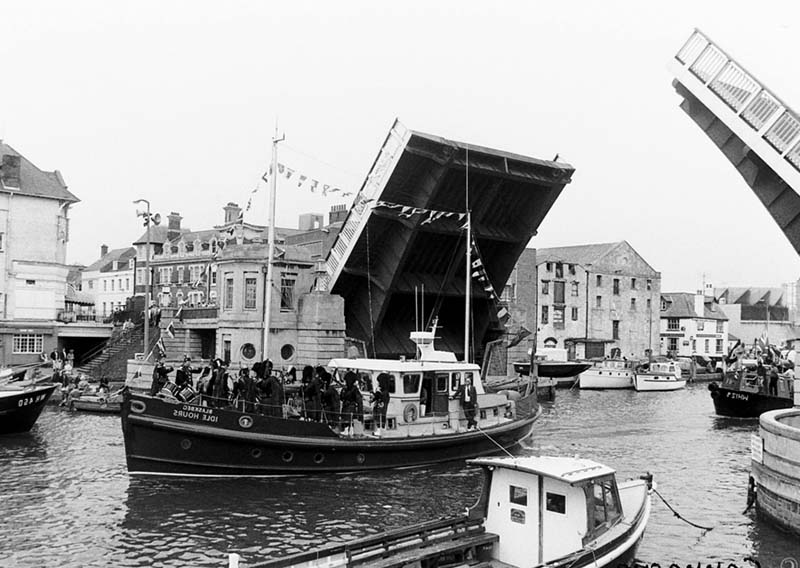
Opening day of the Llanchala Bridge 1870
Legacy
The significance of the Bryn Lar & Llanchala Harbour Company lies far beyond the modest scale of its original tramway. When its first timber rails were laid in 1825, there was no railway network in the Caerwyn Isles. There were simply quarries, a harbour and the practical problem of moving heavy stone between them. The solution demonstrated that guided rail transport could move bulk goods more efficiently than conventional roads. Other industries and communities would eventually apply the same principle to minerals, timber, agriculture and passengers. The company itself evolved into the Little Rathmor Railway in 1871. That railway would in turn be reorganised as the Caerwyn Junction Railway in 1885, the strategically important joint railway known as “The Joint”. It remained formally independent until July 1939, when it was finally absorbed into the Glynoch & Rathmor Railway.
Bryn Lar therefore occupies a unique place in the history of the islands. Its primitive wooden tramway was the beginning of a railway story that would eventually connect ports, mines, farms, towns and industries across the Caerwyn Isles. The remains of its earliest alignments near the old quarry faces are consequently more than industrial archaeology. They mark the birthplace of rail transport on the islands.
History
Railways
BLHC
BLHC Maps
Bryn Lar & Llanchala Harbour Company
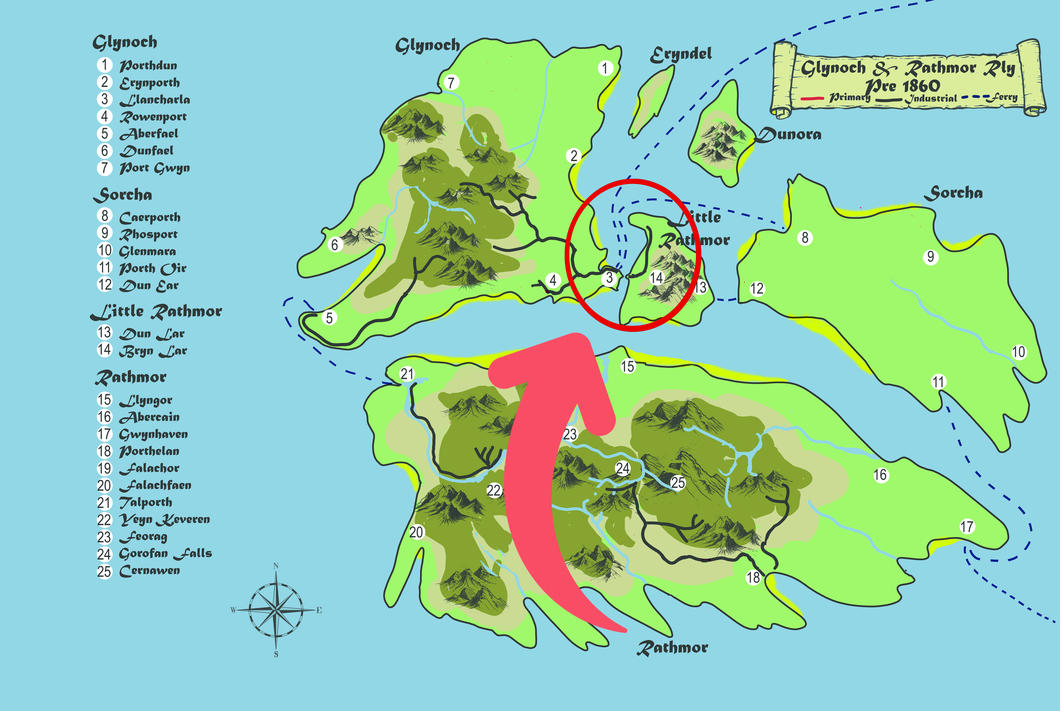
From the north of Little Rathmor down to the port at Bryn Lar and onwards to Llanchala
Key: 3 - Llanchala, 14 - Bryn Lar, 13 - Dun Lar
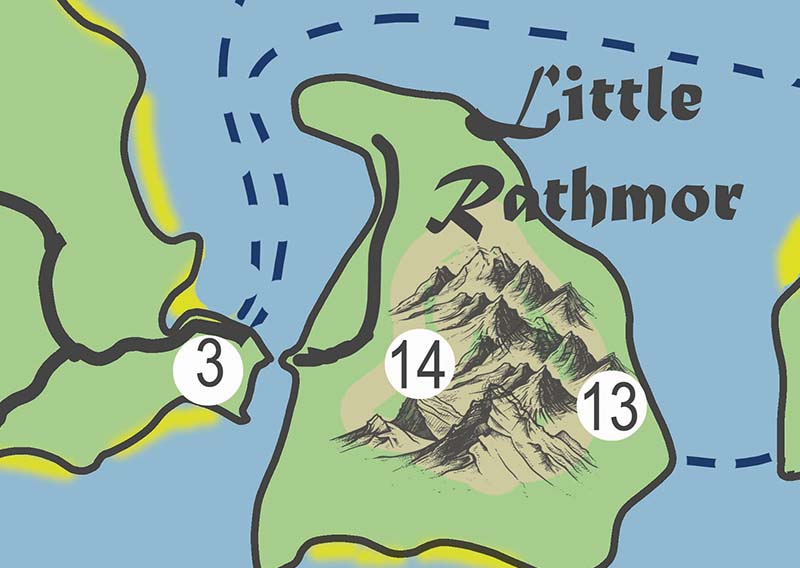
Location on Little Rathmor


0 Comments